

13 min 23 sec
Available in: English
 ไทย
EnglishไทยThe Gift of Fear: Survival Signals That Protect Us From Violence
Shows how to trust and sharpen the gut feeling that warns of violence, read the signals dangerous people give off, tell empty threats from real ones, and spot the blind spots that let abuse continue.
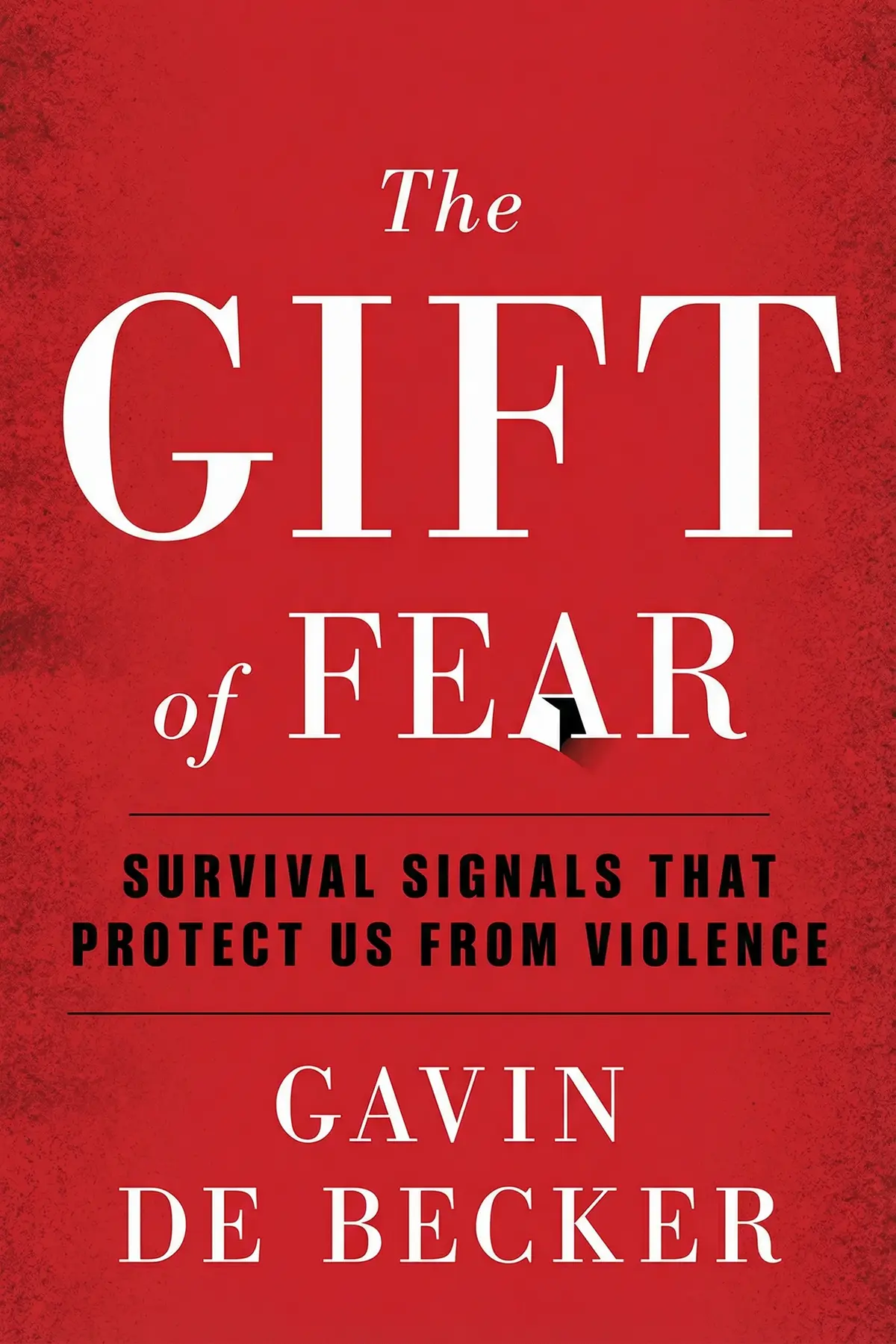
Table of Content
1. Introduction
57 sec
That cold jolt you feel near a too-friendly stranger or on a dark street is usually telling you something true, and brushing it aside is how many people get hurt. In The Gift of Fear, Gavin de Becker, who has spent his career predicting violence for public figures, police agencies and families, argues that most violence is not a surprise. It announces itself first, and your intuition hears the announcement before your reasoning catches up. What fails people is rarely the warning. It is the habit of ignoring it, as Patrick did, that can lead to life-threatening consequences.
So the case de Becker builds is that fear is a gift only if you listen, and listening can be trained. Afterward, a stranger’s helpful offer, a shouted threat and a quiet red flag will each mean something different to you.
2. Trust the alarm that sounds before your reasons
1 min 36 sec
Two police partners stood beside the same stopped car and felt completely different things. One of them would later be shot, and the difference between them comes down to a habit almost everyone shares.
3. See through the helpful stranger who says we
1 min 32 sec
A man on an apartment stairway picked up spilled groceries and offered to help. One small word in his offer should have raised an alarm, and it is a word predators use on purpose.
4. Read aggression in a face and a motive
1 min 20 sec
Some signs of coming violence show on the face, and others can only be found by imagining the other person’s goals. Together they help sort a scary message from a dangerous sender.
5. Tell a real threat from an empty one
1 min 31 sec
A single phone call can empty an office building in minutes. De Becker argues that how a threat sounds tells you a great deal about whether the caller means to act on it.
6. Tell a harmless oddball from a warning sign
1 min 57 sec
One man sent a television host 800 letters and ended up a guest on the show. A college student received one package and killed two people. The difference lay in signals people could see.
7. Learn how abuse can dull your natural fear
1 min 45 sec
A woman called a support line and said she was in no immediate danger. What she described next shows how living with violence can switch off the instinct meant to protect us.
8. Make sure warnings reach people who can act
1 min 34 sec
A school was warned about a troubled boy before he ever arrived, and still a second child was harmed. The way information got stuck explains failures that guards alone cannot fix.
9. Conclusion
1 min 11 sec
Look back at every story and one pattern stands out: the warning almost always came. Patrick had a dream and a near miss. Kelly felt fear on the stairs. The college had a package marked Classic Arms and an anonymous call. Joey’s new school had a warning from his old one. Where harm followed, someone held the signal and talked themselves, or their institution, out of it. That is why de Becker’s message is, at heart, hopeful. Violence can often be avoided, because people are built to sense it coming.
The work is to treat unease as information. When a stranger insists after you have said no, or slips in a we he never earned, say no again and move away. When a threat is loud and theatrical, slow down and ask what the sender wants you to feel. When you are responsible for others, put the scattered warnings side by side and hand them to someone who can act.
Fear, in this telling, belongs in a calm life. It is the part of you that felt danger in that back seat before anyone could say why.
About this book
What is this book about?
Most people have felt uneasy around a stranger, a caller or a partner and then talked themselves out of it. Gavin de Becker, who has spent his career predicting violence, argues that this unease is usually accurate. Violence rarely comes without warning, and human intuition is built to pick up the signs before conscious reasoning can. The book shows what those signs look like and why people ignore them. De Becker explains forced teaming and manipulative charm, the tactics strangers use to lower your guard. He points to body language that often comes before an attack, and to the value of imagining a threatening person's goals. He shows how to tell a theatrical bomb threat from a real danger, and how to separate a harmless eccentric from someone who is signaling violence. He also looks at the harder cases: why victims of domestic abuse can lose their sense of fear, and how schools that hold clear warnings still fail to protect children. Readers learn to treat their unease as information, act on it without apology, and help the people and institutions around them do the same.
Book Information
Who it's for
Wanting to trust instincts
People who walk home alone, live alone or meet strangers often and want to trust their instincts.
Managers and educators
Managers, teachers and school leaders who must judge threats and act on warnings.
Supporting someone facing abuse
Friends and counselors of someone in an abusive relationship who want to understand why fear fades.
About the Author
Gavin de Becker
Gavin de Becker, born in 1954, is a specialist in security and in predicting violence. In 1978 he founded a firm that advises prominent public figures, corporations, police agencies and governments, and that supports private individuals dealing with stalking or domestic abuse. Presidents have appointed him three times, and he has sat on advisory boards for the California Department of Mental Health and the US Department of Justice. He has given testimony to legislatures, advised prosecutors in the O.J. Simpson murder trial and won passage of new laws he proposed on managing violence. The Gift of Fear was published in 1997.
Ratings & Reviews
Ratings at a glance

What people think
Listeners consider this work essential reading, specifically for high schoolers and young women, noting its enduring insights and important takeaways. It acts as an outstanding manual for following your gut feelings, enabling listeners to identify threats and stay safe while detailing the beneficial side of fear. Listeners value its practicality across different contexts, such as the workplace, and describe the writing as clear and compelling enough to maintain their interest throughout.
Top reviews
Ning
Every woman needs a copy of this on her nightstand. Gavin de Becker breaks down the science of intuition in a way that feels empowering rather than paranoid. He teaches us that fear isn't just an emotion to be managed; it's a survival tool that we often ignore because we’re socialized to be 'nice.' The concept that 'No' is a complete sentence really struck a chord with me. It’s about recognizing those tiny, subtle red flags—like forced rapport or 'loan sharking'—before a situation escalates. The writing is accessible and keeps you hooked, even when the subject matter gets heavy. I’ve already recommended it to all my female relatives. It's truly a must-read for staying safe in an unpredictable world.
Show moreYuwadee
After hearing about this book for years, I finally dove in and it completely shifted my perspective on social politeness. We are often taught to suppress our instincts to remain civil, but this book gives you permission to listen to that nagging feeling in your gut. De Becker uses intense real-world examples to show how predators manipulate their victims. Some parts are difficult to read—especially the chapters on domestic abuse—but they are necessary. The author explains that true fear is a gift that alerts us to danger, whereas worry is just noise. My only gripe is that the book feels very male-centric in its descriptions of violence, which can feel a bit dated. Still, the lessons on setting boundaries are invaluable. I feel much more equipped to navigate public spaces now.
Show moreVarinee
Wow, I wish I had read this in high school before heading off to college. It provides such a pragmatic framework for understanding personal safety without resorting to fear-mongering. The truth is, most of us have felt that 'chill' but couldn't justify it logically. De Becker explains why logic is actually your enemy in the first few seconds of a threat. He illustrates how predators test boundaries, and how our desire to be helpful can be our greatest weakness. It’s an engaging read that doesn't feel like a dry manual. Every young woman should have this knowledge in her back pocket. It's not just about avoiding bad guys; it's about reclaiming your right to feel safe. Simple, direct, and potentially life-saving.
Show moreWanida
This isn't your typical true-crime thriller, even though it reads like one at times. It is a brilliant exploration of why we feel fear and how to use it as a tool. Truth is, I used to think I was just 'anxious' in certain situations, but now I realize my brain was actually processing data I hadn't consciously noticed. The way de Becker explains 'forced rapport' and 'typecasting' as predatory tactics is life-changing. I find myself much more aware of my surroundings without being paranoid. Some of the later chapters on public figures felt less applicable to my life, but the early sections are pure gold. It’s a fast-paced, well-written book that delivers on its promise to help you recognize danger before it strikes. Highly recommended.
Show moreRungtip
If I could make one book mandatory for graduation, it would be this one. It’s an essential guide for anyone entering the 'real world,' providing a level of psychological self-defense that you just don't get in school. The author's background in high-level protection gives him immense credibility. He speaks with authority about the signals we all send and receive. I loved the section on how 'No' is the most important word in our vocabulary. It’s not just about physical safety; it’s about emotional health and setting boundaries with people who don't respect them. To me, this book isn't about living in fear—it’s about living with a quiet confidence because you know you can trust yourself. It is accessible, gripping, and deeply important. Five stars all the way.
Show morePornthip
While some of the tech references feel like a time capsule from the 90s, the core message remains incredibly relevant today. De Becker’s insights into the 'pre-incident indicators' of violence are genuinely eye-opening. Frankly, I didn't realize how much I was ignoring my own gut feelings just to avoid being rude to strangers. The book can be a bit repetitive, and the author definitely likes to remind you of his high-profile client list, but the practical advice is worth the occasional eye-roll. It covers everything from workplace threats to domestic issues. Even if you think you’re street-smart, there’s something here that will make you rethink your daily interactions. It’s a solid guide for anyone wanting to fine-tune their internal alarm system.
Show moreMontri
Ever wonder why you get that sinking feeling in your stomach when someone offers to help you with your bags? This book explains exactly what your subconscious is picking up on. De Becker’s advice to 'find a woman who looks like a mommy' if a child gets lost is such a simple, common-sense tip that stuck with me. The chapters on workplace violence and how to identify a 'troubled' individual were particularly fascinating and relevant to my job. Personally, I found the section on dark humor as an indicator of hidden intent to be a real 'aha' moment. The prose is clear and moves quickly, though some of the case studies feel a little sensationalized for dramatic effect. It’s a great tool for anyone who wants to understand the psychology of violence.
Show moreCharles
Picked this up on a recommendation from a friend in law enforcement, and it’s a fascinating deep dive into human behavior. Not gonna lie, some of the stories about stalkers and assassins are genuinely chilling. It reads like a true-crime novel but with the added benefit of teaching you how to avoid becoming a character in one. I specifically liked the discussion on how the media turns criminals into celebrities, which only fuels more violence. De Becker argues that we should focus on the 'pathetic' details of these people instead of their 'meticulous' plans. While the book is a bit heavy on the author's personal achievements, the underlying logic is sound. It’s an empowering read that makes you feel more in control of your environment. Definitely worth your time.
Show morePloy
The advice here is life-saving, but you have to wade through a lot of the author's self-congratulatory anecdotes to get to it. Look, de Becker clearly knows his stuff, and his work with assassins and stalkers is legendary, but the 'I saved the day' tone gets old after 200 pages. That said, the breakdown of how criminals use 'charm' to disarm their targets is brilliant. I appreciated the section on why restraining orders sometimes backfire, as it’s a counter-intuitive perspective that needs to be heard. It’s a bit disorganized in the middle, and the editing could have been tighter to remove some of the fluff. However, the core takeaway about trusting your intuition is something I’ll carry with me forever. A helpful, if slightly bloated, resource.
Show moreKwame
To be fair, the central premise is sound, but the execution is deeply flawed and often reeks of victim-blaming. The author spends way too much time patting himself on the back for being the 'intuition expert' while recycling the same three points. He mentions that women shouldn't be 'wishy-washy' when saying no, which is fine, but he fails to acknowledge the very real danger that comes with being direct to a violent man. The anecdotes are clearly cherry-picked to support his 'intuition is always right' theory, ignoring the thousands of times people feel 'gut' fear that is actually just bias or anxiety. Plus, it’s extremely dated in its gender roles. Not once does he address violence against the LGBTQ+ community or how race plays into these perceptions. It's a very narrow, 1990s perspective that hasn't aged well.
Show moreQuestions about this book
What is the main idea of The Gift of Fear?
Gavin de Becker argues that most violence gives warning signs before it happens, and that human intuition picks them up faster than conscious thought. Fear, in his view, is a gift, a warning signal that people need to learn to heed without hesitation. He shows how to read the signals more accurately, from a stranger’s manipulative charm to body language and the tone of a threat, and how to act on them without hesitation.
What is forced teaming in The Gift of Fear?
Forced teaming is a tactic in which a stranger acts like an ally to lower your defenses. De Becker’s example is Kelly, whose groceries spilled on her apartment stairs. A man gathered them, kept insisting on helping after she declined, and said that “we” had a cat to feed. That invented togetherness is the warning sign. The man proved to be both a rapist and a killer, and Kelly only just got away.
How can you tell if a threat is real, according to Gavin de Becker?
De Becker uses phoned-in bomb threats as his main example. A caller with an aggressively nasty voice, or one who is overly emotional, yells and uses violent imagery, is often trying to create fear or vent anger. People planning a real attack tend to be patient and undramatic, and if they mainly wanted to cause harm, they would probably not call. Panicking hands the caller exactly what they wanted.
Why do victims of domestic violence stay, according to The Gift of Fear?
De Becker argues that the swing between violence and relief can become addictive. When abuse stops, the relief feels stronger than ordinary happiness, so the victim comes to depend on the abuser for it. Over time this dulls the fear instinct, as with a woman who told a support line she was safe while her husband held a loaded gun outside her locked bedroom. The pull of family security adds to it.
Who should read The Gift of Fear?
It suits anyone who has felt uneasy around a stranger and wondered whether to trust the feeling. Managers dealing with angry former employees, school leaders and teachers responsible for children, and people supporting someone in an abusive relationship will find specific cases and tests. The book is practical: it shows which signals to watch for and why people and institutions so often ignore them.
Readers also enjoyed

Acting with Power: Why We Are More Powerful Than We Believe
Deborah Gruenfeld


Age of Propaganda: The Everyday Use and Abuse of Persuasion
Anthony Pratkanis




59 Seconds: Change Your Life in Under a Minute
Richard Wiseman


AUDIO SUMMARY AVAILABLE
Listen to The Gift of Fear in 15 minutes
Get the key ideas from The Gift of Fear by Gavin de Becker, plus 5,000+ more nonfiction titles.
- 5,000+ titles
- Listen as much as you want
- 7-day free trial
- Cancel anytime









