

14 min 37 sec
Available in: English
The Genius Myth: A Curious History of a Dangerous Idea
By Helen Lewis
Helen Lewis traces how the idea of the lone genius was invented, from Renaissance biography to eugenics and Edison's lab. She shows the luck, timing, privilege and unseen helpers that famous achievements actually depend on.
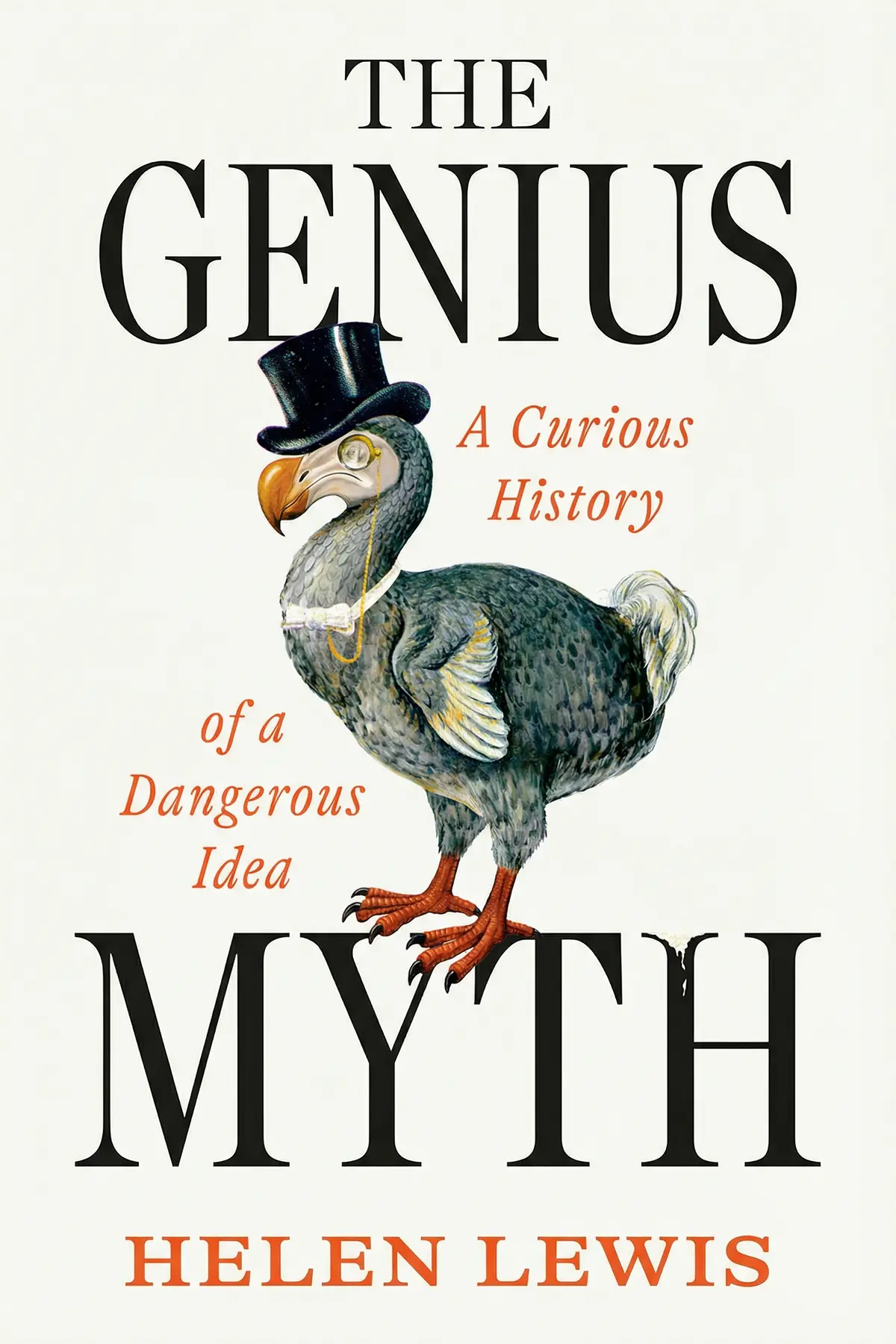
Table of Content
1. Introduction
1 min 01 sec
Many people quietly assume that real achievement belongs to a rare few who were born brilliant. In The Genius Myth, journalist Helen Lewis shows that the word genius once meant something nobody could own. In ancient Rome it was a guardian spirit of a family or a place, and a person only borrowed its inspiration for a moment. The individual genius came much later, built story by story by writers, scientists and publicists.
Lewis’s case is that every version of the genius has hidden the same things. Luck, timing, privilege and the people doing the support work drop out of the picture. What remains is a lone hero who can be excused almost anything.
Follow the myth from a Renaissance biographer to a sperm bank, two famous marriages and an inventor’s workshop. Along the way, you learn to read any success story for the parts it leaves out, and to stop handing out free passes to the people it flatters.
2. Spot the saint story behind a famous name
2 min 05 sec
The suffering artist, the child who outshines his teachers and the talent taken too soon feel like facts of nature. They were shaped by one sixteenth-century writer borrowing from a much older kind of book.
3. When brilliance became a license for cruelty
2 min 09 sec
A Romantic poet’s scandals were forgiven, and a Victorian gentleman decided greatness ran in the blood. Between them, they turned genius into an excuse, and the consequences reached far beyond any single bad reputation.
4. A high IQ score predicts less than promised
2 min 14 sec
A psychologist set out to prove that measured brilliance in childhood leads to success in life. His own subjects, and one boy he rejected, told a very different story about what actually shapes a life.
5. See the partners every great man relied on
2 min 06 sec
One physicist drew up a household contract for his wife, and one novelist took material from his. Both stories were kept out of view for decades, and the reasons say a lot about how fame works.
6. See how one name swallowed a whole lab's work
1 min 54 sec
The inventor the newspapers called a wizard almost missed the importance of his own best invention. What he did understand was publicity, and the working culture he set up still shapes the tech world.
7. Praise the breakthrough and question the hero
1 min 57 sec
A tech mogul with a chainsaw on a political stage looks like pure spectacle. Lewis sees an old impulse at work, and she proposes a surprisingly simple change in how we use one familiar word.
8. Conclusion
1 min 11 sec
Helen Lewis ends where the word began. In Rome a genius was a guardian spirit of a family or place, though a person struck by sudden inspiration might be said to possess one. Over five centuries the label attached itself to painters, poets, inventors and tech founders, and each time the story grew simpler while the lives behind it stayed tangled. Michelangelo’s boots, Galton’s bloodlines, Shockley’s test scores, Sofia Tolstoy’s overnight edits and Edison’s early talks with reporters all point the same way: achievement is assembled from luck, timing, privilege, support and a well-told tale.
That gives you a sharper way to listen. When a success story centers one person, look for the spouse, the team and the timing it skips. When someone famous in one field speaks with confidence about another, ask where that authority was earned. And when brilliance is offered as a reason to overlook how someone treats others, decline the trade.
The Romans may have been closer to the truth. Inspiration passed through people for a while, and it never belonged to any one of them.
About this book
What is this book about?
We still talk about geniuses as if they were born different: the prodigy who outgrows his teachers, the tortured artist, the inventor alone in his workshop. Journalist Helen Lewis argues that these figures are characters in a story, and that the story has been written and rewritten for centuries by people with reasons to tell it. She follows the word from a Roman guardian spirit to Giorgio Vasari's lives of Renaissance artists, Byron's Romantic excess, Francis Galton's eugenics, Lewis Terman's IQ study and the so-called Genius Sperm Bank. She looks inside the marriages of Albert Einstein and Leo Tolstoy, and at Thomas Edison's lab in Menlo Park, where one famous name absorbed the work of many. Readers come away with a clear history of a dangerous idea and a practical habit of mind. Any success story can be read for what it leaves out, and brilliance never has to be accepted as an excuse for bad behavior or borrowed authority.
Book Information
Who it's for
Professionals questioning founder legends
Professionals tired of hero stories about founders and want a clearer view of how success really happens.
Managers wanting credit shared
Managers and team leads who want credit to reach everyone who did the work.
History buffs exploring genius
History readers curious how Vasari, Galton, Einstein, Tolstoy and Edison shaped the idea of genius.
About the Author
Helen Lewis
Helen Lewis is a journalist and staff writer at The Atlantic, and a former deputy editor of the New Statesman. Her work has also appeared in The New York Times, Vogue and The Guardian. She is the author of Difficult Women: A History of Feminism in 11 Fights, and has hosted the Radio 4 program The Spark and the BBC podcasts Helen Lewis Has Left the Chat and The New Gurus.
Ratings & Reviews
Ratings at a glance
What people think
Listeners find that although perspectives differ on the book’s organizational logic and its chosen modern examples, many value its relevant dismantling of the "genius" archetype. Furthermore, listeners appreciate the detailed study of how social structures and external support systems frequently uphold the illusion of the isolated, brilliant person. They also highlight the perceptive discussion regarding IQ metrics and the ethics of intellect, with one listener pointing out how the writing exposes the frequently ignored "unpaid labor of great women" who stood behind these famous historical icons.
Top reviews
Camila
Lewis has written a sharp, necessary takedown of the 'lone wolf' narrative we love to project onto brilliant men. It’s about time someone looked at the invisible infrastructure—the wives, the assistants, and the social safety nets—that actually allows a 'genius' to function in the first place. I found the sections on the domestic labor of women particularly galling but enlightening. While the pacing occasionally stutters in the middle, the core argument remains ironclad and incredibly timely. Truth be told, we need to stop worshipping at the altar of the difficult man. This is a brilliant starting point for that cultural shift.
Show moreKiattisak
After finishing this, I can't look at 'great' historical figures the same way again. Lewis exposes how our culture prizes a specific type of antisocial intelligence while ignoring the collaborative reality of human progress. The way she links the cult of genius to the 'unpaid labor of great women' is nothing short of revelatory. It makes you realize how many potential Jane Austens we've lost because they weren't 'difficult' enough to fit the mold. The writing is snappy and journalistic, which makes the heavy historical lifting feel a lot more accessible than a textbook. Highly recommended for any history buff.
Show moreRoydao
As someone who grew up in 'Gifted and Talented' programs, this book felt incredibly personal and validating. Lewis deconstructs the ethical dimensions of intelligence in a way that goes far beyond just criticizing Elon Musk. She looks at how these labels affect the neurodivergent and how they've been used to justify horrific social policies throughout history. I found the discussion of Wittgenstein’s family dynamics to be one of the most poignant parts of the book. Look, it’s not a perfect work—it rambles in spots—but the emotional and intellectual payoff is well worth the effort.
Show moreDen
Ever wonder why we're so obsessed with tech billionaires and rock stars even when they're demonstrably awful human beings? Lewis dives headfirst into this paradox, using Elon Musk and the Beatles as modern anchors for a much older historical trend. She argues convincingly that 'genius' is often just a label we use to excuse bad behavior or intellectual arrogance. I appreciated the deep dive into IQ testing, though I’ll admit I wanted a bit more on how these myths manifest in non-Western cultures. It’s a dense read at times, but the prose is lively enough to keep you hooked.
Show moreA
The chapter on Chris Goode really soured what was otherwise a fascinating exploration of intellectual idolatry. To be fair, Lewis tries to remain objective, but I found the sympathetic framing of such a problematic figure to be a massive misstep that undermined her larger point. Why are we still extending empathy to monsters under the guise of 'understanding the myth'? Aside from that jarring section, the book does a solid job of dismantling the Great Man Theory. She’s at her best when she’s exposing the systemic biases of who gets to be called a genius. It's a complicated, messy, but essential read.
Show moreGung
Not what I expected, but perhaps exactly what I needed to hear regarding our modern obsession with 'disruptors.' Lewis manages to weave together 19th-century philosophy with 21st-century tech worship in a way that feels organic. I particularly enjoyed her takedown of the idea that art and architecture 'stagnated' during the Middle Ages just because they lacked celebrity creators. Some might find her tone a bit too skeptical or even 'presentist,' but I think a healthy dose of cynicism is required when dealing with these myths. It’s a long-overdue reality check for anyone who still thinks IQ is the end-all-be-all of human value.
Show moreSuthee
Finally got around to reading this, and I’m struck by how much it challenges the hagiographic style of writers like Walter Isaacson. Lewis isn't here to build statues; she’s here to show you the cracks in the marble. By focusing on the 'curious history' of the genius label, she reveals it to be a tool for exclusion as much as an accolade. I do wish she had elaborated more on the 'Jane Austen problem' she mentions early on. Still, the research is top-notch and the way she tackles the 'asshole-intellectual' trope is both hilarious and biting. It’s a necessary antidote to modern hero worship.
Show morePornthip
Lewis has a real talent for making complex sociological concepts feel like a dinner party conversation. This book is a fascinating, if occasionally disjointed, look at why we allow certain people to be terrible just because they’re 'smart.' The bits on the Beatles were fun, though I can see why some critics think they felt a bit out of place compared to the heavier stuff. In my experience, the best history books are the ones that make you question your own biases. This definitely fits that description. It's a 4-star book that feels like a 5-star conversation.
Show moreLuke
Picked this up after hearing Lewis on a podcast and, while the premise is fantastic, the execution feels a bit like a collection of loosely connected essays. There are moments of absolute brilliance—especially her critique of how we deify 'difficult' intellectuals—but then she’ll spend ten pages describing a movie that doesn't quite fit the theme. Frankly, the first half is much stronger than the second. I still think it's worth reading for the chapters on the history of eugenics and IQ. Just don't expect a perfectly linear or cohesive narrative from start to finish.
Show moreThida
This book is basically an excuse to complain about people the author dislikes under the veneer of historical analysis. While there are a couple of decent chapters in the middle, most of it felt like a rambling list of grievances. Lewis spends way too much time on pop culture anecdotes and not enough on the actual 'history' promised by the subtitle. To be honest, it felt like she was writing a long-form article that got stretched into a book against its will. If you’re looking for a serious academic study on the nature of intelligence, this isn't it. Disappointing.
Show moreQuestions about this book
What is the main argument of The Genius Myth by Helen Lewis?
Lewis argues that the lone genius is a story, not a fact of nature. In ancient Rome the term first meant a guardian spirit, and only later was it applied to exceptional individuals. Each version since, from Vasari’s saintly artists to Galton’s eugenics and Edison’s lab, has hidden the luck, timing, privilege and support behind achievement, and has excused bad behavior by the people it celebrates.
What does The Genius Myth say about Einstein and Tolstoy?
Lewis uses their marriages to show how support work disappears from the genius story. Mileva Marić was Einstein’s intellectual sparring partner while he developed general relativity, then was given a contract to do his laundry and meals. Sofia Tolstoy burned her own writing, copied and edited Leo’s drafts overnight, and pushed him to finish Anna Karenina. Fans kept both women out of the record for decades.
Does The Genius Myth say IQ predicts success?
No. Lewis describes Lewis Terman’s long study of high-IQ children, published from 1925 onward, which was meant to link measured genius with success. Instead, war and gender shaped his subjects’ lives more than their scores. She adds that William Shockley failed to qualify for the study as a boy, and that Mensa became known for infighting rather than accomplishment.
How can I apply the ideas in The Genius Myth?
Read success stories for what they leave out: the partner, the team, the timing and the privilege. When credit lands on one name, ask who else did the work, as with the inventors behind Edison’s light bulb. Be wary when experts in one field claim authority in another. And separate admiration for a breakthrough from judgment of the person, so brilliance never excuses mistreating others.
Readers also enjoyed
Alexander Hamilton
Ron Chernow

Abortion: Our Bodies, Their Lies, and the Truths We Use to
Jessica Valenti

Alexander the Great
Philip Freeman




A History of Iran: Empire of the Mind
Michael Axworthy

Afropean: Notes From Black Europe
Johny Pitts
AUDIO SUMMARY AVAILABLE
Listen to The Genius Myth in 15 minutes
Get the key ideas from The Genius Myth by Helen Lewis, plus 5,000+ more nonfiction titles.
- 5,000+ titles
- Listen as much as you want
- 7-day free trial
- Cancel anytime









