A Bigger Prize: How We Can Do Better Than the Competition
Margaret Heffernan
 English
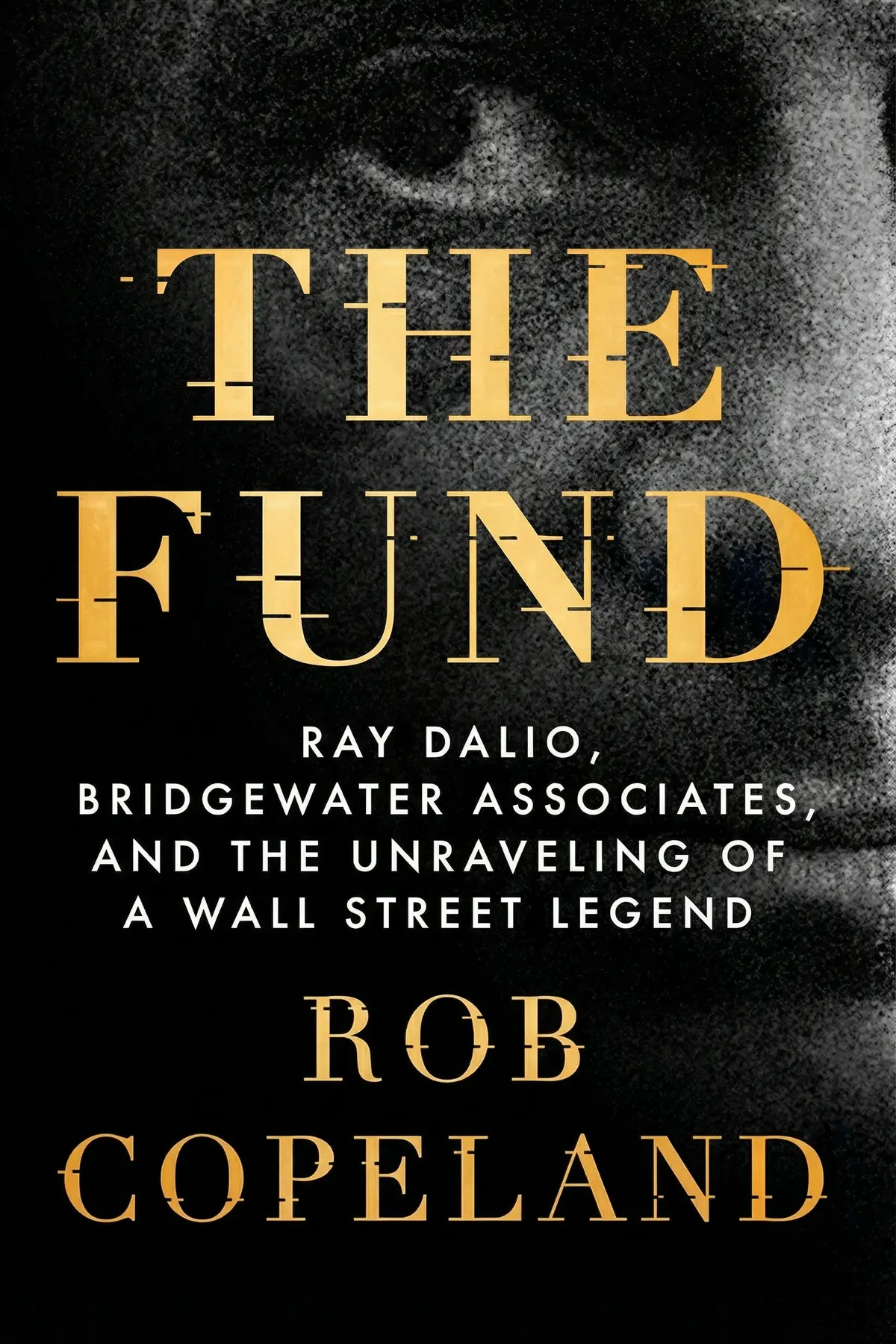
An inside account of how Ray Dalio's creed of radical transparency at Bridgewater turned into surveillance, internal trials and fear, and how a fund with average gains kept its legendary reputation.
1 min 03 sec
If you work inside a strong company culture, or run one, you may have felt a promise of openness turn into pressure. In The Fund, finance reporter Rob Copeland argues that Bridgewater Associates, the hedge fund Ray Dalio built, is the starkest case of that turn. Its famous creed of radical transparency, Copeland finds, became a system of scrutiny and control centered on one man, while the trading edge outsiders admired came from something far plainer than the legend suggested.
Copeland spent close to ten years reporting for the Wall Street Journal before moving to the New York Times, and he tells this story as a nonfiction thriller. It runs from a Thanksgiving dinner on Park Avenue in 1970 to a firm managing $125 billion, by way of internal trials, secret groups and a line of departing executives. Follow it and you gain a sharp set of warning signs for any workplace where the rules about honesty start serving the person who wrote them.
2 min 14 sec
A modest kid from Long Island ends up at a Park Avenue Thanksgiving table, then turns down a free trip to Europe. The skill that got him there would shape the firm he later built.
2 min 06 sec
A firm that banned sugarcoating also turned every employee into a trading card and spent nine months investigating its own co-CEO. Where does a feedback culture end and a courtroom begin?
2 min 00 sec
A former deputy attorney general joined a firm that claimed to prize candor and struggled to adjust to its intense surveillance and cautious climate. What he saw shows how openness can turn inside out.
2 min 08 sec
A recruit arrived fascinated by the idea of total candor. Within a short time the ratings and feedback had overwhelmed him. His story asks what a culture owes the people living inside it.
1 min 59 sec
Rival investors spent years trying to decode how Bridgewater traded. A co-CEO’s revolt and a secret inner group point to an answer much less exotic than Wall Street imagined.
1 min 59 sec
Personal tragedy, a pandemic he misjudged and a string of leadership changes should have dented the founder’s standing. Instead his wealth and influence grew, which says something about how reputations really work.
1 min 13 sec
The Fund leaves Bridgewater looking like a mirror image of its own sales pitch. A firm that promised to put truth above ego was, in Copeland’s account, organized around the ego of its founder: his reviews, his committees, his simple trading rules guarded by lifetime contracts. The young caddie who learned to charm powerful men on a golf course built an institution where charm hardened into control, and where feedback ran downhill far more easily than up.
The question the story leaves open is whether Dalio’s success came from skill and strategy, or from a culture driven by a hunger for control, by paranoia and by pride. Listeners can weigh the evidence themselves.
Wherever you work, the book gives you something to watch for. When a company talks loudly about honesty, look at who is allowed to criticize the person at the top, and what happened to the last one who tried. Notice when feedback tools start to need investigators. And when a firm’s results look ordinary while its mystique keeps growing, trust the record over the legend.
Radical transparency only works when the founder is transparent too.
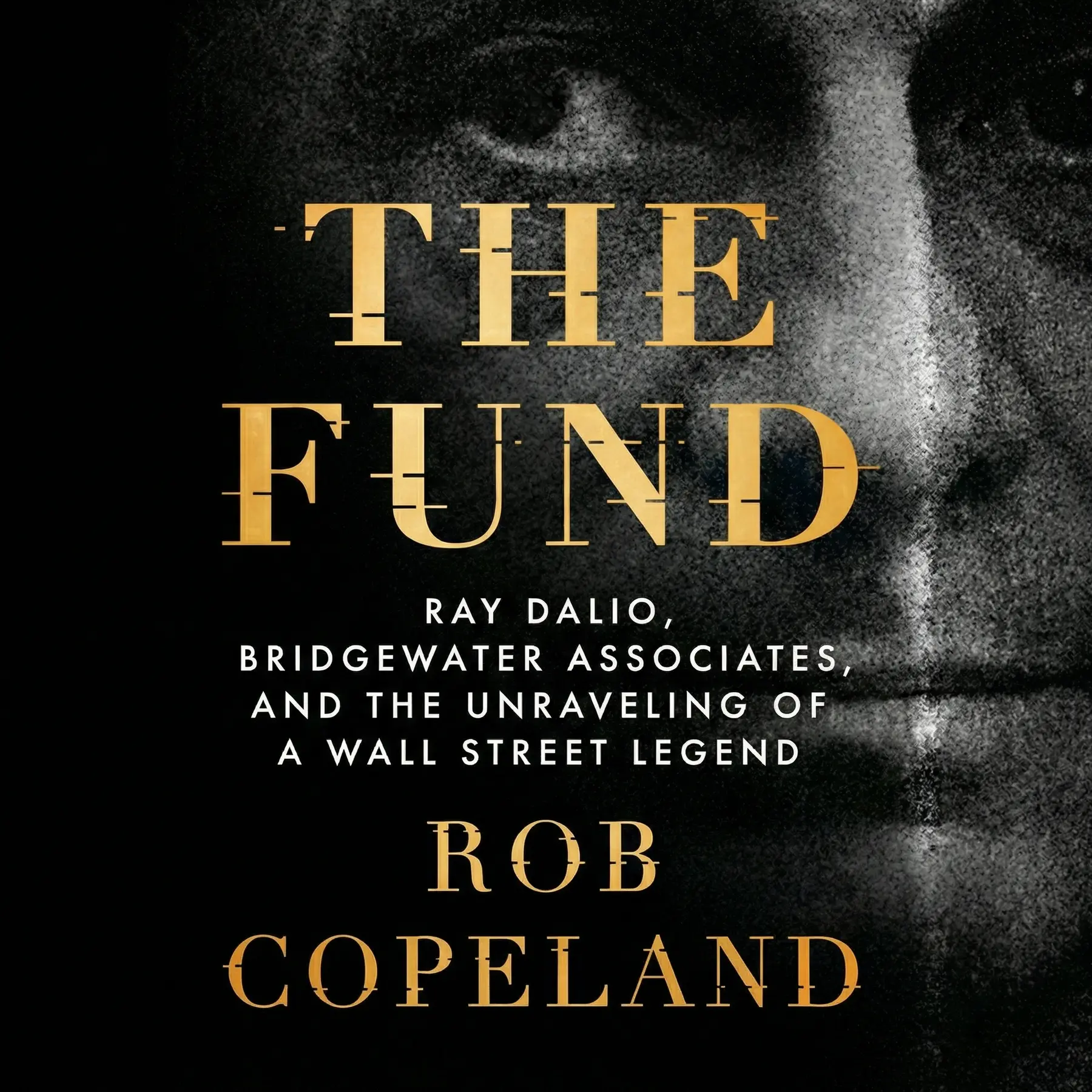
Bridgewater Associates became the world's leading hedge fund, managing $125 billion, and its founder Ray Dalio became famous for a management creed called radical transparency. Staff were told to give blunt feedback, rate one another constantly and live by a 90-page manifesto called The Principles. Rob Copeland, a finance reporter whose investigative work won awards, tells what that looked like from the inside. He follows Dalio from a modest Long Island upbringing and caddying at The Links Golf Club to running a firm where former FBI officers monitored staff behavior, a co-CEO faced a nine-month internal investigation and a committee named the Politburo guarded the rules. He traces the executives who clashed with Dalio, the recruit whose mental health collapsed, and the secret group that held the firm's trading knowledge. The book's sharpest claim is that Bridgewater's edge was neither magic nor machine: it was Dalio's own simple rules, protected by secrecy and a powerful reputation. Readers get a gripping Wall Street story and a clear set of warning signs for any workplace where honesty becomes a tool of control.
Managers and HR leaders running feedback or rating systems who want to see how they can go wrong.
Founders shaping a company culture around one strong set of values.
Finance professionals and investors curious about what really happened inside the world's leading hedge fund.
Rob Copeland is a finance reporter who joined the New York Times in late 2022. Before that he spent close to ten years at the Wall Street Journal, where his investigative reporting won awards. That background in digging into Wall Street institutions shapes The Fund, a nonfiction thriller about Ray Dalio and Bridgewater Associates.
Listeners find the material accessible and simple to process, packed with interesting observations and captivating anecdotes from beginning to end. The prose itself is quite immersive, while the journalism is commended for its meticulous investigation and extensive sourcing. Additionally, listeners appreciate the book's unsettling nature and wit, calling it an entertaining piece of juicy gossip. However, the work’s authenticity garners a variety of opinions from listeners.
Unbelievable. Copeland delivers a narrative that feels more like a horror-themed psychological thriller than a standard finance book. I found myself gripped by the sheer insanity of the workplace culture described within these pages, especially the bizarre rituals of 'radical transparency' that seem more like tools for humiliation than professional growth. The reporting feels incredibly deep, pulling from hundreds of sources to paint a picture of an empire built on the whims of one very peculiar man. While it leans heavily into the juicy gossip and interpersonal drama, that is exactly what makes it so hard to put down. It captures the same vibe as 'Empire of Pain' where you are just horrified by the lack of self-awareness displayed by the protagonists. This is essential reading for anyone curious about what happens when too much money meets a complete lack of boundaries.
Show moreAfter hearing so much buzz about Bridgewater’s internal culture, I finally dove into this exposé and was completely floored. Copeland has an incredible talent for taking what could be dry financial reporting and turning it into a compelling, high-stakes drama. The anecdotes about the 'log' and the constant grading of employees' 'believability' make the place sound like a dystopian '1984' remake set in Connecticut. It is genuinely scary to think that so much global wealth is managed in an environment that sounds this dysfunctional. The research is clearly extensive, as evidenced by the sheer number of specific conversations and emails quoted throughout. If you enjoyed 'Bad Blood' or 'American Kingpin,' you will absolutely love this journey into the ego of a billionaire. It’s funny, dark, and deeply informative all at once.
Show moreWow, what a chaotic and deeply researched dive into the underbelly of one of the world’s most secretive firms. I was particularly impressed by how Copeland managed to get so many people to talk despite the legendary NDAs protecting the company. The narrative flows perfectly, making even the most complex 'circle of truth' sessions feel understandable to a layperson. Not gonna lie, some of the stories are so insane that I had to check the footnotes to believe they actually happened. It’s a hilarious and terrifying look at how a billionaire can reshape reality for everyone around him. Even if you don't care about finance, the psychological study of the people who chose to stay in that environment is worth the price of admission. It is easily one of the best business books of the year.
Show moreRob Copeland has managed to pull back the curtain on the 'naked king' in a way that feels both visceral and meticulously documented. I was utterly gripped by the 'too-crazy-to-be-true' stories that seem to fill every single page of this volume. It is a rare book that can make you laugh out loud at the absurdity of a situation while also making your skin crawl. The level of detail regarding the internal surveillance and the 'pain buttons' is just mind-boggling. Personally, I think this serves as a vital counter-narrative to Dalio's own self-help books, which often gloss over the human cost of his methods. It is an engaging, fast-paced, and ultimately damning portrait of power without accountability. If you want to know what actually goes on behind those guarded gates in Westport, this is the book for you.
Show moreThis book is basically a front-row seat to a slow-motion train wreck. Rob Copeland has written an engaging, almost cinematic account of Bridgewater’s inner workings that exposes the hypocrisy behind Ray Dalio’s famous 'Principles.' The way the author describes the constant filming of employees and the public trials of executives like Greg Jensen is genuinely chilling. To be fair, I would have appreciated a bit more focus on the actual investment mechanics and how the 'machine' actually trades the markets. It feels like the book is 90% personality clash and 10% financial analysis, which might frustrate some serious investors looking for an edge. Still, the writing is sharp and the pacing is excellent. It is a fascinating look at the 'naked king' of the hedge fund world.
Show morePicked this up on a whim and couldn't put it down despite some of the heavier sections on corporate politics. The book moves at a breakneck speed, detailing the rise and eventual internal rot of a financial titan. Truth is, I walked away feeling like I understood the man behind the machine much better, even if I still don't understand the machine itself. My favorite parts were the descriptions of the high-level visitors, like Niall Ferguson, who were brought into the fold only to witness the madness firsthand. There are some moments where the author's bias seems a bit obvious, and the sources who talked clearly had axes to grind. Regardless of whose side you take, the storytelling is top-notch. It is a cautionary tale about what happens when you believe your own hype too much.
Show moreEver wonder how much eccentricity a multi-billion dollar fund can tolerate before it turns into a parody of itself? This book answers that question in spectacular, often cringe-inducing detail. Rob Copeland captures the 'insane' nature of the firm perfectly, showing how a quest for truth turned into a weapon for ego. The prose is punchy and the short chapters make it a very quick read for a 300-page book. I did feel like some of the 'insider' sources were portrayed a bit too heroically, which makes you wonder about the overall balance of the reporting. Still, the core of the story—the stripping away of Dalio's carefully curated image—is handled brilliantly. It’s a fun, biting, and ultimately sad look at a legendary figure. Highly recommended for fans of corporate drama.
Show moreIs Ray Dalio actually a genius, or just the world’s most disciplined cult leader? That is the question I kept asking myself while flipping through these chapters. The stories about the internal environment are certainly wild, and the author does a great job of making the complex social dynamics easy to digest. However, the book gets a bit repetitive after the first hundred pages. You get the point pretty quickly: the culture is toxic and the leader is a hypocrite who doesn't follow his own rules. Look, the gossip is top-tier and the reporting seems thorough, but I wanted more substance on the actual fund performance. By the time I reached the end, I felt like I’d read a very long tabloid article rather than a definitive corporate history.
Show moreFrankly, the first half of the book is a gripping five-star experience, but the momentum stalls significantly toward the end. The reporting on the early days of Bridgewater and the initial implementation of the 'Principles' is fascinating and provides great context. However, the author eventually falls into a pattern of describing one repetitive instance of workplace bullying after another. It starts to feel a bit one-note after a while. I also agree with other reviewers who noted that the actual investment strategy remains a total black box. If you're looking for juicy office drama, this is a goldmine. If you're looking for a serious analysis of Bridgewater's alpha generation, you will likely leave feeling empty-handed. It’s a decent read, but not quite the masterpiece the hype suggests.
Show moreThe chapter on the 'Principles' really highlights the central issue I had with this entire project: it is far too focused on character assassination. I was hoping for a balanced look at how the world's largest hedge fund actually navigated the markets over the last few decades. Instead, what we get is 300 pages of 'Ray is mean' and 'Greg is slimy.' It reads more like a long-form gossip column than a serious piece of financial journalism. While the writing is undeniably smooth and the stories are occasionally funny, the lack of actual investment insight is a major letdown. It feels like Copeland decided on the 'scam' narrative early on and only included sources that supported that specific view. I'm sure the culture is weird, but the book lacks the depth needed to be a truly great business biography.
Show moreIt is an investigative account of Ray Dalio and Bridgewater Associates, the hedge fund he founded. Copeland follows Dalio from a modest Long Island upbringing and caddying at a golf club to running a firm managing $125 billion, and argues that the creed of radical transparency, written down in The Principles, turned into a culture of surveillance, internal trials and fear centered on Dalio himself.
Rivals, including well-known investors such as Bill Ackman, struggled to work out how Bridgewater traded, and many assumed advanced artificial intelligence was behind it. Copeland reports that the real engine was Dalio’s own simple, rule-based decision-making, guarded by a secretive group called the Circle of Trust whose members signed lifetime contracts never to work at another trading firm.
According to Copeland, challenges went badly. Co-CEO Jon Rubinstein argued that The Principles bred fear and conformity, and he left the firm. Co-CEO Eileen Murray faced a nine-month internal inquiry over accusations that she hid a romantic relationship and misrepresented her role in an email, and she was demoted. Greg Jensen, once seen as the potential successor, saw his influence wane and grew frustrated with Dalio, and a recording of him criticizing Dalio further changed their relationship, though the Pure Alpha fund he led did well in 2022.
The book suggests checking whether honesty in a workplace flows in every direction, including toward the top. It warns that feedback and rating systems can overwhelm people, as they did a recruit named Joe Sweet, and that when enforcing a value requires surveillance, the value has changed. It also shows how a strong reputation can keep attracting support even when results are average.
It suits managers and HR leaders who run feedback cultures, founders building a company around a set of values, and anyone in finance curious about Bridgewater. Readers curious about The Principles, the manifesto Dalio wrote for his firm, will find a sharply different view of how those rules played out inside Bridgewater, told as a nonfiction thriller.
AUDIO SUMMARY AVAILABLE
Get the key ideas from The Fund by Rob Copeland, plus 5,000+ more nonfiction titles.