

13 min 46 sec
Available in: English
The Financial Diet: A Total Beginner’s Guide to Getting Good with Money
A beginner's plan for people living paycheck to paycheck. It covers four rules to stop the worst mistakes, a simple budget, investing early, negotiating pay, cooking cheaply and talking honestly about money.
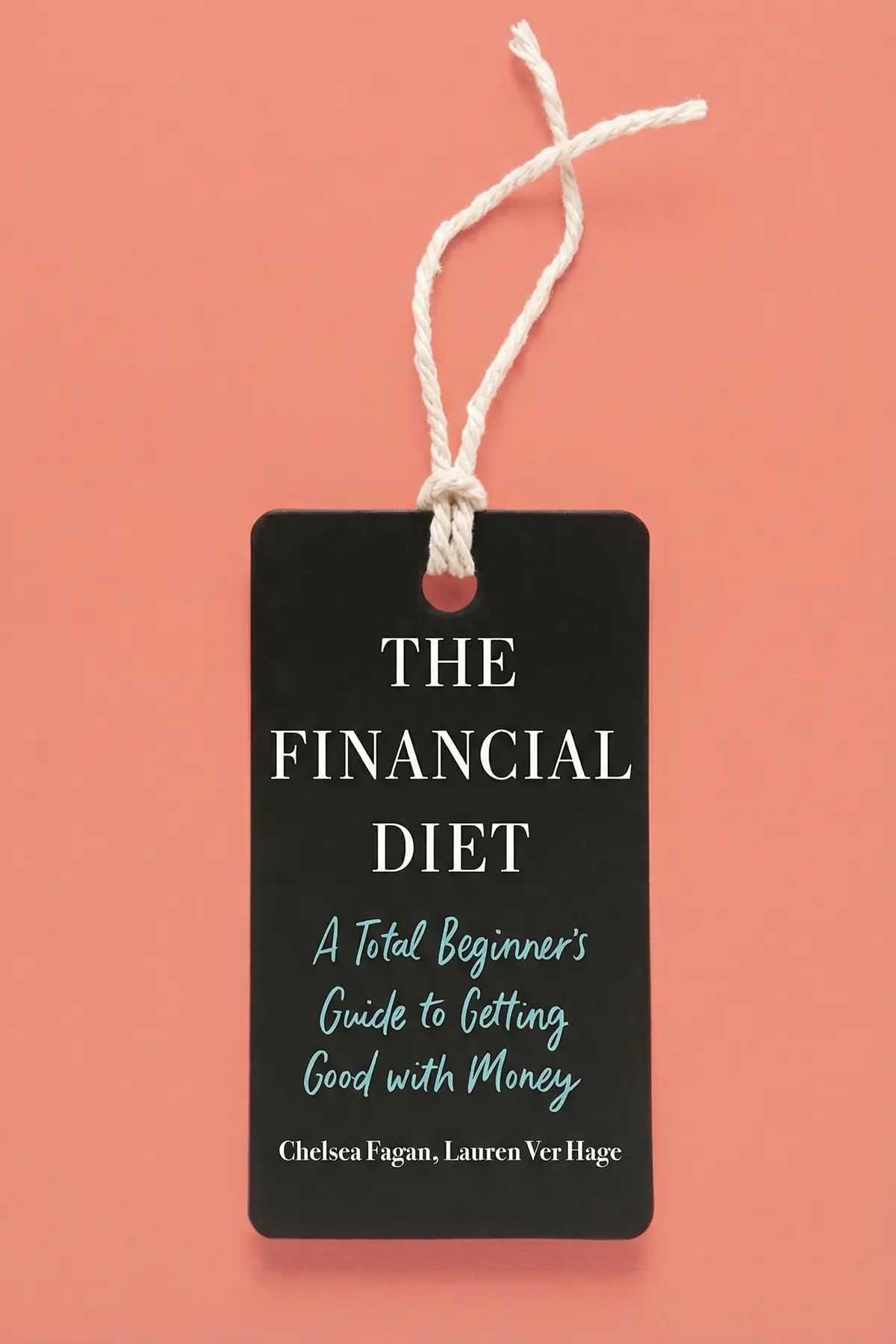
Table of Content
1. Introduction
53 sec
If your money tends to run out before the month does, and you check your balance with one eye closed, the fix is smaller than you might expect. In The Financial Diet, Chelsea Fagan and Lauren Ver Hage, co-founders of a personal finance media company of the same name, say the first step is simply to look: write down every dollar in and out, down to yesterday’s soda.
Their larger point is that getting good with money is a set of everyday habits, not a talent for spreadsheets. Face your numbers honestly, give each dollar a job as early as you can, and use money as a tool for a life you actually want. Along the way they cover cooking, careers and how to talk about pay. By the end you will have a budgeting rule to try tonight, a quick way to see what a purchase really costs, and a plan for your next salary conversation.
2. Four rules that stop money slipping away
1 min 40 sec
Most money trouble does not start with one big disaster. It starts with a few small habits that feel completely reasonable, including one the author caught herself in when she first became a company boss.
3. Map every dollar with a two-month budget
1 min 38 sec
A budget sounds like the opposite of adult freedom. The authors argue that without one you are lost, and a single coffee habit shows how much money can hide in plain sight.
4. See what a purchase really costs you later
1 min 30 sec
A $100 dress seems to cost exactly $100. One simple piece of arithmetic shows why that price is misleading, and why being young is a bigger financial advantage than most young people realize.
5. Build a safety net, then invest
1 min 39 sec
Investing calls up pictures of traders shouting on a stock exchange floor. The real first steps are much quieter, and one of them often comes with money your employer is ready to give you.
6. Get paid what your work is worth
1 min 36 sec
A volunteer job at a newspaper’s charity drive ended with copies of one woman’s work on executives’ desks. Good connections pay off over time, but they cannot make up for one conversation people tend to avoid.
7. Eat well for less with a stocked kitchen
1 min 41 sec
A frightening food bill often comes from chasing fancy online recipes and leaning on takeout instead of simple everyday cooking. The authors’ model is an Italian grandmother who never follows trends yet always has dinner ready.
8. Dream medium and talk openly about money
1 min 59 sec
Social media says anyone can have anything with enough hard work. The authors suggest a more modest goal, and they point to a subject people discuss even less willingly than their sex lives.
9. Conclusion
1 min 10 sec
The Financial Diet treats money the way a sensible eater treats food: no crash plans and no shame, just steady attention and a few firm rules. The authors are clear that you don’t have to obsess over money or build your life around it. You only need to understand it well enough that it supports your plans and does not block them.
Every habit in the book, from checking your balance twice a week to keeping garlic and olive oil in the cupboard, comes down to knowing what you have and putting it to work. The budget shows where the money goes, and the rule of 72 shows what it could become. A negotiated salary raises what comes in, and an honest conversation with a friend stops you from hiding from any of it.
If you do one thing this week, write down two months of income and spending and compare it with the 50/30/20 split. Then, before your next unplanned purchase, divide 72 by a realistic return and picture the price doubling, then doubling again. A $100 dress looks different once you can see the $800 it might have become.
About this book
What is this book about?
Plenty of young adults live from one paycheck to the next. They hope the card goes through and try not to look at the overdraft. Chelsea Fagan and Lauren Ver Hage argue that this is no surprise, because the world keeps urging people to spend and teaches them almost nothing about money. The usual advice is a scolding about avocado toast that ignores student debt. Their answer is a financial diet. It starts with four firm rules and an honest budget, then shows how money grows once it is invested early, using the rule of 72 to show what a purchase really costs over decades. From there the book widens. It covers getting paid what you are worth, cooking good food on a small budget, and keeping a healthy attitude toward money by dreaming medium and talking about it openly. Readers get a budgeting rule they can apply right away and a clear order of steps for starting to invest. They also get practical tactics for salary talks and for the kitchen, and a calmer way of thinking about money as a tool for the life they want.
Book Information
Who it's for
Young professionals scraping by
Young professionals living paycheck to paycheck who avoid checking their bank balance.
Graduates new to investing
Graduates with student debt who want a simple budget and a clear first step into investing.
Wanting practical money habits
Anyone heading into a salary talk or spending too much on takeout who wants practical, judgment-free habits.
About the Author
Chelsea Fagan
Chelsea Fagan is a writer who co-founded The Financial Diet, a personal finance media company, and has served as its CEO. She has written many books and is a keen home cook who lives in New York with her husband and dog. Lauren Ver Hage is a co-founder of the company and its chief design officer, responsible for the brand's visual side. She designed this book, the company's first.
Ratings & Reviews
Ratings at a glance
What people think
Listeners find this financial guide articulate and simple to follow, featuring delightful illustrations that enhance its aesthetic quality. The book acts as a strong starting point for those beginning their fiscal paths, assisting them in cultivating a balanced financial existence, and one listener highlights how it explains the impact of financial decisions. Furthermore, listeners admire its realistic perspective on money management and consider it an entertaining experience.
Top reviews
Roo
Lauren Ver Hage's illustrations are absolutely stunning and make the intimidating world of money feel approachable and even chic. Looking at my transaction history used to give me literal hives, but the 'nutrition facts' analogy helped me confront my spending without the usual shame spiral. This is a total beginner's guide that focuses on building a healthy financial life from the ground up, covering everything from recipes to relationship talks. Not gonna lie, I actually used the grocery list and the kitchen essentials tips immediately. It’s well-written, easy to understand, and looks great on a coffee table too. I’ve already recommended it to three of my friends who are still living that 'champagne brunch' lifestyle on a beer budget. This book is a game changer for millennials.
Show moreSophia
Wow, I finally feel like I have a handle on my spending habits after finishing this. This book is a fantastic jumpstart for anyone who feels overwhelmed by spreadsheets and investment jargon. It focuses on the big picture of building a complete, healthy financial life without making you feel like a failure for enjoying a latte once in a while. I loved the budget tracker tips and the advice on building an emergency fund first. To be fair, I mostly skipped the recipes, but the sections on career and home decor were surprisingly insightful. It’s rare to find a finance book that is actually a fun read. If you’re a millennial woman who is tired of being told to just 'work harder,' this is the practical, empathetic guide you’ve been looking for.
Show moreLucas
This guide was exactly what I needed to stop avoiding my bank account every Monday morning. To be fair, I went into this expecting a dry textbook, but I was pleasantly surprised by the practical approach and the gorgeous illustrations. The way it explains how today's small choices impact your long-term stability really hit home for me. I’m definitely not a 'finance person,' so having things broken down into simple steps felt like a massive weight off my shoulders. It's less about deprivation and more about loving 'Future You.' However, I did find some of the kitchen and wardrobe sections a bit unnecessary for a book about money. Still, it’s a fun read that provides a solid jumpstart for anyone feeling lost in their twenties.
Show moreSamira
Finally got around to reading this after seeing it all over Instagram and I’m glad I did. Living in a different country means some of the US-specific tax and housing stuff didn't apply to me, but the general mindset shift was worth the price. I especially loved the quote about loving 'Future You' as much as 'Today You.' It really reframed how I view my emergency fund. The book is well-written and the interview sections with various bloggers added a nice variety of perspectives, even if I didn't agree with the fashion advice. Buying an expensive designer work bag doesn't exactly scream 'financial diet' to me! Despite that, the practical tips on home cooking and automating my savings have already made a noticeable difference in my stress levels. A solid jumpstart for any young woman.
Show moreFah
Ever wonder why nobody teaches us the basics of 'adulting' in school? Chelsea Fagan fills that gap with a tone that feels like a conversation with a smart, slightly older sister. I particularly appreciated the chapter on money and relationships because that's a topic that usually gets ignored in finance guides. It helped me realize that being honest about my budget with my partner is the only way to build a real future. Some of the advice is a bit 'Pinterest-y,' like the focus on thrift store furniture, but the core message of living within your means is solid. The impact of financial decisions is explained through real-life examples that feel relatable rather than judgmental. It’s a well-written guide that covers more than just numbers—it covers how to actually live your life.
Show moreWittaya
The truth is, this is more of a lifestyle manual than a hardcore finance book. While I appreciated the focus on the emotional side of money, I felt like the actual financial 'meat' was buried under too many 'hot mess' stories. For example, the chapter on investing was incredibly breezy and left me with more questions than answers. To be fair, the section on negotiating a higher salary and managing credit scores was actually quite helpful. I also liked the 'dream medium' concept because it feels much more attainable than the usual toxic positivity found in career books. It’s a decent starting point if you’re a total novice, but if you already know what a 401k is, you might find this a bit too basic. It’s a mixed bag of great vibes and thin data.
Show moreTim
Picked this up because I wanted to stop being such a 'hot mess' with my paycheck every month. The visual layout is great and it certainly makes the topic of budgeting feel less like a chore. However, I found the structure a bit logical-leap-heavy, jumping from deep emotional trauma about debt to a recipe for turkey chili. In my experience, the glossary in the back was necessary because the text itself doesn't define complex terms very well in context. I did appreciate the advice on keeping credit utilization under 30%, which isn't something I’d heard before. It’s a fun, quick read that helps you feel like you’re doing a good job, but don't expect it to be a comprehensive encyclopedia of finance. It’s a starter kit, nothing more and nothing less.
Show moreMingkwan
Chelsea’s voice is just as relatable here as it is on video, but the pacing felt a bit off for a printed book. I’m a fan of TFD, yet I found myself wishing there was less focus on kitchen tools and more on the actual mechanics of investing. The advice to 'find a financial sherpa' felt a bit lazy considering I bought the book to be that sherpa for me! That being said, the sections on credit scores and the importance of checking your transaction history were very well-done. It’s a beautifully designed book that serves as a nice companion to the channel, but it lacks the depth of other personal finance classics. It’s great for a high-level overview of a 'grown-up' lifestyle, but seasoned savers won't find much new info here.
Show moreLook
As a longtime subscriber to the YouTube channel, I had high hopes that this book would be my financial bible. Frankly, the listicle-style format that works so well in a five-minute video feels shallow and disjointed when spread across two hundred pages. My biggest gripe is the questionable advice regarding homeownership, specifically the suggestion that a 3.5% down payment is a good move. Any basic financial literacy course will tell you that PMI will eat your savings alive. It’s a beautifully designed object, but the 'hot mess' anecdotes started to feel repetitive and a bit patronizing after a while. If you want a lifestyle book about Pinterest-worthy apartments on a budget, buy this. If you want to understand the mechanics of compound interest or diversified portfolios, look elsewhere.
Show moreRuangrat
Stop right there before you take the investing advice in this book to heart. I was shocked to see mutual funds described as 'low-risk' investments; that is dangerously misleading information for a beginner. As someone who works in the industry, seeing 'experts' suggest a 3.5% down payment on a house makes my blood boil. This book prioritizes aesthetics and 'Sex and the City' references over actual, sound financial principles. It relies way too heavily on swearing and 'relatable' failures rather than providing the nuts and bolts of wealth building. Frankly, it’s irresponsible to market this as a 'Total Beginner’s Guide' when it contains errors that could lead a young person into a debt trap. If you want to get good with money, buy a book by a financial professional, not a lifestyle blogger.
Show moreQuestions about this book
What is The Financial Diet about?
Chelsea Fagan and Lauren Ver Hage offer a beginner’s plan for getting money under control. It starts with four firm rules and an honest two-month budget, then explains investing early with the rule of 72. It also covers negotiating your salary, cooking cheaply like an Italian grandmother, and keeping a healthy attitude toward money by dreaming medium and talking about it openly.
What is the 50/30/20 budget rule in The Financial Diet?
The authors suggest splitting after-tax income three ways. Fifty percent goes to fixed costs like rent and utilities, thirty percent to variable lifestyle costs such as groceries, travel and nights out, and twenty percent to savings. The split gives you a yardstick. If lifestyle spending takes 40 percent and savings only 10, you can see exactly where to adjust.
How does the rule of 72 work?
Divide 72 by the yearly return on an investment to estimate how many years it takes your money to double. At 7 percent that is about 10.28 years, so $1,000 becomes roughly $2,000 in a decade. The authors use this to show that a $100 purchase today could instead be $200 in ten years, $400 in twenty and $800 in thirty.
What should I do before I start investing?
The authors name two steps. First, set up an emergency fund that covers a minimum of three months of living costs, kept apart from the money you use for everyday checking. Second, pay off debt that charges more interest than your investments would earn. After that, start with a retirement account at work such as a 401(k), where employers often match contributions, then consider IRAs and low-risk index funds.
Who should read The Financial Diet?
It is written for total beginners, especially young adults who live from one paycheck to the next, carry student debt or avoid looking at their bank balance. It also suits people who want more than spreadsheets, since it connects money to career moves, salary negotiation, home cooking and simple home skills that cut spending.
Readers also enjoyed



AUDIO SUMMARY AVAILABLE
Listen to The Financial Diet in 15 minutes
Get the key ideas from The Financial Diet by Chelsea Fagan, plus 5,000+ more nonfiction titles.
- 5,000+ titles
- Listen as much as you want
- 7-day free trial
- Cancel anytime









