
14 min 39 sec
Available in: English
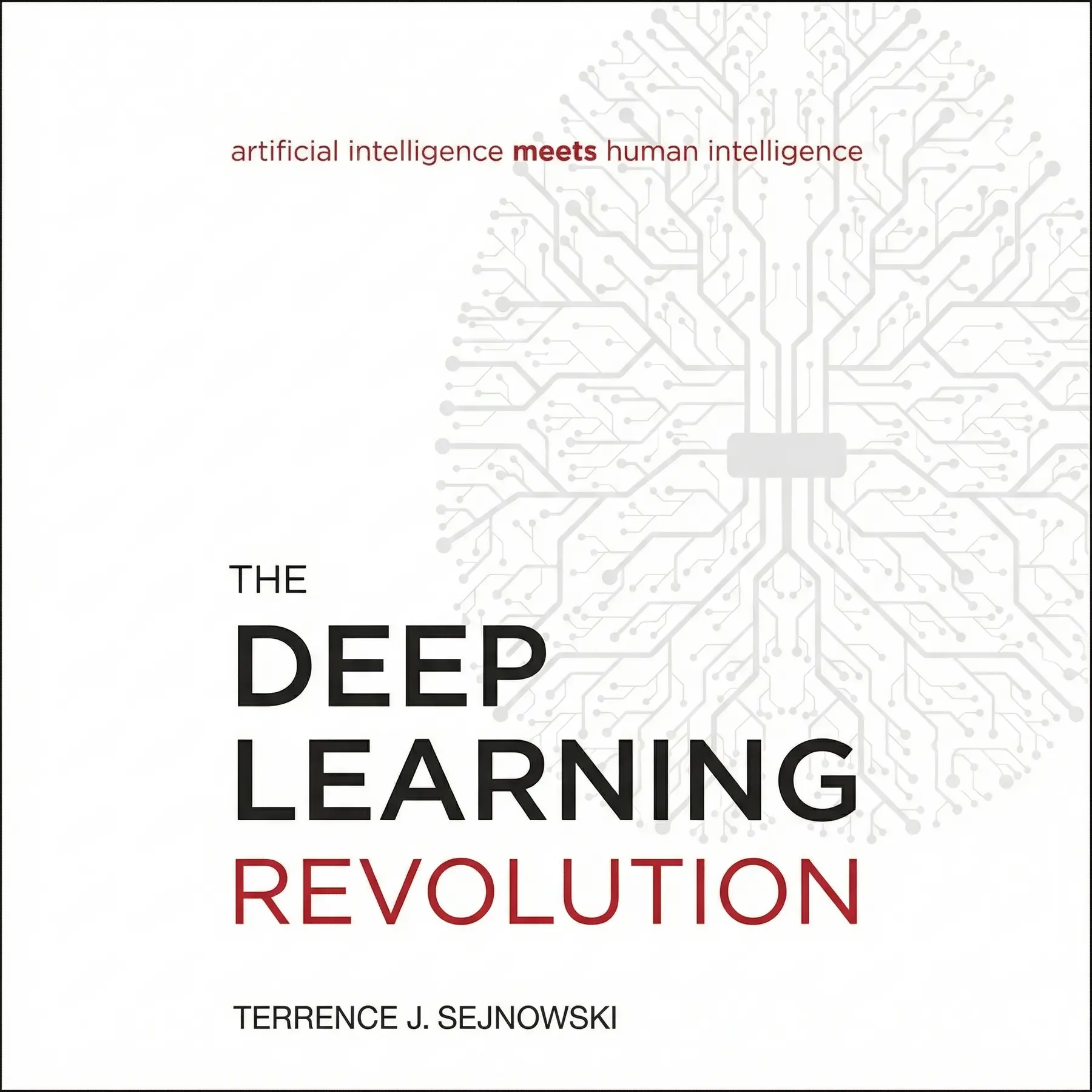
The Deep Learning Revolution
How a small group of researchers taught computers to learn from examples the way brains do, why that idea took thirty years to pay off, and what machines still cannot do.
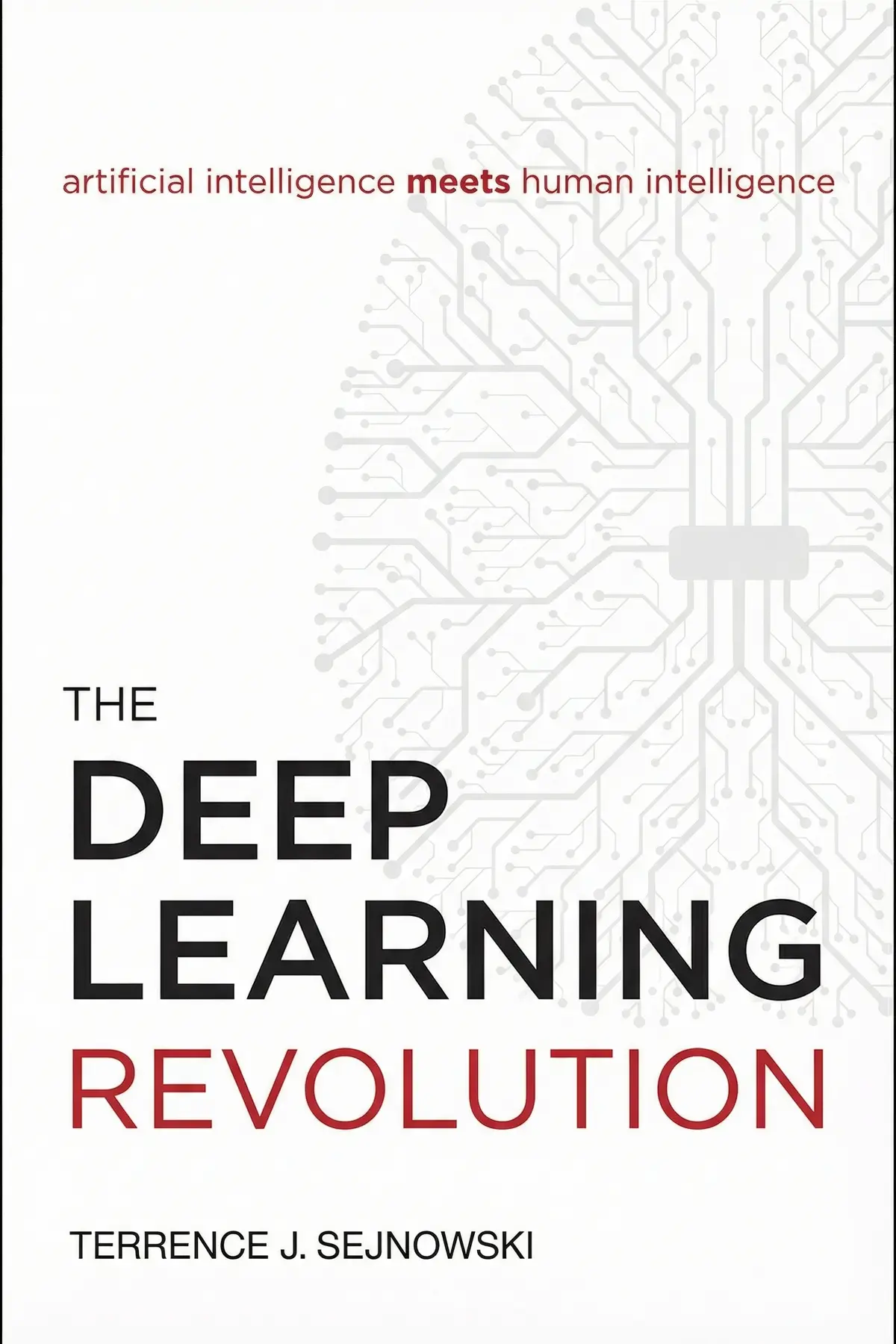
Table of Content
1. Introduction
58 sec
If artificial intelligence feels like a black box you are expected to have opinions about, the core idea behind it is simpler than it looks. Modern machines were never taught the rules of seeing or speaking; they learned from examples, the way a toddler learns faces. In The Deep Learning Revolution, Terrence Sejnowski, a Salk Institute neuroscientist who helped pioneer learning networks in the 1980s, tells how a few outsiders bet on that idea while the field dismissed them.
His argument is that intelligence can be grown from data by copying how brains learn. Once computers became fast enough, that bet reshaped translation, games, medicine and work. It also left gaps that only humans fill, and choices only humans can make. Follow the story and you will be able to explain how these systems actually learn, where they still fall short, and what that means for your classroom, your job and the news you trust.
2. Stop writing rules and let the system learn
2 min 08 sec
For decades the smartest people in computing tried to describe the world to machines one instruction at a time. A small group thought a two-year-old was the better model, and the establishment made them pay for it.
3. Borrow the brain's trick for recognizing a voice
1 min 58 sec
You can pick out one familiar voice through a terrible phone line without knowing how you do it. That everyday feat became the blueprint for machines that now see and listen, and it explains their oddest habit.
4. Use noise and errors as tools for learning
1 min 51 sec
Brain cells sometimes fire for no reason at all, which looked for years like a design flaw. Two researchers decided it was a feature, and paired it with a method that turns every wrong answer into progress.
5. Learn what let a thirty-year-old idea take over
2 min 10 sec
The rebels had a design they trusted and almost nothing to run it on. Then chips built for video games and the clutter of the internet changed everything, and a board game gave the world its proof.
6. Know the human strengths machines still lack
2 min 12 sec
A machine can beat a world champion and still be puzzled by a person carrying an umbrella on a sunny morning. The reason says a lot about where your own judgment remains hard to replace.
7. Use learning machines wisely and avoid being fooled
2 min 14 sec
The same technology that spots disease in an X-ray can write a student’s essay or put false words in a politician’s mouth. Sejnowski weighs the promise against the damage and argues the outcome is still open.
8. Conclusion
1 min 08 sec
Sejnowski’s story begins with a few researchers who were ignored for studying babies instead of logic, and ends with their idea running phones, cars and hospitals. What it adds up to is a new way to think about intelligence. It is grown, from examples and errors, in networks of simple parts, whether those parts are cells or chips. That origin explains both what the machines do brilliantly and where they stumble. They have absorbed patterns from oceans of data, but they have never pulled a hand back from a hot stove.
That gives you a working stance. When a system impresses you, remember it found patterns in what it was shown, and ask what it was never shown. When it hands you a convincing video or a polished essay, check it before you trust or reward it. And put more of your own effort into what bodies, emotions and lifelong adjusting give you, like the common sense that explains an umbrella on a sunny day.
The rebels copied nature’s best design to build machines that learn. Deciding what those machines are for is the part nobody can copy.
About this book
What is this book about?
For decades, artificial intelligence meant writing rules: instructions about whiskers and ears to help a computer spot a cat. It barely worked. Terrence Sejnowski was one of a handful of researchers in the 1980s who bet on a different idea. Computers, they argued, should learn the way babies do, by absorbing huge numbers of examples and adjusting, just as networks of neurons do in the brain. Sejnowski tells the story from inside. He covers the years when funding dried up and papers were rejected, the brain-inspired methods he and Geoffrey Hinton developed, and the moment when faster chips and the internet's flood of data finally let deep networks recognize images, translate languages and beat the world champion at Go. He also looks at what is still missing. Machines lack bodies, emotions and common sense, and their rise brings real problems in classrooms, jobs and the spread of fake content. Readers get a clear account of how modern AI actually learns, why it succeeds where it does and fails where it does, and which choices are still up to people.
Book Information
Who it's for
Professionals using AI daily
Professionals who use AI tools daily and want to understand how they actually learn.
Rethinking training and jobs
Teachers and team leads rethinking assessment, training and jobs as machines take on more work.
Curious about deep learning
Curious readers who want the inside story of deep learning from one of its pioneers.
About the Author
Terrence J. Sejnowski
Terrence J. Sejnowski holds the Francis Crick Chair at the Salk Institute for Biological Studies and is a professor at the University of California, San Diego. Trained in physics at Princeton and in neurobiology at Harvard Medical School, he helped pioneer learning algorithms for neural networks in the 1980s and developed Independent Component Analysis. He is president of the NeurIPS Foundation, has been elected to all four US national academies, and received the 2024 Brain Prize.
Ratings & Reviews
Ratings at a glance
What people think
Listeners find the book offers extensive depth on deep learning and acts as an outstanding primer on artificial intelligence. Furthermore, the performance earns positive remarks, with listeners characterizing the reading as interesting.
Top reviews
Nook
Finally got around to reading this, and it’s easily one of the best perspectives on the machine learning boom I've seen. Unlike many AI books that focus only on the last five years, Sejnowski takes us back to the 80s to show the struggle of the connectionist movement. The way he describes neurons 'voting' on their experience is such a clear way to visualize complex data processing. It’s part memoir, part science history, and part philosophical inquiry. Not gonna lie, some parts are heavy on the math, but the writing quality is top-notch. It makes you realize that the deep learning revolution wasn't an overnight success—it was a decades-long battle against the status quo.
Show moreMilk
This isn't just a book about code; it's a deep dive into what intelligence actually means. I was captivated by the idea that our brains don't follow checklists. We process the whole picture at once, combining posture and walk into instant recognition. Sejnowski explains how he and Hinton tried to replicate this using artificial neurons that strengthen their connections through experience. The book perfectly captures the 'magic' that happened when these networks were finally fed enough data. From defeating Go champions to spotting fraud, the applications are mind-blowing. It’s a comprehensive, authoritative, and deeply personal look at the technology that is currently reshaping our entire world. Highly recommended for the intellectually curious.
Show moreGabriel
To be fair, you need to understand that this is a historical overview, not a technical 'how-to' manual. Once you accept that, the book is a masterpiece. It bridges the gap between biology and silicon in a way that few other authors can. I was particularly struck by the discussion on 'common sense' and how current AI systems lack the sensory experience of a toddler. It’s a sobering reminder that we still have a long way to go. The prose is elegant and the anecdotes about the NIPS conference and early research are gold for any AI history buff. It’s an authentic, first-hand account of a revolution that is still very much in progress.
Show moreSirinat
The chapter on Boltzmann machines alone was worth the entry price for me. While some other reviews seem bothered by the memoir-like tone, I found that hearing about the evolution of AI directly from one of its founders added a layer of depth that a dry textbook simply cannot provide. Sejnowski explains the transition from the rigid, rule-based systems of the 80s to the fluid, data-driven approach of today with remarkable clarity. He draws brilliant parallels between biological learning and the mathematical neurons we now use. It isn't just about the algorithms; it’s about the very nature of thought. This is an essential read for anyone wanting to understand the foundation of the current technological landscape.
Show moreBoss
Sejnowski provides a fascinating look at how neural networks are essentially a biological democracy. For years, the AI establishment hated the idea of connectionism, but this book proves that the rebels were right all along. I particularly enjoyed the sections comparing the energy efficiency of the human brain to a petascale supercomputer; it really puts our current technology into perspective! My only gripe is that some of the technical sections are a bit dense. You’ll need a fair amount of prior knowledge to fully grasp the math behind backpropagation. Still, for a historical overview of how we moved from logic-based AI to the data-driven world of today, this is an excellent and deeply informative resource.
Show moreSupranee
Ever wonder how we actually got to the age of ChatGPT and self-driving cars? This book answers that question by tracing the long, often ignored history of neural networks. The author does a great job of explaining how the 'AI rebels' looked at nature—birds flying, babies hearing—to realize that intelligence is grown from data, not programmed. It was refreshing to read about the role of GPUs and the internet in finally giving these old theories the 'engine' they needed to actually work. It’s a bit technical in the middle, and Sejnowski does talk about his own work quite a bit, but the historical context is invaluable for anyone working in tech today.
Show morePatcharaporn
As someone who follows the AI space closely, I found this to be a bit of a mixed bag. The first half is a solid history lesson. It captures that radical idea of the 1980s: that computers should learn like babies rather than following a checklist of rules. I loved the bicycle analogy for connectionism—it really makes the concept of neural weights click. However, the book loses its way in the final third. The discussion on the societal impact of AI and the job market feels very generic and doesn't offer much that you haven't already read in a dozen Sunday op-eds. It’s a decent enough primer on the 'why' of deep learning, even if the 'how' is sometimes buried under too much personal history.
Show moreYuki
Picked this up looking for a clear explanation of how AlphaGo works, and while I got some of that, the rest felt uneven. Sejnowski is clearly a brilliant pioneer, and his excitement for the field is infectious, but the writing is occasionally too academic for a general audience. I appreciated the insight into how randomness helps brains escape 'bad solutions,' but then the text would pivot into a list of people the author has worked with, which slowed the momentum. It’s not a terrible book by any means. It just feels like it needed a stronger editor to decide if it wanted to be a textbook or a biography. A middle-of-the-road read for those with a lot of patience.
Show moreNoppadol
I really struggled to stay engaged with this one and eventually just had to put it down. The book tries to be two things at once: a casual history of the AI rebels and a deeply technical manual on learning algorithms. Unfortunately, it fails at both. The memoir sections are dry and feel like a lot of self-flattery, while the technical parts—like the explanation of Boltzmann machines—are dense and poorly explained for a layperson. Truth is, I have a decent background in tech terms, but I still found myself lost in the jargon. It's a bit of a slog. If you aren't already an expert in neural networks, you’ll probably find the pacing frustratingly inconsistent.
Show moreSomchai
The title is incredibly misleading and, quite frankly, I felt cheated by the marketing. I expected a deep dive into the technical 'how-to' of neural networks, but instead, I got a scattered memoir of Terrence Sejnowski’s career. It’s very lightweight. While he mentions the early days of connectionism and his kinship with other pioneers like Hinton, there is almost no technical substance to the writing. He glides over the actual development of deep learning architectures just to talk about who he met at conferences. For anyone looking for an actual explanation of how these systems function or where the field is going, look elsewhere. This is just a collection of historical anecdotes that fails to deliver on its grand promise.
Show moreQuestions about this book
What is The Deep Learning Revolution about?
Terrence Sejnowski tells how a small group of researchers in the 1980s rejected rule-based artificial intelligence and instead built networks that learn from examples, the way brains do. Mocked and underfunded for decades, their approach took off once fast graphics chips and internet-scale data arrived. It then powered image recognition, Google Translate and AlphaGo. The book also covers what AI still lacks and the social choices it forces.
What is backpropagation according to Sejnowski?
Backpropagation is the method that lets an artificial network learn from its own mistakes. When the network gives a wrong answer, it adjusts its connections automatically, strengthening the pathways that led toward correct answers and weakening the ones that did not. Together with brain-inspired ideas like the Boltzmann machine, which uses randomness to escape poor solutions, it gave neural networks a way to improve without hand-tuning.
Why did deep learning take so long to work?
Sejnowski says the design was sound but lacked fuel, like a racing car with a bicycle engine. Three things changed together. Graphics processors built for video games could run thousands of calculations at once. The internet produced vast amounts of training data. And researchers refined their methods, making networks deeper. After roughly thirty years of waiting, the networks could finally show what they could do.
What can AI still not do, according to the book?
Sejnowski argues that current systems lack direct experience of the physical world, and so lack common sense. A person instantly guesses why someone carries an umbrella on a sunny day, while a machine may only offer a statistically likely answer. Humans also learn through emotions such as fear, curiosity and empathy, and keep adapting throughout life, something researchers are only beginning to build into machines.
How can I apply the ideas in The Deep Learning Revolution?
Remember that AI systems find patterns in what they were shown, so ask what they were never shown before trusting them. Treat striking videos and articles as unverified until traced, since deep learning can fabricate convincing fakes. In teaching or management, assess the thinking machines cannot do. And invest in your human edge: context, judgment about people and adapting to the unfamiliar.
Readers also enjoyed









AUDIO SUMMARY AVAILABLE
Listen to The Deep Learning Revolution in 15 minutes
Get the key ideas from The Deep Learning Revolution by Terrence J. Sejnowski, plus 5,000+ more nonfiction titles.
- 5,000+ titles
- Listen as much as you want
- 7-day free trial
- Cancel anytime









