

15 min 12 sec
Available in: English
 ไทย
EnglishไทยThe Coming Wave: AI, Power, and Our Future
Suleyman explains why AI and genetic engineering will spread enormous power to nearly everyone, why history says they cannot be stopped, and why containing their risks takes more than new laws.
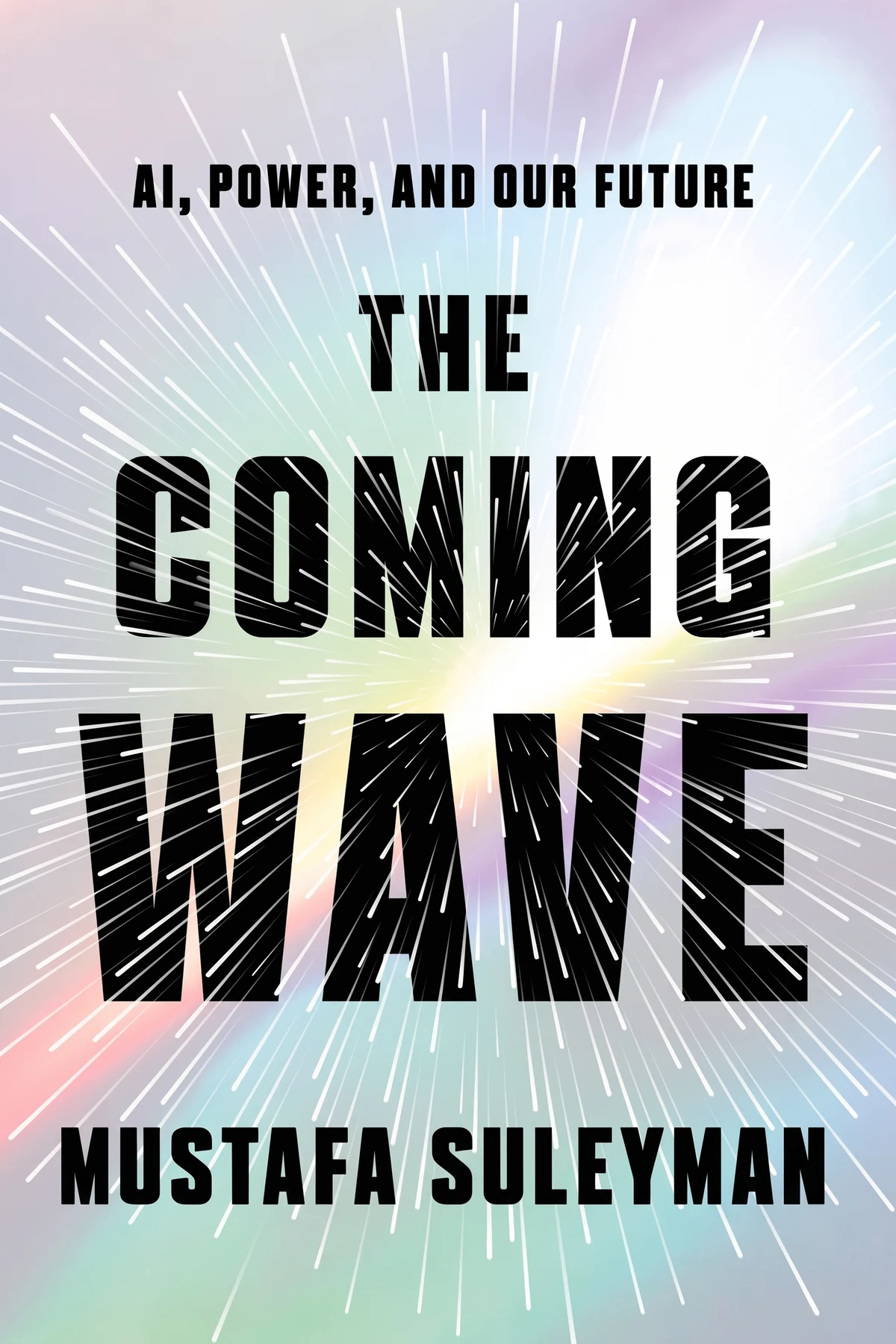
Table of Content
1. Introduction
1 min 03 sec
If artificial intelligence still feels like a handful of chat tools, the next decade may come as a shock. In The Coming Wave, Mustafa Suleyman, co-founder of the AI company DeepMind, argues that AI and genetic engineering will put expert-level power in nearly everyone’s hands at almost no cost. That cheapness is the core of his warning. The same tools that can cure old diseases or help an elderly person with chores can create a new pathogen or crush a protest.
His case rests on history as much as on technology. Useful inventions have always escaped their makers’ plans, and attempts to ban them have always failed. So the wave will arrive, and the real task is deciding together how to contain what it brings. Follow his argument and you gain a steady way to read AI headlines, a clear picture of which office jobs are exposed, and a sharper sense of why calls for regulation open the debate rather than settle it.
2. Spot the side effects hidden in every invention
1 min 59 sec
A device built to help blind people became the foundation of the music business, and a Bible-printing machine shook the most powerful institution in Europe. Inventors, it turns out, are poor judges of their own inventions.
3. See that banning a useful technology never works
2 min 05 sec
Rulers have tried to outlaw weapons, silence presses and smash machines. Every time, the technology outlived the ban. The pattern says something uncomfortable about how we should prepare for AI.
4. See how far AI and biotech have already come
2 min 05 sec
Machines that print custom DNA once weighed tons and cost a fortune. Today a benchtop model can cost as little as $25,000. The future many people are waiting for has quietly become the present.
5. Prepare for automation reaching office work
2 min 08 sec
When factories automated, the lost jobs were replaced by service and office work. That safety net held for generations. Suleyman explains why the next round of automation may have nowhere comfortable to send people.
6. Grasp why cheap power threatens the state itself
2 min 27 sec
A program that taught itself to beat world champions at Go hints at what a self-teaching cyberattack could do to a power grid. The damage would go far beyond dark hospitals and lost money.
7. Look beyond laws when you think about AI rules
2 min 12 sec
Everyone from Beijing to Washington says regulation is the answer, and they point to cars as proof. Look closer at the car, Suleyman says, and the comparison reveals what lawmakers usually leave out.
8. Conclusion
1 min 13 sec
Suleyman’s book is finally an argument about who decides. The tools themselves have no preference between healing and harm. A robot can carry an elderly person’s shopping or beat back a crowd; a DNA printer can end an old disease or start a new one. History says such tools will spread whatever anyone wants, and that their makers will be surprised by what follows, as Gutenberg was when his Bible press helped break the power of the Church. What remains open is how societies weigh the gains against the dangers, and whether they do it before events do it for them.
That leaves a few things worth practicing. Read every AI or biotech announcement with two columns in mind, the benefit and the likely revenge effect. Look honestly at how much of your own work is cognitive manual labor, and build skills beyond it while there is time. And when someone says regulation will handle it, remember the car: rules helped, but the real settlement was a set of values people agreed to live with.
Suleyman’s demand is the simplest one of all. Talk about this now, in public, while the wave is still forming.
About this book
What is this book about?
Artificial intelligence already translates speech, drives cars and writes text, and genetic engineering has fallen in price until a DNA printer fits on a bench. Mustafa Suleyman, who co-founded DeepMind, argues that these two technologies form a wave that will remake economies, bodies and governments. It could make people richer and healthier than ever. It could also bring mass joblessness, violence and failing states. His angle is historical. From Gutenberg's press to antibiotics, successful inventions have produced side effects their makers never imagined, and attempts to ban them, from a pope's crossbow ban to machine-breaking artisans, have failed. The coming wave adds something new: it makes power cheap, so the same tools help a small business owner and a terrorist alike. Readers get a clear frame for judging AI and biotech news, a sober view of which office jobs are exposed, a vivid picture of how self-teaching systems could threaten infrastructure, and an explanation of why regulation alone, as the history of the car shows, cannot settle what risks a society will accept.
Book Information
Who it's for
Curious about job exposure
Office workers in writing, translation, data or customer service who want to know how exposed their jobs are.
Deciding on AI adoption
Founders and team leads deciding how to adopt AI without being blindsided by its side effects.
Citizens following tech debates
Curious citizens who want a clear frame for debates about AI, biotech and regulation.
About the Author
Mustafa Suleyman
Mustafa Suleyman, born in 1984, left his studies at Oxford to help start a non-profit telephone counseling service. He co-founded the AI company DeepMind, later acquired by Google, and spent about ten years there before serving at Google as vice president of AI product management and AI policy. In 2022 he co-founded Inflection AI, which works on machine learning and generative AI, and he has also been CEO of Microsoft AI.
Ratings & Reviews
Ratings at a glance
What people think
Listeners find the writing to be accessible and well-crafted, providing a comprehensive analysis of AI's many facets alongside useful insights. They praise its instructive nature, as one listener points out it requires no prior AI expertise, and its intellectually stimulating content that widens their grasp of the technology’s potential. The delivery style prompts varied feedback; while some deem it captivating, others feel uneasy about the descriptions of hypothetical disasters. Listeners admire the intellectual depth, with one portraying it as a mind-stretching vision for the future.
Top reviews
Bella
Not many books can claim to be both a technical primer and a high-stakes thriller, but Suleyman manages it here. He masterfully breaks down why the current wave of AI is fundamentally different from the technological revolutions of the past. The way he describes the impending shift from 'Artificial Intelligence' to 'Artificial Capable Intelligence' (ACI) is a revelation for anyone trying to understand what comes after chatbots. It is clear he wrote this for the masses, as the prose is entirely accessible without sacrificing the intellectual rigor of his arguments. I walked away with a much deeper understanding of how biotech and AI are going to merge to transform our health and our security. This is an essential read for anyone who wants to be prepared for the disruptions heading our way. Highly recommended.
Show moreNannapat
After hearing Mustafa Suleyman interviewed, I expected a lot of hype, but what I got was a deeply sobering and brilliant analysis. This book is a masterclass in explaining the 'Bionic Tragedy of the Commons'—why rational self-interest leads us to build things that might eventually destroy us. He doesn't shy away from the scary stuff, like the potential for DNA synthesizers to be used by terrorists to create novel pathogens. However, he also offers a glimmer of hope by laying out a series of steps we can take to maintain some level of control. The narrative style is engaging, and he does a great job of connecting historical patterns to our current digital crossroads. It’s a mind-stretching vision for the future that I couldn’t put down until the very last page.
Show moreNit
Mustafa Suleyman provides exactly the kind of clear-eyed, expert guidance that our society desperately needs right now as we navigate this transition. His book is a comprehensive and fascinating deep dive into the dual nature of our most powerful technologies. It requires no previous AI knowledge, yet it manages to broaden your understanding of the potential benefits and catastrophes in equal measure. I was particularly impressed by the rigor he applies to the concept of the 'containment problem,' arguing that we need a global-scale system of regulation immediately. While the message is urgent and at times frightening, the book remains readable and surprisingly optimistic about our capacity to adapt if we act now. This is a brilliant work that should be mandatory reading for anyone who cares about where humanity is headed.
Show moreSomsak
Picked this up expecting the usual tech-industry optimism, but I found a deeply responsible and thorough exploration of our near future. Suleyman captures the 'nuclear arms race' atmosphere of current AI development perfectly, explaining why no single company or nation can afford to stop first. The book is packed with valuable information that challenges the reader to think about the long-term survival of the nation-state in an era of decentralized power. I particularly appreciated the discussion on how AI could take over complex goals with minimal oversight, which he terms ACI. It’s not just about chat bots; it’s about a total shift in how we interact with reality itself. Personally, I think this is the most important book of the year. Five stars for the clarity and the courage to speak plainly.
Show moreSupranee
Finally got around to reading this, and I was struck by how much more grounded it is than the typical 'tech-bro' manifesto. Mustafa Suleyman doesn't just hype the technology; he acknowledges that AI and biotech are dual-use tools that could easily be turned toward destructive purposes. The concept of 'human-tech entanglement' was particularly thought-provoking, showing how we become dependent on these systems before we even understand how they work. I also appreciated that he didn't require the reader to have a PhD in computer science to follow his logic. There are a few moments where the prose feels a bit like a sales pitch for his new company, Inflection AI, but those are easy enough to ignore. Overall, it’s a rigorous and essential look at the containment problem that society needs to address immediately.
Show moreTanawan
Wow, this was a mind-stretching experience that changed how I view the stability of our current liberal democracies. Suleyman paints a vivid picture of a world where deepfakes and automated misinformation make it almost impossible to distinguish fact from fiction. My biggest takeaway was the urgency of the 'containment' issue—the idea that we’ve opened a Pandora's box that we don't yet know how to close. The author’s background as a DeepMind founder gives him immense credibility, and he uses it to warn us that the train has already left the station. Some of the chapters on historical comparisons felt a little stretched, but the core analysis of AI’s impact on the job market is spot on. It’s a fascinating, if somewhat terrifying, guide to the next decade of human history.
Show morePensri
As someone who has been tracking AI since the early days of DeepMind, I really wanted to love this insider perspective. The truth is that while Suleyman provides some excellent food for thought regarding 'containment,' the book often feels self-contradictory. One chapter argues for regulation. The next explains why it’s impossible. This leaves the reader feeling more confused than empowered by the end of the narrative. To be fair, the sections explaining Artificial Capable Intelligence (ACI) are quite educational and help bridge the gap for those without technical backgrounds. It’s a decent overview for late 2023, but I suspect it will feel quite outdated by the time 2025 rolls around. It is worth a skim for the warnings about DNA synthesizers alone.
Show moreMontri
Look, the truth is that this is the typical example of a book that should have been a long-form essay in a decent newspaper. If you already spend time reading the science and technology sections of the press, you aren't going to learn much in terms of new AI developments. What remains is a text that is endlessly repetitive and full of points that have been made better elsewhere by other futurists. However, it’s still worth a look simply because Suleyman has been at the forefront of the industry for so long. He does a good job of moving past the hypothetical 'Terminator' scenarios to focus on very concrete, present-day dangers. It's just a pity that the core message is drowned in such a long-winded and often chaotic presentation.
Show moreNikolai
Ever wonder why the people who built these systems are now the ones sounding the loudest alarms? This book provides a chilling answer by exploring the intersection of AI and synthetic biology, though it often feels like it's trying to cover too much ground at once. Suleyman argues convincingly that the democratization of these tools could allow 'bad actors' to design new viruses, but he gets bogged down in repetitive historical analogies. While the gravity of the future threats is clear, I found the middle section of the book to be a bit of a slog. It’s an important read for the insights it provides into the tech industry's mindset, but it definitely could have used more concise editing to keep the momentum going. Still, for those new to the topic, it offers a solid and scary overview.
Show moreJoe
This book is so rambling and obsessed with tangents that the core message gets fully buried under a mountain of needless historical comparisons. Mustafa Suleyman clearly knows his stuff as a DeepMind founder, but he desperately needed a more aggressive editor to trim the repetitive fluff. Frankly, the text fails to find that sweet spot between being understandable for a layman and providing fresh insights for those of us who follow tech news. Instead, it feels like a collection of ideas that would have worked better as a concise magazine essay rather than a 300-page slog. While the warnings about AI and biotechnology are certainly urgent, the delivery is so wordy it actually became frustrating to finish. It’s a real shame because the topic is genuinely fascinating, but the execution here is a mess. I honestly regret the time spent.
Show moreQuestions about this book
What is The Coming Wave by Mustafa Suleyman about?
Suleyman argues that artificial intelligence and genetic engineering together form a technological wave that will remake economies, health and governments. Because these tools make power cheap and widely available, they can make life richer and healthier or bring joblessness, violence and failing states. History shows such technologies always produce unintended side effects and cannot be banned, so societies must recognize the risks early and decide together how to contain them.
What are revenge effects in The Coming Wave?
Revenge effects are the unintended consequences of successful technologies. Suleyman points to antibiotics, prescribed so widely that drug-resistant diseases emerged, and to space launches so frequent that orbiting debris now threatens future missions. Facebook and Twitter, he notes, ended up speeding the spread of disinformation once millions relied on them for news. He argues these effects grow as a technology spreads and users reshape it.
Which jobs does Suleyman think AI will replace?
He expects AI to take over what he calls cognitive manual labor: data entry, customer service, writing emails, drafting summaries, translating documents and creating content. In earlier waves of automation, lost factory jobs were offset by growing service work. Suleyman’s worry is that AI targets exactly those service roles, and it is unclear what new jobs, if any, will replace them.
Does Suleyman think regulation can solve the risks of AI?
Not on its own. He notes that cars were made safer by regulation, but they spread slowly, while AI and biotech change week by week and legislation lags by years. Even with cars, societies accepted sprawl, pollution and close to a million and a half road deaths a year. Real containment, he argues, also depends on social norms, values and a shared weighing of risk against reward.
How can I apply the ideas in The Coming Wave?
Read each AI or biotech advance with both its benefit and a possible revenge effect in mind. Review your own work for tasks a capable AI could already do, and invest in skills beyond them. In your team or organization, plan for side effects instead of debating whether a tool should exist, and openly agree which risks you will accept for which benefits.
Readers also enjoyed








AUDIO SUMMARY AVAILABLE
Listen to The Coming Wave in 15 minutes
Get the key ideas from The Coming Wave by Mustafa Suleyman, plus 5,000+ more nonfiction titles.
- 5,000+ titles
- Listen as much as you want
- 7-day free trial
- Cancel anytime









