

13 min 56 sec
Available in: English
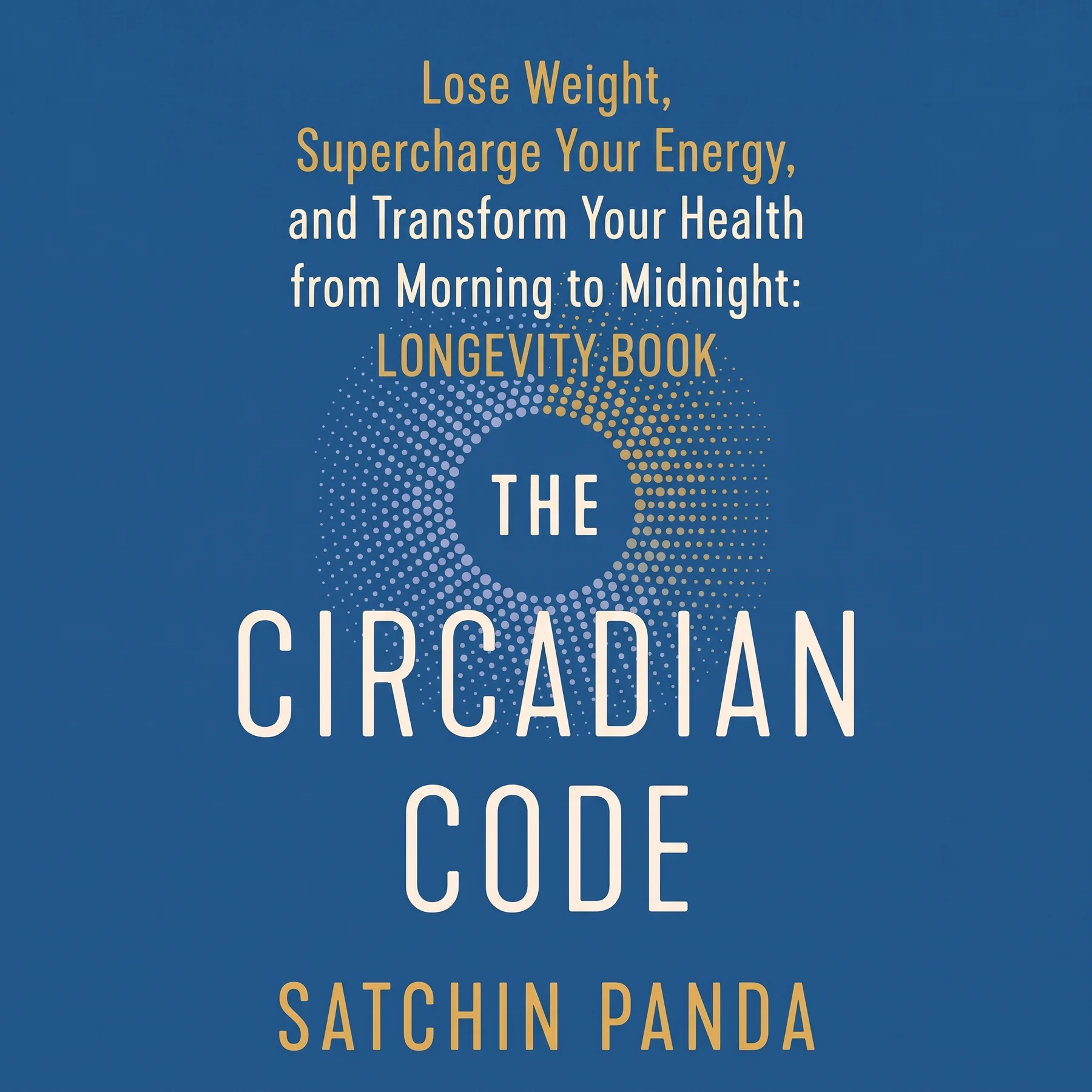
The Circadian Code: Lose Weight, Supercharge Your Energy, and Transform Your Health from Morning to Midnight: Longevity Book
Shows how the body's internal clocks control sleep, metabolism, digestion, brain health and immunity. It explains how simple timing changes to light, meals, sleep and exercise can bring those clocks back into step.
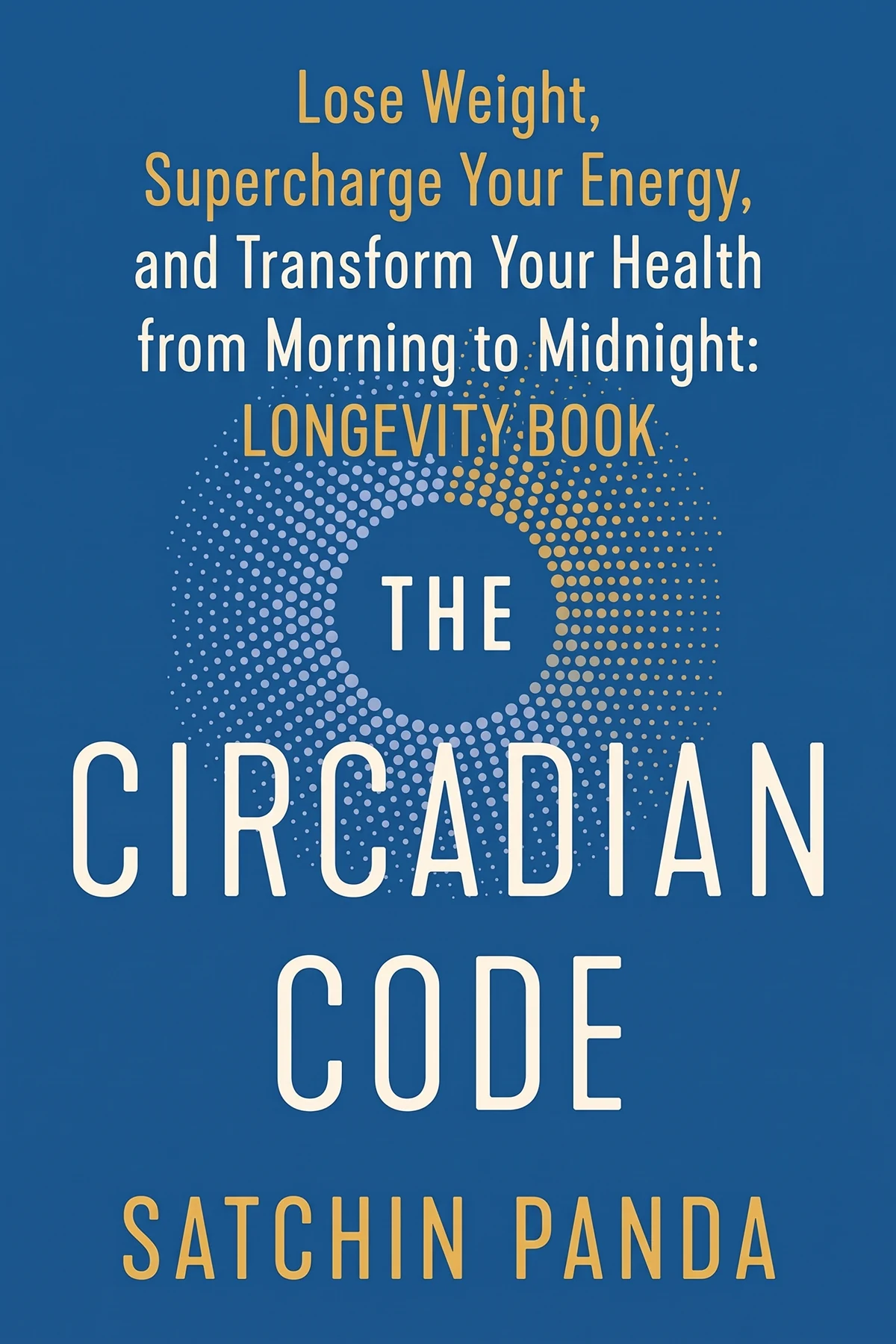
Table of Content
1. Introduction
1 min 04 sec
If you sleep badly, feel heavy after late dinners and wonder why diets never quite hold, the problem may be when you do things, not only what you do. In The Circadian Code, Salk Institute researcher Satchin Panda argues that nearly every cell in your body runs on a daily clock, and that modern life keeps knocking those clocks out of step. Electric light, late meals and irregular sleep confuse genes meant to switch on and off at set hours, and Panda links that confusion to obesity, diabetes, depression and cancer.
His message is hopeful. Because timing shapes health so strongly, a handful of habits around light, food, sleep and movement can bring the body back into rhythm, often doing more than any special diet. The pages ahead explain how the clocks work, then turn the science into a daily schedule: when to seek light, when to eat, when to move and when to stop. They also show why those choices reach from your gut to your brain and your immune system.
2. Timing can matter more than diet, so use it
1 min 39 sec
Two people can eat the same food and get very different results. The difference may lie in a system inside every cell that most health advice never mentions, and it runs on a schedule you set without knowing.
3. Use morning light and dim the evening screens
1 min 40 sec
For almost all of human history, night meant darkness. A single change in the last hundred years rewrote that, and a small set of cells in your eyes has been paying the price ever since.
4. Sleep habits can outweigh night-owl genes
1 min 37 sec
Plenty of people are sure they were born to stay up late. An experiment with self-described night owls suggests something else is setting their hours, and it is something they can change.
5. Fit your meals into a ten-hour window
1 min 48 sec
Your liver and gut keep appointments you never made. Miss them, and food gets handled badly. One simple change to the hours you eat gives these organs the long break they have been waiting for.
6. Move in daylight to sleep more deeply
1 min 26 sec
Exercise is usually counted in calories burned. Panda counts it differently, and in his view the hour you choose to move can either deepen tonight’s sleep or quietly undo it.
7. Protect your brain with steady daily rhythms
1 min 51 sec
Jet lag and a short night feel like a foggy day and nothing more. Panda describes four ways a disrupted clock can harm the brain over years, and one nightly process that keeps it clean.
8. Stronger immune defense from a well-kept clock
1 min 41 sec
An all-nighter seems like a one-time cost you pay with tiredness. Panda’s account of the immune system suggests the bill is larger, and that even medicines and cancer treatment depend on the hour.
9. Conclusion
1 min 10 sec
Panda’s book changes the question people usually ask about health. Instead of hunting for the right food or supplement, it asks whether the body is being given a steady day: light when it expects light, darkness when it expects night, food inside a fixed window, movement while the sun is up and enough sleep. The orchestra image fits. Every organ already knows its part. Bright screens, late dinners and shifting schedules keep changing the tempo underneath it.
The changes are small and cost nothing. Get outside into daylight soon after you wake, and let the evening grow dim as bedtime nears. Pick an eating window of eight to 12 hours, perhaps 8 in the morning to 6 in the evening, and hold it on weekends as well as weekdays. Keep your hardest exercise earlier in the day, and guard seven to nine hours of sleep. None of this asks you to change your genes, and Panda’s case is that these habits often matter more than the genes you were given.
Your body has been keeping time for you all along. The work is to stop interrupting it.
About this book
What is this book about?
Many people do the right things for their health and still feel tired, gain weight or sleep badly. Satchin Panda, a researcher who studies circadian rhythms, argues that a big part of the problem is timing. Nearly every cell in the body follows a daily clock that switches thousands of genes on and off at set hours. Electric light, late meals and irregular sleep pull those clocks apart, and Panda links that disorder to obesity, diabetes, depression, gut problems and cancer. His angle is that when you do things can matter as much as what you do. Panda explains how light reaches the master clock in the brain through special cells in the eye, how organs prepare for food at expected hours, and how sleep, eating and activity form three linked rhythms. He then follows those rhythms into the brain, the immune system and the gut. Readers get a practical daily schedule built on that science: morning daylight, dim evenings, a steady eating window of eight to 12 hours, exercise earlier in the day and seven to nine hours of sleep. Each habit is small, and Panda's case is that together they reset the body's timing.
Book Information
Who it's for
Drained professionals
Professionals who sleep poorly, eat late and feel drained despite eating well.
Shift workers and travelers
Shift workers and frequent travelers whose schedules keep pulling their body clock apart.
Curious about time-restricted eating
People curious about time-restricted eating who want the science behind when to eat.
About the Author
Satchin Panda
Satchin Panda is a scientist who specializes in circadian rhythms, the daily biological cycles that govern sleep, metabolism and much more. He has worked as an associate professor at the Salk Institute, where his research focuses on how internal clocks work. He has received the Dana Foundation Award for Brain and Immune System Imaging. The Circadian Code brings his field's findings to general readers as a set of daily habits.
Ratings & Reviews
Ratings at a glance
What people think
Listeners find the material thoroughly researched and accessible, with one review mentioning how it breaks down intricate body clock science into straightforward language. The book receives favorable responses for its health advantages, especially regarding weight management and sleep quality, with one listener reporting better weight and energy levels. Listeners value the information on circadian rhythms, with one review emphasizing how it outlines the timing of daily habits.
Top reviews
Divya
Dr. Satchin Panda has crafted a genuine masterpiece that translates complex biological mechanisms into actionable lifestyle changes. I was particularly struck by the discussion on how our organs have their own internal clocks that don't always sync up perfectly unless we intervene. Since implementing a strict ten-hour eating window, my energy levels have stabilized, and I no longer experience that dreaded mid-afternoon crash. While some might find the detailed descriptions of cellular processes a bit dense, I appreciated the scientific rigor behind every recommendation. It is refreshing to read a health book that isn't just about what you eat, but emphasizes that the timing of your behaviors is just as critical for long-term vitality.
Show moreYulia
Ever wonder why you feel sluggish despite getting enough sleep or eating a clean diet? This book provides the missing piece of the puzzle by explaining how our circadian rhythms dictate our metabolic health and cognitive performance. I was fascinated by the research on hospital lighting and how poorly timed illumination can actually hinder a patient's recovery process. Panda explains the science of the biological clock in simple terms without ever feeling like he is talking down to the reader. Following his advice on morning sunlight has completely transformed my mood during the winter months. It’s rare to find a science book that is this practical and life-changing.
Show moreSaengdao
Picked this up because I was struggling with persistent digestive issues and a general sense of burnout. Dr. Panda’s explanation of the molecular mechanisms behind our internal clocks gave me the motivation I needed to finally stop late-night snacking. I’ve been following a nine-hour eating window for three months now and the results are undeniable: I've lost weight and my skin looks clearer than ever. I love that he includes specific tips for shift workers, who are often ignored in most health and wellness books. The chapter on cellular rejuvenation was especially intriguing, showing how our bodies need that 'down time' to repair. Truly an essential read for the modern era.
Show moreEleni
As someone who has always identified as a 'night owl,' this book was a massive reality check for my health habits. I never realized that even my morning coffee counted as the 'first bite' that kicks the whole digestive system into gear. Dr. Panda makes a compelling case for why we need to respect our evolutionary biology if we want to avoid chronic disease. The writing is clear and the action items are easy to implement, like dimming the lights two hours before sleep. I’ve noticed a huge difference in my focus between 10 AM and 3 PM, which he identifies as peak performance hours. This is easily one of the most useful health books on my shelf.
Show moreGun
The chapter on cellular clocks alone is worth the price of admission for anyone interested in longevity. I’ve read plenty of books on nutrition, but this is the first one that helped me understand the importance of timing everyday behaviors. Dr. Panda's research into how circadian disruption leads to systemic inflammation is both terrifying and deeply motivating. I particularly liked the section on scheduling surgeries to align with cell rejuvenation cycles, as it shows the broad potential for this science. My energy levels have never been more consistent, and I find myself sharing 'circadian facts' with everyone I meet. It’s a brilliant, well-researched guide that actually delivers on its promises.
Show moreA
Finally got around to reading this after hearing so much about the benefits of time-restricted eating. The book is well-researched and easy to understand, even for someone who hasn't looked at a biology textbook in over a decade. I’ve managed to lose about five pounds just by shifting my dinner earlier, which feels like a total win. My only real gripe is that the author can be somewhat repetitive, hammering home the same points about blue light and sleep hygiene in every chapter. However, the advice regarding jet lag and resetting the 'stomach clock' was worth the price of admission alone. It’s a solid guide for anyone looking to optimize their daily routine.
Show moreIff
The science here is genuinely fascinating, even if the prose gets a little dry in the middle of the book. I appreciated how Panda dispels common myths, like the idea that we are genetically programmed to be 'night owls' rather than just having bad habits. The camping experiment he described, where people's melatonin rose earlier without artificial lights, was a real eye-opener for me. To be fair, I think he exaggerates the benefits of TRE slightly, and the suggestion that you can eat anything as long as the window is small seems risky. Still, the focus on sleep hygiene and reducing blue light before bed has significantly improved my rest.
Show moreOlivia
Gotta say, I was skeptical about the whole 'Time Restricted Eating' thing until I saw the data presented here. Dr. Panda isn't just a guru; he’s a legitimate expert from the Salk Institute, and his passion for the subject is evident on every page. He explains how our body's cells aren't all on the same schedule, which really helped me understand why late-night meals feel so heavy. I do think he oversimplifies the 'what to eat' department by focusing so much on the 'when,' which might mislead some people. Regardless, the improvement in my sleep quality after following his protocol has been worth the effort. It's a very solid four-star read.
Show morePriya
Look, there is a lot of valuable information tucked away in these pages, but the book is stuffed with far too much fluff. The core message could have been summarized in a ten-page pamphlet: eat in an 8-10 hour window, avoid blue light at night, and get morning sun. Instead, we get hundreds of pages of repetitive anecdotes and some questionable claims about fasting being the 'only way' to prevent obesity. While the research on rats is interesting, I felt the author made some wild leaps when applying those findings to human lifestyles. It’s worth a skim for the practical tips, but don't expect every word to be gold.
Show morePreeda
Step right up and see the man with the miracle cure for everything that ails you! This book reads exactly like an old-timey medicine show script where the author pimps out a single solution for every disease known to man. I found the 'lie-restrict-contradict' template infuriating because he tells you that you can eat whatever you want, only to later admit you need to eat healthy anyway. Many of the success stories felt incredibly biased, like the retired postman who magically got better just by walking more. Unless you have zero responsibilities and can obsess over your light exposure every minute, most of this plan is totally unrealistic for a normal person with a job.
Show moreQuestions about this book
What is the main idea of The Circadian Code?
Satchin Panda argues that nearly every cell in the body follows a daily clock that switches thousands of genes on and off at set hours. Electric light, irregular meals and inconsistent sleep throw those clocks out of step, which he links to obesity, diabetes, depression and cancer. Retiming a few habits around light, food, sleep and exercise can restore the rhythm, often with more effect than a specialized diet.
What eating window does Satchin Panda recommend?
Panda recommends time-restricted eating, keeping all food within the same window of eight to 12 hours each day. His example is breakfast at 8 in the morning and dinner finished by 6 in the evening, a 10-hour window that leaves an overnight fast of more than 14 hours. That long fast gives the gut time to repair and lets the body’s overnight cleanup and fat burning run.
How does light affect the body clock according to The Circadian Code?
Light reaches the master clock in the brain through light-sensitive melanopsin cells in the retina. Blue light at night, such as from screens, makes these cells register daytime, which suppresses melatonin and disturbs sleep. Panda advises getting natural daylight in the morning, which resets the master clock each day, and reducing blue light in the evening so the body can recognize night.
Can night owls change their sleep schedule?
Panda suggests they often can. He describes studies in which self-described night owls were placed in natural settings with no artificial light at night, and their circadian rhythms moved back toward normal. He concludes that habits matter more than genes here. Late light, screens, caffeine and late meals or workouts all override the natural drive to sleep, so cutting them is the place to start.
When is the best time to exercise for better sleep?
Panda points to earlier in the day. Daytime activity, according to the research he describes, helps people fall asleep faster, sleep longer and sleep better, while reducing daytime sleepiness and the need for sleeping pills. Activity earlier in the day deepens the drive to sleep at night, whereas late exercise can disrupt it. An outdoor walk in the morning adds daylight to the benefit.
Readers also enjoyed








AUDIO SUMMARY AVAILABLE
Listen to The Circadian Code in 15 minutes
Get the key ideas from The Circadian Code by Satchin Panda, plus 5,000+ more nonfiction titles.
- 5,000+ titles
- Listen as much as you want
- 7-day free trial
- Cancel anytime









