
11 min 18 sec
Available in: English
 ไทย
EnglishไทยThe Bogleheads’ Guide to Investing
A plain guide to building wealth with steady habits: spending below your income, owning low-cost index funds, keeping emotions out of decisions, saving for a child's education and planning what you leave behind.
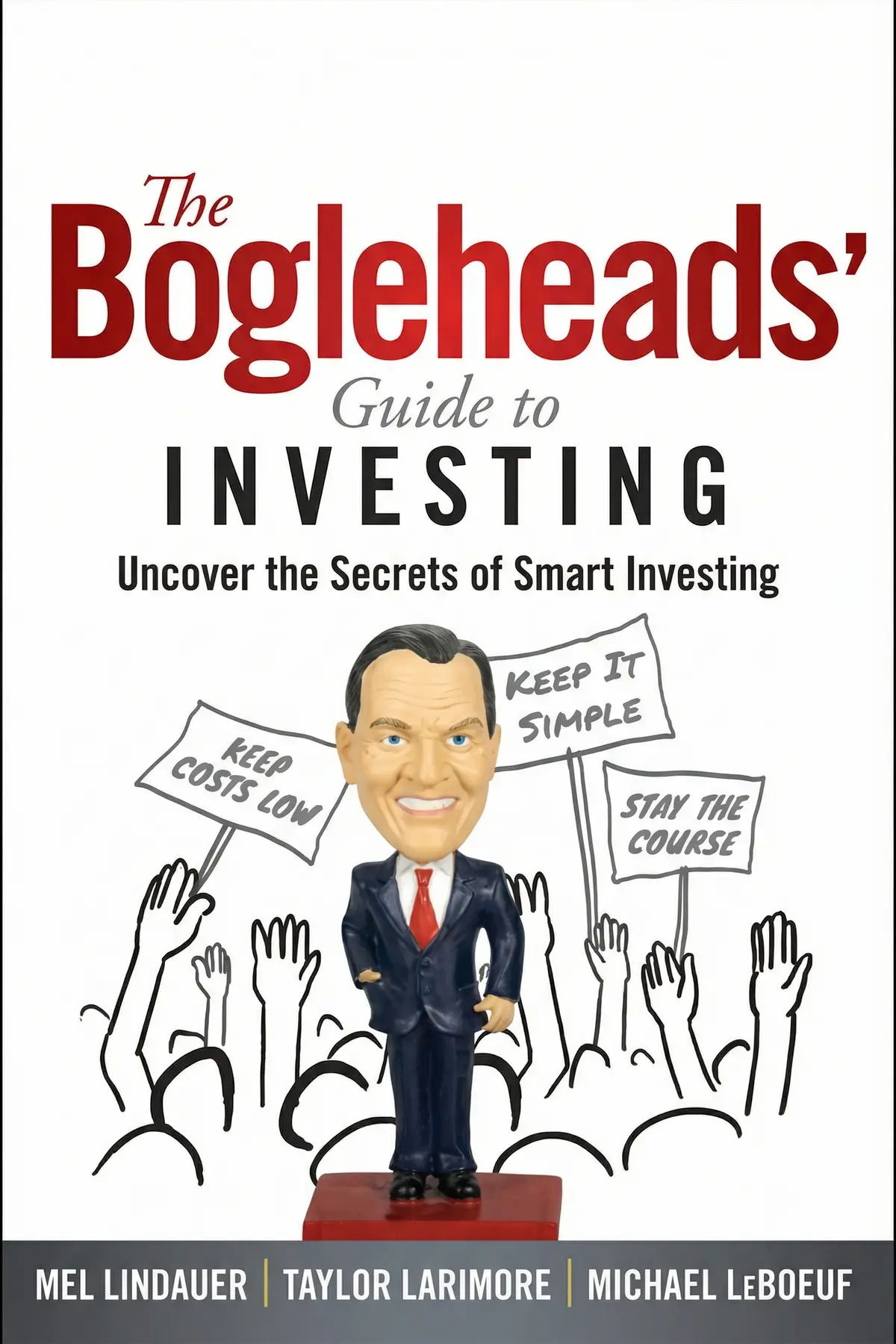
Table of Content
1. Introduction
1 min 00 sec
Most people who never reach financial independence did not lose it in one bad bet; they spent it, one ordinary month at a time. In The Bogleheads’ Guide to Investing, Mel Lindauer, Taylor Larimore and Michael LeBoeuf argue that the way out is just as ordinary. Live below your income, put the difference into low-cost index funds that hold the whole market, and then mostly leave it alone.
The authors, two longtime leaders of an online investor community and a former management professor, wrote for American savers, but their case travels well. Wealth is built by steady habits and simple tools, and it is lost through debt, fees, taxes and panic.
The ideas move from the daily decision to save, through the funds worth owning and the emotions that ruin returns, to paying for a child’s education and passing on what you build. Each one ends with something you can check or change in your own finances this month.
2. Choose the money habits that build wealth
1 min 42 sec
Couples who handle money in different ways can end up in very different financial places. The authors trace the difference to habits so ordinary that most people never notice they are choosing them.
3. Own the whole market for almost nothing
1 min 48 sec
Paying experts to pick winning stocks sounds like the careful choice. The authors make the opposite case, and their reasons come down to four quiet costs most investors never add up.
4. Master your emotions to protect your investment returns
1 min 56 sec
Investors rarely lose money because they lack information. They lose it at the worst possible moments, for reasons that feel completely sensible at the time. The authors name the traps and the one habit that disarms them.
5. Fund your child's education without risking yours
1 min 59 sec
Parents feel pressure to save for school, and every account type promises something different. The authors sort the choices by what each one gives up, and warn about a cost many families discover too late.
6. An estate that goes where you intend
1 min 42 sec
Without a few signed documents, strangers and state rules decide who receives what you spent a lifetime saving. The authors explain the tools that keep that decision yours, including one most people use far too little.
7. Conclusion
1 min 11 sec
The Bogleheads’ approach asks for very little cleverness. It asks for something harder: doing a few sensible things for decades without being talked out of them. The Keepers in the authors’ opening portrait stand apart from the Borrowers by saving, investing and using credit carefully. They let each paycheck leave something behind, place it in the cheapest and broadest funds they can find, and stay put when the news turns frightening. Saving for a child’s education and planning an estate are that same habit, extended to the people who come after you.
If the book changes one thing this month, let it be the direction your money flows. Move a set amount into savings on payday, before spending begins. Look up the fees on what you already own and weigh them against a broad index fund. Write down, while markets are calm, what you will do when they fall, so fear finds a script already waiting. And if no will exists yet, make one.
None of this will impress the neighbors. The Borrowers’ new car always looks better than the Keepers’ index fund, right up until the day the bills come due.
About this book
What is this book about?
Many people with good incomes still reach retirement without real financial security. Mel Lindauer, Taylor Larimore and Michael LeBoeuf argue that the gap rarely comes from bad luck. It comes from everyday choices about debt, spending and saving. They show this through three types of couples: Borrowers who live on credit, Consumers who spend every paycheck, and Keepers who save and invest part of each one. From there the authors make the case for passive investing. Low-cost index funds that track the whole market, they argue, win on cost, diversification, taxes and simplicity. They then turn to the investor's own mind, explaining how greed, fear, overconfidence, loss aversion and mental accounting skew decisions and feed the habit of buying high and selling low, and how a disciplined, systematic plan with clear goals helps keep those forces in check. The book also covers two long-range goals for families: paying for a child's education through savings accounts, 529 plans, Coverdell accounts and other options, and passing on wealth through wills, trusts and yearly gifts. Readers get a simple, repeatable system for growing money and protecting it.
Book Information
Who it's for
Earners wanting simple investing
Earners who spend most of each paycheck and want a simple system for saving and investing.
Investors paying high fees
Investors paying high fund fees or reacting to every market drop.
Planning tuition and legacy
Parents and grandparents planning for school costs and for what they will leave behind.
About the Author
Mel Lindauer
Mel Lindauer, a Marine veteran who began investing in the late 1960s, helped lead the Bogleheads forum and founded The John C. Bogle Center for Financial Literacy. Taylor Larimore, a World War II paratrooper and former IRS officer, spent hours answering investors' questions for free on the Morningstar forum and ran the annual Bogleheads contest, a game meant to show how hard stock prices are to forecast. Jack Bogle nicknamed them the Prince and the King of the Bogleheads. Michael LeBoeuf taught management for 20 years at the University of New Orleans and has written eight books.
Ratings & Reviews
Ratings at a glance
What people think
Listeners find this investment resource excellent for grasping the fundamentals of financial strategy and asset management, covering nearly all necessary subjects. Furthermore, the writing is straightforward and well-researched, making it essential for novices. They value how it builds their confidence in personal wealth management, and one listener mentions how it totally transformed their strategy for investing. Additionally, listeners view the book as a valuable use of both their time and financial resources.
Top reviews
Jai
Finally got around to reading the Bogleheads’ bible and I’m kicking myself for waiting this long to get my hands on it. The book is remarkably simple to read, stripping away the complex jargon that usually makes Wall Street feel like an exclusive club. I love how it emphasizes the net worth mentality over just looking at your paycheck. It completely changed my investment approach from chasing hot stocks to trusting a well-researched, passive strategy. To be fair, some of the sections on insurance and estate planning felt a bit like an information dump toward the end. However, the core advice on index funds and keeping costs low is worth every penny of the purchase price. I now feel significantly more confident managing my own money without a middleman.
Show moreTen
The chapter on asset allocation alone makes this worth the purchase price for any serious long-term investor looking for stability. It’s a well-researched deep dive into why passive beats active management over any significant time horizon. I specifically appreciated the hard data on rebalancing strategies and how it forces you to buy low and sell high automatically. Personally, I found the breakdown of tax-efficient fund placement to be one of the most useful sections I've ever read. It takes the mystery out of 401ks and Roth accounts by providing a clear hierarchy for your contributions. My only minor gripe is that I wish they cited their external sources more directly in the text. Overall, this is a must-read for beginners and seasoned pros alike.
Show moreJack
Wow, I finally feel like I have a handle on my financial future instead of just crossing my fingers and hoping for the best. This book is a life-changer for anyone who has been paralyzed by the fear of making a mistake with their savings. It takes the complex world of Modern Portfolio Theory and turns it into a simple, three-fund strategy that anyone can implement. To be honest, I wouldn't recommend the audiobook version because listening to lists of mutual fund names is incredibly boring. Stick to the physical copy so you can highlight the charts and the great quotes from Warren Buffett. It’s a masterclass in simplicity. This book empowered me to fire my expensive broker and take control of my own destiny.
Show moreA
Ever wonder why your mutual funds are underperforming despite all the hype from your bank? This book explains exactly why active management fails and how you can win by simply accepting market returns through index funds. It's a comprehensive look at John Bogle's philosophy, backed by names like Burton Malkiel and William Bernstein. The authors make a compelling case for keeping your emotions out of the door and focusing on what you can control. I found the 'Tenants of the Bogleheads' to be a perfect checklist for my yearly financial review. While it is a bit Vanguard-centric, the principles apply to any low-cost brokerage you choose. It's simple, honest, and wise advice that everyone should hear before they start investing.
Show morePrim
As someone who always found finance books intimidating, this guide felt like a breath of fresh air for my morning commute. It covers the essential basics of financial planning, including the 'Captain Obvious' stuff like paying off high-interest debt and building emergency funds. While some of the advice is basic, it serves as a necessary foundation for any beginner investor. The authors do a great job of explaining the rule of 72 and why saving is actually the most powerful tool for wealth building. Look, it’s definitely biased toward Vanguard, but the math behind low-cost indexing is hard to argue with in the long run. I did find the repetitive nature of the main message a bit much at times. Still, it’s a solid manual for anyone starting from zero.
Show moreRohan
Picked this up after finishing 'The Millionaire Next Door' and it really helped bridge the gap between frugal living and actual wealth building. The Boglehead philosophy is simple: start early, diversify, and stay the course no matter what the market headlines say. It provides a very clear roadmap for achieving financial independence through boring but effective index fund investing. Frankly, the middle section on insurance and saving for college can drag on quite a bit if you don't have kids. I also felt that the specific allocation percentages for REITs and international stocks felt a little arbitrary compared to the rest of the data. Despite these small flaws, the book is an excellent resource for anyone wanting to build a responsible financial lifestyle. It’s practical, honest, and very actionable.
Show moreMarco
This guide is essentially a survival manual for your money in an era of predatory financial advisors and hidden fees. It hammers home the importance of keeping costs low and the danger of trying to time the market. I appreciated the section on windfalls, which gave me a lot of perspective on how to handle unexpected money without making emotional errors. Gotta say, the insurance chapter felt a little out of place in a guide primarily focused on investing. It felt like they were trying to be a complete 'all-in-one' financial guide, which occasionally watered down the main investment message. Nevertheless, the logic is sound and the writing style is very accessible for the layman. It’s a great addition to any personal finance library.
Show moreMats
Truth is, most people don't need a complicated strategy to build wealth, and this book proves it through decades of market data. It shifts the focus from picking winners to managing risk through proper asset allocation and diversification. I really liked the advice on only insuring against catastrophes you can't afford, rather than buying every policy offered. It’s a very grounded book that values a sound financial lifestyle over the flashiness of day trading. My only criticism is that the writing can feel a bit repetitive, as they hammer the same points over and over. However, maybe that repetition is exactly what we need to avoid making irrational choices during a market crash. It’s certainly worth the time and money invested.
Show morePetch
Not what I expected from a finance book, mostly because it was actually readable and didn't try to sell me a 'get rich quick' system. Instead, it offers a sober look at how to reach your goals through patience and discipline. The explanation of the rule of 72 and the importance of low turnover in funds was eye-opening for me. In my experience, most books in this genre are too technical, but this one keeps things at a level that is perfect for beginners. I do think the authors could have trimmed some of the more obscure tax topics to keep the book tighter. Regardless, it’s a must-read for anyone who wants a simple path to wealth. It's a solid, reliable guide for the long haul.
Show morePranee
Warning: if you live outside the United States, skip this one and find a local alternative because it is heavily US-centric. I was frustrated to find that more than half the chapters cover things like 401ks, Roth IRAs, and I-Bonds which have no relevance in Europe. The authors mention their international community at the end, yet they wrote a book that feels almost like false advertising for non-Americans. In my experience, the investment principles are sound, but the practical tax and legal advice is completely useless for a global audience. Why focus so much on the US tax system if the philosophy is supposed to be universal? I’d recommend ‘A Random Walk Down Wall Street’ instead for a more evidence-based, globally applicable perspective. It’s okay, but definitely not for everyone.
Show moreQuestions about this book
What is the main idea of The Bogleheads' Guide to Investing?
The authors argue that financial independence comes from ordinary, repeated habits rather than luck or high income. Spend less than you earn, invest the difference regularly in low-cost index funds that track the broad market, and keep greed and fear from driving decisions. They then apply the same disciplined planning to a child’s education and to estate planning, so wealth is built, protected and passed on as intended.
Why do the Bogleheads prefer index funds?
The authors give four reasons. Index funds cost less because they simply copy a market index instead of paying managers to trade. They spread risk across many companies, so one falling stock or industry does less harm. They trade less, which means fewer taxable capital gains. And they are simple, so investors do not need tips or forecasts and are less tempted to react emotionally to market swings.
Who are the Borrowers, Consumers and Keepers?
They are three types of couples the authors use to show how money habits shape the future. Borrowers live on credit and can be ruined by one setback. Consumers spend every paycheck and skip chances to save, leaving no cushion when income stops. Keepers spend below their income, invest regularly, use credit carefully and track their net worth, which gives them comfort now and security later.
How can I stop emotions from hurting my investments?
The authors recommend clear planning and a systematic plan with specific goals and regular contributions to diversified investments, held over a long horizon. This limits the pull of greed and fear, which lead people to buy high and sell low. It also guards against overconfidence, loss aversion and mental accounting, such as treating a tax refund as free money to spend instead of investing it or paying down debt.
What college savings options does the book compare?
It covers ordinary savings accounts, which are flexible but taxed; 529 plans, offered by each US state, with tax-free withdrawals for education and high limits that suit grandparents; Coverdell Education Savings Accounts, capped at $2,000 a year but usable from elementary school on; and savings bonds and UGMA or UTMA custodial accounts, which can reduce financial aid and pass control to the child as an adult.
Readers also enjoyed



AUDIO SUMMARY AVAILABLE
Listen to The Bogleheads’ Guide to Investing in 15 minutes
Get the key ideas from The Bogleheads’ Guide to Investing by Mel Lindauer, plus 5,000+ more nonfiction titles.
- 5,000+ titles
- Listen as much as you want
- 7-day free trial
- Cancel anytime









