

A Long Way Gone: Memoirs of a Boy Soldier
Ishmael Beah
 English
 ไทย
Follows Martin Luther King Jr. from a segregated Atlanta childhood to Memphis, showing how he turned faith and nonviolence into a deliberate strategy, and why it led him beyond civil rights to poverty and war.
56 sec
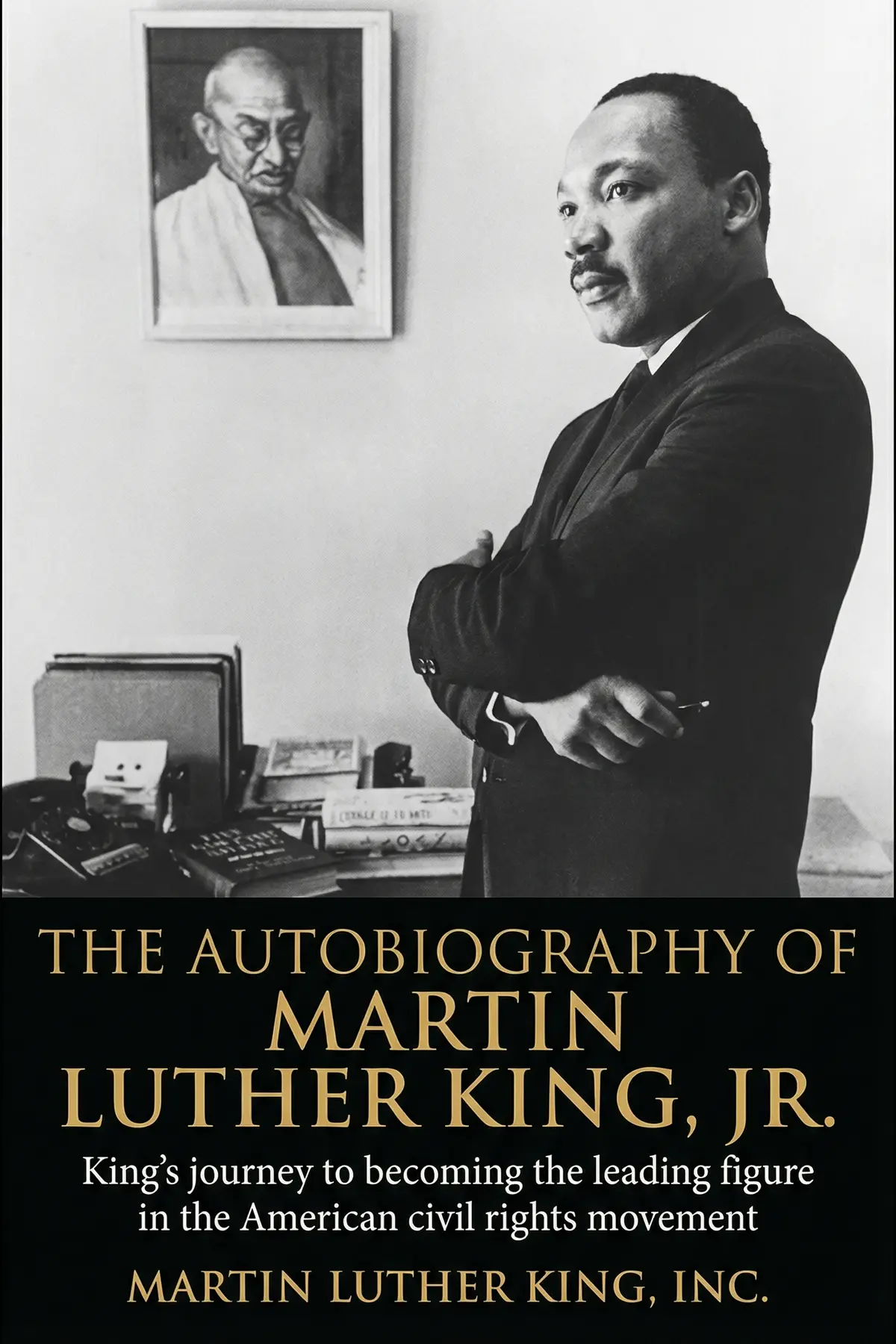
Most people know Martin Luther King Jr. through one line about a dream, and that memory hides the strategist who planned the steps behind it. In The Autobiography of Martin Luther King, Jr., built from his own reflections and letters, King traces how a boy barred from playing with a neighborhood friend in Atlanta came to lead a movement. One conviction runs through it all: nonviolence is an active force, and love organized with discipline can change laws, cities and a nation’s conscience.
That conviction had to be earned. It survived a bomb on his porch, was sharpened by an unfocused campaign in Albany that won only some progress, and finally pushed him toward poverty and war at the cost of old allies. Follow his story and you gain a working picture of how principled change gets organized, what it costs the people who lead it, and why it rarely stops where it began.
1 min 31 sec
A small boy in Atlanta lost a friend overnight, and nobody asked his opinion. What he did with that hurt over the following years explains why his anger became a plan instead of a grudge.
1 min 27 sec
A teenager at college stumbled on an old essay about refusing to obey. Combined with a theologian and Gandhi’s nonviolent struggle in India, it gave him a weapon that needed no weapon at all.
1 min 57 sec
One arrest on a city bus started a year of walking, and then the phone calls began. A sleepless night and a bomb tested whether nonviolence was a belief or only a theory.
1 min 26 sec
A flag ceremony in Africa and a visit to India changed how King understood a bus boycott in Alabama. He came home seeing one problem where others saw several.
1 min 49 sec
After a disappointing campaign in one Georgia city, King’s team rebuilt their whole approach. The new plan had a code name and a single letter, and it was designed to provoke.
1 min 35 sec
The words that made King’s most famous speech were not in the text he wrote that night. A voice from the crowd changed his plan, and years of practice made the change possible.
1 min 42 sec
New laws ended legal segregation in the South, yet King found crowds in a Northern city angrier than any he had faced. Inside the movement, younger voices were calling his method naive.
1 min 38 sec
In 1967 King said something about his own government that enraged a president and worried his closest allies. He said it anyway, and it reshaped the final year of his life.
1 min 18 sec
The King in these pages is harder to admire from a distance than the one on the monument. He changed tactics constantly, from a citywide boycott to a staged confrontation, from a national march to a Chicago tenement. One thing never moved: change would come through nonviolence, chosen deliberately and paid for by people willing to suffer for it. That choice cost him safety, then old allies, then his life. The famous dream sits inside a far more radical story about housing, wages, war and who gets heard.
His life suggests a few things worth carrying into ordinary work and citizenship. When something unfair keeps happening, look for the system that produces it before reacting to the person in front of you. When you organize others, name one precise demand and the place where pressure will land, as Birmingham did after Albany. And when conscience pulls you away from the safe position, expect to stand there with fewer friends.
King believed injustice in one place threatens justice everywhere. He also showed that the arc toward justice does not bend by itself. People bend it, one bus seat, one march and one refused act of revenge at a time.
Most people remember Martin Luther King Jr. through a single speech about a dream. Told through his own reflections, letters and experiences, this autobiography shows the thinker and organizer behind that moment, and a far more radical figure than the monument suggests. The story runs from a boy in Atlanta who lost a friend to segregation, through the books and teachers who gave him a method, to the Montgomery bus boycott, a night of fear at his kitchen table and a bomb on his porch. It continues to the focused confrontation of Birmingham, the March on Washington and a Nobel Prize he credited to unnamed marchers. In his last years he took on housing in Chicago, the anger behind Black Power, the Vietnam War and the Poor People's Campaign. Readers see nonviolence as King practiced it: an active force, tested under threat and sharpened by failure. They also get practical lessons about seeing injustice as a system, choosing precise targets, holding principles when others lose patience and standing alone when conscience demands it.
Readers who know the dream speech and want the strategist and thinker behind it.
Team leads and organizers who hold groups together under pressure and disagreement.
Anyone weighing whether to speak up on principle when it may cost them allies.
Martin Luther King Jr. was born in Atlanta, Georgia, on January 15, 1929. He led the 1955 Montgomery bus boycott, served as the first president of the Southern Christian Leadership Conference, and helped lead the 1963 March on Washington, where he gave his I Have a Dream speech. He wrote several books, including Stride Toward Freedom and Why We Can't Wait. In his last years he took on poverty and the Vietnam War. He was assassinated in Memphis, Tennessee, on April 4, 1968.
Listeners find this life story to be a fantastic account that offers profound perspectives on the leadership and history of Martin Luther King Jr. The work is skillfully composed and educational, with one listener mentioning that the narrative kept them engaged day and night. They value its Christian morality and bravery, and one review highlights it as a "courageous book."
Wow. Listening to this as an audiobook narrated by LeVar Burton was an absolute religious experience for me. I’ve always admired Dr. King as a historical figure, but hearing these recordings of his actual sermons and speeches makes him feel so much more real. The book isn’t a traditional narrative because it was compiled by Clayborne Carson from various archives, yet it flows with a surprising amount of internal logic. You get to hear King’s voice—literally and figuratively—on everything from the Montgomery bus boycott to his deep philosophical inspiration from Gandhi. It is courageous, deeply informative, and provides a window into the soul of a man who chose love over the easy temptation of hatred. There is a specific power in his 'Letter from Birmingham Jail' that everyone should experience at least once. This isn't just a history lesson; it's a blueprint for moral living in a world that often feels devoid of justice. I found myself hitting the rewind button constantly just to absorb the gravity of his rhetoric. It truly is a masterpiece of curation.
Show moreThis book should be mandatory reading for every single student in the United States, if not the entire world. King’s words echo through time with a relevance that is actually quite terrifying when you look at our current social climate. I was particularly struck by his critique of capitalism and his warnings about the 'giant triplets' of racism, materialism, and militarism. He wasn't just a dreamer; he was a radical thinker who wanted a total revolution of values. The section on the Rosa Parks incident and the subsequent bus boycott showed me a level of community unity that feels almost impossible to achieve today. His ability to maintain a non-violent stance while being physically and verbally abused is a testament to a level of courage I can barely wrap my head around. This book is a gut-punch that forces you to re-evaluate your own commitment to justice. Don't just skim it—read it slowly and let the weight of his convictions sink in.
Show moreKing’s courage drips from every single page of this compilation. I found myself reading this day and night, unable to put down his reflections on the March on Washington and the Civil Rights Act of 1964. The book is incredibly well-written, which speaks to King’s legendary gift as an orator and writer. It’s not just a collection of speeches; it’s a narrative of a man who knew he was likely going to be assassinated but kept going anyway. The sections where he writes to his wife, Coretta, are particularly moving and show a more human, vulnerable side of the leader. It’s informative and provides a historical context that many school textbooks conveniently leave out. If you want to understand the heart of the American civil rights struggle, this is the place to start. It’s a five-star read that will stay with me for a long time. Truly an amazing glimpse into a great life.
Show moreThe depth of research that went into compiling these writings is absolutely staggering. I listened to the audio version and was blown away by the inclusion of high-quality recordings of King’s later sermons. You can actually hear the exhaustion and the determination in his voice as the years go by. This book really highlights his educational background as a philosopher and his dedication to a person-oriented society over a thing-oriented one. His critique of capitalism as a system that takes necessities from the masses to give luxuries to the classes feels incredibly modern. It’s an amazing read that provides deep insights into how a social movement actually functions on the ground. There were moments that felt like a kick to the gut, especially when he discusses the violence faced by unarmed protesters. This is an essential piece of American history that everyone should own. It’s both a heartbreaking and a hopeful journey.
Show moreEver wonder how the leader of a revolution keeps his head when everything is burning down? This collection of writings offers some of the most profound insights into King's psyche that I’ve ever encountered. While technically an 'autobiography' assembled after his death, the way his letters and notes are pieced together creates a very cohesive picture of his Christian ethic. I particularly enjoyed the sections detailing his early educational background and how he wrestled with the concept of non-violent resistance. To be fair, if you aren’t already familiar with the broad strokes of the 1960s Civil Rights Movement, some of the historical context might feel a bit thin. The focus here is much more on his personal motivations and spiritual struggles than on a dry play-by-play of political events. Occasionally, the repetition of certain metaphors in his speeches can slow the pace down, but the overall impact is undeniable. It’s a brilliant, informative read that kept me engaged for several nights straight.
Show moreAfter hearing so much about the icon, I finally got around to reading about the man, and I’m glad I did. This account helped me understand King first and foremost as a preacher and a man of God, rather than just a political figurehead. The way he describes his admiration for Gandhi and how he integrated those principles into the Southern Christian Leadership Conference is fascinating. Look, the book can be a bit dense in the middle when it gets into the minutiae of various protests in Alabama and Georgia. However, the 'Letter from Birmingham Jail' included here is worth the price of admission alone. It exposes the hidden tensions of society with the precision of a surgeon. My only real complaint is that it doesn't spend enough time on his personal life outside of the movement, but that’s a minor quibble given the quality of the primary sources. It’s a courageous book that demands your full attention.
Show morePicked this up because I wanted to understand the strategic side of the non-violence movement beyond the soundbites we hear every January. The truth is, King was an incredibly complex philosopher who was deeply influenced by his studies in Boston and his trips to India. I loved the behind-the-scenes accounts of his interactions with other leaders and his sometimes-tense relationship with the Black Power movement. The book does a great job of showing how his ideas evolved over time, especially his growing opposition to the Vietnam War. Frankly, it’s a bit of a tragedy that he didn’t live to write a proper autobiography himself, as you can feel the gaps where a biographer’s transition was needed. Still, the editor did a commendable job of weaving together a narrative that feels mostly seamless. It’s a long read, but it provides a deep insight into the logistics of organizing for change. Highly recommended for anyone interested in social justice.
Show moreLook, it’s not a perfect 'autobiography' since it was pieced together posthumously, but it’s probably as close as we are ever going to get. The editor, Clayborne Carson, deserves a lot of credit for the amount of research that went into this. You get a firsthand look at King’s feelings and motivations during the most pivotal moments of the 20th century. I was especially impressed by his description of his visit to India and how it cemented his faith in civil disobedience as a tool for political change. Personally, I found some of the theological sections to be a bit repetitive, but that's just because King was so consistent in his message. The book successfully bridges the gap between King the legend and King the human being. It’s a courageous account of a man who fought against institutionalized discrimination with nothing but the truth and a commitment to peace. It’s a solid 4-star read for any history buff.
Show moreFrankly, I didn't realize how much King struggled with his own humanity until reading his letters and personal notes in this collection. We often see him as this untouchable, stoic figure, but this book shows his doubts, his fears, and his frustrations with 'white moderates.' The 'Letter from Birmingham Jail' remains one of the most powerful pieces of literature I have ever read. I did find that the book occasionally glosses over some of the historical context, assuming the reader already knows the details of things like the Albany movement. If you aren't a history student, you might need Google nearby to keep the timeline straight. Also, the archival nature of the text means some sections are much more polished than others. Despite these minor issues, the Christian ethic and the sheer bravery on display are inspiring. It’s a very informative and courageous book that I would recommend to anyone looking for more than just a surface-level understanding of Dr. King.
Show moreTo be fair, I went into this expecting a traditional biography and was surprised to find it’s a montage of documents edited by a third party. While the source material is obviously of monumental importance, the lack of a singular, cohesive authorial voice was a bit jarring for me. There are some frustrating technical oversights that marred the experience, such as the misspelling of 'Gandhi' as 'Ghandi' in several places. I even noticed a glaring geographical error where a trip to the Sabarmati ashram in Ahmedabad was mislabeled as 'Amniabad.' As a King scholar, Carson should have been much more vigilant about correcting these factual inconsistencies in the Stanford archives before publishing. The spiritual tone is heavy, which is expected given King was a pastor, but the constant invocation of God in every other sentence occasionally felt like it diluted the political strategy being discussed. It’s a decent collection for those who want the raw documents, but I found the lack of hindsight perspective from a professional biographer disappointing.
Show moreIt tells King’s life through his own reflections, letters and experiences, from a segregated childhood in Atlanta to his assassination in Memphis. It covers his study of Thoreau, Rauschenbusch and Gandhi, the Montgomery bus boycott, the Birmingham campaign, the March on Washington, his work in Chicago, his debate with Black Power and his late stand against the Vietnam War and poverty.
For King, nonviolence was an active force, not passivity. He drew it from Thoreau’s idea of refusing to cooperate with unjust systems and from Gandhi’s campaign against British rule, which he saw as Christian love put into practice. He tested it when a bomb hit his home and he told an armed crowd to put down their weapons and answer hate with love.
In Albany, Georgia, protests were broad and goals vague, and they produced some progress but no national crisis. In Birmingham in 1963, the team chose precise targets, downtown businesses and voter registration, under a plan called Project C, for confrontation. Fire hoses and dogs turned on peaceful marchers exposed the city’s violence, and leaders agreed to desegregate public facilities and improve hiring.
In a 1967 speech at Riverside Church, King argued that money spent on the war should fight poverty at home, and that the war killed young Black men disproportionately while draining the country morally and financially. He saw racism, extreme materialism and militarism as linked evils. The stand angered President Johnson and cost him allies, but he treated it as a matter of conscience.
Look for the system behind repeated unfairness instead of blaming one person. Build your convictions before pressure arrives, as King did through years of study. When organizing, choose one concrete goal and the place where pressure will be felt. Take others’ anger seriously without letting it set your methods, and be ready to stand with fewer friends when conscience requires it.
Ishmael Beah

James Herriot


Barack Obama


Masaji Ishikawa


Ben Macintyre

Fay Bound Alberti

AUDIO SUMMARY AVAILABLE
Get the key ideas from The Autobiography Of Martin Luther King, Jr. by Martin Luther King Jr., plus 5,000+ more nonfiction titles.









