
15 min 34 sec
Available in: English
 ไทย
EnglishไทยThe Autobiography of Malcolm X: As told to Alex Haley
By Alex Haley, Malcolm X
Follows Malcolm X from a shattered childhood and a hustler's life in Harlem to prison, national fame and a pilgrimage to Mecca. It shows how study and honest self-revision let one man remake himself repeatedly.
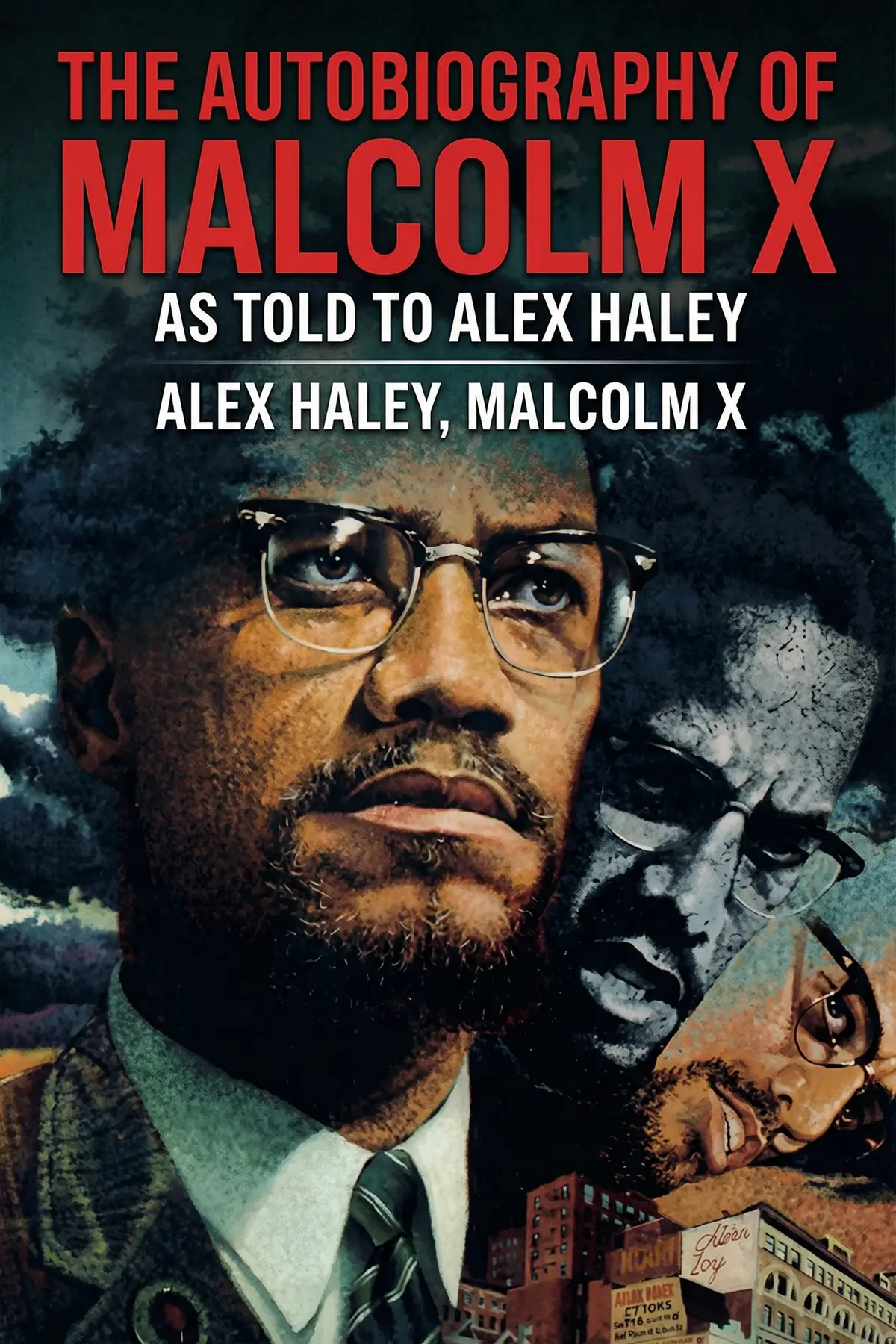
Table of Content
1. Introduction
55 sec
Many people assume the person they were at twenty sets the limit on who they can become. The Autobiography of Malcolm X, written by Alex Haley from long interviews with its subject, records a man who proved otherwise several times. Sent to prison for ten years at twenty, he taught himself to think and argue by reading through the night, became the best-known voice of the Nation of Islam, then broke with it and publicly rethought his views on race.
Next to Martin Luther King Jr, he is perhaps the most famous name of the 1960s civil rights movement, yet few know his actual story. Its thread is this: each time Malcolm met a harder truth, he chose to keep learning, and that choice made redemption possible within one life. Along the way you will hear what the X meant, why he broke with his mentor and what Mecca changed in him.
2. Understand the losses that forged a fierce voice
1 min 42 sec
Long before the speeches, a small boy woke to find his house on fire and later heard the police call his father’s violent death an accident. Those early years explain a great deal about the man.
3. Low expectations can hurt more than insults
1 min 38 sec
He was popular enough to be elected class president, and one ordinary conversation with a teacher still left a mark that lasted for years. Sometimes the most damaging words arrive dressed as sensible advice.
4. Spot the traps that feel like freedom
1 min 39 sec
A shoeshine stand at a famous jazz club looked like a humble first job. For a teenager new to the city, it turned out to be an apprenticeship in something else entirely.
5. Read your way out of a dead end
1 min 47 sec
A judge handed a first offender five times the usual sentence. What happened inside those walls, by bad light and long after lights out, is the hinge on which the whole life turns.
6. Turn a lost name into a movement
1 min 42 sec
A single letter replaced his family name, and it carried a whole history inside it. Then a police beating in Harlem brought the Nation of Islam national attention.
7. Keep your eyes open when you follow a hero
1 min 40 sec
He turned down interviews so that credit would go to the man who had saved him. Then news about that man arrived, followed by a remark that made headlines and a warning about a car bomb.
8. Let new evidence change your mind in public
1 min 52 sec
A man famous for one view of race traveled to a holy city and met strangers who did not fit it. What he did next surprised the press and cost him old certainties.
9. Judge a person by their whole life
1 min 35 sec
He said he had made peace with dying young. A firebomb at his family’s window and a crowded ballroom eight days later tested that peace, and a friend’s eulogy asked how he should be remembered.
10. Conclusion
1 min 04 sec
Malcolm X is often remembered as one fixed image, the angry man at the microphone. His own account shows a person in motion: a boy told to aim for carpentry, a teenager selling marijuana to jazz musicians, a prisoner reading dictionaries in bad light, a minister opening temples and a pilgrim who wrote to the American press that he must reconsider his old beliefs. Each version began when the last one met a truth it could not absorb.
That is the book’s case for redemption. It came in stages, through study, discipline and the nerve to change his mind in front of a hostile press. It also leaves something to practice. When someone, yourself included, is judged by their worst chapter, remember the boy who was told to be realistic. When evidence breaks a belief you have defended loudly, say so as plainly as he did from Mecca.
He died at 39, having remade himself more times than most people manage in twice that span.
About this book
What is this book about?
Next to Martin Luther King Jr, Malcolm X may be the best-known name of the 1960s civil rights movement. Yet many people know him only as a fiery quote, with little sense of what he said or how he lived. This book, built from long interviews with the writer Alex Haley, tells the story in his own voice. It begins with a father murdered and a mother institutionalized, moves through the jazz clubs and hustles of Roxbury and Harlem, and turns in a prison library, where Malcolm read through the nights and found the Nation of Islam. It follows his rise as a minister who took the surname X, his painful break with his mentor Elijah Muhammad, and the trip to Mecca that changed his view of race. Readers get the full arc of a life that kept changing direction, along with what the X meant, why he left the Nation and what he hoped to build in his final year. Above all, the book makes a case that redemption is possible within one life, earned through study, discipline and the courage to change one's mind in public.
Book Information
Who it's for
Curious about Malcolm X
Readers who know Malcolm X only from a quote and want the full story of his life.
Students of civil rights
Students of the civil rights era looking for a firsthand account beside Martin Luther King Jr.
Rebuilding after hard times
Anyone rebuilding after a bad chapter who wants proof that study and honesty can change a life.
About the Author
Alex Haley
Malcolm X, born Malcolm Little in 1925, joined the Nation of Islam while in prison and became its spokesperson for about twelve years. In 1964 he left the organization, made the Hajj to Mecca, became a Sunni Muslim and founded the Organization of Afro-American Unity. He was assassinated in New York in February 1965. Alex Haley built this book, his first, from a long series of interviews with Malcolm X, and later wrote Roots: The Saga of an American Family.
Ratings & Reviews
Ratings at a glance

What people think
Listeners find this autobiography to be an essential read, providing a detailed and educational chronicle of Malcolm X’s life. The work is beautifully written, with one listener observing that Alex Haley’s ghostwriting was masterful, and listeners describe the narrative as a gripping biography that is deeply moving and intellectually stimulating. They value the perspective it provides on Malcolm X’s soul, regarding him as one of the most significant leaders ever.
Top reviews
Mo
How is it that I went through years of American history classes and barely learned a thing about this man beyond a few scary headlines? Reading this was a total revelation. Malcolm’s journey from 'Detroit Red' the street hustler to El-Hajj Malik El-Shabazz is one of the most compelling life stories ever captured on paper. Alex Haley deserves immense credit for ghostwriting this so masterfully; you can practically hear Malcolm’s voice vibrating off the pages. The way he describes his intellectual awakening in prison—copying the entire dictionary just to be able to communicate—is profoundly moving. It makes you realize how much potential our society wastes by trapping smart young men in cycles of poverty and incarceration. Truth is, I expected a book filled with anger, but what I found was a man with a relentless thirst for truth and a soul that never stopped evolving. This is a must-read for anyone trying to understand the DNA of American race relations.
Show moreDivya
Alex Haley and Malcolm X created something timeless here. I’ve read a lot of memoirs, but few possess this level of raw, painful candor. The book doesn't just chronicle historical events; it offers a deep, informative account of a human being’s psychological transformation. Malcolm’s early life as a zoot-suit-wearing dancer and later a criminal was shocking to me, mostly because I only knew him as the stern man in the glasses. His total devotion to Elijah Muhammad was tragic to witness, especially knowing the betrayal that was coming. To be fair, some of the early Nation of Islam theology is hard to wrap your head around, but seeing his eventual pilgrimage to Mecca and his embrace of a more universal humanity was incredibly powerful. It’s a thought-provoking look at how identity is shaped, broken, and rebuilt. I finished this feeling like I had actually met the man.
Show moreRotjanee
Wow. I am just stunned by the sheer intellectual honesty in these pages. Most people are too proud to admit they were wrong about their entire worldview, but Malcolm did it multiple times on a global stage. This autobiography is a masterful piece of literature that should be required reading in every high school. The chapter on his pilgrimage to Mecca really opened my eyes to the transformative power of spiritual travel. Seeing him realize that 'white' wasn't a biological evil but a cultural one was a massive turning point. Gotta say, the way he analyzes the 'Negro' experience in the North versus the South was brilliant and remains relevant today. He was a human being first and foremost, searching for justice no matter where it led him. This isn't just a book; it’s a living document of a soul in flight. Absolutely brilliant and deeply moving.
Show moreAmy
The sheer intellectual honesty required to admit your entire worldview was wrong—twice—is something we rarely see in public figures. This book provides such a profound insight into Malcolm's soul, moving far beyond the 'militant' caricature created by the media. I found the sections on his childhood especially heartbreaking; the way his family was torn apart by social workers and systemic neglect explains so much of his later fire. It’s a well-written, masterfully ghostwritten account that feels incredibly personal. The transition from the Nation of Islam to true orthodox Islam was the highlight for me, showing a man who was brave enough to follow the truth even when it meant losing everything. Frankly, if you haven't read this, you don't really know American history. It’s a moving, thought-provoking journey that changes the way you see the world. Every page is a lesson in resilience.
Show moreNora
Picked this up during a period of personal stagnation and found Malcolm’s dedication to self-education to be the ultimate kick in the pants. His thirst for knowledge while behind bars is legendary for a reason. This book is a great advertisement for what the human mind can achieve when it’s finally 'mentally alive.' Haley does a beautiful job of letting Malcolm’s voice shine through—it’s candid, sharp, and unapologetic. I loved the descriptions of his trip to Mecca; the imagery of people of all colors worshipping together was a beautiful contrast to the segregation of his youth. It’s a compelling life story that doesn't shy away from the ugly parts. Truth is, he was a giant. This book is an essential piece of the puzzle for understanding why things are the way they are today. A masterful, moving work of art.
Show moreTakeshi
To be fair, I went into this expecting a manifesto of hate, but what I found was an incredibly human story of evolution that challenged my own biases. The narrative is fast-paced and incredibly well-written, moving from the gritty streets of Harlem to the quiet cells of a Massachusetts prison. Frankly, the middle section regarding the Nation of Islam dragged a little for me because the dogma felt so rigid and bizarre, particularly the 'Yacub' story. However, Malcolm’s honesty about his own mistakes and his willingness to change his mind in public is something we almost never see in leadership today. One minor criticism: his views on women were definitely a product of his time and can be quite jarring to a modern reader. Despite that, the book provides vital insight into the 'death-by-a-thousand-cuts' brand of racism that still exists. It’s a masterclass in autodidactism and personal growth.
Show moreTun
Finally got around to this classic and I’m kicking myself for waiting so long to pick it up. The story of Malcolm Little is essentially the story of 20th-century America, told from the perspective of someone who was never supposed to succeed. I was particularly struck by his time in the prison library. His dedication to self-education is the best advertisement for reading I’ve ever encountered. He literally read himself into a new life. The tone is often confrontational, but rightfully so. My only gripe is that I wish we had more of his thoughts from the very end of his life, as the final chapters feel a bit rushed compared to the detailed descriptions of his 'hustling' days. Still, it’s a compelling life story that forces you to confront uncomfortable truths about justice and systemic oppression. He was a man of immense courage.
Show moreAkosua
After hearing so many snippets of his speeches on social media, reading the full context of his life was eye-opening. I never realized how much of his life he spent as a criminal before his conversion. It makes his later discipline even more impressive. Personally, I think the first half of the book is some of the best autobiographical writing ever, though the theological debates in the second half can get a bit dense. You really get a sense of the 'propaganda' he was trying to fight against. He wasn't just fighting for black people; he was fighting for the truth. Some of his earlier rhetoric is definitely harsh, but given what he went through, it’s understandable. The betrayal by the Nation of Islam was painful to read, but it led to his most important growth. It’s an informative account of a man who refused to stay at the bottom.
Show moreMoo
Is it possible for a book to be both a period piece and an urgent contemporary warning? This autobiography manages it. Malcolm X’s dissection of race in America is so sharp it feels like it was written yesterday. The writing is incredibly candid, especially regarding his time as 'Detroit Red.' I found the sections on his religious transformation to be the most complex parts of the narrative. While I didn't always agree with his ideology, especially during his NOI years, I couldn't help but admire his integrity. He was a man who lived for his principles. My only minor complaint is that some of the historical tangents regarding the Nation's mythology felt a bit repetitive. However, the overall impact is undeniable. It's a masterfully ghostwritten account of one of the greatest leaders to ever live. You won't look at the 'civil rights movement' the same way after finishing this.
Show moreNannapat
Look, the historical importance of this text is undeniable, but the casual sexism throughout the middle sections was really hard to stomach at times. It is ironic that a man so sensitive to the dehumanization of his own race could speak so dismissively of women's roles and intellect. That said, the account of his 'schooling' in the streets of Boston and New York is vivid and educational in a different way. It shows how the system funnels talent into crime when legitimate paths are blocked. The writing is top-notch—Haley captured a specific rhythm of speech that makes the pages fly by. I appreciated the informative details about his split from the Nation of Islam, but I struggled with the religious dogmatism that occupied so much of his life. It’s an essential read for context, but I didn't find myself 'liking' the narrator as much as I respected his discipline and his ultimate evolution toward a broader humanity.
Show moreQuestions about this book
What is The Autobiography of Malcolm X about?
It tells the life of Malcolm X in his own voice, through interviews with Alex Haley. It follows his childhood losses in Lansing, Michigan, his years hustling in Roxbury and Harlem, a ten-year prison sentence where he discovered reading and the Nation of Islam, his rise as a national minister, his break with Elijah Muhammad, his pilgrimage to Mecca and his assassination in 1965.
What does the X in Malcolm X stand for?
On becoming a official minister in the Nation of Islam, Malcolm was given the surname X, like other ministers. The letter stood for the true family name of his ancestors, which had been lost and could never be recovered. It replaced Little, the name he was born with, as a statement about the identity he believed had been taken from African Americans.
Why did Malcolm X leave the Nation of Islam?
In 1963 he learned that two of Elijah Muhammad’s secretaries had filed paternity suits against him, and Malcolm felt betrayed. His growing fame also made Nation leaders see him as a threat. After his remark about John F. Kennedy’s assassination, the Nation banned him from speaking for 90 days, and he was then told that his death had been ordered.
How did the pilgrimage to Mecca change Malcolm X?
In Mecca he met Muslims of every color, including blond, blue-eyed men who treated him as a brother. He wrote to the American press that he had to reconsider his beliefs. Back home he said white people were not inherently racist, blamed a society that taught superiority, and urged sympathetic whites to fight racism in their own neighborhoods.
What is the main lesson of The Autobiography of Malcolm X?
The book argues that redemption is possible within one lifetime. Malcolm moved from crime to prison to leadership by reading, staying curious and searching for the truth, and he was willing to change his views publicly when experience contradicted them. His story suggests judging people by the whole arc of their lives, not by a single stage or quote.
Readers also enjoyed

Ali: A Life
Jonathan Eig

All About Love: New Visions
bell hooks

A Life Decoded: My Genome: My Life
J. Craig Venter


A Long Way Gone: Memoirs of a Boy Soldier
Ishmael Beah

All Creatures Great and Small
James Herriot


A Promised Land
Barack Obama

AUDIO SUMMARY AVAILABLE
Listen to The Autobiography of Malcolm X in 15 minutes
Get the key ideas from The Autobiography of Malcolm X by Alex Haley, plus 5,000+ more nonfiction titles.
- 5,000+ titles
- Listen as much as you want
- 7-day free trial
- Cancel anytime









