How To Destroy America in Three Easy Steps
Ben Shapiro
 English
Ben Shapiro argues that a vocal left-wing minority controls America's universities, tech platforms, corporations and public health experts and uses them to punish dissent. He urges the silent majority to answer with calm speech and deliberate spending.
1 min 04 sec
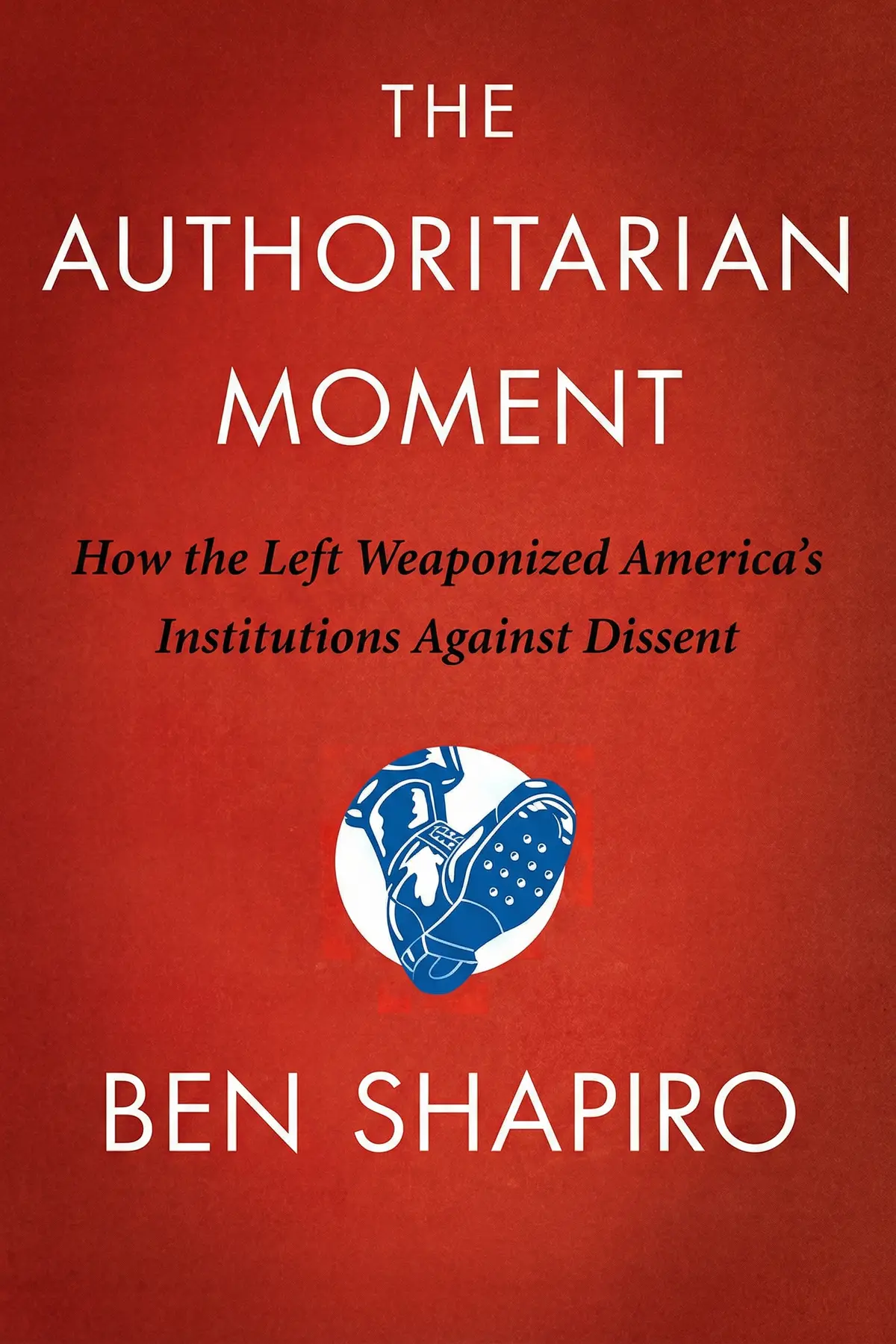
More than 60 percent of Americans say they are afraid to share what they really think, according to a Cato Institute poll that Ben Shapiro places at the start of his case. Only one group in that survey felt free to speak: people who called themselves strong liberals. In The Authoritarian Moment, the podcast host and Daily Wire co-founder argues that this fear did not appear by chance.
His throughline is blunt. In Shapiro’s view, a small and loud left-wing minority now sets the rules inside the institutions that shape American life, from universities and tech platforms to corporations and even public health science, and it uses them to punish dissent. The only counterweight, he says, is a silent majority willing to speak up and to spend its money deliberately.
What follows is his argument laid out piece by piece, the cases he builds it on and his four rules for disagreeing in public without losing your temper or your footing.
2 min 21 sec
A social app built as an open town square was taken offline soon after the riot, while larger networks used by far more rioters stayed online. Shapiro uses the contrast to ask what the rules were really protecting.
2 min 24 sec
At two of America’s most famous universities, conservative professors are rare enough to be a rounding error. Shapiro asks what happens to students, and to the ideas they meet, when almost nobody in the room disagrees.
2 min 20 sec
In 2020, businesses across America, even an ice cream maker, put out public statements on race. Shapiro offers a one-word explanation for the wave, and it is neither conviction nor good marketing.
2 min 19 sec
In that same spring, after scientists had warned against social contact, more than 1,000 public health specialists signed a letter backing the largest protests in the country’s history. Shapiro asks what kind of science changes its rules with the cause.
2 min 15 sec
Shapiro finds his playbook in a letter written in June 1776. From it he draws four habits for anyone who feels pressure to stay silent, and one of them is simply refusing to let feelings outweigh facts.
1 min 22 sec
The book’s argument rests on a single image: a small group with outsized control, and a large group that has fallen silent. Shapiro’s claim is that the more the majority speaks, the less power that minority holds. In his view, the fear captured in that Cato poll is what keeps people quiet, and he urges them to stand up and speak out anyway.
That is why his final advice is so practical. Money, he argues, speaks for the silent majority even when its members say nothing. Stop buying from the companies most eager to take political sides. Cancel subscriptions to outlets that tell only one side of a story. If you give to a university, consider pulling that support when it refuses to host speakers with different views.
Alongside the wallet, there are habits to practice. Notice when a rule seems to apply to one side only. Ask for the facts behind sweeping claims. And when you disagree, say so in calm, clear words, the way Jefferson wrote to his king.
Shapiro’s Founders reached the point where enough was enough, and they answered it by putting their objections in writing. His wager is that a majority willing to do the same, calmly and in public, will find it was never as outnumbered as it felt.
Most Americans now say they are afraid to share what they really think. Ben Shapiro argues that this fear has a cause. In his view, a small and loud left-wing minority has taken hold of the institutions that shape daily life and uses them to enforce one acceptable set of opinions. He builds his case one institution at a time. Tech companies pulled the social app Parler offline after the Capitol riot. Faculty surveys at Harvard and Yale show very few conservatives. Corporate statements on race, he says, came from fear of backlash, and employees lost jobs for saying the wrong words. Public health experts urged lockdowns and then backed mass protests during a pandemic. Shapiro reads all of these as signs of one authoritarian pattern. The book closes with a call to action drawn from the Founders. Shapiro asks readers to treat independent thinking as healthy, to put facts ahead of feelings, to see free speech as a cause for every party and to keep using their voice when they feel intimidated. He also asks them to withhold money from institutions they see as hostile to dissent. Readers get a clear statement of the conservative case against cancel culture and a set of habits for disagreeing in public.
Professionals who hold back opinions at work and want to understand the conservative case against cancel culture.
Students and parents uneasy about the range of views on campus.
Readers following the debate over tech bans, corporate activism and pandemic rules.
Ben Shapiro, a syndicated columnist and co-founder of The Daily Wire, was born in Los Angeles in 1984. He studied political science at UCLA and graduated from Harvard Law School in 2007. Creators Syndicate hired him at 17 as a nationally syndicated columnist. In 2015 he co-founded The Daily Wire, and he hosts The Ben Shapiro Show, a daily podcast that also airs as a live radio program. He has written 16 non-fiction books and is a New York Times bestselling author.

Listeners find this book exceptionally accessible and well-crafted, valuing its thoroughly documented material and straightforward perspective. They commend the deep exploration of the modern political landscape and historical context, while one listener remarked that it captures the present state of America flawlessly. The audiobook earns acclaim for its captivating delivery and thoughtful substance, as listeners characterize the writer as having a formidable intellect. Perspectives on the political subject matter are varied among listeners.
This book hits like a freight train, offering a profound analysis of the current cultural climate that feels incredibly timely. Shapiro provides an exhaustive breakdown of how our institutions have shifted, using a wealth of research to back up his claims about the erosion of traditional American values. Personally, I found the chapter on how 'science' has been re-defined and weaponized for political gain to be the most compelling part of the entire work. While his prose is fast-paced and occasionally aggressive, the logic he employs is hard to ignore if you care about the future of free expression. It is a dense but rewarding read that perfectly describes the fractured state of the United States today. Whether you enjoy his podcast or not, the intellectual depth presented here is undeniable and deeply impressive.
Show morePicked this up because I wanted to see if the 'intellectual dark web' stuff still had legs, and Shapiro definitely delivered. His signature 'motor-mouth' energy translates perfectly to the page, making for a quick and engaging read that never feels dull. The truth is that many people are terrified to speak their minds at work or online, and this book gives a voice to those legitimate fears. He manages to synthesize complex political trends into digestible points without losing the intellectual rigor his fans expect. I especially enjoyed the breakdown of how the 'heckler’s veto' is used to silence anyone who doesn't toe the party line. It’s an honest, brilliant look at the modern Left’s tactics that every American should probably read regardless of their own political leanings.
Show moreThe chapter on the corruption of 'science' into a political bludgeon is worth the price of admission alone. Shapiro is a brilliant mind who isn't afraid to follow the data where it leads, even when the conclusions are unpopular. He meticulously documents how dissent is being pushed underground, creating a dangerous pressure cooker environment for the country. Not gonna lie, some parts of the historical breakdown are quite dense, but they provide the necessary context to understand our current mess. This isn't just a book for conservatives; it’s a warning for anyone who values the legal and cultural right to free speech. We need to mobilize and take our institutions back before the radicalization becomes permanent. He nails the reality of what we are all observing in our daily lives.
Show moreFinally got around to finishing this, and the timing couldn't be more relevant given the current headlines. Shapiro provides a masterpiece of political commentary that is both exhaustively researched and remarkably easy to read. He cuts through the noise of 'woke' culture to explain the underlying philosophical shift that has occurred in America over the last decade. Look, you don't have to love Ben Shapiro to see that his observations about the loss of individual opinion are spot on. The way he ties together tech, finance, and government shows a terrifying level of coordination among those in power. This is a must-read for anyone who feels like they are losing their country to a vocal, radical minority. Five stars for courage and clarity in a time of total confusion.
Show moreNot what I expected from a typical political pundit book; there’s a level of exhaustive research here that you rarely see in this genre. Shapiro proves himself to be a brilliant mind as he dissects how the 'silent majority' has been sidelined by an aggressive, elitist groupthink. He uses historical examples to show how we got to this point and offers a clear-eyed look at the dangers of letting our founding values slip away. It’s an honest and profound analysis that perfectly describes the social polarization we are all experiencing today. The message is simple: if you don't stand up for your rights now, you won't have any left to defend later. This is truth-telling at its finest and a vital roadmap for anyone wanting to push back against the madness.
Show moreEver wonder how every major institution suddenly started speaking the exact same radical language? Shapiro’s exploration of 'institutional capture' offers a convincing historical overview of how tech, media, and academia were essentially colonized by a specific ideological group. I appreciated how he avoided just complaining and actually dug into the mechanisms of 'renormalization' that make dissent feel like a social death sentence. To be fair, the book can get a bit wordy in the middle sections, and I wish the advice for regular people was more detailed. However, his focus on the Founding documents as a shield against this new authoritarianism is a powerful call to action for the silent majority. It’s an engaging, well-written piece of political commentary that demands a serious response from the other side.
Show moreAfter hearing the podcast for years, I expected a retread of his daily show, but the depth of the historical research here actually surprised me. He does a great job explaining why the current 'authoritarian moment' is different from previous political shifts in American history. My only real gripe is that while he identifies the problems with surgical precision, the solutions felt a little thin for those of us without a platform. Standing up for your values is easier said than done when your livelihood is on the line. Still, I’m glad someone is finally calling out the blatant double standards in our news and entertainment industries. It’s a solid 4-star read that gave me a lot to think about regarding my own silence on certain issues.
Show moreAs someone who identifies as a moderate, I found Shapiro's breakdown of 'renormalization' to be both terrifying and incredibly persuasive. He explains how the Left uses cultural pressure to make radical ideas seem like common sense almost overnight. While I don't agree with every single policy position he takes, his defense of the First Amendment is something every American should get behind. The book is well-written and moves at a brisk pace once you get past the slightly long-winded opening. To be fair, he could have spent more time criticizing the authoritarian elements on the Right as well. Overall, it is a very valuable insight into the ideological capture of our society and worth a read for the perspective alone.
Show moreGotta say, the historical overview of media bias was the highlight of an otherwise very slow and wordy introduction. Shapiro is obviously smart, but his prose can be quite arrogant at times, which makes it hard to stick with the book during the more analytical sections. I agree with his premise that free speech is under attack, but the 'flamethrowing' tone often distracts from his more legitimate arguments. It’s a bit of a task to get through because of how partisan it feels, even when the data he cites is technically correct. I'd recommend it to people who want to understand the modern Right's perspective, but don't expect a neutral or calm discussion. It's a decent entry-level work that could have used a much tighter edit to improve its flow.
Show moreBen Shapiro argues that the silent majority is being bullied into submission, yet he spends half the book doing the exact same kind of gaslighting he claims to hate. It feels more like a fantasy novel written for people who already agree with him than a serious contribution to political science. Frankly, his constant straw-manning of his opponents makes it difficult to take his 'authoritative' tone seriously after the first few chapters. He makes a handful of decent points regarding free speech, but they are buried under layers of partisan rhetoric and acerbic insults. If you are looking for a balanced debate about the state of the country, you won't find it in these pages. This is purely for the fanbase and fails to bridge the gap with anyone outside his echo chamber.
Show moreShapiro argues that a small, vocal left-wing minority has gained control of key American institutions, including universities, tech platforms, corporations and public health science, and uses them to punish people who disagree. He supports the claim with cases such as Parler’s removal after January 6, faculty surveys at Harvard and Yale, firings at Cisco and the open letter from public health specialists backing the 2020 protests.
In his view, the main reason is cowardice. Because activists treat silence as a form of violence, companies issue statements to avoid being canceled, as Ben & Jerry’s did in 2020. Shapiro argues that employees pay the price, citing Cisco workers fired for saying All Lives Matter, and research from the University of Pennsylvania suggesting diversity training often increases discrimination.
Shapiro argues that many scientists put politics ahead of public health in 2020. After warning against gatherings during lockdowns, more than 1,000 public health specialists signed a letter supporting the Black Lives Matter protests while opposing other gatherings, and New York’s mayor allowed only those marches. Shapiro calls this politics dressed in a white coat.
Shapiro offers four habits: treat independent thinking as healthy, keep feelings from outranking facts, see free speech as a cause for every party, and keep using your voice when intimidated. He also urges readers to withhold money from institutions they see as hostile to dissent, by changing where they shop, which media they pay for and which universities they fund.
It suits readers who want a clear statement of the conservative argument against cancel culture and institutional pressure on speech. People who feel they must hide their views at work or school will find Shapiro’s examples and his advice on calm, fact-based disagreement directly relevant. It also helps readers on any side understand how this argument is made.


Tracy Rosenthal

Jessica Valenti

Yanis Varoufakis

Yuval Noah Harari

Jacinda Ardern
Pankaj Mishra
James Comey

Anthony Pratkanis
AUDIO SUMMARY AVAILABLE
Get the key ideas from The Authoritarian Moment by Ben Shapiro, plus 5,000+ more nonfiction titles.