

14 min 45 sec
Available in: English
 ไทย
EnglishไทยThe Art of Simple Living: 100 Daily Practices from a Japanese Zen Monk for a Lifetime of Calm and Joy
A Zen priest's everyday practices for people worn down by busyness: wake a little earlier, want less, eat and clean with attention, see people and nature freshly, and act before time runs out.
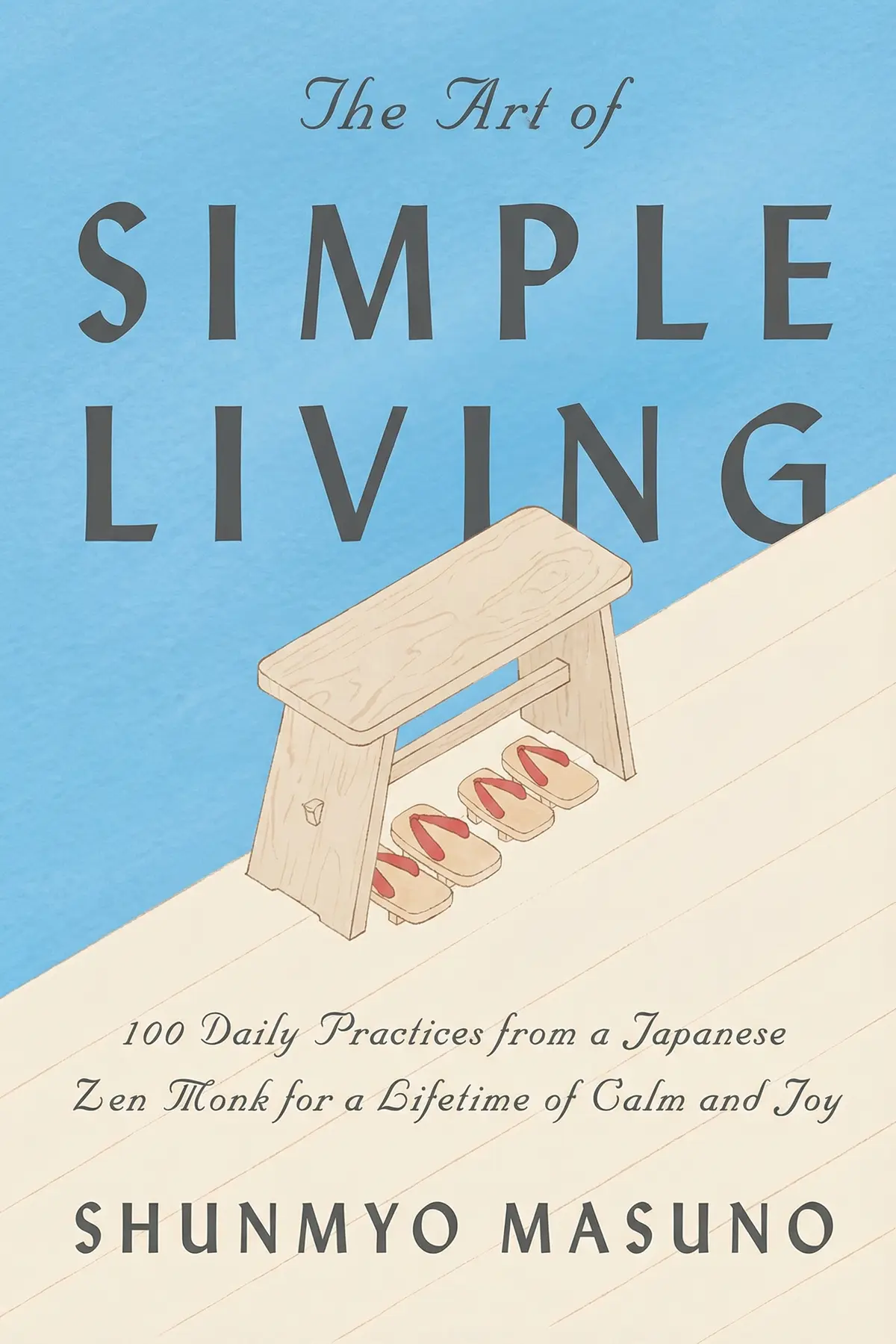
Table of Content
1. Introduction
1 min 03 sec
If your answer to how are you is always some version of busy, the Japanese language has a diagnosis: the written character for busy combines the signs for losing and heart. In The Art of Simple Living, Zen priest and garden designer Shunmyo Masuno argues that the lost heart is won back through small daily acts, not dramatic escapes.
You may not be able to cut your workload or take a long break. You can still change how you wake, eat, clean, judge people and use what you own. Masuno’s case, drawn from temple life and his work designing gardens, is that calm grows from a few simple practices repeated every day, and that remembering life is short gives them their urgency. Ahead are a quarter hour reclaimed each morning, one word that answers greed, a fresh way to see a difficult colleague, a garden that fits on a windowsill and a parable about two plum trees worth carrying for years.
2. Win back fifteen calm minutes every morning
1 min 40 sec
A single Japanese character suggests that being busy is a problem of the heart, not the calendar. A Zen monk’s fix starts before breakfast and ends, oddly, with the shoes by your front door.
3. Say this is enough and mean it
1 min 50 sec
Getting what you want never satisfies you for long. Masuno names the trap behind that pattern, then shows why owning less is different from living cheaply, using a garden with no water in it.
4. Find more energy in what you eat and wear
1 min 49 sec
Masuno’s route to more energy starts at your toes and runs through your dinner plate. His strangest suggestion is that the most refreshing coffee is the one that takes the longest to make.
5. Get along with difficult people by changing your focus
1 min 53 sec
A rude coworker or a critical parent seems impossible to change. A Zen gardener’s way of choosing where to plant a tree offers another route, and it begins entirely on your side of the relationship.
6. Make art that nobody else will see
1 min 49 sec
Two monks from the fifteenth century produced works that are treasured today, yet they never meant anyone to look at them. Their reason points to a cheap, private habit that reveals who you are.
7. Let nature break the sameness of your days
1 min 44 sec
The same commute and the same desk can make life feel like one day on repeat. Masuno finds the cure in temple paths and in gardens small enough for a child to hold.
8. Act now while your time is still open
1 min 48 sec
Two plum trees wait for the same summer wind, and only one is ready when it blows. Masuno uses that parable, and two Buddhist words about death, to make the hours ahead feel worth guarding.
9. Conclusion
1 min 09 sec
Masuno’s book works like a walk through one of his gardens: nothing grand, every stone placed with care. His argument is that a calm life gets built from ordinary acts done with full attention. Busyness, in his reading, is a heart with no room left, and each practice makes room: a slower morning, a firm sense of enough, an unhurried meal, a kinder look at a hard colleague, a page of ink no one else will see. The plum tree supplies the reason not to wait.
The first steps are small. Set the alarm fifteen minutes earlier and drink your tea by an open window before the day starts. The next time you want to buy something, tell yourself this is enough and ask whether you truly need it. Choose one person you tend to judge and look for how they bend, the way Masuno studies a tree before choosing its place. Put a tiny garden on a window ledge so that each day you see something change.
None of this asks you to leave your job. It asks you to treat your time as a gift and to be ready before the warm wind comes.
About this book
What is this book about?
Many people answer every greeting with the same words: fine, just busy. Work, chores and family duties leave little room, and a long vacation or a lighter workload is rarely on offer. Shunmyo Masuno, a Zen priest and garden designer, argues that calm does not depend on either. It grows from small practices built into ordinary days. Drawing on temple life, Buddhist teachings and his own work with gardens, Masuno shows how to reclaim a quarter hour each morning, answer greed with the word enough, eat and dress for more energy, and see difficult people the way he sees trees before planting them. He turns to calligraphy, miniature gardens and daily walks as ways to slow down and notice change, and he closes with Zen ideas about death that make time feel precious. Readers get concrete habits they can start this week, from lining up their shoes to hanging one piece of calligraphy, and a quieter way of measuring a good life.
Book Information
Who it's for
Busy professionals
Professionals whose answer to every greeting is that they are too busy.
Wanting small calming habits
People feeling drained by work and chores who want small calming habits, not a life overhaul.
Hoping to want less
Shoppers, scrollers and worriers looking for a gentler, Zen way to want less and live in the present.
About the Author
Shunmyo Masuno
Shunmyo Masuno, born in 1953, is a Soto Zen priest and garden designer. He serves as chief priest of the Kenko-ji temple and teaches Environmental Design as a professor at Tama Art University in Tokyo. He also leads a design firm that has completed projects in Japan and abroad, so his advice on simple living comes from both temple practice and a working life spent shaping calm spaces.
Ratings & Reviews
Ratings at a glance

What people think
Listeners find this work both accessible and full of insight, as one listener notes it acts as an ideal partner for everyday meditation. They value the book’s straightforward nature, with one individual observing that it assists in decelerating daily routines, and another pointing out the set of 100 meaningful daily practices. The pacing of the book is well-received; one listener describes the way it removes mental clutter, while another mentions that reading just a single page each day has the power to transform a life.
Top reviews
Wipada
Picked this up during a particularly chaotic month at work. It turned out to be the exact mental reset I needed. Masuno, a Zen priest, offers 100 bite-sized lessons that emphasize the beauty of mundane tasks like cleaning or breathing with intention. Some might find the advice too basic, but frankly, that is the entire point. I loved the section on Zen gardens and how the author’s background as a designer shines through. It’s not just a book; it’s a manual for decluttering your brain. The illustrations are a beautiful touch that makes the physical copy feel special. Truly, reading a page a day could change your perspective on what is truly necessary.
Show moreParichat
Masuno’s background as an environmental design professor really informs the structure of these lessons. He treats the soul like a Zen garden, requiring constant, gentle maintenance. This isn't just a self-help book; it's a light introduction to Zen history, covering things like the use of koans and the significance of black ink in traditional paintings. Each of the 100 chapters is short—usually only a page or two—making it the perfect companion for daily meditation. Personally, I found the advice on cultivating a right attitude toward nature to be deeply moving. It’s rare to find a book that feels both practical and profoundly spiritual without being preachy. Truly a gem for my permanent collection.
Show moreDavid
After hearing so much about this book, I finally see why it’s a bestseller. It’s remarkably easy to read, yet the wisdom within is profound if you actually take the time to apply it. Masuno helps you slow down your daily processes, turning mundane tasks like washing dishes into a form of meditation. The 100 practices are organized perfectly into four parts that flow together beautifully. Not gonna lie, I was skeptical about how much a book on 'simple living' could offer, but it truly helps clear the mind clutter. The illustrations throughout the chapters add a layer of calm that complements the text perfectly. It has quickly become one of my favorite companions for my morning routine.
Show moreThanit
Ever wonder why we hold onto worries that haven't even happened yet? This book addresses that head-on with a wonderful retelling of the Bodhidharma and Huike story regarding the intangibility of anxiety. Masuno’s tone is incredibly calm, though a few chapters felt a bit specific to Japanese cultural norms which might not translate perfectly for everyone. To be fair, most of the 100 practices are universally applicable and encourage a slower pace of life. I particularly enjoyed the insights into why Zen paintings use only black ink. It's a quick read but one you'll want to revisit. My only real gripe is that some advice feels repetitive after the first fifty pages.
Show moreAnawin
Finally got around to finishing this, and I feel noticeably lighter. Masuno has a way of stripping away the noise of modern life until only the essentials remain. The way he describes the act of 'not-thinking' meditation was much easier to grasp than other manuals I've tried. Truth is, our lives are filled with so much digital clutter that these 100 practices act like a cooling breeze. I did find the repetition of certain themes a bit tiresome toward the end of the four parts. Still, the overall sentiment is beautiful and the illustrations are gorgeous. It's a solid read for anyone needing to hit the pause button.
Show moreOlivia
As someone who struggles with a million tabs open in my brain, this was a relief. Masuno doesn't ask for much, just small shifts in how we eat, move, and think. I loved the suggestion of taking a moment to appreciate nature every single day. The book is divided into four distinct parts, and while some of the advice on owning less felt familiar, the Zen perspective added a fresh layer. Gotta say, the chapter on 'not-thinking' was a bit of a paradox, but that’s the nature of Zen, right? It’s an easy, insightful read that manages to clear a lot of the mental clutter we carry around.
Show moreGun
The chapter on the intangibility of anxiety really hit home for me. Realizing that our fears are often just inventions of the mind is a simple concept, yet so hard to practice. This book gives you 100 ways to try. To be fair, some of the lessons clearly target a Japanese audience—like specific ways to arrange a home—but the core message remains universal. The author's voice is gentle, like a teacher guiding you through a garden. I appreciated the brevity of each section, though it did make the book feel a bit fragmented at times. It’s definitely a title I’ll keep on my nightstand to read a page of every morning.
Show moreChamnong
The title doesn't lie, but maybe it's a bit too simple for some readers. Look, I appreciate the Zen philosophy and the author's credentials as a priest and garden designer. However, many of the 100 tips felt like common sense repackaged with a spiritual bow. Do I really need a book to tell me that cleaning my room will make me feel better? On the other hand, the pacing is excellent for those with short attention spans. The short chapters make it a decent companion for morning coffee. It’s a nice enough collection, though it lacks the depth I was hoping for after reading more rigorous Buddhist texts.
Show moreLaor
Wow, this was much more minimalist than I even anticipated. The book is structured into 100 very short lessons, which is great for busy people but left me wanting more depth. The truth is, I read the whole thing in about ninety minutes. While the insights on breathing and minimalism are solid, they don't exactly break new ground in the world of mindfulness. I did enjoy the sections on Zen paintings and the history of Bodhidharma, but those felt like brief glimpses into a much bigger world. It’s a decent introductory text, but seasoned readers of Buddhist philosophy might find it a bit repetitive and overly simplistic for their needs.
Show moreOrawan
Not what I expected from a Zen master. I struggled with the tone here, particularly the anecdote about a monk living 'happily' with terminal cancer. To be blunt, that brand of extreme detachment feels less like peace and more like a lack of reality. The advice on cleaning and breathing is fine, but it’s stuff you can find on any lifestyle blog for free. The 100 lessons are so short that they never dive deep into the 'why' behind the practices. If you want a decorative book for your coffee table, this is great because the illustrations are pretty. But if you want actual substance, you might want to look elsewhere.
Show moreQuestions about this book
What is the main idea of The Art of Simple Living?
Shunmyo Masuno argues that calm comes from small daily practices, not from escaping a busy life. He traces busyness to a heart with no room left, then offers habits that make room: waking a little earlier, cleaning with attention, wanting less, eating mindfully, seeing people and nature freshly, and remembering that life is limited.
What does chisoku mean in The Art of Simple Living?
Chisoku is a Buddhist teaching meaning be satisfied. Masuno presents it as the antidote to greed, which he describes as an addictive poison. The practice is to tell yourself firmly that this is enough once you have the minimum that meets a need, leaving your wants out of the decision, so the mind recognizes it is already fulfilled.
Is simple living the same as being frugal?
Not according to Masuno. Frugality means owning cheap things you do not care about. Simple living means owning only what you need and treasuring all of it, like a single coffee cup, possibly an expensive one, that you use and enjoy every day. It also means using what you already have creatively instead of buying something new.
How can I apply The Art of Simple Living to my mornings?
Masuno suggests setting your alarm fifteen minutes earlier and spending that time with tea or coffee near an open window. He also recommends a short cleaning ritual, as Zen monks clean their temples daily to clear their minds, and lining up your shoes as a reminder to pay attention to where your steps are leading.
What is the plum tree parable in the book?
Two plum trees need the warm summer wind to bloom. One prepares its flowers all winter and blossoms when the wind comes; the other starts only when it feels the breeze and misses it. Masuno uses the story, with the Buddhist ideas of shoji and jomyo, to argue that time is limited and growth should not be postponed.
Featured in
Readers also enjoyed
A New Earth: Awakening to Your Life’s Purpose
Eckhart Tolle

Aflame: Learning from Silence
Pico Iyer

59 Seconds: Change Your Life in Under a Minute
Richard Wiseman





A Guide to the Good Life: The Ancient Art of Stoic Joy
William B. Irvine
AUDIO SUMMARY AVAILABLE
Listen to The Art of Simple Living in 15 minutes
Get the key ideas from The Art of Simple Living by Shunmyo Masuno, plus 5,000+ more nonfiction titles.
- 5,000+ titles
- Listen as much as you want
- 7-day free trial
- Cancel anytime









