
13 min 33 sec
Available in: English
 ไทย
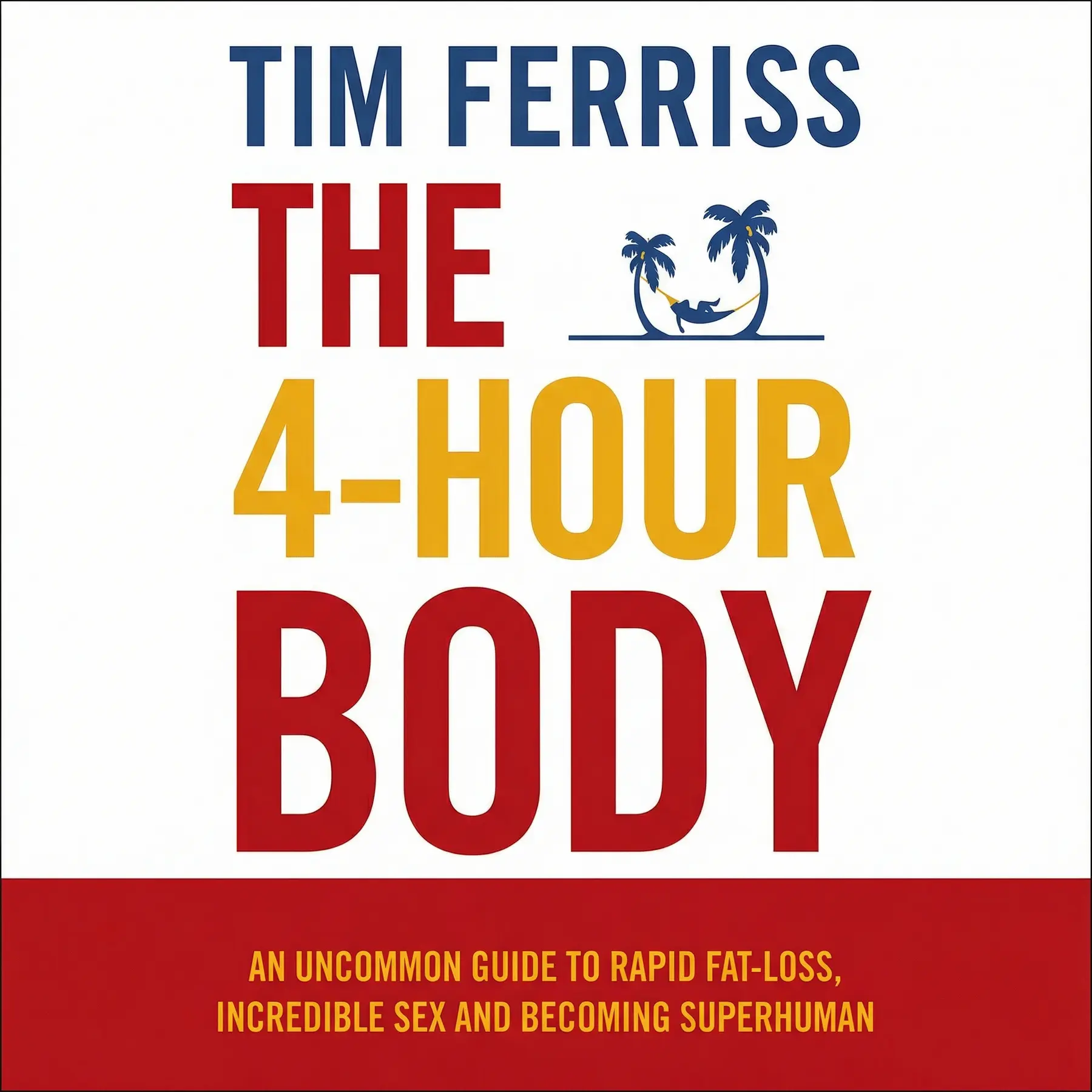
EnglishไทยThe 4-Hour Body: An uncommon guide to rapid fat-loss, incredible sex and becoming superhuman
By Tim Ferriss
Shows how to find the smallest change that gets a physical result, through Ferriss's slow-carb diet, short kettlebell workouts, sleep and sex adjustments, and technique fixes for jumping, running and swimming.
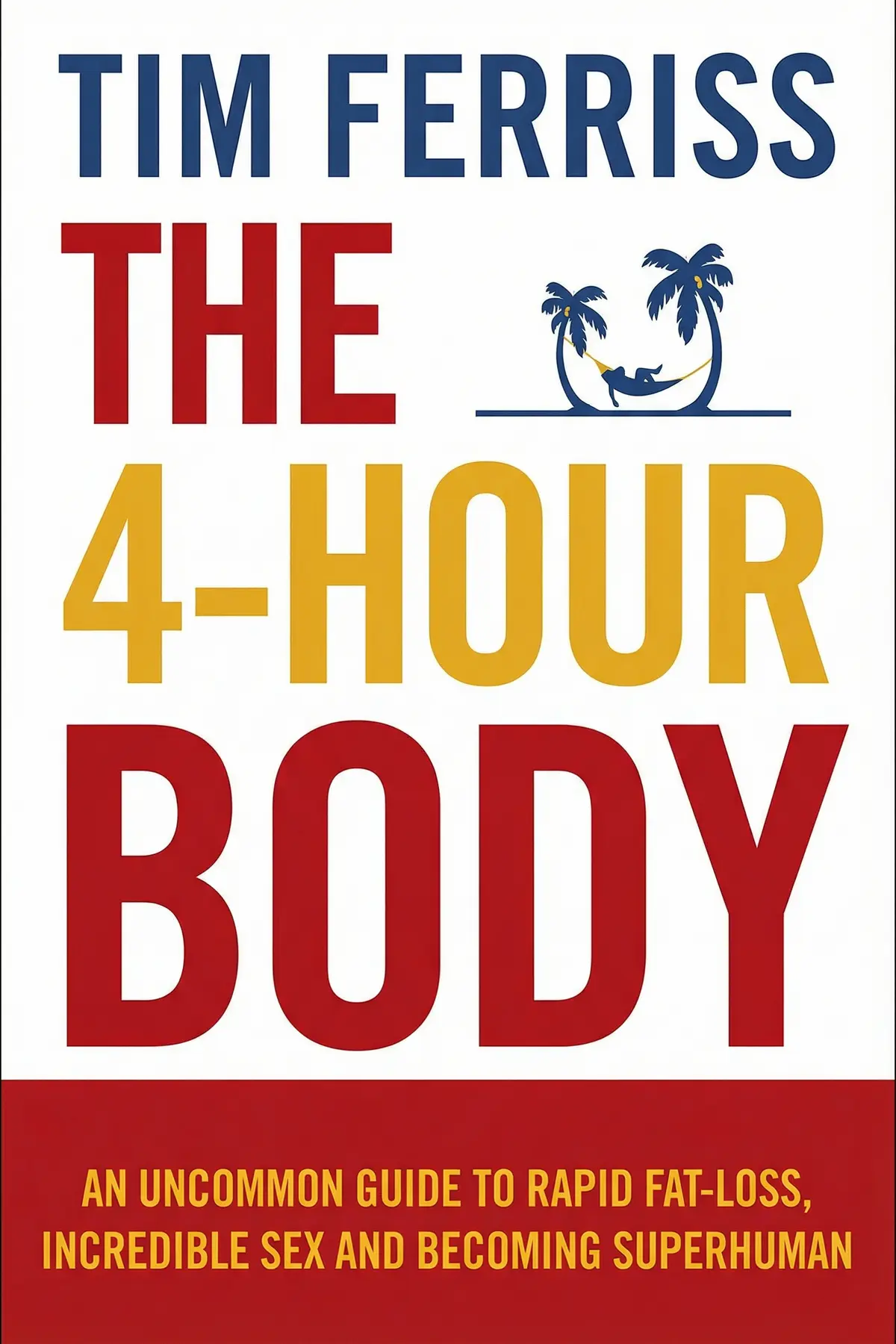
Table of Content
1. Introduction
59 sec
If you have tried diet after diet and still feel stuck, Tim Ferriss offers another way in: find the smallest change that produces a result, and stop there. In The 4-Hour Body, Ferriss reports on ten years of testing unusual fitness methods on himself, with help from well-known athletes and scientists. One headline result: on a five-rule eating plan, he says, he lost 9 kilograms in 30 days without exercising once.
The idea running through the book is that the body responds to small, precise inputs far better than to sheer volume of effort. Ferriss carries that idea into fat loss, muscle, sex, sleep, jumping, running and swimming. Expect a working toolkit: what to cut from your plate, how two short sessions a week can replace long hours at the gym, and which small technique changes made athletes faster. Each one is an experiment you can run on yourself.
2. Find the smallest dose that still works
1 min 41 sec
An Ironman athlete slashed his training hours and went on to place fourth in a 100-mile endurance race, while a remark in a Tokyo shop started a 32-kilogram change. Both stories turn on the same unexpected rule.
3. Lose fat with five food rules and breakfast
1 min 40 sec
Ferriss dropped 9 kilograms in a month without a single workout, and his diet even schedules a weekly binge. One morning habit, his father’s numbers suggest, can make or break the whole plan.
4. Lose fat and build muscle in short sessions
1 min 40 sec
A woman who once weighed 111 kilograms trained for under 20 minutes at a time, twice a week. A bestselling writer wanted the opposite result. One piece of equipment features in both stories.
5. Better sex from angle, pressure and desire
1 min 43 sec
Two famous surveys paint a bleak picture of how often women reach orgasm. An adult film veteran’s advice comes down to two physical adjustments, and Ferriss adds an odd thing to eat the night before.
6. Fall asleep sooner and free up hours
1 min 31 sec
A Stanford professor’s offhand tip finally ended Ferriss’s sleepless nights, and no pill was involved. He then makes a far bolder claim: that most of the hours you spend asleep may be negotiable.
7. Jump higher in two days, run with gravity
1 min 36 sec
An inch can decide a young football player’s future, and one coach claims he can add it in a weekend. A viral video of a man running on ice turns out to teach running anywhere.
8. Faster on land and farther in water
1 min 33 sec
A future record-breaking sprinter built her base at a walking pace, and a swim coach helped Ferriss cover twice the distance without adding a stroke. Both methods depend on a strange physical feeling.
9. Conclusion
1 min 10 sec
What ties ice baths, kettlebells and a pillow under the hips together is one stubborn question Ferriss keeps asking: what is the smallest, most exact change that gets you where you want to be? MacKenzie answered it with 6.5 hours of training where he once logged up to 30. Felix answered it by walking. Fowler answered it the moment he heard himself say he would never look good. The book’s real offer is precise effort, tested on a living body and measured.
That makes it a book to use selectively. Begin where your own Harajuku Moment points. If it is weight, drop white carbohydrates and eat 20 grams of protein within an hour of waking. If it is time, try two short kettlebell sessions a week in place of long workouts. If it is a skill, change one technique cue and count what happens, in inches, seconds or strokes. Write the numbers down, since a small dose only proves itself when you can watch them move.
Ferriss’s wager is that the body rewards the right adjustment, made on purpose, far more than it rewards sacrifice.
About this book
What is this book about?
Advice on diet and fitness comes in endless, contradictory forms, and most of it asks for more: more hours, more discipline, more sacrifice. Tim Ferriss spent a decade using himself as a test subject, working with athletes and scientists, to find which methods deliver results with the least effort. His organizing idea is the Minimum Effective Dose, the smallest input that produces the outcome you want. He applies it to a five-rule slow-carb diet, to short kettlebell sessions that replace long workouts, and to a weightlifting routine for gaining muscle. He also covers adjustments that improve sex, cold baths and nap schedules for sleep, and technique changes that helped people jump higher, run better and swim farther. Along the way come stories with numbers attached: an Ironman athlete who cut his training from up to 30 hours a week to 6.5, a woman who trained twice a week for 15 to 20 minutes and changed her weight dramatically in three months, and a sprinter conditioned by fast walking. Readers get a set of experiments to try and measure on their own bodies.
Book Information
Who it's for
Professionals short on time
Busy professionals who want results from diet and exercise without spending hours at the gym.
Dieters wanting simple rules
Dieters tired of conflicting advice who want simple food rules to test on themselves.
Amateur athletes
Amateur runners, swimmers and athletes looking for quick technique fixes they can measure.
About the Author
Tim Ferriss
Tim Ferriss made his name with the 4-Hour books, among them The 4-Hour Body and The 4-Hour Workweek, self-help titles about optimizing how you live, an approach he has since rethought. He later wrote Tools of Titans and Tribe of Mentors. He invests in and advises early-stage technology companies, with Uber, Shopify and Duolingo among them, and his podcast, The Tim Ferriss Show, crossed one billion downloads in 2023. He also backs scientific study of psychedelic treatments.
Ratings & Reviews
Ratings at a glance
What people think
Listeners find this weight loss guide engaging and straightforward to navigate, with one person describing it as an essential manual for lifestyle hackers. The text provides practical advice and achieves impressive outcomes, with listeners reporting losing up to 30lbs while gaining 5% muscle mass. They appreciate the thoroughly documented information, where one listener emphasizes its distinct research methodology, and they highly value the muscle-building plan alongside the diet and exercise strategies.
Top reviews
Malee
Finally decided to see if the hype around the slow-carb diet was actually legitimate or just more internet noise. I’ve dropped nearly twenty pounds in two months without feeling like I’m starving myself, which is a massive win in my book. The instructions on the "cheat day" are a total game changer for mental sanity during a weight loss journey. While Ferriss can be incredibly cocky and his self-experimentation feels like a bit much at times, the results speak for themselves. This isn't your standard health manual; it’s more like a reference guide for lifestyle hackers who want the maximum output for minimal effort. I especially appreciated the sections on kettlebell swings and the specific supplement stacks he recommends for fat loss. You have to be willing to ignore the ego, but the data-driven approach worked for me.
Show moreMarasri
Wow, what a wild ride through the world of extreme self-experimentation and biological optimization. This book completely changed my perspective on how much control I actually have over my own physical performance. I’ve integrated the cold showers and the high-protein breakfast into my daily routine, and the energy boost has been undeniable. The information on "minimal effective dose" is particularly valuable because it helps you stop overtraining and start seeing real progress with less time spent. While some critics hate his tone, I found the data-driven, anecdotal approach far more engaging than a dry textbook. It’s definitely not for everyone, but for anyone obsessed with efficiency and body hacking, this is the ultimate resource. I’ve gained five percent muscle mass using his specific lifting protocols while actually spending less time at the squat rack.
Show moreAnthony
If you treat this book as a "choose your own adventure" manual rather than a cover-to-cover read, it’s actually quite brilliant. I focused primarily on the injury prevention and muscle-building sections, and the simplified routine of deadlifts and kettlebells has saved me hours in the gym. Ferriss has a way of stripping away the fluff of the fitness industry to find the 20% of work that yields 80% of the results. Not gonna lie, the guy’s constant self-promotion is grating, but his dedication to tracking every single variable is impressive. The research approach is unconventional, but for someone tired of the same old gym-rat advice, it provides a refreshing alternative. You just need a healthy dose of skepticism when he starts talking about holding your breath for minutes or tripling your testosterone levels.
Show moreLucia
After hearing everyone rave about the slow-carb lifestyle, I finally picked this up to understand the mechanics behind it. The diet is surprisingly easy to follow once you get past the initial cravings for bread and sugar, and the weekly cheat day makes it feel sustainable. I’ve noticed a significant drop in body fat, especially around my midsection, which was my primary goal when starting this journey. Ferriss writes with a level of confidence that is infectious, even if some of his claims about 15-minute orgasms or rapid muscle gain feel like hyperbole. The book is well-researched in its own weird way, drawing from professional athletes and fringe scientists rather than just mainstream health gurus. It’s a great tool for anyone who likes to track their own data and experiment with what works for their specific biology.
Show moreGai
This massive doorstop of a book actually makes for a perfect bathroom read because you can just dip in and out of different sections. I didn't bother reading it from start to finish, but instead focused on the "Geek to Freak" muscle-building program. The results were surprisingly good for such a low-frequency lifting schedule, which proves his point about the minimal effective dose. Truth is, Ferriss can be a bit of a tool, and his constant need to prove he's the smartest guy in the room is annoying. But if you can look past the ego, there are some legitimate gems in here about nutrition and physical recovery. The advice on using cinnamon to manage insulin levels was a particularly cool hack that I've started using daily. It’s a lifestyle manual for the modern era that challenges every piece of conventional wisdom you’ve ever heard.
Show moreChamp
Look, the guy is a total showman, but he definitely knows how to get people motivated about their health. I was mostly interested in the injury-proofing chapters, and the movements he suggests for correcting imbalances have really helped my chronic back pain. The "Slow-Carb" diet is basically a rehashed version of older low-glycemic plans, but the way he packages it makes it much more accessible for the average person. I do think he overcomplicates certain things, like the elaborate sleep schedules that no one with a normal life could ever actually follow. But as a general guide for optimizing your body, it’s far more comprehensive than anything else on the market right now. If you’re looking to lose weight and gain some muscle without spending your entire life in the gym, this is a solid investment.
Show moreMichael
Tim Ferriss is definitely a unique character, and his writing style reflects that obsessive, almost OCD-level attention to detail. I picked this up curious about the body-hacking trends, but found myself rolling my eyes at the constant name-dropping and mentions of partying with rockstars. To be fair, he does offer some solid advice on strength training and minimal effective doses that make sense for busy professionals. However, some of the more extreme experiments, like the ice baths or the massive supplement cocktails, felt borderline dangerous and expensive for the average person. The chapter on female sexuality was also surprisingly awkward and felt totally out of place in a book about physical optimization. It’s an interesting read if you’re looking for weird ideas to test, but I wouldn’t take everything he says as gospel truth.
Show moreWatcharin
A bit of a mixed bag here, as Ferriss vacillates between genuinely useful health tips and some pretty questionable "science." Personally, I found the sections on sleep hacking and the PAGG supplement stack to be the most interesting parts of the entire book. However, the sheer volume of information is overwhelming, and the contradictory nature of the different chapters can be incredibly confusing for a beginner. One page tells you to avoid all carbs, and the next is discussing how to binge-eat on a cheat day to spike your metabolism. It’s a fascinating look into the mind of a madman, but I’m not sure how much of it is sustainable for someone with a real job and kids. The writing is entertaining, but you have to be careful about which "hacks" you actually decide to implement on your own body.
Show morePrinya
Is it science? No, not in the traditional sense, but it is a very thorough collection of one man’s obsessive experiments. I appreciate the focus on tracking metrics and being your own "N-of-1" study, even if some of the conclusions are logically shaky. The book is entertaining as hell to read, mostly because Ferriss goes to such extreme lengths to test things like sperm count and blood glucose. Gotta say, I'm skeptical of the "four hour" branding, as many of these protocols actually take quite a bit of planning and expensive testing to execute properly. It’s more of a hodgepodge of advice than a cohesive system, but there’s enough variety that everyone will find something useful. Just don’t expect to become a world-class athlete or a tango champion overnight just because you read a few chapters.
Show moreKanchana
The sheer arrogance dripping from every page of this five-hundred-page doorstop is honestly exhausting to navigate. Ferriss treats the human body like a piece of software to be hacked, often ignoring established medical science in favor of his own anecdotal evidence. Frankly, telling people they can sleep two hours a day or avoid all fruit like the plague seems irresponsible and potentially harmful to long-term health. I tried the slow-carb approach for a few weeks and felt absolutely miserable, losing my mental focus and energy for my family. The book is a hodgepodge of contradictory advice that changes depending on which chapter you happen to be reading at the moment. Unless you have thousands of dollars for private blood tests and a mountain of supplements, most of these "hacks" are completely inaccessible. Stick to the basics of eating well and moving more instead of following this narcissist's bible.
Show moreQuestions about this book
What is the main idea of The 4-Hour Body?
Tim Ferriss argues that the body responds best to the smallest precise input that produces a result, an idea he calls the Minimum Effective Dose, borrowed from exercise scientist Arthur Jones. Doing more than that dose wastes time and can even backfire. Ferriss applies the principle to fat loss, muscle gain, sex, sleep and sports, drawing on a decade of testing methods on himself with athletes and scientists.
What are the rules of the slow-carb diet?
There are five. Cut all white carbohydrates, including bread, pasta, potatoes, cereal and every kind of rice. Repeat a few meals built from proteins, legumes and vegetables. Don’t drink calories such as milk, juice or soft drinks, though a little red wine is allowed. Avoid fruit, except tomatoes and avocados. Take one cheat day a week. Ferriss adds a breakfast with at least 20 grams of protein within an hour of waking.
What does The 4-Hour Body say about sleep?
For insomnia, Ferriss recommends a ten-minute ice bath an hour before bed, a tip from a Stanford sleep biology class that worked for him. He also argues that about two hours of REM sleep matters more than eight hours in bed. His Everyman schedule uses 4.5 hours of core sleep plus two 20-minute naps, while the much stricter Uberman schedule uses six 20-minute naps a day.
Who should read The 4-Hour Body?
It suits people who want physical results without long hours of training: busy professionals, dieters overwhelmed by conflicting advice, and amateur athletes who want faster technique gains. Its methods are short and specific, from twice-weekly kettlebell sessions of 15 to 20 minutes to jump and swim drills that Ferriss tested on himself and measured in inches and strokes.
How can I apply The 4-Hour Body?
Start from the one area that matters most to you right now, which Ferriss would call your Harajuku Moment. For weight, drop white carbohydrates and eat a protein-rich breakfast. For fitness with little time, try two short kettlebell sessions a week. For a sport, change a single technique cue, such as leaning forward when you run, and track one number to see whether it works.
Featured in
Readers also enjoyed


Ali: A Life
Jonathan Eig


An American Sickness: How Health Became Big Business and How You Can Take
Elisabeth Rosenthal



AUDIO SUMMARY AVAILABLE
Listen to The 4-Hour Body in 15 minutes
Get the key ideas from The 4-Hour Body by Tim Ferriss, plus 5,000+ more nonfiction titles.
- 5,000+ titles
- Listen as much as you want
- 7-day free trial
- Cancel anytime









