

15 min 05 sec
Available in: English
The $12 Million Stuffed Shark: The Curious Economics of Contemporary Art
By Don Thompson
Explains why a preserved shark or a painted date can sell for millions: brands, rarity and powerful dealers set art prices. It also shows why art usually makes a weak investment and how careful collectors can still profit.
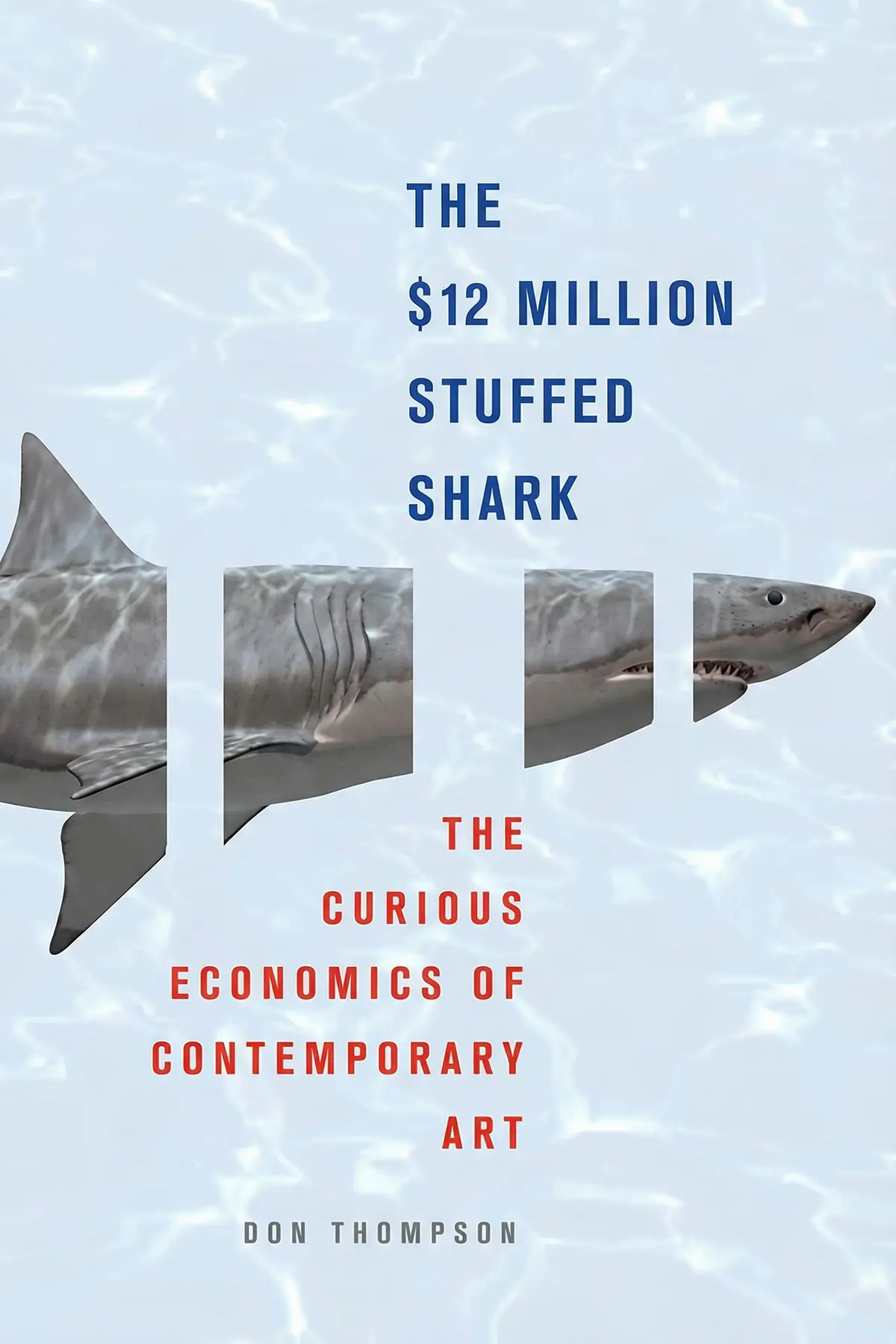
Table of Content
1. Introduction
1 min 09 sec
If a $12 million price for a dead shark sounds like madness, you are looking at the art and missing the market. In The $12 Million Stuffed Shark, economist Don Thompson argues that contemporary art prices are set mostly outside the canvas, by brands, rarity and the people who control access. The shark of the title, a decaying specimen suspended in formaldehyde by the British artist Damien Hirst, was reportedly sold in 2005 to hedge fund billionaire Steve Cohen. At the time, no work by a living artist had ever sold for more.
Thompson follows the money through galleries, auction houses, dealers and museums, and the picture is consistent. Value here is manufactured by names and gatekeepers. That is exactly why art usually makes a poor investment, and why the few who profit do it through patience and discipline. By the end, a headline art sale will read like an insider’s report, and you will know whether a painting belongs in your portfolio or only on your wall.
2. See the brand behind every price tag
2 min 12 sec
The same sculpture can sound foolish or sensible depending on one extra word in the sentence. Thompson shows which names do that work, and why the richest buyers have stopped caring about the size of the bill.
3. Read rarity to understand record prices
2 min 13 sec
A minor painting changed hands twice in nine years and its price jumped several times over, though the canvas never changed. Thompson explains what did, and why the whole market is smaller than it looks.
4. Learn which dealers decide an artist's career
2 min 08 sec
Thousands of artists graduate every year, and almost none will ever see a major auction. The person who picks the winners runs a fragile business, and one investor’s rights deal shows where the real money hides.
5. Discover what museums gain by hiding their art
2 min 02 sec
An artist sprayed a dollar sign on a famous painting and called it a protest. The numbers Thompson gathers about museum storerooms and one famous name deal suggest the protester had a point.
6. Spot the gap between art's headlines and its returns
2 min 12 sec
A Picasso bought for $30,000 sold for $104 million, and the story made headlines. The rest of the same museum’s record tells a very different story, and so do the auctions where nobody raised a hand.
7. A collecting plan that can actually pay off
2 min 01 sec
Thompson does not tell would-be collectors to give up. He gives them a price range, a holding period and a rule about when to sell, and each one answers a trap described earlier.
8. Conclusion
1 min 08 sec
A shark in a tank turns out to be a good teacher of economics. Its price was never a verdict on the shark. It recorded a meeting of brands, scarcity, gatekeepers and wealthy people competing for status, in a market small enough for a few of them to set the terms. Thompson makes that machinery visible, and once you see it, the headlines read differently. A record sale reports what a few bidders wanted on one evening. The Whitney’s 7 percent a year and the 41 unsold lots of 1991 say more about what art does with money over time.
The practical lessons follow. When a price astonishes you, look for the names behind it before judging the work. If you buy art hoping it will grow, count the failures the indexes leave out, spread your money across several modest pieces and expect to hold them for decades. If a piece simply moves you, let that be the main reason to buy, and treat any profit as a possible bonus.
The canvas starts the story. Everyone standing around it writes the price.
About this book
What is this book about?
Headline art prices look irrational from the outside. A shark preserved in formaldehyde reportedly sold for $12 million, simple date paintings fetch high sums, and the same work can cost three times more in one gallery than in another. Economist Don Thompson argues that none of this is random. Contemporary art prices are produced by a market with its own rules. Thompson follows the money through branded galleries and auction houses, shrinking supplies of old masters, dealers who decide which artists get a career, and museums that keep most of their collections in storage as assets. He then asks the question many buyers care about most: is art a good investment? His answer draws on boom-and-bust cycles, the Whitney Museum's record of sales and the limits of the Mei Moses Index. Readers come out able to decode a record sale, see who really sets the price of a work, and judge art as an asset with clear eyes. For those who still want to collect, Thompson lays out a practical plan: study the market, earn dealers' trust, spread money across modest works and hold for decades.
Book Information
Who it's for
Curious gallery visitors
Curious gallery visitors who have wondered why a simple work sells for millions.
Weighing art against stocks
Investors and professionals weighing art as an asset next to stocks.
Marketers and founders
Marketers and founders who want a vivid case study in how brands and scarcity create value.
About the Author
Don Thompson
Don Thompson is an economist and emeritus Nabisco Brands professor of marketing and strategy at the Schulich School of Business at York University in Toronto. He has also taught at Harvard Business School and the London School of Economics. He writes about the economics of the art market for publications including The Times of London, Harper's Magazine and The Art Economist.
Ratings & Reviews
Ratings at a glance
What people think
Listeners find the book remarkably accessible and simple to follow, praising the thorough research and in-depth breakdowns of social and economic aspects. Furthermore, it offers a compelling perspective on the modern art world and is packed with intriguing real-life stories. Additionally, listeners value the narrative voice and see it as a helpful guide, with one noting it is especially beneficial for newcomers to the industry.
Top reviews
Weera
Ever wonder why a pickled shark costs more than a private island? This book offers a hilarious and terrifying glimpse into the elite circles where branding beats beauty every single time. Thompson, an economist by trade, deconstructs the mechanisms of 'Veblen goods' without making it feel like a dry classroom lecture. You’ll learn how Charles Saatchi can turn a pile of candies into a fortune just by attaching his name to the exhibit. It’s a fascinating look at how the super-rich use art as a status symbol to signal their arrival in the global upper class. I especially loved the anecdotes about Christie's and Sotheby’s; the psychology behind those bidding wars is absolutely wild. If you’ve ever looked at a modern masterpiece and thought 'my kid could do that,' read this first. It won't change your mind about the art, but you'll finally understand why it costs millions.
Show moreTanawan
Wow, what a wild ride through the galleries of London and New York. I never realized how much work goes into creating the 'buzz' around a new artist before they even hit the auction floor. This book explains the concept of 'buying blind' and why some collectors will spend millions on things they haven't even seen in person. It’s a bizarre world where status is the primary currency and the art itself is almost secondary to the transaction. Thompson is a fantastic guide, providing just the right amount of economic theory to support his colorful stories. The chapter on the $12 million shark itself is worth the price of admission. It's easily one of the most readable non-fiction books I've picked up this year. Highly recommended for anyone who loves a good behind-the-scenes exposé.
Show moreSomrutai
For anyone looking to break into the industry, this is basically required reading. Don Thompson provides a comprehensive roadmap of how the contemporary art world actually functions, far away from the romanticized image of the starving artist. He highlights the crucial role of the branded gallery and the importance of a 'star' collector’s endorsement. The book is packed with fascinating true incidents that illustrate how precarious this market can be. Even famous collectors like Charles Saatchi aren't immune to making bad investments sometimes. It’s a very practical look at a very impractical world. The prose is clear and the pacing is excellent throughout the entire work. I finished it in two sittings and immediately wanted to go to a museum.
Show moreWoravit
As an economics enthusiast, I found Thompson's breakdown of the high-end art market absolutely gripping. He manages to demystify the bizarre valuations of conceptual works, such as Tracey Emin’s unmade bed or Damien Hirst’s various taxidermy projects. The writing is incredibly accessible, avoiding the dense 'artspeak' that usually alienates outsiders from the conversation. We see how the 'branded' dealer acts as a gatekeeper, ensuring that only the luckiest few artists reach the top of the funnel. While I enjoyed the focus on the financial side, I wish there was more discussion on the intrinsic value of the pieces themselves. It feels a bit cold to talk about creativity solely in terms of ROI and resale margins. Nevertheless, for a deep dive into the business of beauty, this is a top-tier resource.
Show moreSamuel
Picked this up on a whim and couldn't put it down. It’s essentially a collection of 'true crime' stories for the billionaire set, where the crimes are the prices being paid for mediocre objects. Thompson explains why a Damien Hirst shark is worth $12 million while a similar one in a science museum is worth nothing. The answer is branding, branding, and more branding. It makes the whole industry look like a massive, sophisticated game of musical chairs played with oil paintings. My only gripe is that the book gets slightly repetitive towards the end when discussing different auction houses. That being said, the readability is off the charts. You don't need an MFA to appreciate the absurdity documented here.
Show moreWissanu
Don Thompson does for the art market what Freakonomics did for everyday life. He takes a world that seems nonsensical to the average person and shows that there is a rigid, albeit strange, logic behind it. The sections on how auctioneers use the 'endowment effect' to drive up prices during a sale were particularly eye-opening. You start to realize that the buyer isn't just purchasing a canvas; they are purchasing a ticket into an exclusive club. I was surprised by how much of the value comes from provenance and the prestige of previous owners. It's well-documented and filled with figures that will make your eyes water. My only minor complaint is that some of the market data feels slightly dated now. However, the social principles he outlines are still 100% relevant today.
Show moreFinn
After hearing about multimillion-dollar sales for years, I finally understand the machinery behind the curtain. Thompson’s exploration of the branding circle—where museums, dealers, and auction houses all support each other’s interests—is brilliant. It’s a fascinating ecosystem where the value of a piece is directly tied to the status of the person selling it. I loved the list of 'rules' for what sells at auction, like why red paintings are worth more than green ones. It’s these kinds of specific, weird details that make the book so engaging for a casual reader. The writing style is brisk and professional without being stuffy. I’d recommend this to anyone who finds the contemporary art scene confusing or pretentious. It provides the decoder ring you’ve been looking for.
Show moreSaengdao
The book is a solid introduction to the 'how' of the art world, but I felt it lacked a bit of 'soul.' It’s very much written by an economist, meaning everything is viewed through the lens of supply, demand, and signaling. While the breakdown of how galleries manipulate prices was enlightening, the narrative felt a bit detached from the actual joy of art. I wanted to hear more about the artists' struggles rather than just the dealers' commissions. Truth is, the anecdotes are the real star here, especially the parts about the 'trophy wives' leaving auctions early. It’s an interesting read for sure, but maybe too cynical for some. If you want to know about money, buy it. If you want to know about art, look elsewhere.
Show moreElena
The chapter on auction house psychology was the clear highlight for me. Seeing how Christie’s and Sotheby’s manipulate bidders' egos was both fascinating and a little bit gross. Thompson is great at explaining these complex social dynamics in a way that feels natural. However, I did find the middle section of the book to be a bit of a slog as it drifted into more technical dealer details. It’s a good book, but it probably could have been fifty pages shorter without losing much impact. To be fair, the research is impeccable and the author clearly knows his stuff. It’s just that some of the artist lists started to blend together after a while.
Show moreSuphan
Frankly, I left this book feeling more cynical than when I started. It’s a well-written account, but the sheer amount of greed on display is honestly exhausting to read about for 300 pages. Thompson focuses almost entirely on the 'branded' superstars like Jeff Koons, leaving little room for the 99% of artists who aren't making millions. The book describes a system where the art is just a commodity, no different than pork bellies or oil futures. It’s informative, yes, but it completely ignores the aesthetic or emotional resonance that art is supposed to provide. If you’re looking for a celebration of creativity, this isn’t it. It’s a funeral for art disguised as a marketing textbook. I appreciate the research, but it left a bad taste in my mouth.
Show moreQuestions about this book
What is The $12 Million Stuffed Shark about?
Economist Don Thompson explains how contemporary art gets its prices. Using Damien Hirst’s preserved shark, reportedly sold for $12 million in 2005, as a starting point, he shows that value comes largely from branded galleries and auction houses, scarcity, dealers who control which artists succeed, and museums that treat art as an asset. He also examines whether art is a sound investment.
Is art a good investment according to Don Thompson?
For most people, no. Thompson points to boom-and-bust cycles, such as the impressionist crash after 1990 that took until 2005 to recover. The Whitney Museum’s collection averaged about 7 percent a year, and a fifth of its auctioned works sold below cost. He argues the Mei Moses Index looks better than reality because it ignores unsold works, private sales, fees and taxes, and that stocks generally do better.
Why do branded galleries and auction houses raise art prices?
Because buyers are unsure how to judge contemporary art, a respected name reassures them. Thompson offers the case of a piece that could fetch $4,000 at a little-known small gallery but $12,000 at Gagosian. Artists such as Warhol and Hirst, and collectors such as Charles Saatchi, become brands too, so the market accepts almost anything linked to them.
How does Thompson suggest building a profitable art collection?
Study galleries in London, New York, Berlin and Paris, and use advisory services to find artists already rising. Build trust with reputable dealers, who control access to sought-after work. Buy works priced from $30,000 to $75,000 and spread money across several of them rather than one costly piece. Hold for 20 or 30 years, track prices on Artnet, and favor young, innovative artists.
Readers also enjoyed

A Splendid Exchange: How Trade Shaped the World
William J. Bernstein



Adults in The Room: My Battle With Europe’s Deep Establishment
Yanis Varoufakis

1929: Inside the Greatest Crash in Wall Street History--and How It
Andrew Ross Sorkin

23 Things They Don’t Tell You About Capitalism
Ha-Joon Chang
AUDIO SUMMARY AVAILABLE
Listen to The $12 Million Stuffed Shark in 15 minutes
Get the key ideas from The $12 Million Stuffed Shark by Don Thompson, plus 5,000+ more nonfiction titles.
- 5,000+ titles
- Listen as much as you want
- 7-day free trial
- Cancel anytime









