Born For This: How to Find the Work You Were Meant to Do
Chris Guillebeau
 English
 ไทย
Shows how ordinary people build one-person businesses with almost no money. They find where their passions meet a real customer need, test demand before building, price for value and plan on a single page.
1 min 04 sec
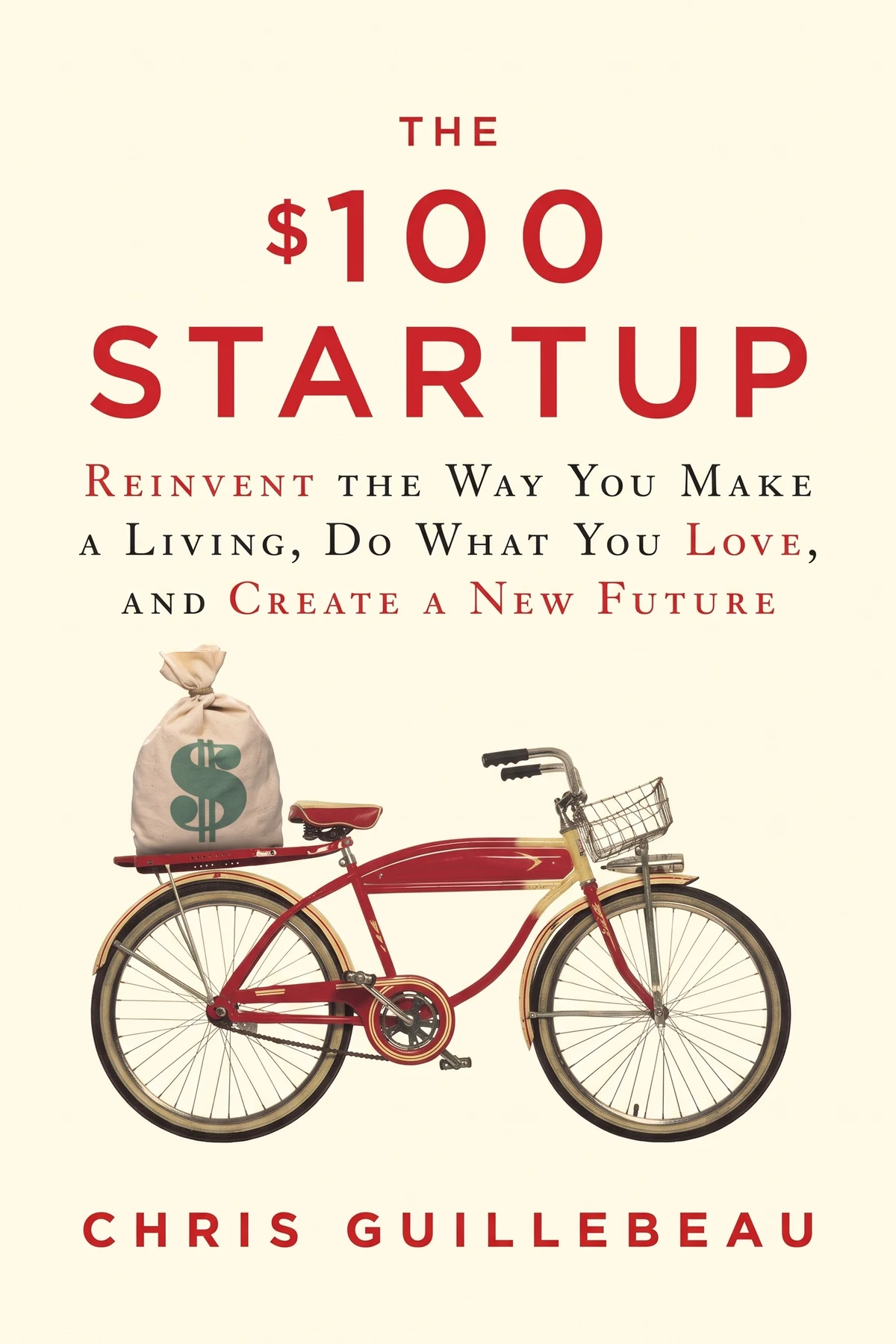
If you have ever wanted to work for yourself but assumed it took savings, a business degree and a thick plan, the starting bar is far lower than it looks. In The $100 Startup, author and lifelong self-employed entrepreneur Chris Guillebeau shows ordinary people building one-person businesses with no funding and no experience. Two designers just out of school began selling custom maps online and left their day jobs within nine months. A piano teacher wrote software to keep track of his students and lessons, then turned it into income of more than $30,000 a month.
Guillebeau boils the requirements down to three: a product or service, customers who want it enough to buy, and a method for taking their payment. Many of his entrepreneurs say their hardest fight was with their own fears. His case is that the real work is finding where what you love meets what others need, testing it cheaply and starting before you feel ready. Expect a working method, from proving demand to a plan that fits on one page.
1 min 36 sec
Plenty of people love travel, food or music, and almost none of them get paid for it. A frequent flyer and a London waitress show where the money hides, and it is rarely in the passion itself.
1 min 34 sec
Surveys say one thing and wallets often say another, as every airline has learned. A car enthusiast and a wedding photographer show two ways to find out what buyers will really pay for.
1 min 32 sec
Listing your product’s features feels like selling, but it rarely persuades anyone. A California ranch and a five-cent advice stand in Seattle point to a cheaper and far more effective way to be noticed.
1 min 37 sec
The worst outcome for any new product is silence on launch day. One online course earned more than $100,000 in 24 hours, and its deadline came from a train timetable.
1 min 37 sec
A Denver food tour guide started on $28, and a craft publisher found money her bank would not lend. Neither began where most new owners think they must.
1 min 40 sec
Two founders can sell the same service and earn very different amounts. A travel consultant who ignores the clock and a cupcake club show where the extra profit comes from.
1 min 39 sec
Growth sounds like the obvious goal, yet it can turn a satisfying one-person business into something you never wanted. The direction you grow, and who you hand work to, decide which way it goes.
1 min 30 sec
Thick business plans feel responsible and often keep founders from ever starting. The alternative fits on a single page, ends with one commitment most plans leave out, and takes an evening to write.
1 min 15 sec
Look back across these stories and one pattern repeats: small, cheap proof. A car guide sold twice before a page existed. Architecture advice for a nickel that led to full-price work and national news. A 24-hour train ride with a deadline built in. Guillebeau’s founders tend to begin modestly, often without outside money or detailed plans. Each found a place where something they cared about met a problem others would pay to solve. Then they tested it on real customers and adjusted from there.
That is why he locates the biggest obstacle inside the founder. Markets rarely stop a microbusiness before it begins. Fear and endless preparation do.
If you want to start, begin with the overlap: one passion, one skill, one group of people with a problem. Ask them, or better, ask for a preorder. Keep spending tied to sales and charge for the value you deliver. Then write your one-page plan and put a launch date on it.
Guillebeau promises the first sale will feel better than you imagine. In his account, it takes only a product, a buyer and a way to get paid, a list short enough to fit on a receipt.
Plenty of people want to work for themselves and assume they first need savings, an MBA and a detailed business plan. Chris Guillebeau argues they need far less: a product or service, customers who will hand over money for it, and some means of receiving payment. His examples are ordinary founders, from two young designers selling custom maps to a piano teacher whose scheduling software became a full-time income. The catch is that passion alone pays nothing. Guillebeau shows how to find the overlap between what you love, what you can do and what others need. He then explains how to check demand before building, market the benefit a customer feels and run a launch with a real deadline. He covers the money side too: starting on less than $100, keeping costs tied to sales, subscriptions, value-based prices and small experiments that lift profit. Readers get a practical method for starting a microbusiness and deciding how big it should grow. They also learn to fit the whole plan onto one page with a launch date attached.
Employees who dream of working for themselves but think they need savings or a business degree first.
Freelancers and side-project builders who want to test demand and price their work for its value.
Small business owners looking for low-cost marketing, simpler plans and steadier income.
Chris Guillebeau is an author, blogger, speaker and entrepreneur who has been self-employed for his whole working life. His blog The Art of Non-Conformity, on entrepreneurship and travel, led to a book of the same name in 2010, followed by The $100 Startup in 2012 and Side Hustle in 2017. He hosts the daily podcast Side Hustle School and organized the World Domination Summit in Portland, Oregon, from 2011 to 2022. He visited all 193 countries before turning 35.
Chris Guillebeau
Chris Guillebeau
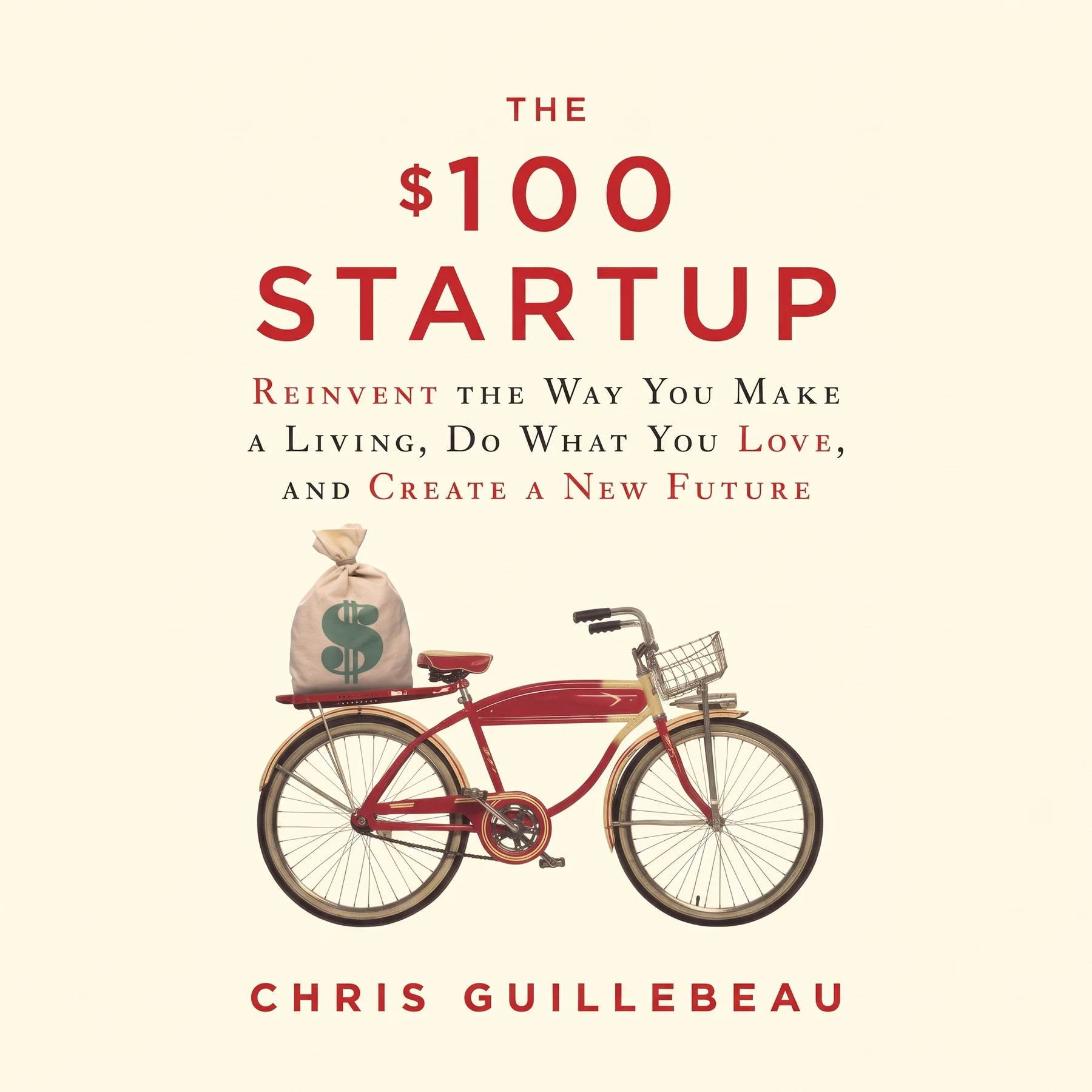
Listeners find this book both accessible and captivating, praising its abundance of actionable tips and thoroughly investigated material. It serves as an all-encompassing guide to entrepreneurship, helping individuals build businesses that fund their ideal lifestyles. Listeners also appreciate the authentic stories included throughout the work, with one listener noting that it encourages them to think outside the box. Furthermore, they find the focus on minimal initial investment highly beneficial and believe the purchase is a great value.
Finally got around to reading Chris Guillebeau’s guide, and frankly, it’s a refreshing change of pace from those dense, academic business manuals. Instead of pushing for complex venture capital models, Chris reminds us that you just need a product, a group of willing customers, and a way to get paid. I loved the emphasis on microbusinesses that earn at least $50k a year without a massive team or overhead. While some might find the 'three elements of a business' a bit too simplistic, the focus on taking action over endless planning is vital for beginners. Truth is, the anecdotes about people turning hobbies into revenue streams are incredibly motivating, even if they sometimes feel a bit like curated highlight reels. It’s a great primer for anyone looking to build a lifestyle-centric career without taking on massive debt or risk. The low-cost approach makes the dream of entrepreneurship feel accessible to everyone.
Show moreWow, what an eye-opener for those of us who overthink every single step of a project. The central thesis is that you don't need a massive, sixty-thousand-dollar education to start making money on your own terms. Personally, I think the 'Give people fish' chapter was brilliant because it challenges that old cliché about teaching a man to fish being the only way to help. Sometimes, people just want the fish, and providing that solution is exactly where a viable business lives! The author’s bias for action is contagious, making you want to go out and test an idea immediately rather than drafting a fifty-page plan. It’s well-researched and full of practical checklists like the thirty-nine-step product launch that actually give you a roadmap. If you're looking for an inspirational kick-start that won't break the bank, this is the one for you. It really helps you realize that your knowledge is valuable.
Show morePicked this up during a career slump and it was exactly the kick in the pants I needed to stop making excuses. I love the distinction between being a 'hustler' versus being a 'charlatan' or a 'martyr.' It really made me rethink how I present my own skills to the world and whether I’m actually providing value or just talking about it. The book is packed with practical advice on how to overdeliver to your customers so that they feel an immediate sense of satisfaction. Not gonna lie, seeing 1,500 examples of people making $50,000 or more a year on their own terms makes the dream feel very attainable. It’s an engaging, well-researched read that doesn't get bogged down in technical jargon or boring financial spreadsheets. If you want to build a business that supports your lifestyle rather than consuming it, start here. It's the best $15 I've spent all year.
Show moreThis book serves as a solid primer for anyone feeling trapped in a traditional 9-to-5 role. In my experience, most business literature focuses way too much on the 'big scale' and not enough on the 'right scale' for the individual. Guillebeau does a fantastic job identifying individuals who built successful ventures from almost nothing, often starting with less than a hundred dollars. However, to be fair, the writing can feel a bit repetitive at times, almost like several blog posts were stitched together without a tight edit. The 'Key Points' summaries at the end of chapters are helpful, but occasionally they feel like they are over-explaining the obvious to a degree that might irk more seasoned professionals. Despite that, the focus on value and helping others is a message that more people need to hear before they launch. It’s well-researched and certainly worth the money for the inspiration alone.
Show moreEver wonder if you're stuck in the corporate grind forever because you lack an MBA or a huge bank account? This book argues—quite convincingly—that you don't need any of that to start something meaningful. I particularly enjoyed the concept of 'Convergence,' which is that sweet spot between what you love doing and what people are actually willing to pay for. It’s a very low-cost approach to entrepreneurship that feels accessible even if you aren't particularly artsy or crafty. I do wish there was more 'how-to' depth regarding the technical side of things, as the case studies are often very brief. Still, as a motivational tool to get your gears turning about a side hustle, it’s worth the price of admission. It encourages you to think outside the box and stop waiting for permission to pursue your own version of freedom. The focus on emotional benefits over product features is a game-changer for marketing.
Show moreThe chapter on the one-page business plan was the highlight for me because it strips away all the unnecessary fluff. Picked this up when I was feeling overwhelmed by the idea of 'starting up,' and it really helped simplify the path forward. The core idea is that you need to focus on what you can add or take away to improve someone’s life, which is a great way to frame marketing. It’s less about persuasion and more about invitation, making the whole process feel much less 'salesy' and more authentic. I did notice that many of the examples are from people in creative or artistic fields, which might not resonate with everyone. However, the general principles of value exchange are universal enough that most readers will find at least a few nuggets of wisdom. It’s a very easy read that you can finish in a weekend while taking notes on your next big move.
Show moreAfter hearing so much buzz about the 'microbusiness' movement, I finally dove into these case studies to see what the fuss was about. The book does a great job of showing that freedom is very closely linked to the value you provide to others. Frankly, the most honest part of the book was seeing the checklists at the end, which actually give you something to do once you finish reading. I appreciated the advice on 'strategic giving' and how to build a loyal following by genuinely trying to improve people’s lives. It’s not a perfect book—some of the 'how-to' sections are a bit thin on actual implementation details—but the mindset shift it provides is worth it. It helps you think outside the box and realize that you don’t need anyone’s permission to start your own journey. Definitely a worthwhile read for aspiring entrepreneurs who want to start small but think big.
Show moreAs someone who has been following the author’s work for a while, my expectations were high, and I found this to be a bit of a mixed bag. Not gonna lie, the stories are wonderful and inspiring, but they often feel a bit surface-level and leave out the behind-the-scenes struggles. You get the 'John Doe quit his job and now he's happy' snippet, but you don't always see the blood, sweat, and tears required to actually scale. I appreciated the one real moment where Chris mentioned spending $10,000 on advertising for a guide, as it felt like a rare glimpse of actual data in a sea of anecdotes. The book is definitely aimed at the absolute beginner who has zero experience with online business. For everyone else, you might find yourself rolling your eyes at how simple some of the advice is, but it's still a quick, pleasant read for a rainy afternoon.
Show moreLook, the advice here is fundamentally sound, but you have to realize it is extremely basic at its core. You get a product, you find people to buy it, and you get paid—that’s essentially the whole book expanded into two hundred pages. Truth is, I found the repetition a bit grating, as the author tends to circle back to the same points over and over again. That said, the case studies are engaging enough, and it’s interesting to see how people have built five-figure businesses from their living rooms. It serves as a comprehensive primer on entrepreneurship for the risk-averse, emphasizing low-cost entries rather than high-stakes gambling. I just wish there were fewer anecdotes about the author’s friends and more in-depth data on the failures that happened along the way. Success stories are great, but we learn just as much from the behind-the-scenes struggles that were mostly left out here.
Show moreI'll be blunt: I expected way more substance than what was actually delivered in these pages. Most of the book feels like 15% substance and 85% anecdotes that are too short to be truly educational. To be fair, I think the author succeeded in creating his own startup by selling this book, which feels a bit too meta for me. I was also pretty irritated by the misattributed quotes—it’s clear some of these were just pulled from unsourced sites without a second thought, like the one attributed to Karl Marx about catching fish. If you can’t get basic research right, it makes me wonder how much of the other content is just surface-level fluff. It’s fine as a very basic introduction if you have literally never thought about business before, but for everyone else, it’s just vapor. Save your money and just read a couple of blog posts on the topic instead.
Show moreChris Guillebeau argues that launching a one-person business takes far less than most people assume: a product or service, customers who will buy it, and a means for them to pay you. The real work is finding where your passions and skills meet a need others have. From there you test demand cheaply, market the benefit customers feel and launch before you feel fully ready. Many founders he describes began with no funding, no experience and no detailed plan.
Get to know your customers’ shared passions, skills and values, then ask them directly, informally or through surveys, whether they would pay. Better still, advertise the product before making it. One car enthusiast advertised a guide to high-end cars and wrote it only after two people paid $900 each. Guillebeau also warns that stated wishes can mislead, as airlines learned when travelers who complained about cramped seats still chose cheaper flights.
Base the price on the benefit to the customer. Travel consultant Gary Leff charges a flat $350 per booking whether it takes five minutes or five hours. Guillebeau also recommends subscriptions for repeat income and occasional price increases, which customers often accept more warmly than expected. He suggests a small range of options too, including a premium version for buyers who always want the best.
Guillebeau limits the plan to one page that spells out the product you will sell, the buyer, the buyer’s reason for purchasing, and the way you will be paid. Add the marketing tactics you plan to use, such as guest blog posts, and the key numbers you will track, such as daily site visitors. End with a firm launch date, and write a mission statement short enough to fit in 140 characters.
It suits employees who want to work for themselves but believe they need savings, a degree or a long plan first. It also serves freelancers and small owners who want cheaper marketing and better pricing. The examples are ordinary people, such as a London waitress who started a public relations company and a Denver food tour guide who began with $28 and grew to $60,000 a year.



Hamilton Helmer



Duncan Clark

John Carreyrou
AUDIO SUMMARY AVAILABLE
Get the key ideas from The $100 Startup by Chris Guillebeau, plus 5,000+ more nonfiction titles.