

12 min 24 sec
Available in: English
Tax-Free Wealth: How to Build Massive Wealth by Permanently Lowering Your Taxes
Shows how to cut your tax bill for good by shifting toward business and investment income, turning spending into deductions, using depreciation and property exchanges, and hiring an advisor who reads the law in your favor.
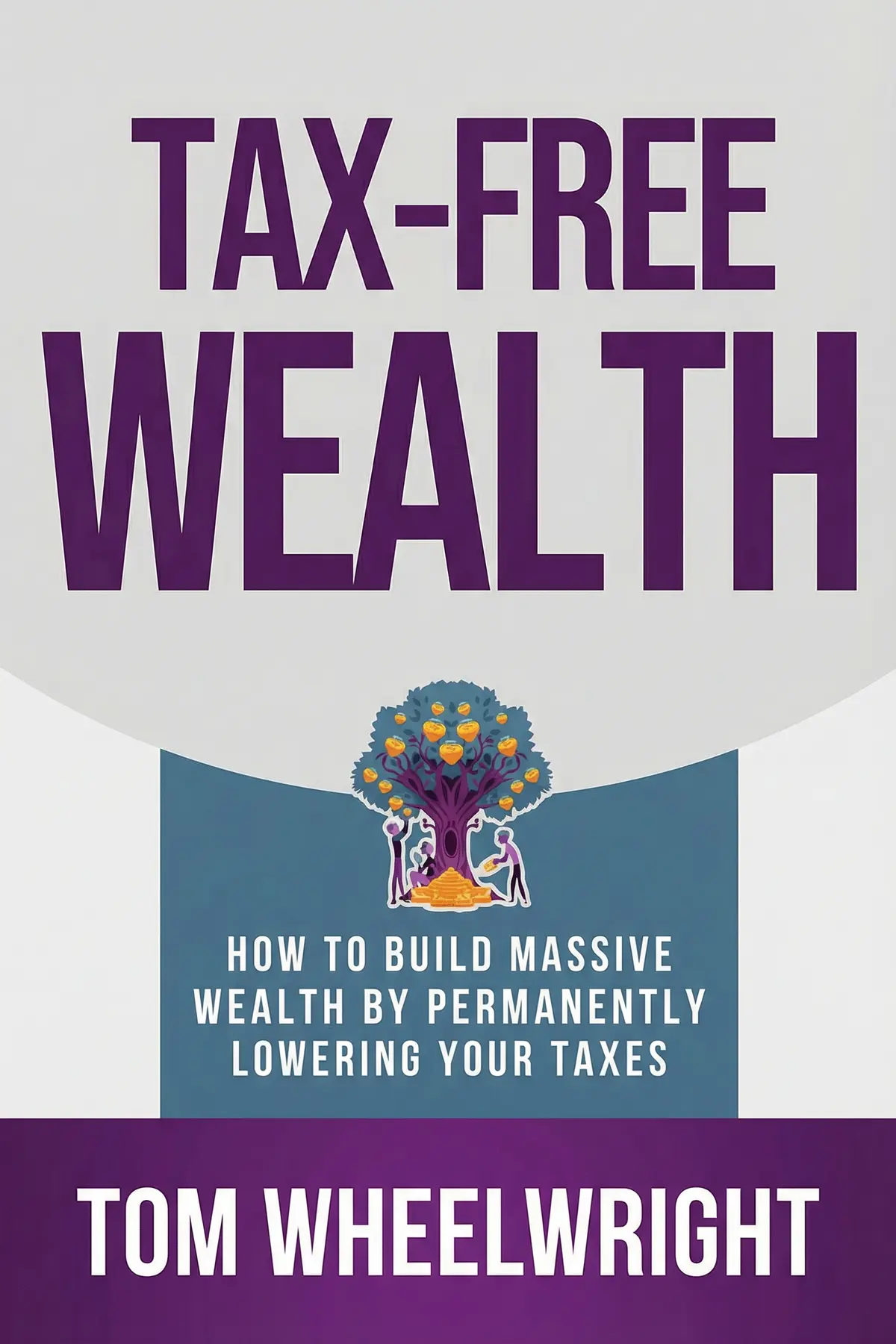
Table of Content
1. Introduction
1 min 13 sec
Most people treat tax season as something to survive, a bill that arrives and gets paid. In Tax-Free Wealth, certified public accountant Tom Wheelwright argues the opposite: tax laws are mostly a set of rewards, and you can collect them. Governments, he says, use taxes to steer people toward what keeps the economy going, such as creating jobs and providing housing. Do those things and your bill shrinks.
What decides your tax, in Wheelwright’s view, is your facts: how you earn, how you invest and how you run your personal affairs. Change the facts and the tax changes with them. He claims this works across most developed countries, naming the US, Canada, Australia and Europe. Lower taxes, in his account, come from arranging your income, spending and property the way the law already encourages. Follow that idea and you will know which kinds of income leak least, how ordinary costs become deductions, how a chain of property sales can postpone tax for a lifetime, and what to ask an advisor before hiring one.
2. Read the tax code as a list of rewards
1 min 27 sec
Two people with the same income can face very different tax rates, and the gap is no accident. Wheelwright traces it to two things every government wants, and shows which side of the line you can move toward.
3. Earn the right kind of income and keep more
1 min 29 sec
Not all money arrives in the same container. Picture five buckets with different numbers of holes, and the one most people fill every month turns out to be the worst of the lot.
4. Turn everyday spending into business deductions
1 min 36 sec
A dinner, a favorite holiday spot, even family travel can change their tax status without changing what you actually do. The difference lies in one question about purpose, and in a habit most people skip.
5. Get the biggest deduction from what you own
1 min 34 sec
One deduction asks you to spend nothing at all, yet many owners claim far less of it than they could. The fix hides in the fences, floors and cabinets they never thought to count.
6. A property ladder that keeps tax waiting
2 min 01 sec
Years of depreciation build up a tax bill that lands the day you sell. Wheelwright describes an investor who climbs from houses to apartments to a store and never pays it, then passes the problem away entirely.
7. Hire an advisor who cuts your tax bill
1 min 48 sec
The cheapest accountant can turn out to be the most expensive one you ever hire. Wheelwright explains the fear that holds many of them back, and what to listen for in the first meeting.
8. Conclusion
1 min 16 sec
Wheelwright’s book adds up to a change in posture. The tax bill stops being weather that happens to you and becomes the result of choices: where your income comes from, what your spending is for, and how long you hold what you own. The law, as he reads it, already says what the government wants. Doing those things is how the bill comes down. None of it, in his telling, needs a genius: the right attitude, some education and careful planning.
Begin with the facts you already have. Sort last year’s income into its buckets and see how much passed through the leakiest one. Photograph every receipt tied to work or investments, so any deduction you claim can stand up to an audit. If you own a building, or plan to, break its cost into parts before you depreciate it, and treat any future sale as a chance for an exchange. When you look for an advisor, watch whether they talk about themselves or about you.
The investor in his example paid no tax moving from houses to apartments to a store, and the children sold it without a tax bill. Taxes may still be certain. How much of yours you pay is far less so.
About this book
What is this book about?
Most people treat taxes as a fixed cost they can only delay or ignore. Tom Wheelwright, a certified public accountant, argues that tax law works more like a set of rewards. Governments use taxes to push people toward behavior that keeps the economy running, such as creating jobs and providing housing, and they charge less to those who do it. What sets your bill, in his view, is your facts: how you earn, how you spend and how you invest. He sorts income into five buckets that lose different amounts to tax, explains how expenses become deductions when their purpose is to produce income, and singles out depreciation as the most valuable deduction of all. Real estate gets special attention, with a ladder of property exchanges that can postpone tax for a lifetime. Readers get a clear map of which money is taxed hardest, a habit of documenting every transaction, a way to squeeze more from what they own, and a set of interview questions for finding an advisor who hunts for savings.
Book Information
Who it's for
Taxed on every paycheck
Salaried professionals who pay tax on every paycheck and want to know how business owners and investors pay less.
Business owners and freelancers
Small business owners and freelancers unsure which expenses they can deduct or how to document them.
New to property investing
New property investors who want to understand depreciation, exchanges and what to ask a tax advisor.
About the Author
Tom Wheelwright
Tom Wheelwright is a certified public accountant and tax expert who helps entrepreneurs and investors build wealth by cutting their tax bills in lasting ways. He is a Rich Dad Advisor to Robert Kiyosaki, author of Rich Dad Poor Dad, and speaks at conferences around the world. Besides writing the best seller Tax-Free Wealth, he has contributed to The Real Book of Real Estate, Who Took My Money? and Unfair Advantage.
Ratings & Reviews
Ratings at a glance

What people think
Listeners find the work delivers practical insights into business structuring and serves as a strong primer on tax basics. Additionally, the writing is clear and simple to follow, leading listeners to believe it is well worth the cost. However, reactions to the level of detail are split, with some considering it very thorough while others believe it is short on information. There are also conflicting views on the tempo, with some listeners finding the experience enjoyable and others calling it dull, and opinions on the caliber of advice fluctuate, as some find the recommended tactics questionable.
Top reviews
Supaporn
As a small business owner who was terrified of an audit, I found this book to be a total game-changer for my mental state. Wheelwright breaks down complex legal structures like S-Corps and trusts in a way that actually makes sense to someone who doesn't have a CPA license. I loved how each chapter starts with a relatable story before diving into the actual strategy; it kept me engaged when the subject matter could have easily become dry and boring. The big takeaway for me was that the tax code is actually a roadmap for what the government wants us to do, rather than just a list of rules to take our money. It’s simple, actionable, and arguably the most important book I’ve read since the original Rich Dad Poor Dad. It is worth every penny for the clarity it provides.
Show morePrinya
Picked this up on a whim after hearing Tom on a podcast, and I’m kicking myself for not reading it years ago. This is pure gold for anyone who is self-employed or looking to build a real estate portfolio. The concept that taxes are "voluntary" if you follow the government’s incentives changed my entire perspective on wealth building. I’ve already started implementing some of the entity structuring tips he suggested, and my accountant is impressed with the new questions I’m now asking. It’s an easy read that doesn’t get bogged down in too much technical jargon, making it perfect for a weekend deep-dive. Frankly, if you want to keep more of what you earn, just buy the book and take notes. It's rare to find such high-level concepts explained so simply.
Show moreRin
If you are tired of paying a massive chunk of your income to the government, this book is your new bible. I retired early at 35, and honestly, if I had found this book a decade ago, I probably could have shaved three years off that timeline. The insights into how the government rewards entrepreneurs and real estate investors are unparalleled. It’s not just about "loopholes"; it’s about aligning your financial goals with the economy’s needs. The advice is highly actionable, provided you aren't just a W2 employee looking for a quick fix. You have to be willing to change your business facts to change your tax situation. Be a doer, not a complainer. This is easily one of the most practical wealth-building books on my shelf.
Show moreBun
Tax law is usually a sedative, but Wheelwright somehow makes it entertaining. I loved the "story-first" approach he uses to explain why certain tax structures exist. It makes the lessons stick in a way that a dry textbook never could. This book taught me that the tax code is actually thousands of pages of instructions on how to pay less tax—you just have to read them carefully. The focus on asset protection through trusts and corporations was particularly helpful for me right now as I expand my business. It’s a fast read, but you’ll want a highlighter and a notebook nearby. Truly a foundational text for anyone looking to build generational wealth and protect what they have worked so hard to build.
Show moreHazel
Contrary to what some critics say, I found the "Velocity of Money" section to be the most brilliant part of the book. Yes, there is risk involved with debt, but Wheelwright is teaching you how to play the game at a higher level than most people ever dream of. This isn't just about saving a few bucks on your year-end return; it’s about a total shift in how you deploy capital to grow your net worth. I’ve read a lot of finance books, and this one stands out for its clarity and simplicity. To be fair, if you’re already a seasoned tax pro, you might find some of this basic, but for the 99% of us who aren't, it’s worth its weight in gold. Simple, direct, and incredibly motivating.
Show moreJames
The most eye-opening part of this entire book is the fundamental shift in how you view the IRS. Instead of seeing them as the enemy, you start to see them as a partner that rewards specific behaviors. I’m giving it four stars because while the core advice on business entities and depreciation is excellent, I found some of the sections on life insurance to be a bit questionable for the average investor. To be fair, he covers a lot of ground that most tax books ignore, especially regarding how to structure your life as an entrepreneur. The writing is accessible and quick, though I wish there was a bit more meat on the bones regarding specific state-level nuances. Overall, it’s a solid investment of your time if you want to understand why your accountant is always telling you 'no'.
Show moreViroj
Wheelwright has a knack for taking the labyrinth of the US tax code and turning it into a coherent strategy for the average person. I appreciate how he builds on the foundation laid out in the Rich Dad series, going deeper into the "how" rather than just the "why." However, not gonna lie, the pacing is a bit uneven in the middle chapters. Some sections feel like they could have been summarized in a single page, while other complex topics deserved more space. Still, the information on how to use debt as a tool for "velocity" is fascinating, even if it feels a bit high-risk for my personal taste. It’s a must-read for any serious investor, just be prepared for a bit of repetition and several advertisements for his tax business throughout the text.
Show moreSarocha
Finally got around to reading this, and it lives up to the hype for the most part. It’s clearly written for people who are ready to take control of their financial destiny through business and real estate. If you’re a standard W2 worker, you might find yourself frustrated because most of these strategies won’t apply to you. But for those of us with side hustles or rental properties, it’s an absolute treasure trove of information. My only gripe is that it can feel a bit light on the technical "how-to" in certain areas, forcing you to look elsewhere for the actual implementation details. Still, as a strategy guide, it’s top-tier and very easy to digest for a beginner. It makes the world of taxes feel much less intimidating.
Show moreAisha
Let’s get the elephant out of the room: this book is essentially a massive advertisement for Tom’s tax services and the broader Rich Dad franchise. While the baseline information regarding tax strategy and how the government uses the code to incentivize behavior is solid, the constant plugs for expensive courses and franchises get tiring. Truth is, the sections on "Velocity" are arguably dangerous for an amateur investor. Wheelwright advocates for heavy debt loads without a serious, nuanced discussion on risk management or the reality of market crashes like the 2008 disaster. It’s a good primer if you can filter out the sales pitch, but please, do your own due diligence on the debt side of things. It’s not all sunshine and tax-free rainbows when the market turns. I found the lack of a warning about over-leveraging to be a major oversight.
Show moreKet
Look, I really wanted to love this, but the blatant self-promotion makes it hard to take the content seriously at times. Every few pages feel like an ad for a seminar or a franchise opportunity, which is incredibly frustrating when you’ve already paid for the book. Beyond that, the "Velocity" strategy he promotes is essentially just leveraging yourself to the hilt. He glosses over the devastating impact of debt when an investment goes south. While there is definitely some good baseline knowledge here about tax entities and business structuring, the lack of a balanced risk assessment is a major red flag for me. It feels more like a top-of-funnel marketing tool for his tax firm than a comprehensive financial guide. I'd suggest looking elsewhere for a more unbiased take on tax law.
Show moreQuestions about this book
What is the main idea of Tax-Free Wealth?
Tom Wheelwright argues that tax laws are mainly incentives. Governments charge less to people who do what helps the economy, such as creating jobs and providing housing. Your bill depends on your facts: how you earn, spend and invest. Change those facts toward what the law encourages, through business and investment income, deductions, depreciation and real estate, and your taxes go down in a lasting way.
What are the five income buckets in Tax-Free Wealth?
Wheelwright compares income to buckets with holes that leak tax. Earned income from work leaks most, hit by income and employment taxes. Ordinary income, such as pension payments, faces the top income tax rate but no employment tax. Investment income like capital gains, interest and dividends is taxed much less. Gifts and inheritances usually lose nothing for the receiver, and passive income is taxed at a regular rate that can be reduced.
How does real estate help you avoid taxes according to Tom Wheelwright?
Depreciation lets property owners deduct part of a building’s cost each year, but it lowers the tax basis and raises the tax due on a sale. A like-kind exchange, called a Section 1031 exchange in the US, lets you sell and buy a property of equal or greater price without paying capital gains tax then. Holding the last property until death resets its basis, so heirs can sell it free of tax.
How do I choose a good tax advisor?
Wheelwright says to judge an advisor by how much they save you, not by their fee: paying $10,000 more makes sense if they save you $70,000. Avoid advisors who fear the law and stick to simple guides. In the interview, see whether they focus on you or on themselves, ask how they view tax law and how they invest, and notice whether they ask about your goals and family.
Readers also enjoyed


AUDIO SUMMARY AVAILABLE
Listen to Tax-Free Wealth in 15 minutes
Get the key ideas from Tax-Free Wealth by Tom Wheelwright, plus 5,000+ more nonfiction titles.
- 5,000+ titles
- Listen as much as you want
- 7-day free trial
- Cancel anytime









