

60 Seconds & You’re Hired!
Robin Ryan
 English
Shows professionals whose experience doesn't obviously fit a new field how to change careers: name the kind of switch, accept its costs, recast transferable skills and let people, not job boards, open the doors.
1 min 08 sec
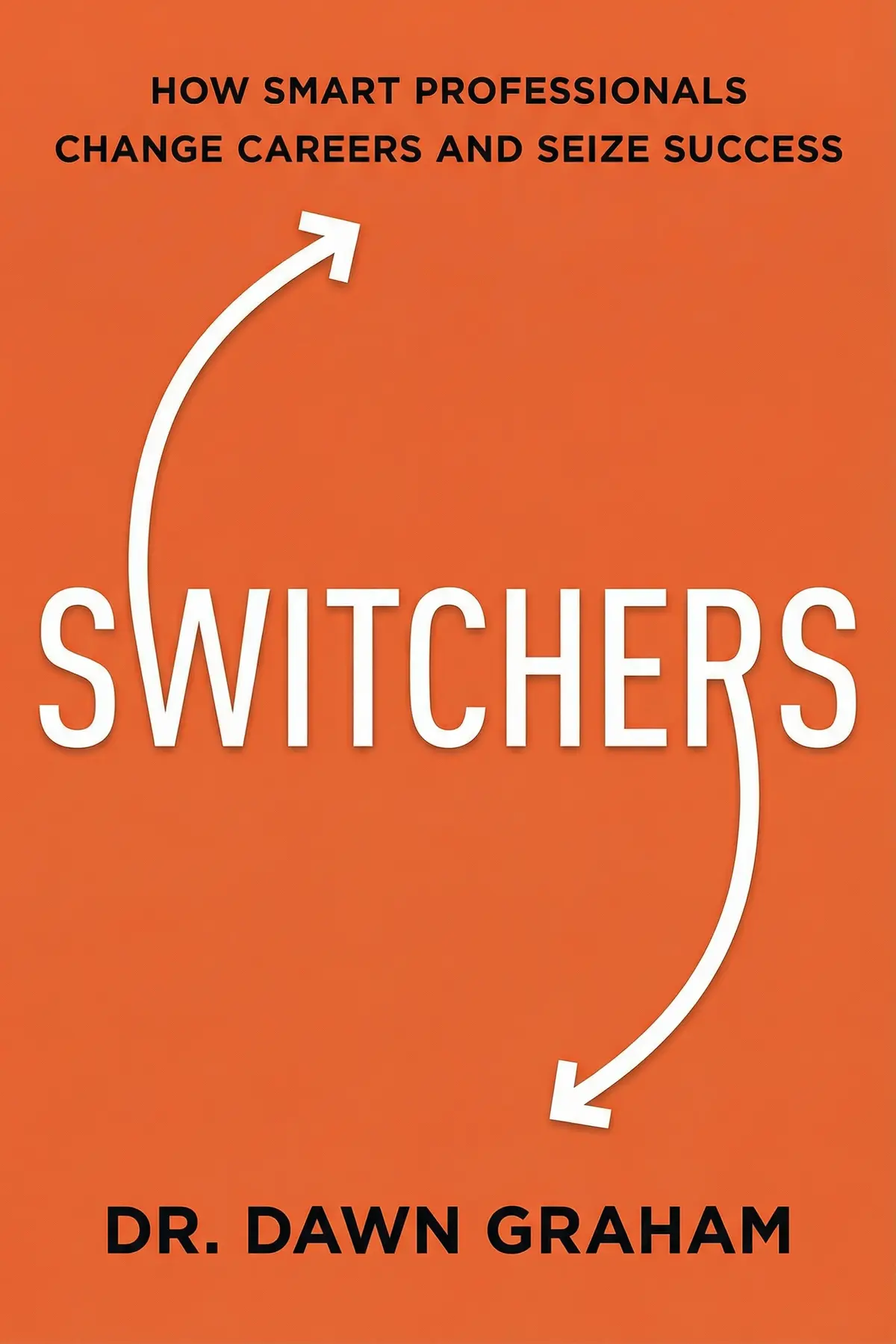
Once you try to change fields, being good at your work counts for less than you would expect, and many career changers only find this out after weeks of silence from recruiters. In Switchers, psychologist, coach and former corporate recruiter Dawn Graham explains what actually carries a professional into new territory. Her argument is that a career switch is a campaign you plan, not a job application you send. You name the kind of change you are making, accept its price and manage the fear it stirs up. Then you retell your past for a new audience and let people, more than job boards, open the doors.
Donna shows what happens without that plan. After two decades at a large New York bank, she set her sights on advertising and applied for senior roles at major media companies. Nobody answered. When she followed up, recruiters told her that her skills were strong but not relevant, and that she lacked experience in their field. The ideas ahead show how to avoid her silence, from choosing your route to negotiating the final offer.
1 min 50 sec
A Boston lawyer wanted a product job at a tech company on the other side of the country. His case shows why some career changes are far harder than others, and why the order of your moves matters.
1 min 49 sec
Most people plan a career change around what they hope to gain. Graham starts somewhere less comfortable, with a list that can tell you whether this is even the right year to make the move.
2 min 09 sec
After fifteen years of climbing at one company, a marketing executive found she couldn’t move toward the work she wanted. What stopped her had nothing to do with her skills, and it affects nearly everyone who tries.
2 min 00 sec
People who had known one finance professional for years simply couldn’t picture her doing anything else. Changing their minds meant more than editing a résumé, and it changed how she saw herself too.
1 min 59 sec
A hospital executive with an enviable contact list kept sending applications into the void. His pride had a cost, and the fix took far less effort than all those forms.
1 min 54 sec
A former academic walked into her first corporate interview well prepared and still had to unlearn one habit. Changing it got her the job and a salary she hadn’t expected.
1 min 17 sec
Donna and Mary started from similar places: capable professionals trying to enter fields that did not know them. One got silence and the other got an offer above her hopes, and that gap is the whole argument of the book. Credentials do not carry over from one industry to another by themselves. A switch works when the person making it treats it as a project, with a known price, a mind ready for loss, a story rewritten for new listeners and people willing to speak up for them.
Graham’s method also changes what a career looks like after the move. The skills that carry a switch are the same ones that keep a career growing once you arrive. They include networking generously and explaining your value in someone else’s terms. She sees changing careers as an ongoing process of growth that never fully ends.
If you are at the edge of a move, start with the sentence that names your switch, and with the list of what you will and will not give up. Then contact a person before you open another job board, and ask someone in your target field for a short conversation about how they got there. The murky middle will be uncomfortable. It is also where your next professional self takes shape.
Plenty of capable professionals try to change careers and run into silence. Their résumés are strong, but recruiters in the new field see skills that don't seem relevant and experience from the wrong industry. Dawn Graham, a psychologist, career coach and former corporate recruiter, argues that qualifications alone rarely get anyone across. Switching takes a strategy, an honest look at the mental barriers involved and a deliberate rebrand. Graham works through the stories of switchers such as a Boston lawyer aiming for product management in San Francisco, a marketing executive frozen by fear of leaving her company of 15 years and a hospital executive too proud to ask his contacts for help. She shows how to tell which of three kinds of switch you are making and how to decide what you will give up. She also covers how to handle loss aversion and ego, and how to recast your past around transferable skills. The book then turns to execution: building a network of ambassadors, using informational interviews, preparing for the hard interview questions and negotiating an offer that fits your long-term goals.
Mid-career professionals whose strong résumé gets no replies in the field they want to enter.
People weighing a move that means a new role, a new industry or both, and wondering what it will cost.
Experienced managers who rely on job boards and hesitate to ask their network for help.
Dr. Dawn Graham is a psychologist and career coach who also spent time as a corporate recruiter, so she has seen career changes from both sides of the hiring desk. Her work centers on helping professionals move from one career to another. She hosts the SiriusXM show Dr. Dawn on Careers, writes for Forbes, has given a TEDx talk and has created online career courses for LinkedIn Learning.
Listeners find this guide offers actionable advice for shifting both functional roles and industries, and one listener mentions it is loaded with useful tips. The work is also lauded for its clear writing and deep psychological perspectives that support individuals during professional pivots. Furthermore, listeners value the thorough subject matter and the user-friendly tools included.
Wow, I wish I had discovered this book three years ago when I first started thinking about leaving my accounting firm. Dr. Dawn Graham has created a masterpiece for anyone who feels 'pigeonholed' in their current profession. The psychological insights are what set this book apart from the usual generic career advice you find online. I loved the emphasis on 'professional energy' over just blindly following your passion, which felt much more grounded and realistic. The 30-day challenge to get outside your comfort zone was exactly the kick in the pants I needed to start networking properly. This isn't just a book you read; it’s a book you do. Every chapter left me with a specific task that actually moved the needle on my job search. If you are serious about changing your life, don't just skim this—study it.
Show moreIn my experience, the hardest part of a career change isn't the skill gap, but the mental hurdle of letting go of your old identity. Graham tackles this head-on with her deep dive into the psychology of transition. She doesn't lie to you; she makes it clear that you will likely have to sacrifice your title or status to get where you want to go. I found the 'Plan A' vs 'Plan B' discussion particularly helpful for staying focused on a singular goal. The writing style is engaging and the stories she shares are truly inspiring without being cheesy. It’s a comprehensive guide that covers everything from social media branding to the nuances of interviewing as an outsider. This book gave me the confidence to finally apply for roles I thought were out of reach. It is easily the most valuable career resource on my shelf right now.
Show moreThe chapter on the 'Unknown Factor' changed my entire approach to the job search. It’s so easy to get discouraged when you’re doing everything 'right' and still not seeing results, but Graham reminds us that luck and timing are part of the equation too. You just have to stay in the game long enough for those factors to align. I really appreciated the focus on building a 'Brand Bank' and how every interaction counts toward your professional reputation. The book is incredibly readable and packed with actionable tools that you can use immediately. I’ve already rewritten my LinkedIn bio using her BVP framework and the response has been amazing. Honestly, this is the first career book that actually made me feel empowered instead of just overwhelmed. It's an essential read for anyone looking to make a meaningful professional shift in today's chaotic market.
Show moreFinally got around to reading this after a friend mentioned the chapter on psychological 'red flags.' As someone looking to move from education into tech, I’ve been battling massive imposter syndrome for months. Dr. Graham’s insights into the 'beginner's mind' and how to frame your career story really helped shift my perspective. I finally feel like I have permission to stop defining myself by my old title and start talking about the value I actually bring to the table. The action steps at the end of each chapter make the daunting process of a career pivot feel much more manageable. My only gripe is that some of the networking advice feels a bit aggressive, almost like you’re expected to bother people constantly. Still, the psychological tools for handling rejection and the fear of loss are worth the price of the book alone. It's a comforting read for anyone feeling stuck in a professional rut.
Show moreThe truth is, most career books are fluff, but this one actually provides a concrete roadmap for those willing to do the work. Graham focuses heavily on the 'Career Story,' which is a game-changer for anyone whose background doesn't perfectly align with their target role. She teaches you how to connect the dots for the hiring manager so they don't have to guess. I found the 'Brand Bank' concept particularly insightful for building a reputation in a new industry. The book is well-organized and the tools are easy to implement right away. It’s a bit repetitive in the middle, but the core message is vital for the modern job market. If you're serious about making a jump, this is one of the better guides out there.
Show moreAs someone who works in recruitment, I found Dr. Graham’s perspective on the hiring manager's psyche to be spot on. We really are wired to avoid risk, and she explains perfectly why a 'Switcher' can look like a liability on paper. Her advice on how to mitigate that perceived risk through referrals and a strong Brand Value Proposition is incredibly practical. I especially liked the section on 'loss aversion' and how it affects both the seeker and the hirer. It's a quick, insightful read that manages to bridge the gap between psychology and business. I’ve already started recommending certain chapters to my candidates who are looking to pivot. The only reason it’s not five stars is that it can feel a bit formulaic at times, but the content itself is high quality. It’s a must-read for anyone who feels like their current path is a dead end.
Show morePicked this up because I’ve been feeling stagnant in my marketing role and wanted to see what the 'other side' looks like. Dr. Graham is very realistic about the sacrifices involved, which I appreciated even if it was a tough pill to swallow. She doesn't sugarcoat the fact that switching careers often means taking a hit to your title or your paycheck. The concept of 'loss aversion' was a real eye-opener for me and helped explain why I’ve been so hesitant to make a move. Personally, I agree with some other readers that the book is quite dry in places. You can get about 80% of the value just by reading the end-of-chapter exercises and the bolded text. It’s a solid roadmap if you need a step-by-step guide, but don't expect to be entertained while reading it. I’m glad I borrowed it from the library rather than buying a permanent copy.
Show moreEver wonder why your resume keeps falling into a black hole when you apply for roles outside your current field? Dr. Graham explains the 'why' behind this frustration by highlighting how hiring managers view switchers as a major red flag. Her focus on rebranding yourself and creating a 'Brand Value Proposition' is probably the most useful part of the entire book. She argues that networking is the only real way in, which is probably true, though it’s exhausting to hear for us introverts. To be fair, the book is very corporate-centric and doesn't account for the gig economy or creative fields much at all. The writing is clear, but the formatting feels a bit like a textbook with all the checklists and bullet points. It’s a functional guide that provides a decent framework, but it lacks the inspiration I usually look for in career development books. It’s more of a manual than a manifesto.
Show moreNot what I expected, but still worth a look if you are feeling completely lost. I was hoping for more specific tips on learning new technical skills, but this is more about the 'selling yourself' part of the equation. Look, the advice on networking and bypassing the online application systems is very solid. I just found the tone a bit too 'corporate cheerleader' for my personal taste. It feels like it was written for people who love LinkedIn, which isn't really me. The summary sections are the best part because they get straight to the point without the fluff. It’s a decent enough guide, but I think the value depends entirely on how much you enjoy the traditional corporate networking dance.
Show moreThis book feels a bit stuck in the past despite claiming to be for the modern job seeker. While Dr. Graham clearly knows her stuff regarding corporate HR, the advice feels tailored exclusively to someone trying to climb a very specific ladder at a Fortune 500 company. If you aren't trying to become a middle manager in a traditional office, you might find the 'tried and true' methods a bit stale. I found the sections on networking to be helpful, but the constant repetition of chapter summaries felt like filler to pad the page count. Frankly, many of these psychological insights are things you can find in any standard career blog for free. It’s not a bad resource if you’re a complete novice, but for those of us already mid-career, it didn't offer the breakthrough I was hoping for. I ended up skimming the last third because it felt like I’d already heard the main points multiple times.
Show moreGraham argues that qualifications alone rarely get a professional into a new career. A switch needs a strategy: knowing which kind of change you are making, accepting its sacrifices, overcoming fear of loss and ego, and rebranding your transferable skills for the new field. It also needs a network of ambassadors who vouch for you, plus careful preparation for interviews and salary negotiation.
Graham describes three. You can stay in the same role but move to a new industry, change your role within your current industry, or change both role and industry at once, which she sees as the hardest. A Boston lawyer aiming for a product management job at a San Francisco wearable tech company shows how a double switch, plus a move, forces decisions about interim roles and timing.
Graham traces the anxiety to the brain’s evolved preference for familiar routines, which today shows up as self-doubt and a focus on losses. She calls this loss aversion. Ego adds to it when a switch means a lower title or salary. Her remedy is to train the brain deliberately to notice gains and to see temporary steps back as part of the uncomfortable murky middle of a transition.
Graham recommends going beyond job boards to build ambassadors, people who vouch for you in your target industry. Attend industry events, join professional associations and use LinkedIn to connect with key people and share what you know. Ask for informational interviews to gather advice without asking for a job. Give back by sharing information and making introductions, and keep nurturing contacts after you land the new role.
It suits experienced professionals who want to move into a new role or industry but find their background is not getting traction. Readers frozen by fear of losing status, too proud to ask contacts for help, or unsure how to explain a career change in an interview will find concrete steps, from writing down non-negotiables to framing an outside background as an asset.
Robin Ryan




Marianne Cantwell
William Vanderbloemen
AUDIO SUMMARY AVAILABLE
Get the key ideas from Switchers by Dawn Graham, plus 5,000+ more nonfiction titles.









