

A Long Way Gone: Memoirs of a Boy Soldier
Ishmael Beah
 English
 ไทย
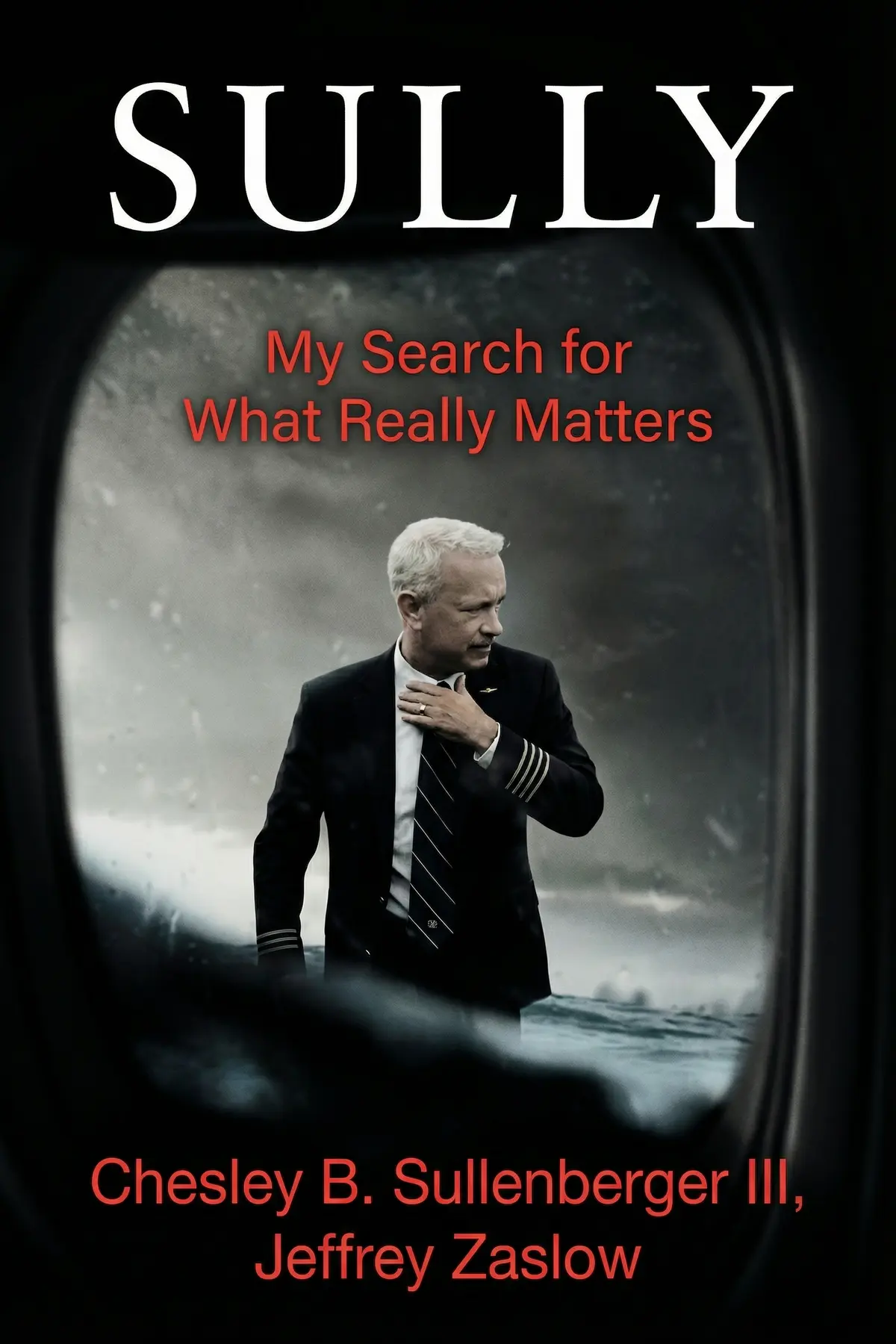
Captain Sullenberger traces the calm that saved Flight 1549 back through decades of preparation, from his father's workshop to Air Force training, and shows how readiness and clear priorities decide what happens when everything goes wrong.
58 sec
Most of us assume we will rise to the occasion when a crisis hits, but Captain Chesley Sullenberger’s story suggests we fall back on whatever we have practiced. In Sully, written with journalist Jeffrey Zaslow, the pilot who set a crippled airliner down on the Hudson River in January 2009 traces his calm back through four decades. Both engines of US Airways Flight 1549 had failed after hitting a flock of geese, and all 155 people aboard survived.
The memoir suggests that those few minutes reflected a father’s insistence on care, the discipline of military service and a long, unglamorous airline career. Follow his path and you see how readiness is built in ordinary years. You also gain one decision rule, goal sacrificing, that works far beyond a cockpit: when you cannot save everything, choose fast what matters most.
2 min 09 sec
A boy cuts a board too short and gets a four-word lesson from his father. Decades later, that same habit of thinking before acting would face its hardest possible test in the sky above New York.
2 min 22 sec
Hundreds of cadets who arrived alongside him never made it to graduation. The harsh first months confused him at the time, and only years later did he understand what the shouting and haircuts were meant to install.
1 min 49 sec
Gliders have no engine, only wings, air and patience. A cadet’s favorite pastime looked like a pleasant side interest, until the day a large airliner lost every bit of its thrust over a crowded city.
2 min 11 sec
Promotion in the Air Force meant more desks and briefings and fewer hours in the air. Sullenberger faced a choice many professionals know well, and he settled it with one blunt test.
2 min 10 sec
Ninety-five seconds after takeoff, a routine climb over New York turned into the worst emergency of a 42-year flying career. The sounds, the silence and a strange smell told the captain how bad it was.
2 min 04 sec
A $60 million aircraft, a cold day, a smooth river and a skyline full of towers. The captain had to decide what he would let go, and the rule he used works in any emergency where not everything can be saved.
1 min 08 sec
Sully is a memoir about a few minutes that took a lifetime to prepare. The famous part was over within moments of the geese hitting. Behind it stood a boy who learned to check before cutting, a cadet trained to answer with no excuses, a glider pilot who knew how to stay up on air alone, and an airline captain who chose his career by how much flying it offered. None of those choices looked heroic at the time. All of them meant that when both engines went silent, very little had to be improvised.
That is the lesson worth keeping. Readiness is built in the dull years, when nobody is watching, and it is spent in an instant. You can build it the way he did. Double-check the decisions you cannot undo. Practice the rare failure as seriously as the routine success. And decide in advance what you would give up if you could not save everything.
About a million passengers flew with Sullenberger and never learned his name. Flight 1549 changed that, and the reason began with a board cut too short.
On January 15, 2009, a flock of geese knocked out both engines of US Airways Flight 1549 shortly after it left LaGuardia Airport. Minutes later, Captain Chesley Sullenberger set the Airbus down on the Hudson River, and all 155 people aboard survived. The landing made him famous overnight. In this memoir, written with journalist Jeffrey Zaslow, he insists the moment was built long before it arrived. Sullenberger goes back to a Texas childhood shaped by a father who demanded careful work, to the harsh discipline of the Air Force Academy, to the gliders he loved flying as a cadet, and to the hard career choices that took him from fighter jets to a modest job at a struggling airline. Each stage added a habit he would need in the cockpit that day. Readers get a gripping account of the bird strike and the river landing, along with a principle any professional can use: when not every goal can be met, decide quickly which ones to give up so the most important one survives.
Professionals who want to stay calm and decisive when a project or plan suddenly fails.
Aviation fans and aspiring pilots curious about what happened in the cockpit of Flight 1549.
Managers and trainers looking for a real story about how discipline and practice become reflex.
Chesley B. Sullenberger III was born in Denison, Texas, in 1951. He was named Outstanding Cadet in Airmanship in his class at the United States Air Force Academy and holds two master's degrees. An airline pilot, safety expert and accident investigator, he has served as an instructor and safety chairman for the Air Line Pilots Association and speaks internationally on airline safety. His coauthor, Jeffrey Zaslow (1958 to 2012), was a Wall Street Journal columnist who cowrote The Last Lecture with Randy Pausch.
Listeners describe this autobiography as a motivating and absorbing listen that keeps them captivated from beginning to end. It delivers a deep dive into the pilot’s background and professional life, with one listener pointing out that it is written in a conversational style. They value the narrative's sincerity, with one mentioning it’s shared through the pilot’s own words, and they admire the character portrayal, describing Sully as an awesome hero.
Ever wonder what goes through a pilot’s mind when both engines go silent over one of the most populated cities on Earth? Sully provides an incredibly engaging answer that feels more like a fireside chat than a dry autobiography. Truth is, his humility is the most striking part of the entire narrative, especially when he discusses the flight crew's collective effort. I loved the way Jeffrey Zaslow helped weave Sullenberger's childhood memories of his father and grandparents into a larger tapestry of American values. The conversational tone makes even the complex aeronautical systems easy to understand for someone with zero flying experience. It’s an inspiring look at how a lifetime of 'doing the right thing' culminates in a single moment of extraordinary grace.
Show moreAfter hearing so much about the 'Miracle on the Hudson,' I finally dove into the source material and was not disappointed. Captain Sullenberger comes across as an authentic, principled individual who values the contributions of his co-pilot and cabin crew above his own fame. The book offers fascinating insights into how his early passion for flight transformed into a rigid commitment to excellence that saved everyone on board. Frankly, I think this should be required reading for anyone in a leadership position because it stresses the importance of preparation over luck. The way he describes the internal struggle of the investigation following the landing adds a layer of tension I didn't expect. It is a powerful testament to human skill.
Show moreThe chapter on his time at the Air Force Academy was surprisingly one of my favorite parts of the whole experience. It sets the stage for the discipline and integrity that defined his entire career as a commercial pilot. In my experience, most memoirs by public figures feel ghostwritten and shallow, but this one feels deeply personal and authentic to Sully’s voice. He doesn't just talk about the landing; he critiques the entire airline industry's slide toward sloppiness and corner-cutting. You really get a sense of why his experience was so vital to the survival of those 155 souls on that freezing January day. This is a brilliant exploration of what it means to be a true professional in a world that often rewards the opposite.
Show moreFinally got around to reading this and I’m struck by how much heart is packed into a story about a plane crash. Sully's search for what really matters isn't just a catchy subtitle; it’s the core philosophy that drives his life and his writing. The book provides an incredibly detailed look at the seconds leading up to the Hudson landing, but the emotional weight comes from his family. Personally, I found the stories about his father and the values passed down through generations to be the most moving part of the book. It’s a rare look into the mind of a man who was prepared for his worst day because he treated every other day with respect. Truly an uplifting and engaging read for anyone who appreciates real-life character development.
Show moreSully Sullenberger is the role model we need right now because he reminds us that excellence comes from doing the grunt work when nobody is watching. His writing style is straightforward and conversational, making it feel like you’re actually sitting in the cockpit with him during those 208 seconds of chaos. I appreciated how he addressed the aftermath and the sudden thrust into the public eye, handling it all with incredible self-deprecation. The book really highlights the importance of honesty and integrity, not just in aviation, but in every aspect of a life well-lived. To be fair, you have to be interested in the 'why' and 'how' of his life, not just the 'what' of the landing. It’s a deeply inspiring story that proves character is built one small, correct decision at a time.
Show moreThis book is a masterclass in professional integrity and the quiet power of being prepared for the unthinkable. Most people know the headline from the Hudson, but the true value here lies in the decades of unheralded grunt work that preceded those 208 seconds. I appreciated the deep dive into aviation safety and how Sully views the shift toward cost-cutting in the modern airline industry. To be fair, the technical descriptions of his Air Force days occasionally slowed the pace, but they serve a purpose in showing his development. It is quite refreshing to read about a man who refuses to call himself a hero despite saving 155 lives through sheer competence. If you want a story about a character built on solid values and lifelong learning, this is it.
Show moreAs someone who has always been a nervous flier, reading this actually gave me a lot of peace of mind. It’s fascinating to learn about the rigorous checks and the vast amount of knowledge pilots must possess regarding airplane systems and emergency procedures. Not gonna lie, some of the technical jargon went over my head, but Sully’s steady, calm personality shines through every page. He makes a point to emphasize that he isn't a hero in the traditional sense, which only makes him more likable in my eyes. The book does feel a little fragmented at times with short, anecdotal chapters that don't always connect perfectly. Still, the message of diligence and taking care of the small details is one that resonates long after you finish.
Show moreThis memoir does an excellent job of showing that the 'Miracle' was actually the result of thousands of hours of preparation. Captain Sullenberger writes with a humble authority that is rare to find in the spotlight of such a massive media event. I was particularly interested in the insights into how automated systems can sometimes hinder a pilot’s ability to react to a life-threatening emergency. My only real complaint is that the early chapters regarding his family history felt a bit long-winded compared to the later sections. However, once the narrative shifts toward his career and the specifics of Flight 1549, it becomes impossible to put down. It is a solid, well-written account of a pivotal moment in aviation history that highlights the necessity of human skill.
Show morePicked this up because the movie was so captivating, but the book itself felt a bit disjointed in the middle sections. While the opening chapters regarding his family roots are genuinely touching, the narrative eventually becomes a patchwork of technical Air Force history and personal anecdotes. Look, I respect the man immensely, but some of the detailed descriptions of cockpit instrumentation felt like they were pulled straight from a manual. That said, the second half of the book is where the momentum finally picks up as we get into the specifics of Flight 1549. It’s an okay read for aviation buffs, though casual readers might find themselves skimming the more dense, technical portions. His dedication to safety is admirable, even if the writing style isn't always the most fluid.
Show moreNot what I expected given the high praise and the intensity of the film adaptation. While I admire the Captain’s bravery, the first half of this book is a slog through family histories and mundane Air Force training details. Truthfully, I was hoping for more focus on the actual landing and the immediate aftermath, but that doesn't really kick in until much later. The patchwork structure of the chapters makes it hard to stay engaged, jumping from technical data to his kids' childhoods without a clear through-line. I ended up skipping several pages just to get to the 'good stuff' in the final third of the memoir. It’s a bit too much of a slow-burn biography when the subject matter suggests a high-stakes thriller.
Show moreIt is the memoir of the captain who brought US Airways Flight 1549 down onto the Hudson River in January 2009 after geese knocked out both engines, with all 155 people aboard surviving. Written with Jeffrey Zaslow, it traces his calm that day back through his Texas childhood, Air Force Academy training, glider flying, fighter career and nearly thirty years as an airline pilot.
Goal sacrificing is the principle Sullenberger turned to once both engines failed. When you cannot achieve every objective, you rank them and abandon the lesser ones to protect the most important. For him, choosing the Hudson River meant giving up an aircraft worth $60 million so that everyone on board had the best chance of surviving. The same rule applies to any failing plan or project.
His father taught him to measure twice and cut once, building a habit of careful checking. The Air Force Academy drilled accountability until it became reflex. As a cadet he loved gliders, learning how an aircraft behaves without an engine, and he was named Outstanding Cadet in Airmanship. He also chose his career by how much flying it allowed, keeping his skills sharp.
Three habits stand out. Double-check any decision you cannot reverse. Practice rare but serious failures on purpose so your response is rehearsed, as glider flying rehearsed engine-free flight. And when a situation is collapsing, name the one outcome you cannot lose and let lesser goals go quickly, the way Sullenberger gave up the plane to save the people inside it.
Ishmael Beah
James Herriot


Barack Obama


Masaji Ishikawa

Ben Macintyre


James Shapiro

AUDIO SUMMARY AVAILABLE
Get the key ideas from Sully by Chesley B. Sullenberger III, plus 5,000+ more nonfiction titles.









