
14 min 36 sec
Available in: English
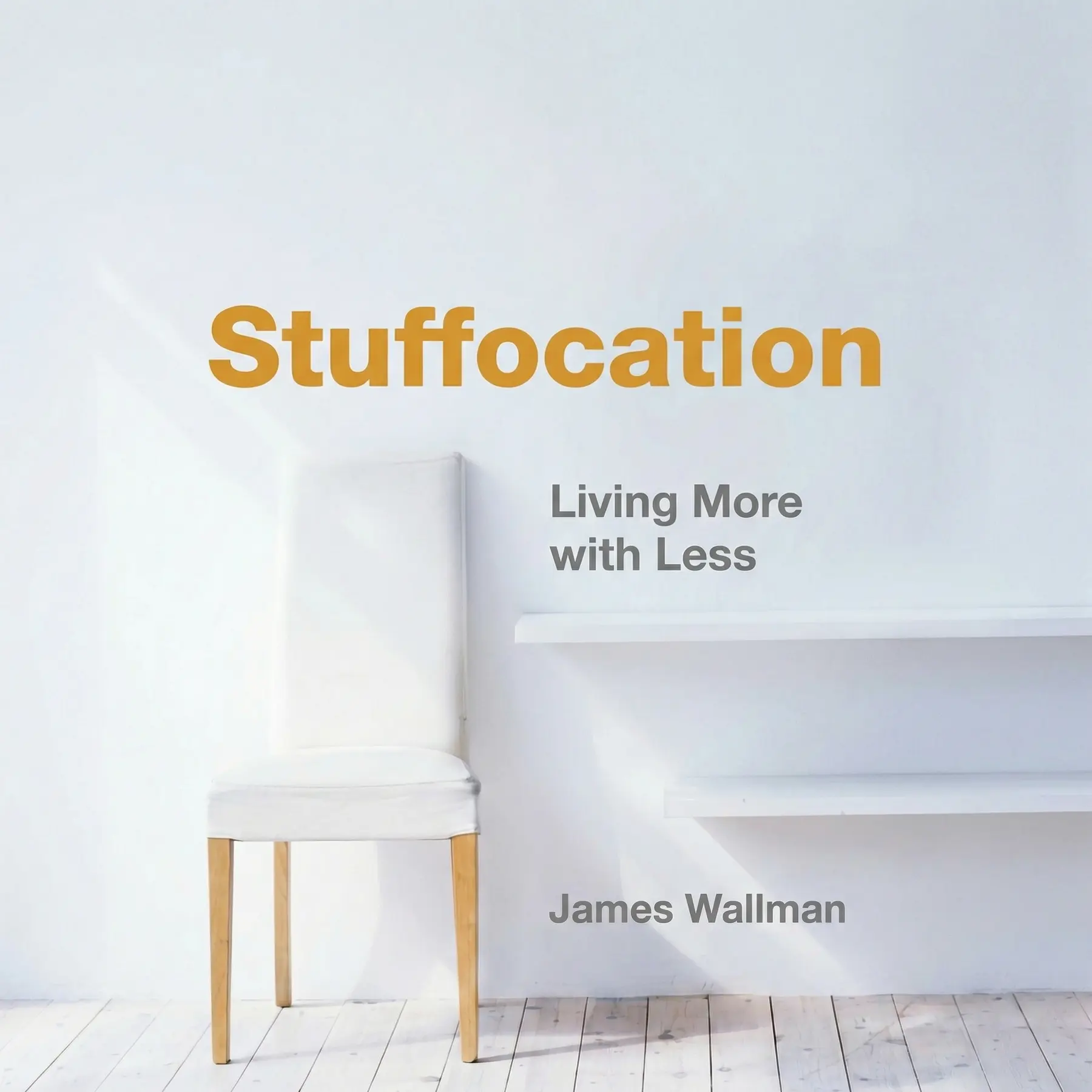
Stuffocation: Living More with Less
Explains why piling up possessions has stopped making people happier and has started to harm them. It also shows how spending on experiences instead of things leads to a fuller life and a healthier economy.
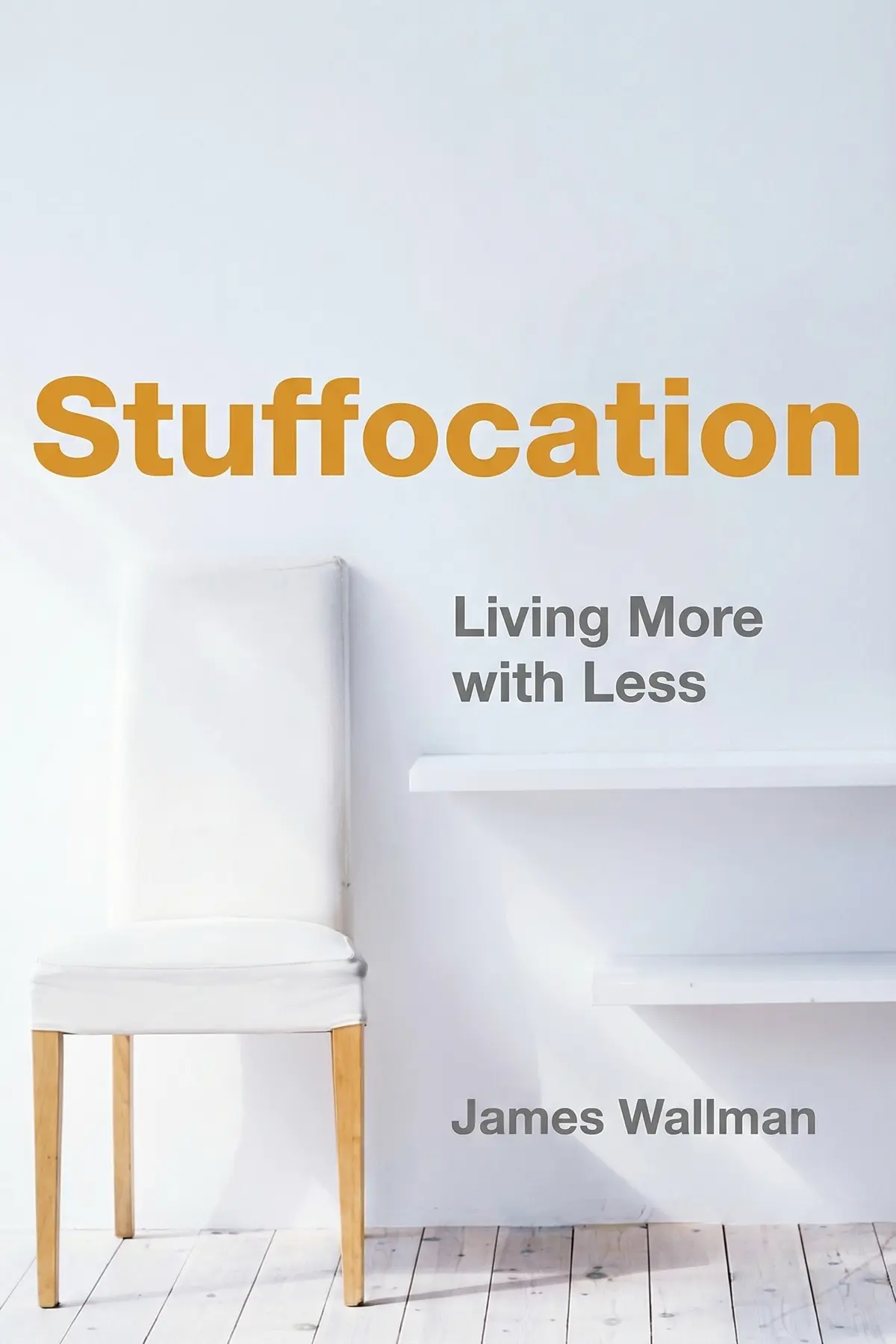
Table of Content
1. Introduction
1 min 00 sec
If your drawers jam shut and your spare room has turned into a storage unit, the problem may be the stuff itself. In Stuffocation, journalist and trend forecaster James Wallman argues that owning more has stopped making people happier. In 1979, about four in five people in Britain, France and West Germany believed material things bring happiness. Today only about one in two do.
Wallman’s case is that we have hit the limit of what possessions can give us, and that the best way past it is to put our money and time into experiences instead of objects. That move, he argues, helps the individual and even suits an economy that runs on spending.
Along the way there is a philosopher’s second cup of coffee, house fires that now take over a room in minutes, a 1920s argument about working hours, and a cinema where people pay 50 pounds to dress up. You also get a simple test for your next purchase.
2. Learn why owning more no longer makes you happy
1 min 47 sec
For most of the last century, a fuller home meant a better life. Then something changed in how people answered one simple survey question, and the reasons behind it come from surprisingly different directions.
3. See the real price of a cluttered home
1 min 47 sec
A full house looks like comfort and security. Wallman links it instead to rising anxiety, and a fire study from Melbourne shows that the clutter in ordinary homes has changed how quickly a blaze turns deadly.
4. A 1920s choice you are free to remake
1 min 45 sec
American factories once produced far more than people could use, and leaders had to pick a fix. One camp wanted more leisure; the other wanted more shopping. The winner still shapes your weekly budget.
5. Pick the exit from clutter that fits your life
1 min 47 sec
Clearing out a cupboard can feel wonderful for a week. Wallman compares three ways people escape the pile, from a 21-day box test to turning down a promotion, and shows where each one falls short.
6. Spend on doing for happiness that lasts
1 min 45 sec
A bonus arrives and the choice is a new car or a trip away. One psychology study suggests which option keeps paying back, and Wallman finds three reasons why even a miserable holiday can win.
7. Watch for the new status trap in experiences
1 min 51 sec
Swapping possessions for adventures sounds like the end of keeping up with the neighbors. Yet a large share of young adults report a fresh kind of pressure, and it is spreading to new economies too.
8. Discover how companies profit by selling memorable experiences
1 min 48 sec
If people stopped buying so much, a spending-driven economy would seem to be in trouble. A London cinema charging 50 pounds a ticket and a shoe bag that vanishes in water point to another way.
9. Conclusion
1 min 06 sec
Stuffocation tells the story of a century-old bargain running out. Spending more was the fix for factories that made too much, and for decades it seemed to work. Wallman’s evidence suggests the returns have dried up: half of people no longer believe things make them happy, mental illness has risen, and the homes we fill now burn faster. His way forward asks for no vow of poverty. It asks us to move our spending from objects toward moments, which also suits an economy that still needs people to spend.
The book supports a few small habits. Before buying something new, check whether you could borrow it, rent it or get access to it in a way that uses fewer resources. When a price tag tempts you, translate it into what the same money could do as a holiday or a course you have long wanted to take. And when a closet starts to choke, box its contents for 21 days and see what you actually reach for.
Bentham’s second cup of coffee was perfectly good coffee. It was simply one too many, and most of us passed our first cup long ago.
About this book
What is this book about?
Most people own far more than they use: jammed drawers, packed cellars, gadgets bought and forgotten. James Wallman calls this condition stuffocation, and he argues it is no longer harmless. Fewer people believe that material things bring happiness, rates of mental illness have climbed, and cluttered homes now burn much faster than they used to. Wallman traces the problem to the United States, where the 1920s brought a debate over how to absorb too many goods, and by the 1930s the elite had decided that getting people to consume more was the answer. He then weighs the exits people have tried: minimalism, a simpler life in the countryside and the medium chill of turning down promotions for more free time. Each helps, but each has limits. His preferred answer is experientialism: spending on things you do rather than things you own. Drawing on a psychology study of purchases, he shows why experiences give more lasting happiness and invite less comparison. He also explains how an experience economy can keep jobs and spending alive. Readers get a clear account of why more stuff stopped working, and a practical test to apply before every purchase.
Book Information
Who it's for
Professionals with full homes
Professionals whose homes are full but whose purchases no longer bring much joy.
Weighing big life tradeoffs
People weighing a promotion against more free time, or a new car against a trip.
Marketers and company founders
Founders and marketers who want to understand why buyers now pay for experiences.
About the Author
James Wallman
James Wallman is a journalist and trend forecaster who has written for the Guardian, Esquire and Nike, and wrote the futurology column for T3 magazine. Since 2014 he has run the consultancy The Future Is Here. Stuffocation, his first book, was covered by more than 200 media outlets worldwide, and he followed it with Time and How to Spend It in 2019. He has spoken at TEDxLondon School of Economics, the Royal Society of Arts and Google HQ, and advised the UK Department for International Trade on its experience economy strategy.
Ratings & Reviews
Ratings at a glance
What people think
Listeners find the book accessible and stimulating, valuing its historical background and insightful perspectives. It receives positive reviews for its core message, engaging concepts, and structure, with one listener remarking that it functions as a guide for decluttering. Listeners also enjoy the title and feel it is a valuable purchase, with one calling attention to its focus on buying experiences.
Top reviews
Saowalak
Wow. The term 'stuffocation' perfectly describes that crushing feeling I get when looking at my overflowing closets and junk drawers. This book serves as a much-needed wake-up call for our consumer-driven culture. I loved how the author encourages us to pivot toward 'experientialism' by prioritizing memories and hobbies over physical junk. Since finishing the chapters, I’ve actually started a decluttering game and found myself thinking twice before every Amazon purchase. The writing is engaging and conversational, making complex ideas about GDP and social values easy to digest for the average reader. Not gonna lie, some of the 'minimalist' quizzes were a bit silly, but they added a fun, lighthearted element to a serious topic. This is a thought-provoking read that I’ve already recommended to several friends who feel buried by their belongings.
Show moreAisha
Finally got around to reading this, and it has fundamentally changed how I view my weekend spending habits. Wallman argues that we are 'stuffocating' under the weight of too many things, and his solution of prioritizing experiences is brilliant. I loved the examples of people who declined promotions to gain more time; it’s a powerful reminder that time is our most precious resource. The book is incredibly readable and the way it’s organized makes it easy to jump between historical context and modern-day anecdotes. I’ve already started looking for more 'experiential' gifts for my family instead of more plastic toys that will just end up in a landfill. Truly, this is the decluttering guide for the 21st century. It’s a must-read for anyone who feels like they have everything they need but still isn't quite happy.
Show moreAudrey
Picked this up during a weekend trip and found it surprisingly hard to put down. Wallman captures the zeitgeist of our era, identifying that 'peak stuff' moment many of us are currently hitting. I particularly enjoyed the analysis of the sharing economy and how services like Spotify or Zipcar are changing our relationship with ownership. The book is well-organized and the history of how marketing created the consumerist monster was truly fascinating to me. To be fair, some of the case studies feel a bit extreme—not everyone can just quit their job to move to the woods—but the underlying message is vital. It’s a readable, insightful look at how we might find more happiness by owning less and doing more. Even if you don't become a full-blown minimalist, the shift in perspective is worth the price of admission.
Show moreAnchalee
As someone who has always struggled with the pressure to 'keep up with the Joneses,' Wallman’s analysis of status-seeking was eye-opening. He explains that we aren't just greedy; we are biologically hardwired to seek status, and we've simply been using the wrong tools to do it. By shifting the 'scorecard' from material goods to experiences, he suggests a path that is better for both our mental health and the environment. The book is thought-provoking and provides a nice synthesis of current trends like the 'sharing economy' and 'voluntary simplicity.' I did find the focus on affluent, white, middle-class examples a bit limiting, but the core thesis remains strong. It’s a great companion for anyone looking to simplify their life without necessarily moving into a yurt. Definitely a worthwhile purchase for those feeling overwhelmed by modern life.
Show moreSirichai
Look, some of the case studies about people moving to the country to grow crops are a bit extreme for the average reader. Most of us aren't going to quit our city jobs to become self-sufficient farmers overnight. However, the core message of the book—that we need to stop craving 'tangibles' and start valuing 'intangibles'—is spot on. Wallman writes with an engaging, journalistic style that keeps the pages turning even during the denser parts about GDP and economics. The quiz at the beginning was a bit ridiculous, but it served as a fun entry point into a deeper conversation about our values. It’s an authentic look at the future of our economy and how we might actually save ourselves from our own clutter. If you’re feeling weighed down by your possessions, this book offers a very compelling way out.
Show moreHenry
After hearing about 'Stuffocation' on a podcast, I expected a practical guide to decluttering my apartment, but it’s actually more of a social history. Wallman does a solid job explaining how we shifted from an age of scarcity to this modern era of overwhelming abundance. The sections on 'medium chill' and 'voluntary simplicity' offer some food for thought, even if they aren't always realistic for everyone. However, I couldn't help but feel that 'experientialism' is just status-seeking in a different outfit; posting photos of a trek in Peru is still a way of showing off. The book is readable and decently organized, yet it struggles to offer a solution that doesn't involve having a large safety net of cash. It’s a worthwhile purchase for the history lessons alone, but don't expect a life-altering epiphany.
Show moreLucas
To be fair, the historical sections detailing how we transitioned from scarcity to abundance are the strongest parts of the book. Wallman clearly did his homework on how industrialization and 20th-century marketing forced us into a cycle of overconsumption. However, the 'solution' of experientialism feels a bit hollow when you realize it’s still just a form of consumption. Instead of buying a new sweater, you’re buying a ticket to a pop-up cinema event—is that really a radical shift? Personally, I found the constant stream of case studies about 'successful' people dropping out of the rat race to be a bit repetitive after a while. The book is decent and offers some good insights, but it lacks a certain 'nitty-gritty' reality for people living paycheck to paycheck. It’s a light, interesting read that doesn't quite hit the home run it aims for.
Show moreSupaporn
Ever wonder why a ten-minute TED talk needs to be stretched into a 300-page slog that feels like walking through thick mud? The title is brilliant and the initial hook is compelling, but the book quickly devolves into a repetitive collection of case studies. I lost interest after the sixth person described their journey from city life to a rural homestead or a minimalist apartment. Truth is, the author spends too much time sheltering behind voluminous anecdotes rather than digging into the deep socio-economic reasons for our consumerist obsession. It takes an awfully long time to say very little, and the writing style can be quite exhausting to follow. While there are some decent insights about the 'sharing economy,' they are buried under layers of fluff. I'd recommend watching the author's videos online instead of buying the hardcover.
Show moreKatya
The psychology cited throughout the chapters felt incredibly flimsy and unscientific to me. As someone with a background in the field, I found the researchers' methods—like following families around and recording them—to be prone to obvious observation bias. Beyond the questionable 'science,' the author’s treatment of religion and traditional values felt dismissive and poorly researched. He seems convinced that we can solve our internal voids by simply attending more 'theatrical experiences' or events. It feels like a very secular, First World solution to a much deeper human problem. While the prose is breezy and the title is clever, the content lacks the intellectual depth I was hoping for. It’s a bit too much like a long Sunday Times supplement article that has been padded out to meet a publisher's word count.
Show moreRungtip
This book is essentially a manifesto for the upper middle class who have the luxury of choosing to own less. Wallman assumes everyone reading has a high-paying job to decline or a Maserati to trade in for a beach hut. Frankly, the dismissal of those living in actual scarcity feels incredibly out of touch and elitist. While the concept of 'experientialism' sounds trendy on paper, it often just feels like a new way for wealthy people to brag on social media. I found the psychological studies cited to be largely bunkum, lacking the rigor one would expect from a serious social critique. It’s an interesting premise ruined by a narrow worldview and a tone that feels patronizing to anyone not living in a London penthouse. If you aren't already rich, most of these 'alternatives' to materialism are simply out of reach.
Show moreQuestions about this book
What is Stuffocation by James Wallman about?
Wallman argues that people in rich countries now own so much that possessions have stopped making them happier and have started causing harm, from status anxiety to faster house fires. He traces the problem to a 1920s decision to boost consumption, compares minimalism, a simpler life and medium chill, and recommends experientialism: spending on experiences instead of things.
What is experientialism?
Experientialism is Wallman’s name for valuing experiences over possessions. Drawing on psychologists Gilovich and van Boven and their study from 2003, he argues that experiences bring more happiness, improve in memory, shape identity and are hard to compare. Unlike the hippie movement, experientialists still buy what they need and stay within mainstream society; they simply stop seeking status or meaning through objects.
What is the 21-day box test in Stuffocation?
It is a minimalist method Wallman describes. You pack your belongings into boxes for 21 days and open a box only when you actually need something inside it. When the period ends, many boxes will still be sealed, which shows what you can give away. Owning less also means buying less, easing environmental harm and reducing how much you need to work.
Does buying fewer things hurt the economy?
Wallman takes the concern seriously, since consumer spending accounts for roughly 65 percent of Britain’s economy and as much as 70 percent of America’s. His answer is an experience economy, where people still spend but on memorable moments. He points to Secret Cinema in London, where audiences pay around 50 pounds for an immersive screening, and to Apple’s hands-on stores.
How can I apply Stuffocation in daily life?
Before buying something, ask whether you could borrow it, rent it or access it in a less wasteful way. When a price tempts you, such as a phone upgrade, compare it with what the same money could buy as a holiday or a course. Also watch for the new status trap: booking experiences mainly to impress others brings back the anxiety you wanted to escape.
Readers also enjoyed


Abolish Rent: How Tenants Can End the Housing Crisis
Tracy Rosenthal


Abortion: Our Bodies, Their Lies, and the Truths We Use to
Jessica Valenti





A Guide to the Good Life: The Ancient Art of Stoic Joy
William B. Irvine
Afropean: Notes From Black Europe
Johny Pitts
AUDIO SUMMARY AVAILABLE
Listen to Stuffocation in 15 minutes
Get the key ideas from Stuffocation by James Wallman, plus 5,000+ more nonfiction titles.
- 5,000+ titles
- Listen as much as you want
- 7-day free trial
- Cancel anytime









