
15 min 40 sec
Available in: English
 ไทย
EnglishไทยSource Code: My Beginnings
By Bill Gates
Bill Gates retells his Seattle childhood, his teenage obsession with programming and the founding of Microsoft, showing how focus, lucky access to computers and one close partnership turned a restless boy into a builder.
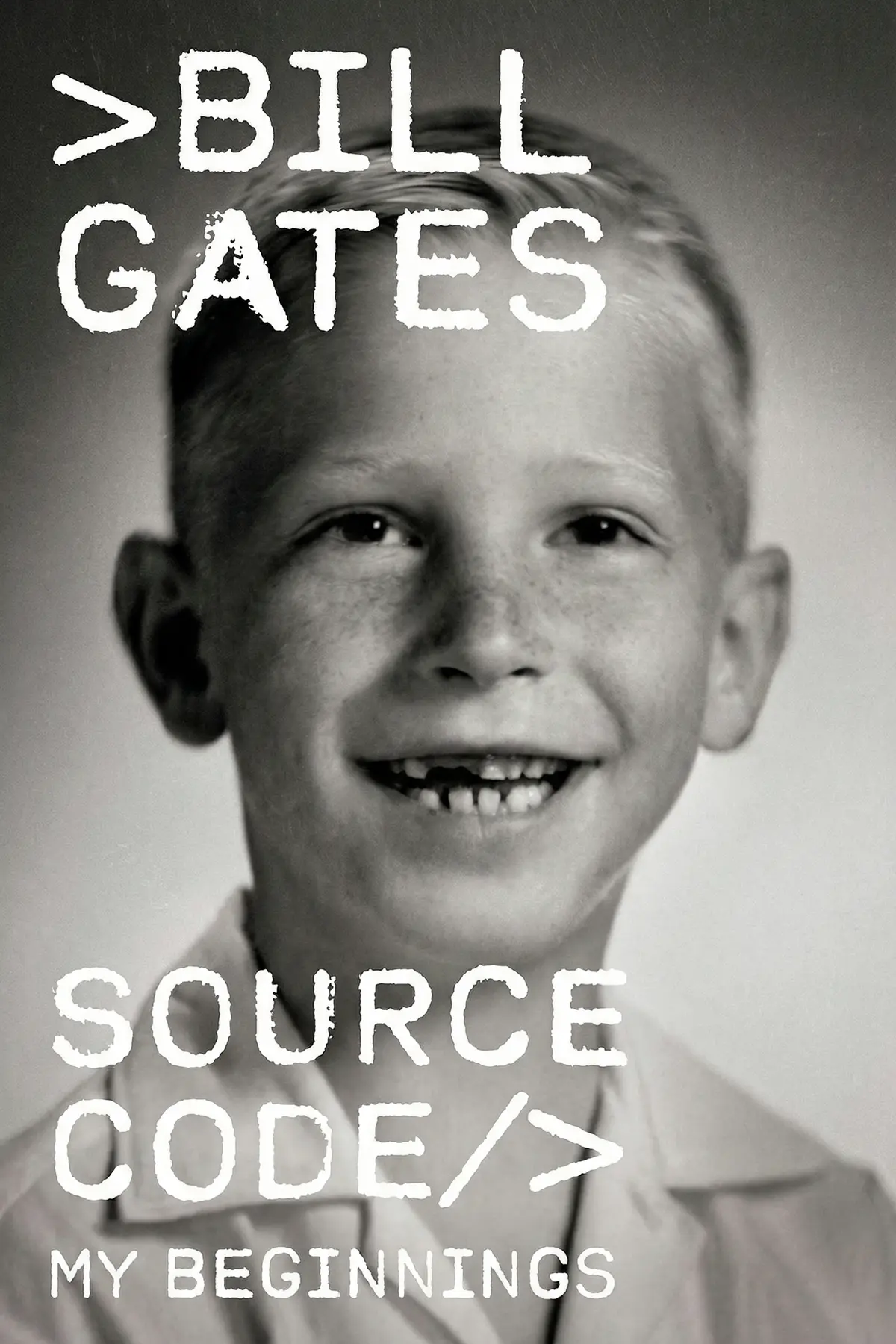
Table of Content
1. Introduction
1 min 05 sec
Most stories of great careers skip the slow middle, where interest gradually hardens into skill. In Source Code: My Beginnings, the first of three planned memoirs, Bill Gates goes straight to that middle, and he credits his programming expertise less to talent than to about 500 lucky hours of unlimited computer time as a young teenager.
The book follows him from card games with his grandmother in Seattle to the founding of Microsoft with his school friend Paul Allen. Its throughline is plain. Gates became who he was because an obsessive, puzzle-solving mind kept meeting rare chances, and because he and Allen grabbed each one with relentless work.
Along the way come a banned teenage hacker, a dumpster full of code, a death that changed everything and a contract clause that set a young company free. The early Microsoft story turns into a clear lesson in how focus, access and partnership build on each other, and a lens for spotting those same forces in your own work.
2. Learn to read every game as a pattern
2 min 12 sec
A grandmother who never lost at cards finally revealed how she did it. Her answer changed how a bored, bullied boy looked at every class, puzzle and problem he would ever face.
3. Find the room where obsession can grow
2 min 03 sec
An elite school he nearly sabotaged, a friend who acted like an adult at twelve, and a small notice on a wall. One of them would hand a teenager the tool that defined his life.
4. Your first 500 focused hours lay the groundwork for mastery
2 min 23 sec
A record snowfall, a security hole and a midnight trip into a dumpster. Gates argues that the famous story about practice and mastery leaves out the part that actually made his possible.
5. Turn grief into a partnership that lasts
2 min 09 sec
Two teenagers were racing to finish software for their own school when tragedy struck twice. What Gates did in the weeks afterward reshaped the friendship that would later become a company.
6. Bet on software while others chase hardware
2 min 27 sec
A college student, a friend with a beard and a guitar, and a $397 computer kit on a magazine cover. They had no machine to test on, and they built the software anyway.
7. Protect your best work with one contract clause
2 min 12 sec
Microsoft’s first customer was sold to a company that believed it now owned their code, every future version included. The young firm’s freedom came down to a few words written years earlier.
8. Conclusion
1 min 09 sec
What Source Code adds up to is a portrait of luck that was worked for. Gates does not hide his advantages: a comfortable Seattle home, an elite school, a parent who found free computer time, a snowy winter that cancelled classes. Yet each break mattered only because a boy who had spent years losing to his grandmother at cards had learned that any system yields to patient attention. The dumpster printouts, the recipe program, the scheduling job finished in a dead friend’s honor and six weeks of Altair code were all that same habit, aimed at bigger puzzles.
The book points to a few things worth watching in your own work. Notice where you have, or could get, unlimited practice, and protect those hours. Pay attention to the people who help you finish hard things, because that is where Gates found his partner. And treat the fine print of every early deal as part of what you build.
Gami’s lesson was that a winning streak is strategy in disguise. Gates spent his youth proving her right, one cracked code at a time.
About this book
What is this book about?
Great careers are usually told from the top: the company, the fortune, the famous name. In Source Code: My Beginnings, the first of three planned memoirs, Bill Gates goes back to the part most stories skip, the years when a scrawny, easily bored kid in Seattle turned curiosity into real skill. Gates traces that skill to a mix of influences and chances: a grandmother who never lost at cards, demanding parents, a school that rented a computer terminal, a parent who found the boys free machine time, and friends who were just as obsessed. He is frank about both his privilege and his luck, and about the loss of his closest friend, which led him to the partner he would build Microsoft with. Readers follow him from dumpster diving for discarded code to writing BASIC for the Altair 8800, facing Harvard's disciplinary board and winning an arbitration that freed his young company. The result is a clear picture of how deep expertise and a lasting business can grow from focused practice, open doors and the right collaborator.
Book Information
Who it's for
Curious how Microsoft began
Founders and aspiring entrepreneurs curious how Microsoft actually started.
Students and new programmers
Students and early-career programmers wondering how deep skill is built through practice and luck.
Raising a restless kid
Parents and teachers raising a focused, restless kid who tunes out anything routine.
About the Author
Bill Gates
Bill Gates grew up in Seattle, where he met Paul Allen at Lakeside School. He entered Harvard in 1973 and left in 1975 to co-found Microsoft with Allen, then served as its CEO for 25 years. He now chairs the Gates Foundation, founded Breakthrough Energy and TerraPower, and in 2010 launched the Giving Pledge with Warren Buffett. He has also written How to Avoid a Climate Disaster and How to Prevent the Next Pandemic.

Ratings & Reviews
Ratings at a glance
What people think
Listeners find this biography to be a captivating and articulate account, characterizing it as a smooth weekend listen that delivers meaningful life lessons. The work provides thorough perspectives on Bill Gates' younger years, as one listener mentions its vivid portrayal of his childhood and another draws attention to its extensive look at PC software history. Listeners value the author's brilliance, with one review specifically citing his encouragement to use his brain.
Top reviews
Noo
Ever wonder what makes a titan tick? 'Source Code' provides a surprisingly candid map of the intellectual architecture behind Microsoft. Gates describes his early access to the DEC PDP-10 with such infectious enthusiasm that you almost feel the hum of the cooling fans yourself. Truth is, his portrayal of the partnership with Paul Allen feels more like a heist movie than a business history, crackling with a sense of urgency and youthful arrogance. I found the reflections on his grandmother, Gami, particularly moving as she clearly laid the groundwork for his mathematical rigor. While some might find the technical jargon a bit dense, it’s essential to understanding how he outpaced the competition. It is a masterclass in how environment and obsession collide to create world-altering change. If you want to understand the origins of the software revolution, this is non-negotiable reading for your weekend.
Show moreLevi
Picked this up on a Friday afternoon and finished it by Sunday night because the pacing is just that good. Gates has a way of explaining complex software concepts that makes you feel smarter just for reading it. It’s an encouraging reminder to use your brain to its full potential, regardless of whether you’re a coder or not. The anecdotes about the Altair 8800 and the mad dash to write BASIC are thrilling, capturing a moment in time when the future was wide open. I loved the inclusion of family photos which grounded the technical talk in a real, relatable childhood. To be fair, he doesn't sugarcoat his early friction with his mother, which adds a necessary layer of human conflict. This is more than a tech book; it’s a lesson in agency and relentless effort. Truly a valuable read for anyone looking for a spark of inspiration from a pioneer's early days.
Show moreDarius
Wow, the chapter regarding Kent Evans was genuinely heartbreaking and added a layer of depth I wasn't expecting from a Bill Gates book. It really highlights how fleeting life can be and how those early friendships define our sense of purpose. Beyond the sadness, the book is a riveting exploration of how a specific set of circumstances—luck, timing, and a massive amount of hard work—aligned perfectly. Gates's intelligence jumps off every page, but he writes in a way that is accessible and never feels like he’s talking down to you. To be fair, his obsession with being '20% better' than everyone else is a bit intense, yet it’s exactly that drive that changed the world. This is a comprehensive look at the foundation of a legacy. I finished it feeling motivated to tackle my own projects with more focus. It’s a brilliant tribute to the early days of hacking and home computing.
Show moreSangduan
To be fair, I went into this expecting a dry business manual and ended up with a vivid portrait of the 1970s tech scene. The story of writing the Altair BASIC interpreter on the fly is the stuff of legend, and hearing it from Gates himself is a treat. He paints a picture of a world where computers were massive machines locked in basements, and his vision to bring them to everyone’s desk feels revolutionary all over again. The book is well-written and flows naturally, making it a very quick read for such a dense subject. I especially enjoyed the parts about his competitive nature—it explains so much about Microsoft’s later business tactics. Frankly, his intelligence is staggering, but his willingness to admit to his youthful arrogance makes him much more relatable. It’s a fascinating look at the 'Source Code' of a man who changed everything. Highly recommended for any tech enthusiast.
Show moreBrooklyn
Finally got around to reading this and I'm left wanting more of the Microsoft era, but as a standalone 'beginnings' story, it's perfect. Gates succeeds in making his early life feel like a high-stakes adventure where every line of code mattered. The transition from a rebellious student to a Harvard dropout with a mission is documented with incredible detail and a surprising amount of humor. Truth is, his family's influence on his philanthropic spirit is clearly laid out here, showing that his later years weren't a total pivot. It’s an engaging, easy read that manages to be both educational and entertaining at the same time. The ending is a bit abrupt, leaving us right at the dawn of his massive success, but it sets the stage beautifully for what’s to come. If you’ve ever wondered how a scrawny kid from Seattle built a global empire, this is where you start. It’s a 5-star look at a brilliant life.
Show moreArt
Bill Gates has always been a polarizing figure, but this memoir humanizes him in ways I didn't expect. Instead of the polished philanthropist we see today, we get the 'weird dude' who dropped acid in high school and struggled with social cues. The family dynamics are the real highlight here, showing how his parents’ high expectations forged his relentless drive. Frankly, his admission of being a 'spoiled brat' at times makes the narrative feel more authentic than most celebrity biographies I've read. You can see the seeds of Microsoft in his competitive school scheduling projects and early payroll software. My only gripe is that he maintains a bit of a clinical distance during the more emotional segments, like the tragic loss of his friend Kent. Despite that, it's an engaging look at how a brilliant, often difficult mind found its footing in an industry that didn't even exist yet.
Show morePatcharaporn
After hearing about his 'Source Code' for years, it's fascinating to finally read his own account of those formative Seattle winters. The book provides detailed insights into the PC software revolution that shifted the world’s trajectory forever. Gates strikes a balance between being self-deprecating about his social awkwardness and being rightfully proud of his technical breakthroughs. Personally, I found the chapters on his time at Lakeside School to be the most compelling because they show the raw potential of a young mind given the right tools. It’s an easy weekend read, perfect for someone who wants to understand the 'why' behind the man. However, the book ends just as Microsoft starts to truly take off, which feels like a bit of a tease. I’m definitely looking forward to the next volume to see how he handled the transition into global dominance. It's a well-written, engaging look at a life defined by obsession.
Show moreNannapat
In my experience, tech memoirs usually skip the awkward childhood bits, but Gates leans into his eccentricities with surprising honesty. He doesn't shy away from his reputation as a difficult kid, showing how his parents’ patience was tested time and time again. The focus on how he processed information and his 'source code' for thinking is actually quite helpful for anyone interested in cognitive performance. I liked how he acknowledged the mentors and teachers who saw his potential when he was just a scruffy kid acting out. Not gonna lie, some of the programming talk went over my head, but the overall narrative of a young man finding his passion kept me hooked. It’s a great glimpse into the history of software through the eyes of one of its chief architects. While a bit self-congratulatory in spots, the life lessons tucked between the lines are genuinely valuable. A solid, engaging biography.
Show moreAmy
The level of technical detail regarding the PDP-10 and early BASIC programming is impressive, though it occasionally drags for the casual reader. While I appreciated the deep dive into the 'source code' of his personality, the narrative voice feels oddly detached from the major life events it describes. He talks about his neurodivergent traits and his habit of rocking with a clinical precision that explains the 'what' but rarely the 'how it felt.' It’s an average read that sits somewhere between a historical document and a personal diary, never quite committing to either. I wanted more insight into the internal shift from being a rebellious teen to a business leader. Instead, we get a lot of focus on school scheduling software. Still, the historical significance of these early years makes it worth finishing. It’s a solid 3-star effort that provides a missing piece of the computing puzzle.
Show moreEye
This felt like a long, self-indulgent exercise in revisionist history that didn't quite land for me. Look, nobody is denying Gates is a genius, but the book spends far too much time justifying his early behavior as 'intense' rather than just admitting he was difficult to be around. The privilege he enjoyed—access to high-end computers in 1968—is mentioned, but the sheer luck of his timing isn't interrogated enough. I found the middle section a total snooze fest, bogged down by dry descriptions of programming minutiae that even an IT veteran might find tedious. It’s a sheltered perspective that ignores the massive socioeconomic advantages that allowed him to take risks others couldn't. By the time he finally leaves Harvard to start Microsoft, I was too bored to care. Not gonna lie, this could have been half as long and twice as impactful if it weren't so focused on his own legend.
Show moreQuestions about this book
What is Source Code by Bill Gates about?
Source Code: My Beginnings is the first of three planned memoirs by Bill Gates. It covers his Seattle childhood, his years at Lakeside School, his first encounters with computers, his time at Harvard and the founding of Microsoft with Paul Allen. Gates shows how a puzzle-solving habit, lucky access to computers, a partnership formed after a friend’s death and a bet on software led to the company’s first big deals.
How did Bill Gates learn to program?
Gates first used a Teletype terminal his school rented, writing a tic-tac-toe game. A parent then arranged for him and his friends to test a startup’s PDP-10 computer in exchange for unlimited use. They taught themselves through trial and error, even pulling discarded code printouts from a dumpster. Gates credits those first 500 hours of free access as the lucky break behind his skill.
How did Microsoft get started?
After the Altair 8800 kit was announced in 1975, Gates and Paul Allen wrote a version of BASIC for it, simulating its chip on Harvard’s PDP-10. Allen demonstrated it for MITS in Albuquerque, it ran perfectly, and MITS licensed it. The partners named their firm Micro-Soft, later won an arbitration against Pertec over the license, and then signed deals with Apple, Commodore and RadioShack.
What lessons can I take from Source Code?
The memoir suggests seeking settings that give you unlimited practice and using every hour of them, as Gates did at C-Cubed. It shows the value of partners who help you finish hard things, since Gates and Allen grew close completing a project after their friend Kent Evans died. And the arbitration story shows why early contract terms deserve careful reading.
Featured in
Readers also enjoyed



Ali: A Life
Jonathan Eig

A Life Decoded: My Genome: My Life
J. Craig Venter


A Long Way Gone: Memoirs of a Boy Soldier
Ishmael Beah

All Creatures Great and Small
James Herriot


A Promised Land
Barack Obama

AUDIO SUMMARY AVAILABLE
Listen to Source Code in 15 minutes
Get the key ideas from Source Code by Bill Gates, plus 5,000+ more nonfiction titles.
- 5,000+ titles
- Listen as much as you want
- 7-day free trial
- Cancel anytime









