
10 min 48 sec
Available in: English
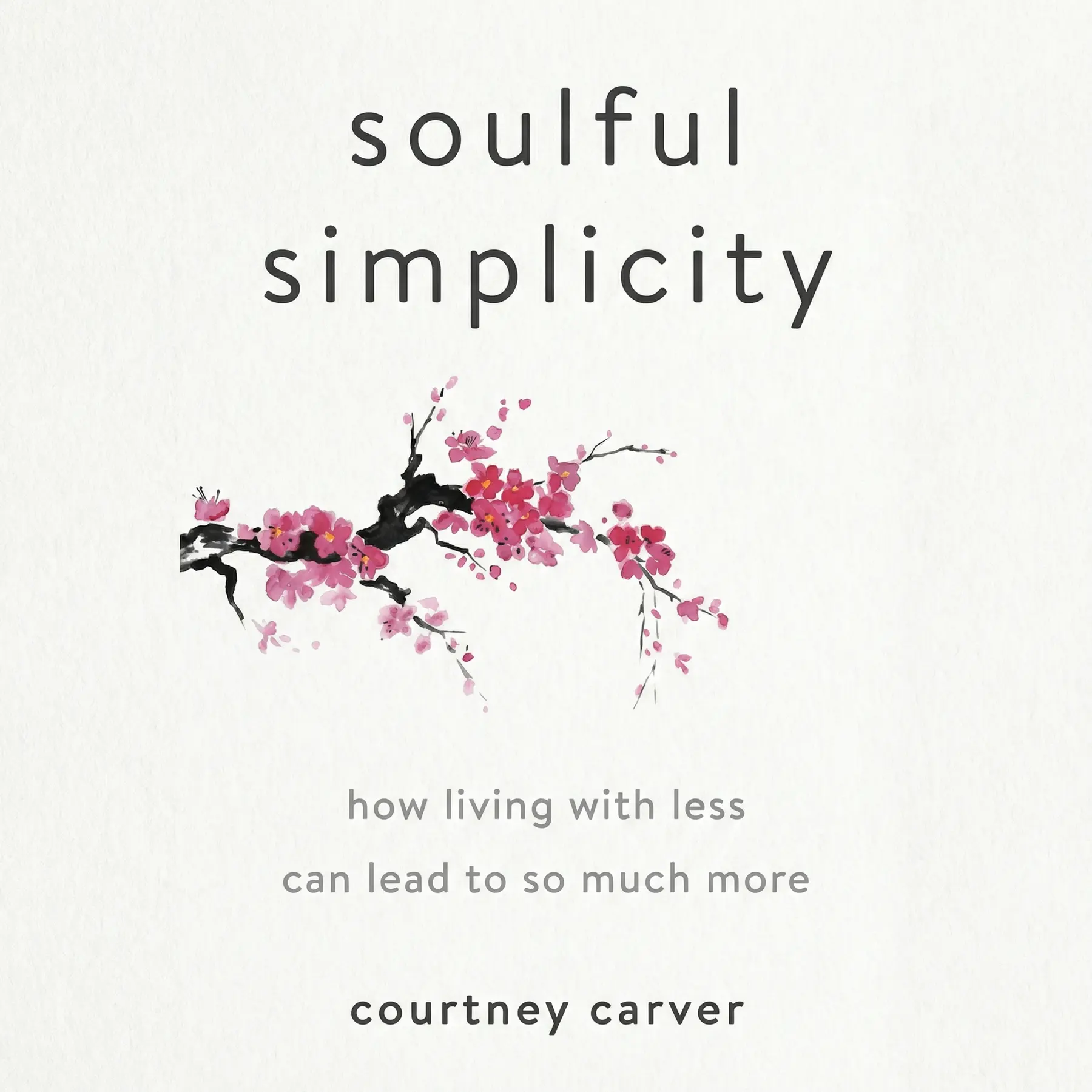
Soulful Simplicity: How Living with Less Can Lead to So Much More
Shows how removing excess possessions, commitments and self-criticism, one deliberate choice at a time, frees attention and energy for your health, your time and the people you love most.
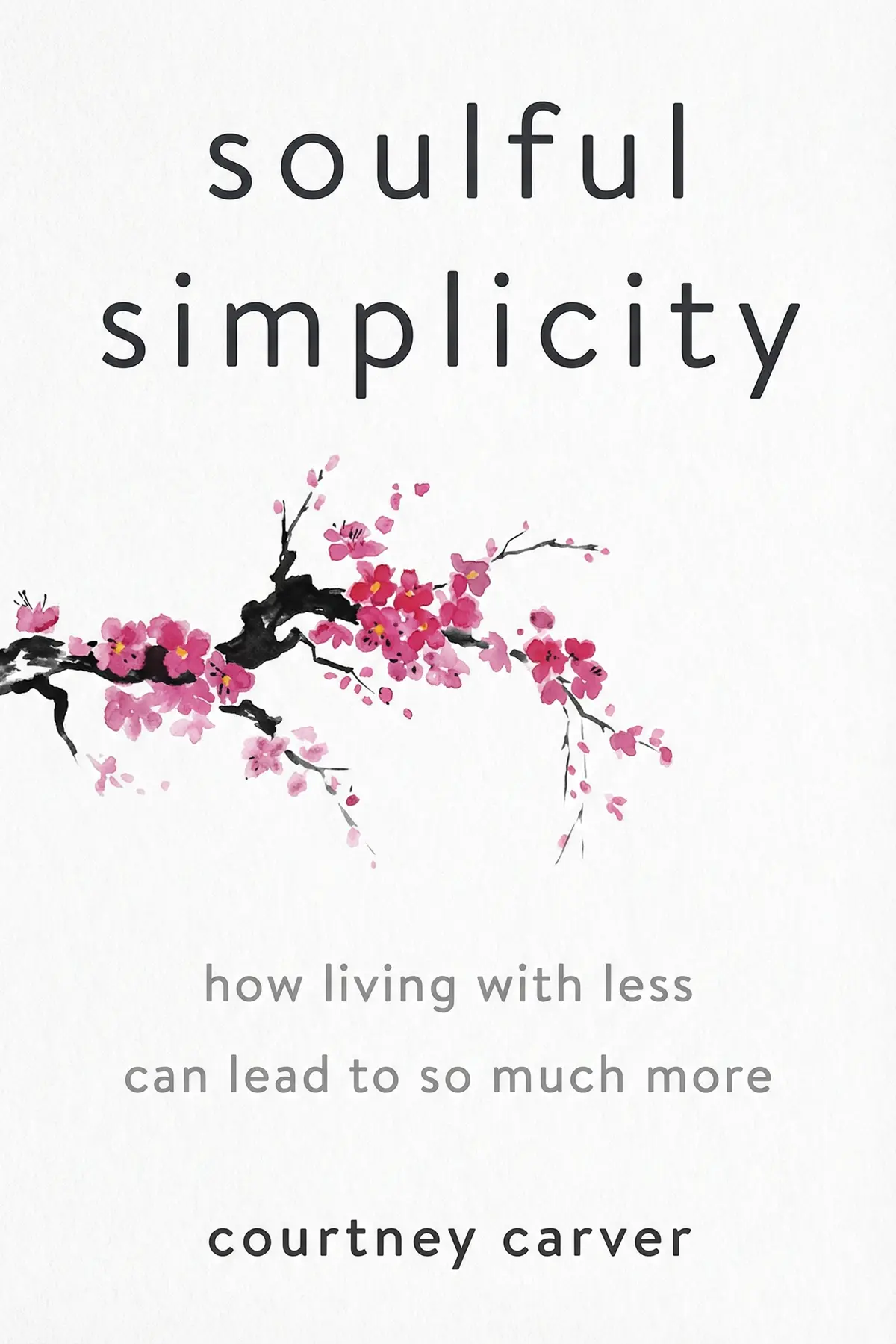
Table of Content
1. Introduction
1 min 07 sec
If your days feel crowded with possessions, plans and worries, the answer may be subtraction rather than better organizing. In Soulful Simplicity, Courtney Carver, who created the Project 333 minimalist fashion challenge in 2010, argues that clearing out excess belongings and commitments is how you find your way back to the person underneath them. She is not asking anyone to own nothing or walk away from every duty. Her method is a series of deliberate choices, made one at a time, that line up with what you actually care about.
That is the thread running through everything she recommends: each closet you thin and each yes you hold back returns room to your health, your hours and the people you love. Her tools are small and ordinary. There are four blunt questions, one filter for anything new, a month of saying no, five minutes taken back from the snooze button and a personal mission written in your own words. Any of them can start tonight, in a single drawer or a single evening.
2. Find what must change with four honest questions
1 min 41 sec
Most of us answer how are you with a reflex. Carver suggests asking yourself the same thing and refusing the polite reply, because the honest answer often names something that has already waited too long.
3. Stop clutter at the door with one question
1 min 36 sec
Tidying feels productive, yet the shelves fill up again within months. Carver points to a simple test, and a month-long experiment, that show which of your must-haves were never really needed at all.
4. Let go of the things that carry guilt
1 min 36 sec
The hardest objects to give away are rarely the useless ones. They are the expensive purchase and the item that belongs to a version of you that never arrived, and they cost more than space.
5. Five reclaimed minutes can set your whole day
1 min 37 sec
Busyness can feel like proof that you matter. Carver asks where that need comes from, then offers a morning change so small it seems trivial, and a way to rest without your worries following you.
6. Clear space to make room for deeper love
1 min 47 sec
A cleared closet and an open calendar can still feel empty if the voice in your head stays harsh. Carver turns to what the space is actually for, and to a short document you write about yourself.
7. Conclusion
1 min 24 sec
Carver’s case for simplicity works by subtraction, but what it gives you is something to add. Every item you release, every invitation you decline and every harsh thought you set down removes a small demand on your attention. What is left is bandwidth: for deeper relationships, for new creative work and for rest that actually restores you.
Underneath the closets and calendars, there is a quieter claim. Once we let go of external expectations, we can see that our worth does not depend on proving anything to anyone. When that pressure loosens, Carver argues, you can see that your worth never depended on proof, and ordinary days start to feel more peaceful.
You do not need a dramatic overhaul to test this. Answer the four questions about your body, your spirit, what you want to change and what you must change, honestly and on paper. Before your next purchase or yes, ask whether it supports what you love or who you want to become. Then write a few lines about who you are and keep them close, for the days when life gets loud again.
Less in the closet and on the calendar is only the start. The point is to have more of yourself left over for the people you love.
About this book
What is this book about?
Many people want a life with depth, yet their days fill up with belongings, obligations and worries until there is little room left to think about what matters. Courtney Carver argues that the way out is subtraction, not better organizing. Her version of simplicity does not ask you to give away everything you own or abandon your responsibilities. It asks you to step back, look honestly at your priorities, your space and your time, and make choices that match what you care about. Carver moves from the inside out. She starts with honest questions about your body and spirit, then turns to the clutter in your home, the busyness in your calendar and finally the way you treat yourself and others. Her tools are modest and practical: a single question to ask before any new purchase or commitment, a month-long pause on shopping and saying yes, five minutes taken back from the snooze button, rest periods with distractions set aside, and a written personal mission. Readers get a gentle, repeatable practice for living with less, and a reason to keep going: the space they clear becomes room for relationships, creativity and peace.
Book Information
Who it's for
Overbooked professionals
Professionals whose packed calendars and full closets leave them tired and scattered.
Recovering from burnout
People recovering from burnout who want a gentle, practical way to rebuild their days.
Clutter keeps coming back
Anyone who has decluttered before and watched the mess return within months.
About the Author
Courtney Carver
Courtney Carver writes about simplicity on her blog, Be More with Less, and founded The Simplicity Space, a membership community for people trying to simplify their lives. In 2010 she created Project 333, a minimalist fashion challenge that later became a book. Her other books include Gentle. With her daughter, Bailey, she hosts the Soul and Wit podcast, and her work has appeared in the New York Times and O, The Oprah Magazine.
Ratings & Reviews
Ratings at a glance
What people think
Listeners find this book immersive and intellectually stimulating, as it reminds them of what really matters. The writing is considered contemplative, and listeners enjoy how the author shares her own life events. Further, it earns praise for its direct method of living more simply, with one listener highlighting the way it details multiple techniques for doing so. They also admire the narrative-driven approach, which blends personal stories seamlessly into the instructional content.
Top reviews
Tariq
Courtney Carver has a way of making you feel like you’re sitting across from her at a coffee shop, sharing your deepest burdens. This book isn't just a guide to cleaning your closet; it’s a profound reflection on how her MS diagnosis forced a total life overhaul. I was moved by her transition from a stressed-out shopaholic to someone who truly values space and stillness. The way she dismantles the 'busy' badge of honor is something every modern woman needs to hear. Truth is, we often use clutter to hide from our own lives, and Carver gently peels those layers back. It’s emotional, beautifully written, and deeply convicting. While some might find the personal anecdotes lengthy, I found them essential for understanding the stakes of her transformation.
Show moreManee
After hearing about Project 333 on several podcasts, I was thrilled to finally dive into the philosophy behind the wardrobe. This book is a 'Whitman’s Sampler' of sorts, touching on everything from debt reduction to spiritual health. Carver doesn't just tell you to throw things away; she explains how clearing the physical space allows for emotional healing. Her journey with MS is heartbreaking but serves as such a vital catalyst for the message. I loved how she encourages us to reject the 'CrossFit yoga body' ideal and just be present in our own skin. It’s a life-changing perspective for anyone who feels like they are constantly running a race they can't win. Highly recommended for a slow weekend read.
Show moreFilm
Honestly, it’s rare to find a book that addresses the emotional weight of our belongings with such grace. I’ve read a lot of minimalism books, but this one felt different because of its vulnerability. The way Courtney ties her physical health to her environment is a wake-up call for anyone living in a state of constant stress. I felt seen when she talked about the pressure to be perfect and the exhaustion of trying to do it all. This isn't just about clothes; it's about reclaiming your soul from a world that wants to sell it back to you in pieces. It’s a beautiful, story-rich guide that I know I will return to whenever I feel the 'busy' creeping back in.
Show moreTaw
Picked this up because I was drowning in my own schedule and needed a lifeline. I’m not usually one for 'woo-woo' practices, but the way she frames listening to your heart felt surprisingly grounded. The connection between her health crisis and her need to downsize is powerful. It makes you realize that simplifying isn't just a trend; it's often a necessity for survival. Personally, I appreciated the mention of Project 333, as it gave me a concrete starting point in my own home. I did find the sections on her past debt a bit repetitive, yet the overall message of living with less to have more room for joy is beautiful. This is a solid choice for anyone feeling overwhelmed by the weight of their possessions.
Show moreEleanor
The chapter on saying 'no' should be mandatory reading for every mother in America. We spend so much time trying to be the perfect Instagram parent while juggling a career and a side hustle that we lose ourselves. Courtney really nails the toxic culture of busyness that defines our current era. It’s a relief to hear someone say it's okay to just stop. Not gonna lie, I cringed a little at the hand-on-heart stuff, but the author acknowledges it's a bit much for some people. That self-awareness made the advice easier to swallow. It’s a thoughtful, straightforward approach to reclaiming your time. I finished it feeling like I finally had permission to breathe again.
Show moreCholada
Finally got around to reading this after seeing it referenced in so many other decluttering books and it didn't disappoint. It offers a very straightforward approach to simplifying life that feels attainable rather than clinical. I especially liked the sections on 'the busy trap' and how we use our schedules to avoid looking at our real problems. Carver’s voice is gentle and encouraging, which is a nice change from the more aggressive 'toss everything' manuals. Look, it’s a bit repetitive in the middle, but the core message is so important that I didn't mind the reminders. It really helped me reevaluate what I actually need to be happy. It’s more about the heart than the house.
Show moreJoshua
In my experience, most minimalism books focus on the 'how' of tossing stuff, but this one focuses on the 'why' of keeping your sanity. Carver uses her own life as a case study, showing how a diagnosis can change your entire value system overnight. The anecdotes are woven through the guidance in a way that feels natural and engaging. Got to say, the practical tips on downsizing were my favorite part, even if the beginning felt a little slow. It’s a grounding read that reminds you that you don't need a massive house or a packed calendar to be successful. If you’re looking for a thoughtful, quiet book to help you reset, this is definitely it.
Show moreArm
To be fair, I went into this expecting a tactical manual on minimalism but found a memoir instead. The first half of the book is a deep dive into the author’s history with overspending and workaholism. If you don't share that specific background, it can feel a bit like slogging through someone else's therapy session. Once she gets into the actual 'how-to' of simplicity, the advice is wonderful and very heart-centered. However, I felt like the book could have been half as long if it focused more on the strategies and less on the backstory. It's a sweet story, but perhaps not the most practical resource for someone who is already debt-free and just wants to declutter their kitchen.
Show moreSomchai
While I admire Courtney’s transformation, I found it difficult to relate to the 'shopaholic' backstory that anchors the first third of the book. I’ve never been someone who keeps up with the Joneses or carries massive credit card debt, so those lessons didn't quite land for me. I was more interested in the 'soulful' aspect, but that felt a bit thin compared to the autobiographical elements. Still, there is value here in her discussion of health and the importance of slowing down. The writing is clear and the sentiment is genuine, even if the 'me, me, me' focus of the self-help portions felt a little narrow. It’s a decent inspirational read, but it lacks a broader focus on community or service.
Show moreNuk
Frankly, the spiritual angle felt confused and lacked a clear direction for the reader. The author seems to be caught between her own faith and a desire to be universally inclusive, resulting in vague suggestions to pray to 'the universe' or your 'intuition.' It felt like she was trying to please everyone and ended up saying very little of substance in those sections. I also struggled with the pacing; we spend a long time on her failed marriage and shopping habits before getting to the actual 'soulful' parts. If you are new to minimalism, you might find some inspiration here, but seasoned declutterers will find this repetitive. It just wasn't the right fit for me.
Show moreQuestions about this book
What is the main idea of Soulful Simplicity?
Courtney Carver argues that living with fewer possessions, commitments and harsh self-judgments makes room for what matters most. Her simplicity is not about owning nothing or abandoning responsibilities. It is about deliberate choices that match your real priorities, so that the space and time you clear can go to your health, your relationships and the passions that make you feel alive.
How do you start simplifying your life according to Courtney Carver?
Carver begins with an honest check-in. Ask how your body has been feeling, how your spirit has been feeling, what you would like to change and what you need to change. She also suggests reflecting on wake-up calls, from burnout to recurring headaches, and building simple foundations such as leafy greens, daily time in nature and steady sleep.
What is the month-long no-shopping challenge in Soulful Simplicity?
Carver suggests taking a month off from shopping or from saying yes. During that month, list everything that felt like a must-have or must-do. At the end, review the list. If something still feels essential, buy it or commit to it fully. She expects many items will turn out to be passing wants, which reveals how impulsive many of our choices are.
How does Soulful Simplicity help with busyness and burnout?
Carver asks why you feel the need to stay busy, and suggests dropping or delegating tasks that never get done anyway. Before new commitments, check whether they truly matter. She recommends using the five minutes you would spend on snooze for reflection, reading or stretching, and setting regular rest periods with devices and worries put away in a real or imagined box.
Who should read Soulful Simplicity?
It suits people who feel overwhelmed by possessions, schedules or self-criticism and want a gentle, practical way to simplify. It is especially useful for those recovering from burnout and for anyone whose decluttering never lasts, because Carver focuses on why clutter arrives and on writing a personal mission statement to stay on course.
Readers also enjoyed


A High-Performing Mind: Strengthen Your Mind and Live Your Best Life
Andrew D. Thompson


Abundance: The Inner Path to Wealth
Deepak Chopra


59 Seconds: Change Your Life in Under a Minute
Richard Wiseman




AUDIO SUMMARY AVAILABLE
Listen to Soulful Simplicity in 15 minutes
Get the key ideas from Soulful Simplicity by Courtney Carver, plus 5,000+ more nonfiction titles.
- 5,000+ titles
- Listen as much as you want
- 7-day free trial
- Cancel anytime









