
12 min 18 sec
Available in: English
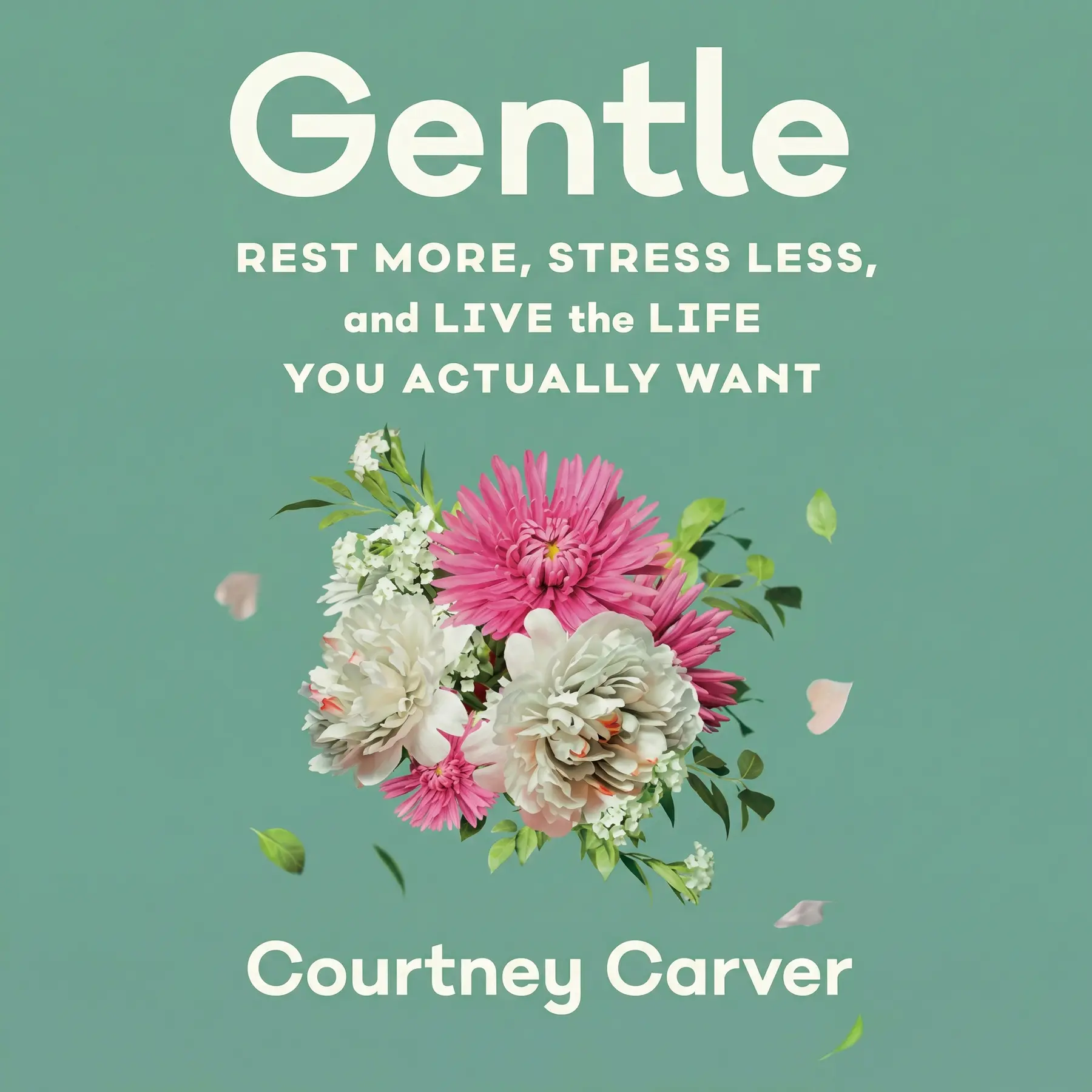
Gentle: Rest More, Stress Less, and Live the Life You Actually Want
Shows tired, overcommitted people how to put rest first through tiny daily practices, from a one-minute morning routine to a notebook for racing thoughts, and how resting this way makes work clearer and more satisfying.
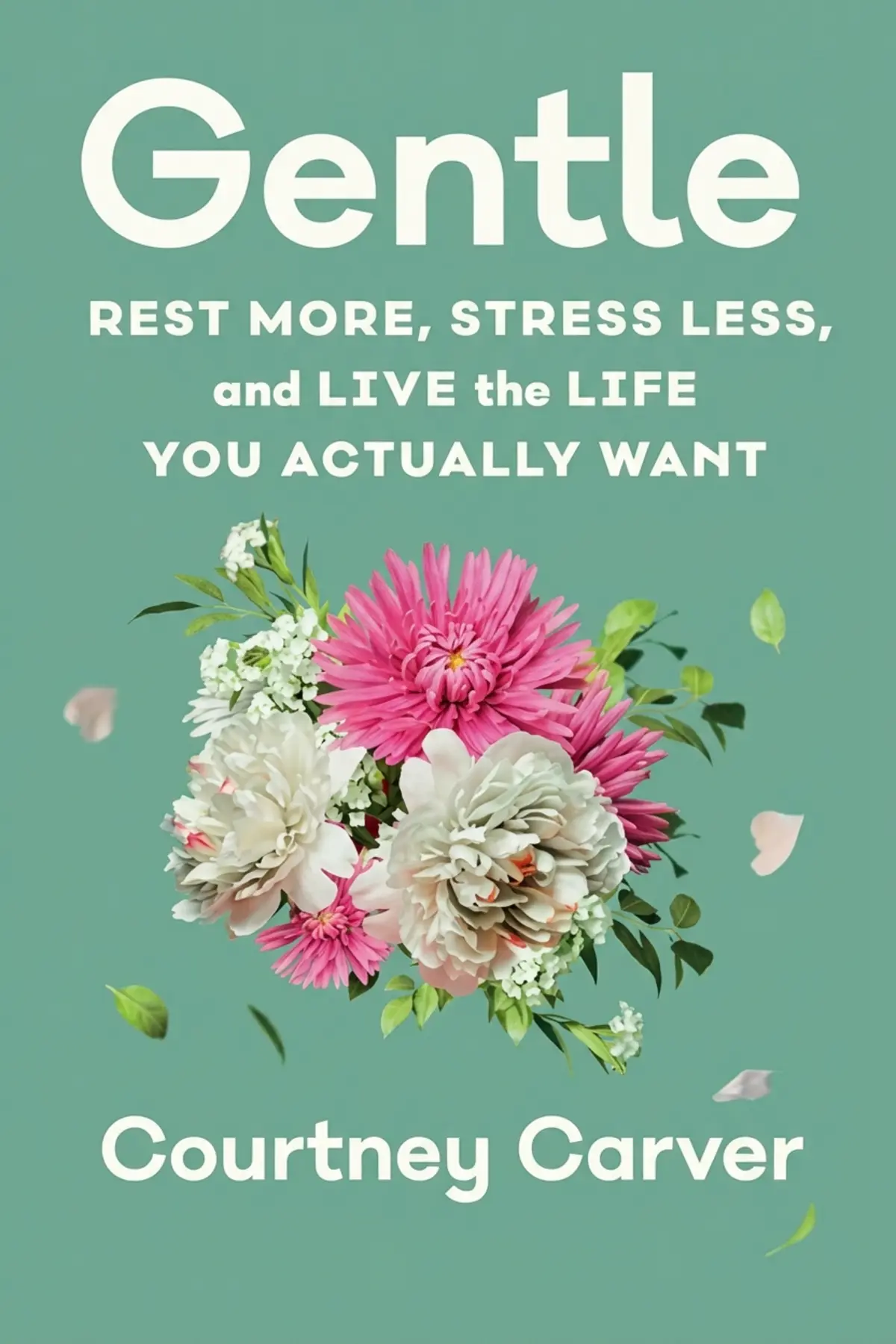
Table of Content
1. Introduction
58 sec
If you run on a tiredness you have stopped noticing, Courtney Carver’s Gentle starts with a simple claim. Rest is the ground your to-do list stands on, so it should come first. The simplicity writer argues that doing nothing on purpose may be the most useful thing you do all day.
Her case is practical. You do not need a sabbatical or a new calendar. You need small, regular pockets of stillness, chosen to suit your temperament, and a way of working that follows your energy instead of fighting it. In Carver’s view, rest and output are partners. Each feeds the other.
The moves she offers are specific and small: a rest break booked before any meeting, a one-minute morning routine, a notebook that settles racing thoughts, and a workday built around your sharpest hours. Each one takes minutes, and each makes the next one easier to keep.
2. Make rest the foundation of your day
1 min 54 sec
Most people plan to rest once everything is finished, and somehow that moment never comes. Carver traces the habit to one belief and shows what a few empty minutes on the calendar can change.
3. Start a rest habit with one breath
1 min 59 sec
Giving yourself permission to stop can feel almost rebellious when everything around you rewards being on. Carver’s way in is so small it sounds like a joke, and that is exactly why it lasts.
4. Small rituals that bring you back to calm
2 min 10 sec
The first minute after you wake and the last hour before you sleep shape far more than they seem to. Carver fills both, and the gaps between, with habits that take less time than checking email.
5. Calm for minds that refuse to sit still
2 min 06 sec
For some people, closing their eyes makes their thoughts run faster, and standard advice about rest only adds frustration. Carver offers routes to stillness that start with moving, writing or drawing.
6. Do your best work by resting first
1 min 58 sec
Most workdays are planned as if energy stayed level from morning to night. Carver’s gentle productivity starts from a different assumption, and it changes when you do hard work, how you focus and when you stop.
7. Conclusion
1 min 13 sec
Gentle asks for remarkably little, and that is its strength. Carver never tells you to rebuild your life. She asks you to stop treating rest as leftovers and to place it first, in pieces small enough that no schedule can refuse them. A single breath before a meeting. A blanket that signals the day is over. A notebook that holds the thoughts that would otherwise keep you awake. Over time, she argues, these small anchors train the nervous system to find calm faster, even in stressful stretches, and the calm shows up in the quality of your work and the patience you bring to people.
If you start anywhere, start tomorrow morning. Leave the phone alone for one minute, breathe three times, name two things you are grateful for and choose one intention. Book a five-minute rest in your calendar before anything else, and let the people around you know it is there. Then find the hours when your mind is sharpest and give them to your hardest task, one thing at a time.
The real test of a day is not how much you got done. It is whether you still have something left to give when it ends.
About this book
What is this book about?
Many people now live with a tiredness they barely notice anymore. It follows them through the day and wears down their mood, their health and their capacity for joy. The usual response is to push harder and promise to rest once the list is done. The list is never done. In Gentle, simplicity writer Courtney Carver argues for the opposite order. Rest comes first, as the base that makes everything else possible, and it does not need a sabbatical or a new schedule. It grows from very small steps: five minutes booked before any meeting, a do not disturb sign, three breaths between tasks, a candle or blanket that tells the body it can relax. Carver also writes for people who cannot sit still, offering walking meditation, creative rest, a brain dump notebook and time in nature. She ends with gentle productivity: matching hard work to your sharpest hours, doing one thing at a time, and accepting good enough where it fits. Readers come away with a set of small habits that make room to breathe and help them work better because of it.
Book Information
Who it's for
Tired professionals
Professionals who feel constantly tired and keep postponing rest until the work is done.
Struggling to sit still
Restless people and perfectionists for whom sitting still feels impossible or wasteful.
Wanting to work better
Anyone who wants to work better without adding hours, by matching tasks to their energy.
About the Author
Courtney Carver
Courtney Carver writes about simplicity on her blog, Be More With Less, and founded The Simplicity Space, a membership community for people who want to simplify their lives. In 2010 she created Project 333, a minimalist fashion challenge that later became a book, and she also wrote Soulful Simplicity. She hosts the Soul and Wit podcast with her daughter, Bailey, and has been featured in the New York Times and O, The Oprah Magazine.
Ratings & Reviews
Ratings at a glance
What people think
Listeners find this book beneficial and simple to navigate, valuing its mild approach to self-care and stress reduction. Furthermore, the author's prose is highly regarded, and listeners describe it as both heartening and inspirational. They also appreciate the guidance on fostering a richer life, with one listener remarking that it helps them step off the "never ending carousel of life."
Top reviews
Tariq
Finally got around to reading Carver’s latest, and it was exactly the breath of fresh air I needed to stop spinning. My life often feels like a never-ending carousel of tasks, but this book gave me actual permission to step off without feeling guilty. I chose the audiobook version, which I highly recommend because her voice is incredibly soothing and adds to the overall message of peace. While some might find the advice simple, the "Rest, Less, and Rise" framework provided a structured path back to myself. It isn’t about radical changes but rather the small, intentional shifts that lead to a more fulfilling daily existence. I’ve already started decluttering my digital life and noticed a significant difference in my daily stress levels. If you’re feeling burnt out and need a nudge to be kinder to yourself, this is the perfect companion for your nightstand.
Show moreJoshua
Ever wonder why it's so hard to just sit still for five minutes? Carver tackles this head-on by exploring the cultural pressures that keep us constantly busy and burnt out. The structure of the book is fantastic, moving from the physical act of resting to the mental work of simplifying. I found the calls to action at the end of each chapter to be very clear and achievable, which isn't always the case with self-help books. It’s about reclaiming your peace in a world that profits from your distraction and exhaustion. Personally, the tips on reducing digital clutter were the most impactful for me. This book doesn't demand that you change your entire life overnight; instead, it invites you to make tiny, gentle shifts. It’s a beautiful resource for anyone who feels like they’re drowning in a sea of "shoulds" and needs a way out. Highly recommend the audiobook for the author's soothing narration.
Show moreLeo
Wow, I didn't realize how much I needed a "permission slip" to just breathe until I sat down with this book. It creates a wonderful space for grace and self-understanding, especially for those of us who are chronic overachievers. Carver’s approach to self-care is so refreshing because it isn't about buying expensive products; it’s about simplifying your environment and your schedule. The way she links our physical surroundings to our mental state is so clear and hit home for me. I felt like I was being given a map to a more fulfilling life that doesn't involve constant hustle and grind. The truth is, we are all exhausted, and this book offers a legitimate way to heal that exhaustion from the inside out. It’s a beautiful, thoughtful exploration of what it means to live with intention. I finished it feeling lighter and more hopeful than I have in a long time. Definitely worth the read.
Show moreSakura
As someone who has followed Courtney’s journey with MS, I found this deeply resonant and incredibly grounding. She understands that "doing more" isn't always an option for everyone, and her focus on rest as a foundation is a total game-changer. The chapter on setting boundaries was particularly helpful because it gave me the language to protect my energy without feeling like I was failing at life. Look, some parts are a bit repetitive, but the short chapters make it easy to digest when you only have a few minutes of quiet. I love how she redefines success as internal peace rather than external productivity or wealth. It’s an encouraging manual for anyone trying to navigate a world that demands too much of our limited time. This isn't just about cleaning your closet; it’s about making room for the life you actually want to live. I appreciate the grace she extends to the reader.
Show moreVipawan
Picked this up during a particularly hectic week and found it to be a very calming influence on my morning routine. Carver’s writing style is incredibly uplifting, and she has this way of making simple concepts feel significant again. I especially liked the section on "Rise," which focuses on how we show up for the world after we’ve taken the time to rest properly. Some critics might say it’s surface-level, but sometimes we just need a gentle reminder to drink more water and step away from the screen. Not gonna lie, the "permission slip" idea was a bit cheesy, yet I found myself actually taking the advice to heart. It’s not a revolutionary manifesto, but it is a solid, easy-to-follow guide for reducing the noise in your head. It helped me realize how much "extra" I was carrying around that served no real purpose. A solid four stars for the peace it brought me.
Show moreChanikarn
Not what I expected initially, but I'm glad I stuck with it because the second half really pulled everything together. I loved that the author prioritized "Rest" as the very first step, acknowledging how women specifically are socialized to keep doing until they drop. This book isn't about productivity hacks; it's about the radical act of doing less so you can enjoy your life more. To be fair, some of the inclusivity language at the beginning might feel a bit jarring to some, but I appreciated her effort to be welcoming. The advice on creating physical and mental space was very practical and easy to implement right away. It helped me identify the "noise" in my life that was preventing me from focusing on what actually matters. Carver has a gift for making simplicity feel like an attainable luxury rather than a chore. It’s a helpful guide for getting off the carousel of busyness.
Show moreYuwadee
The chapter on phone use was a major wake-up call for me and forced me to re-evaluate my relationship with technology. We all know we spend too much time scrolling, but Carver explains the "why" behind our stress in a way that feels very non-judgmental. Her writing is encouraging and uplifting, never making the reader feel bad for their current habits but instead offering a way forward. I found the actionable steps to be the strongest part of the book, as they were simple enough to start immediately. While it might be a bit surface-level for some, I think that's exactly what makes it so effective for people who are currently in crisis mode. It’s a gentle guide—true to its name—that helps you navigate back to a state of calm. I’ve already recommended it to several friends who are struggling with burnout. It’s a very quick read that stays with you.
Show moreNina
The premise of this book is lovely, but I struggled with the delivery in several chapters. Carver has a very calming way of writing, yet the advice frequently felt rooted in a level of privilege that isn’t accessible to everyone. For example, suggesting someone declutter an entire unused room is a bit unintentionally hilarious for those of us living in small apartments or shared spaces. Truth is, many of the suggestions—like spending more time in nature and drinking less—are things we already know we should be doing. It lacks a deep, nuanced exploration of why we struggle with these things in the first place. That said, I did appreciate the "permission slips" she includes, even if they felt a little bit simplistic or childish at times. It’s a fine entry-level book for minimalism, but if you’ve read her blog or previous work, you won’t find much new information here.
Show moreZoe
This book is the definition of "standard self-help," but that isn't necessarily a bad thing depending on what you're looking for. The chapters are short and digestible, which is great for people who are already feeling overwhelmed and can't focus on long, academic texts. However, I found the content to be quite repetitive, with the same themes of "less is more" being hammered home in every section. It’s a light and accessible read, but it lacks the depth or nuance found in books by authors who dive into the psychology of habits. Gotta say, I was also a bit put off by the assumption that everyone has a spare room they can just "get rid of" to simplify their lives. It’s a nice enough book with a sweet tone, but it probably could have been a series of well-edited blog posts. It’s a good starting point for beginners, though seasoned minimalists won't find much new.
Show moreSue
Why did the author feel the need to include so much political ideology in a book about resting? I picked this up hoping for practical tips on stress management, but I was met with mentions of "the terror of capitalism" and "white supremacy" within the first ten pages. It felt like a strange detour into virtue signaling that had very little to do with the actual practice of being gentle with oneself. Frankly, it was alienating and made it difficult to focus on the self-help aspects of the text. The advice that did remain was quite thin—mostly standard blog-style tips like "put your phone away" and "spend time outside." I appreciate her personal story, but the lens through which she views the world feels very narrow and exclusionary to those who don't share her exact politics. If you’re looking for a neutral guide to mindfulness, you might want to look elsewhere, as this one is heavily skewed.
Show moreQuestions about this book
What is the main idea of Gentle by Courtney Carver?
Carver argues that rest should come first and should not be a reward for finishing your to-do list. She shows how tiny, consistent practices, from scheduling five minutes of rest before other commitments to breathing between tasks, build calm over time. She also argues that rest and productivity support each other, so resting well helps you work with more clarity and satisfaction.
How do I start resting more if I am very busy?
Carver recommends putting rest into your calendar before your obligations, starting with five minutes a day, or two, or even a single deep breath. Tell people when you are resting, perhaps with a do not disturb sign. Keep a small rest kit in one spot. Then add about a minute a week, since steady repetition matters more than long sessions.
What is the 3-2-1 morning method in Gentle?
It is a short routine Carver suggests doing before you reach for your phone after waking. Breathe deeply three times, pick two things you are thankful for, and choose one intention to guide the day. It takes less than a minute and creates a buffer between sleep and the demands of the world.
How can restless people rest according to Courtney Carver?
Carver says rest is not one-size-fits-all. Active people can try movement meditation such as tai chi, flow yoga or walking meditation. People with racing thoughts can keep a notebook for a brain dump. Analytical minds may prefer creative rest like sketching or coloring, and nature, including the Japanese practice of forest bathing, calms many unsettled minds.
What is gentle productivity?
It is Carver’s approach to work built on rest. You find the hours when your mind is sharpest and do your hardest tasks then, leaving routine work for later dips. You single-task instead of multitasking, use time blocks if structure helps, accept good enough where excellence is not needed, and end the day by noting what you finished.
Readers also enjoyed

59 Seconds: Change Your Life in Under a Minute
Richard Wiseman





A Guide to the Good Life: The Ancient Art of Stoic Joy
William B. Irvine


A High-Performing Mind: Strengthen Your Mind and Live Your Best Life
Andrew D. Thompson


Abundance: The Inner Path to Wealth
Deepak Chopra
AUDIO SUMMARY AVAILABLE
Listen to Gentle in 15 minutes
Get the key ideas from Gentle by Courtney Carver, plus 5,000+ more nonfiction titles.
- 5,000+ titles
- Listen as much as you want
- 7-day free trial
- Cancel anytime









