

14 min 47 sec
Available in: English
Solitary: A Biography
Albert Woodfox's account of more than four decades in solitary confinement for a murder he did not commit. It shows how racism rigged his conviction and how Black Panther ideals kept him unbroken.
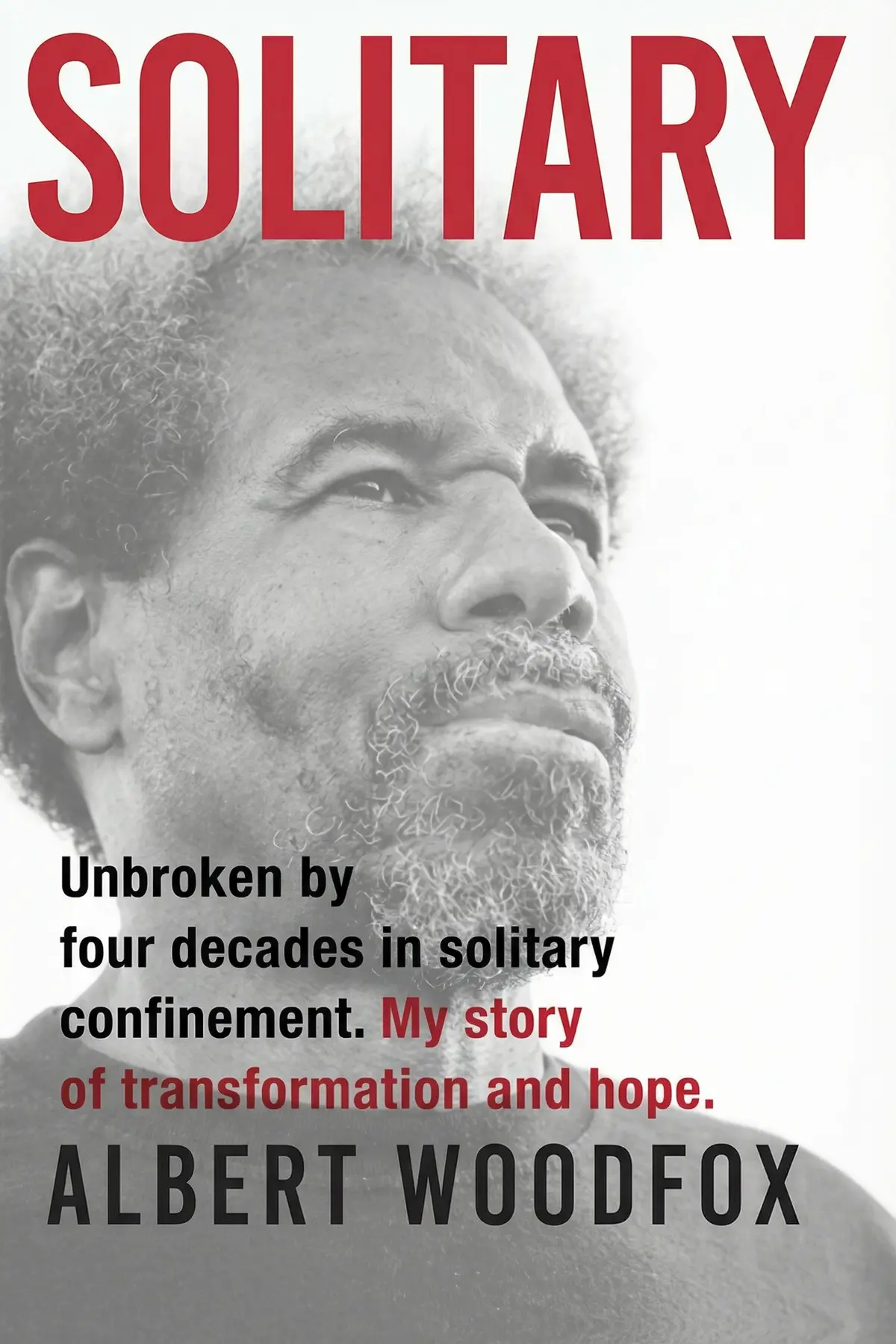
Table of Content
1. Introduction
54 sec
Most people cannot imagine a single day locked in a cell six feet by nine. Albert Woodfox spent more than 40 years that way. An all-white jury convicted him of killing a prison guard, with no forensic evidence and witnesses who contradicted each other. In Solitary, Woodfox tells how a poor boy from New Orleans became a Black Panther, a target of the state and, at 68, a free man.
His story proves one thing: a justice system bent by racism can bury an innocent man for most of his life, and what kept him whole was the purpose and education the Panthers gave him. You will see exactly how cleared case files, paid informants and an unmatched fingerprint became a life sentence, and how one man in a cell still found ways to improve life for those around him.
2. Trace how poverty and policing shaped a boy
1 min 23 sec
A hungry boy stealing bread and selling graveyard flowers ends up driving a stolen cement mixer toward home. The story sounds almost funny until you see what it taught him about the law.
3. What a former plantation reveals about prison power
1 min 27 sec
In a prison built on an old plantation, the worst abuses were not accidents the guards failed to stop. Seeing who gained from them changes how you look at any broken institution.
4. Leadership that wins a room without force
1 min 36 sec
Three new prisoners take control of a Manhattan jail tier within days and never throw a punch. Their method still works for anyone trying to lead people who owe them nothing.
5. Find a purpose strong enough to remake a life
1 min 33 sec
A group much of the public saw as dangerous gave a young armed robber a vow he would keep for the rest of his life, and turned him into a protector inside Angola.
6. Learn how an outspoken activist becomes the easy suspect
1 min 29 sec
A guard is murdered, and within a day the warden has a theory, a mysterious letter and a culprit. One small detail about typewriters makes the official story fall apart.
7. Spot the marks of a verdict decided early
1 min 40 sec
Three witnesses, one bloody fingerprint and a defense committee run by a helpful couple. Each piece of the trial hides a problem, and together they point to something worse than bad luck.
8. Keep your dignity where you control almost nothing
1 min 45 sec
Five steps one way and five steps back, for 43 years. What a man does with law books, a protest over toilet paper and a made bed under those conditions is worth knowing.
9. Understand how freedom can come without exoneration
1 min 50 sec
Decades after the trial, a juror, an attorney general and a single key kept him inside. When release finally came, it came with a choice no innocent person should have to make.
10. Conclusion
1 min 10 sec
Woodfox’s life works like a stress test of a justice system. Each protection that should have shielded him, from a real defense to evidence testing to an impartial jury, was missing or turned against him. Unproven charges dumped on him to clear police files in 1969 were still being used against him almost four decades later. What the system could not take was the purpose he found among the Panthers, which turned a cell into a classroom and a law office.
Woodfox regards today’s reforms as surface deep. A US Sentencing Commission study covering 2012 to 2016 found that Black men typically got sentences 20 percent longer than white men for the same crimes. In 2019, more than 80,000 people in the United States were still held in solitary.
His advice starts small. Learn how prisoners are actually treated, through sources such as Prison Legal News and Solitary Watch, then do the one thing within your reach to make prisons more humane. He did that for decades, five steps from a wall.
About this book
What is this book about?
In 1972 a white guard was murdered at Louisiana's Angola prison. Albert Woodfox, a young Black Panther who had been organizing against rape and abuse inside, was blamed. There was no forensic evidence, the prisoner witnesses contradicted each other, and an all-white jury convicted him in under an hour. He then spent more than 40 years in a cell six feet by nine. Woodfox tells the whole story. It runs from a hungry childhood in segregated New Orleans and a first stint at Angola to the Manhattan jail where three Panthers showed him a different way to live. He describes the conditions of solitary, the tear gas and strip searches, the FBI informants who sabotaged his defense and the officials who kept repeating false rape charges to keep him locked away. Readers get a precise picture of how a racially biased justice system can hold an innocent man for decades. They also get a portrait of the discipline, study and friendship that kept him from breaking. The book ends with his release in 2016 and his continuing fight against solitary confinement.
Book Information
Who it's for
Curious about wrongful convictions
Readers who want to understand, step by step, how a wrongful conviction actually happens.
Following the reform debates
People following debates on solitary confinement, policing and prison reform who want a firsthand account.
Drawn to endurance stories
Anyone drawn to stories of endurance who wants to know how a person stays whole through decades of isolation.
About the Author
Albert Woodfox
Albert Woodfox was born in 1947 and grew up poor in New Orleans. He spent 44 years in solitary confinement at Louisiana State Penitentiary, where he educated himself, helped teach other prisoners and joined the Black Panther Party. After his release in 2016, he worked for prison reform and social justice. That makes Solitary both a firsthand account and an argument from someone who lived inside the system he describes.
Ratings & Reviews
Ratings at a glance

What people think
Listeners describe the work as highly accessible and expertly crafted, offering a compelling narrative regarding incarceration and a remarkable chronicle of maintaining human dignity. This stimulating read is vital for grasping global realities, and one listener characterized the experience as a roller coaster ride through uncomfortable issues. Although listeners value the story of endurance, some find the content heartbreaking, and there is significant distress regarding how individuals are treated within solitary confinement.
Top reviews
Wan
Woodfox’s resilience is simply staggering. This memoir doesn't just describe forty years of solitary confinement; it makes you feel the airless weight of that 6x9 cell. He spent decades in Angola prison for a murder he didn't commit, yet he refused to let the system break his spirit. The way he and the rest of the Angola 3 utilized the Black Panther party’s teachings to organize against the horrific violence and sexual exploitation in the prison was truly inspiring. It’s a devastating look at systemic racism that left me reeling. Frankly, it’s one of the most powerful things I’ve read in years. Every American should have this on their shelf to understand the reality of our justice system.
Show moreClaire
It is rare to find a memoir that is both a brutal indictment of a system and a testament to the human soul. Albert Woodfox tells his story with a raw, unvarnished honesty that is sometimes hard to stomach. From his early days of petty crime to the decades spent in isolation, the narrative moves like a roller coaster through the darkest corners of the Louisiana justice system. I was particularly struck by his ability to turn his cell into a university. He read everything he could get his hands on to transcend his surroundings. The writing is incredibly clear and persuasive. You cannot read this without wanting to demand immediate prison reform.
Show moreKanokporn
Ever wonder how a person maintains their sanity in total isolation for four decades? Woodfox provides the answer through his unwavering commitment to his principles and his friends. This book is a gut-punch. It exposes the corruption of the Louisiana authorities who fought for years to keep an innocent man behind bars. The descriptions of life in Angola are vivid—the heat, the noise, the constant threat of violence. Yet, the core of the book is about humanity and friendship. The bond between the Angola 3 kept them alive when everything else was taken away. It’s an essential, well-written account of survival against impossible odds. Simply unforgettable.
Show moreOrathai
Heartbreaking. This book is a necessary reminder of the cruelty that exists within our own borders. Woodfox’s account of being framed for a guard's murder and then abandoned in a hole for forty years is chilling. The writing is simple but carries so much weight. I found myself tearing up at the ending—the sheer persistence required to reach that point is unfathomable. It’s more than just a prison memoir; it’s a call to action. If this doesn't make you want to fight for justice reform, I don't know what will. It is a devastating, brilliant, and ultimately hopeful piece of work that everyone needs to experience.
Show moreWichai
The chapter on his time with the Black Panthers completely shifted my perspective on his journey. It wasn't just about survival; it was about reclaiming dignity in a place designed to strip it away. Woodfox writes with such clarity about the systemic racism that fueled his conviction. The fact that he spent forty years in solitary—23 hours a day in a tiny cage—is a stain on our country. This book is well-written and deeply researched, blending personal trauma with political analysis. It’s an incredible account of holding onto one's humanity when the world wants you to disappear. I highly recommend it to anyone interested in social justice.
Show moreKanokwan
After hearing so much about Woodfox on the news, I expected a dry legal history, but this was something else entirely. It’s a raw, emotional journey that highlights the absolute worst and best of people. The way the state of Louisiana suppressed evidence for decades is infuriating. But seeing Woodfox emerge as a whole, thoughtful man after 42 years of torture is a testament to the human spirit. The prose is beautiful and the story is essential. It’s a thought-provoking deep dive into why we need to end for-profit prisons and solitary confinement once and for all. This is a truly life-changing read that I won't soon forget.
Show moreGor
While this is undoubtedly a monumental story, the execution can be a bit of a slog at times. I found the inclusion of extensive court transcripts and the minute details of every legal maneuvering to be slightly excessive. It definitely slowed down the momentum of the personal narrative. However, that’s a minor gripe when you consider the scope of what Woodfox endured. His transformation from a young man caught in a cycle of crime to a political intellectual is fascinating. The book provides a necessary, if uncomfortable, look at the treatment of prisoners in America. It’s thought-provoking and stays with you long after the final page is turned.
Show moreTeng
Finally got around to reading this, and it’s a total roller coaster of emotions. There were moments where I had to put the book down because the injustice was just too much to handle. To be fair, the book is quite repetitive, but I think that might be intentional to mirror the crushing boredom of solitary confinement. Woodfox doesn't shy away from his past, which I appreciated. He’s honest about who he was before he went in. Seeing his growth through education and activism while locked in a tiny room is nothing short of a miracle. This is a powerful story about the endurance of the human spirit.
Show moreUdom
Looking at the American justice system through the lens of the 'Angola 3' is an eye-opening experience, though I had some issues with the pacing. The middle section of the book feels bogged down by names of committees and repetitive descriptions of legal filings. It’s obviously an important record, but as a reader, I found my attention wandering. Also, Woodfox’s refusal to express regret for his earlier crimes, like armed robbery, made him a difficult protagonist to root for initially. That said, the second half is incredibly moving. The persistence of his legal team provides a much-needed glimmer of hope in a very dark story.
Show moreDimitri
I struggled to connect with this narrative, mainly because the editing felt quite loose. To be honest, I found the inclusion of full court transcripts to be unnecessary and distracting from the actual story. It felt like the book couldn't decide if it wanted to be a personal memoir or a legal reference text. Furthermore, I found Woodfox's lack of remorse for his victims prior to his murder conviction quite jarring. He admits to terrorizing people with guns but says he wouldn't change a thing. It’s a very important subject, and solitary confinement is clearly torture, but the writing style just didn't work for me. I preferred other memoirs in this genre.
Show moreQuestions about this book
What is Solitary by Albert Woodfox about?
It is Albert Woodfox’s own account of his life, from a poor childhood in segregated New Orleans to more than four decades in solitary confinement at Angola prison in Louisiana. He was convicted of murdering a guard in 1972 despite no forensic evidence and contradictory witnesses. The book shows how racism shaped that conviction and how the Black Panthers’ ideals helped him survive, educate himself and help other prisoners.
Why was Albert Woodfox held in solitary confinement?
After guard Brent Miller was killed in 1972, prison officials blamed Black militants, and Woodfox, who had founded a Black Panther anti-rape group inside Angola, was accused and moved to solitary. He was convicted on the testimony of three prisoner witnesses who disagreed with each other and were later rewarded. A bloody fingerprint near the body did not match him. Officials kept him in solitary for decades, calling him dangerous despite his good record.
How did Albert Woodfox survive so long in solitary?
Woodfox kept a strict routine: he made his bed, cleaned his cell, exercised and read every day. He taught himself law from library books and filed lawsuits that slowly won books, newspapers, fans, radios and mosquito nets. He organized protests with fellow Panthers Herman Wallace and Robert King, and he drew strength from his friendship with them and from the purpose the Black Panthers had given him.
Who should read Solitary?
It suits readers who want a concrete, firsthand picture of how a criminal justice system can convict and hold an innocent person. It also speaks to anyone following debates on solitary confinement or police reform, and to readers interested in resilience, since Woodfox shows how study, routine and friendship kept him from breaking.
What does Albert Woodfox suggest readers do?
Woodfox’s advice begins with learning. He points readers to Prison Legal News and Solitary Watch to see how people behind bars are really treated. From there, he urges each person to take whatever single step they can to bring more humanity to prisons. He continues to campaign against solitary confinement and against racial injustice in policing and sentencing.
Readers also enjoyed

A Promised Land
Barack Obama


A River in Darkness: One Man’s Escape from North Korea
Masaji Ishikawa


A Spy Among Friends: Philby and the Great Betrayal
Ben Macintyre

A Biography of Loneliness: The History of an Emotion
Fay Bound Alberti


A Force for Good: The Dalai Lama's Vision for Our World
Daniel Goleman

A Year in the Life of William Shakespeare: 1599
James Shapiro
AUDIO SUMMARY AVAILABLE
Listen to Solitary in 15 minutes
Get the key ideas from Solitary by Albert Woodfox, plus 5,000+ more nonfiction titles.
- 5,000+ titles
- Listen as much as you want
- 7-day free trial
- Cancel anytime









