

15 min 57 sec
Available in: English
 ไทย
EnglishไทยSoccernomics: Why European Men and American Women Win and Billionaire Owners Are Destined to Lose
Shows how data overturns soccer's favorite beliefs, from star managers to big transfer fees. It explains what really predicts results, and why the same clear thinking helps you judge leaders, price talent and spot flukes.
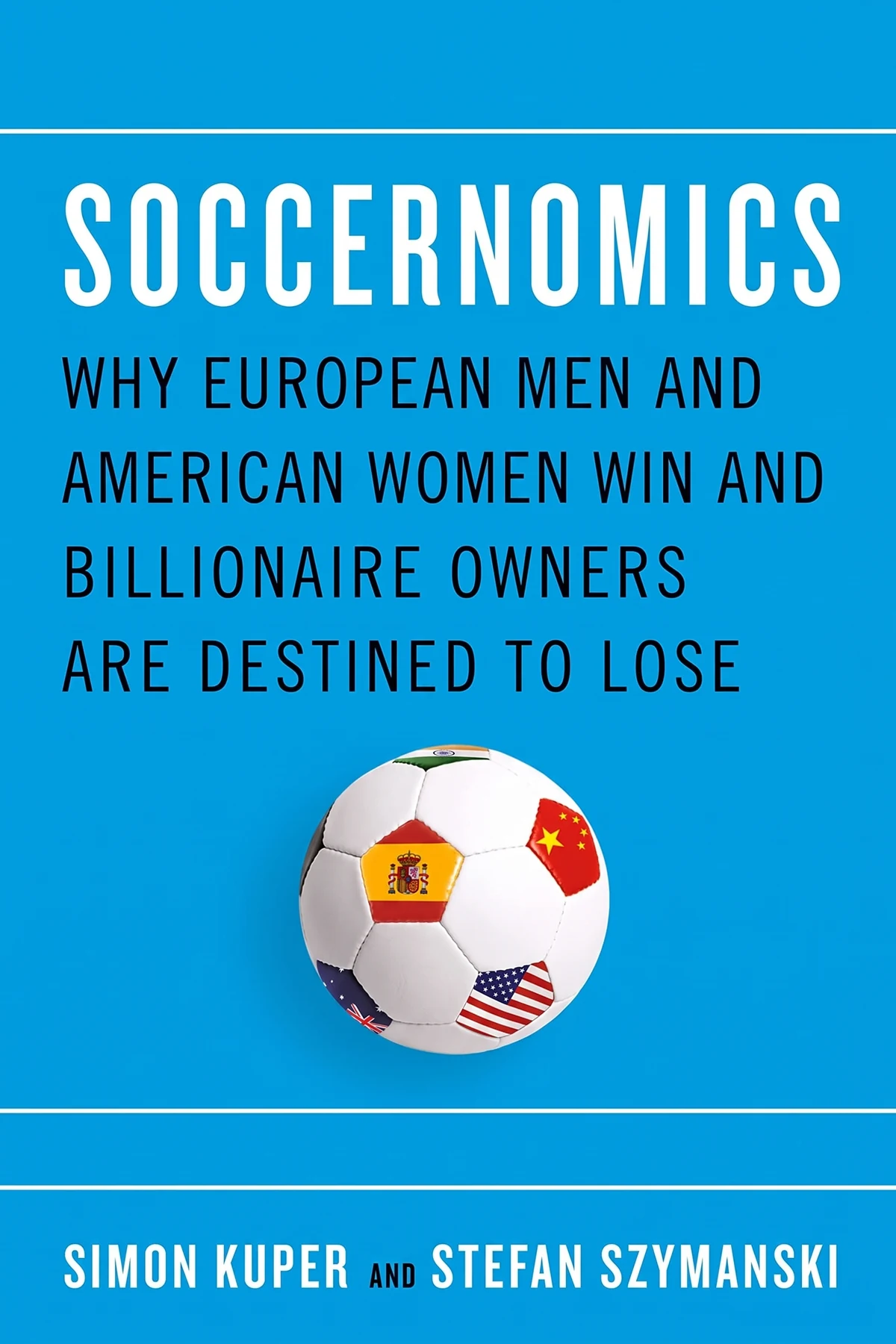
Table of Content
1. Introduction
50 sec
Most soccer talk runs on cliché: the new manager will turn things around, the club must spend big, money has ruined the game. In Soccernomics, journalist Simon Kuper and economist Stefan Szymanski test those beliefs against data, and most of them collapse. Take size. Manchester United, one of the richest clubs on Earth, earns less than a tenth as much as an American organic food distributor that few people have heard of.
The authors’ case is that calm analysis of numbers explains the game better than passion or fashion, and often points the opposite way from the crowd. Pay predicts results, managers mostly ride luck, and the nations that win are the ones best connected to others. The method travels well beyond the stadium, into how you judge a leader, price talent or tell a fluke from a trend.
2. Judge a club like a single supermarket
1 min 40 sec
Everyone says soccer has turned into big business. Compare the most famous club in the world with an ordinary food company, and a very different picture appears, along with a reason why clubs almost never go bust.
3. Spot the trick behind a new manager's first wins
1 min 31 sec
Fire the manager, and the team often starts winning at once. It looks like proof that leaders matter enormously. A business school study of sackings suggests the improvement would probably have arrived anyway.
4. Buy players in their early twenties
1 min 39 sec
Clubs pour billions into the transfer market every summer, often chasing the hero of the latest tournament. One Arsenal signing became a famous joke among the club’s own fans, and the age data explains the pattern.
5. Follow the wage bill to predict the table
1 min 44 sec
Doubling a player’s salary will not make him twice as good. Yet one simple number, tracked over a decade of English soccer, lines up with league position almost perfectly. Leicester’s title shows where it breaks down.
6. Find the easy goals hidden in the data
1 min 42 sec
A manager often dismissed as old-fashioned found a reliable source of goals that rivals ignored. Today every club employs analysts, yet players keep making one hopeful choice the numbers say almost never pays.
7. Where champions grow: rich nations, modest homes
1 min 50 sec
A volcanic island with roughly the population of a small city qualified for a European or World Cup. Meanwhile many European stars grew up in poor neighborhoods. Both facts point to the same two ingredients behind any great player.
8. Keep stealing ideas from your neighbors
1 min 57 sec
England’s star midfielder blamed foreign players for the national team’s failures. The numbers point to a different weakness, one that also explains why Western Europe keeps filling the World Cup podium.
9. A shared tournament can keep people alive
1 min 46 sec
Grim stories of fans who take their own lives after a defeat are well known. A study across twelve European countries found something far larger happening during major tournaments, and the result barely mattered.
10. Conclusion
1 min 18 sec
What Kuper and Szymanski offer is a habit of mind. The loudest claims about soccer, that business rules it, that a new manager will save the season, that poor boys simply want it more, turn out to be stories. The numbers tell a calmer and more useful tale about pay, luck, practice time, investment and the flow of ideas between neighbors. They also show the map shifting. China, ranked 70th in the world, is investing 220 billion dollars in sport, making soccer compulsory in schools and training 50,000 soccer teachers, while President Xi Jinping wants the country to win the World Cup and stage it by 2050.
The same lens works on Monday morning. When a new leader’s early success is being celebrated, check how low things were just before. When you price talent, look at pay over years and at people just short of their peak. And at the next penalty shootout, watch the coin toss: the team that shoots first wins about six times in ten, probably because the pressure falls on the side that must answer. Most of the time, the story everyone repeats is weaker than the pattern nobody checks.
About this book
What is this book about?
Soccer talk runs on cliché. Fans expect a new manager to rescue the season, supporters demand big signings, and commentators complain that money has ruined the game. Journalist Simon Kuper and sports economist Stefan Szymanski take those beliefs one by one and test them against numbers. Most of them fail. Their findings are often surprising. The richest clubs are smaller than a little-known food distributor. A sacked manager's replacement usually benefits from a statistical bounce, not new genius. Transfer fees barely predict success, while wage bills predict it almost perfectly. Iceland outperforms its size through investment, poor European neighborhoods produce stars because children have time to practice, and England's struggles owe more to insularity and bad luck than to foreign players. Even national grief and national tournaments show up in suicide statistics. Readers come to see the world's most popular sport as a system with patterns. They also learn a way of thinking that works far from the stadium: check the base rate, separate luck from skill and follow the money that actually matters.
Book Information
Who it's for
Fans tired of punditry
Soccer fans tired of pundit cliché who want to understand what really decides results.
Separating luck from skill
Managers and analysts who judge leaders, hires or budgets and want to separate luck from skill.
Curious what shapes winners
Readers curious how money, history and geography shape which cities and countries win.
About the Author
Simon Kuper
Simon Kuper was born in Uganda to South African parents and grew up mostly in the Netherlands. He studied at Oxford, Harvard and the Technische Universität Berlin, and has written on politics, society, culture and sport for the Financial Times since 1994. Stefan Szymanski is a professor of sport management at the University of Michigan. As an economist, he researches how sports work as businesses, along with their culture and history, much of it published in peer-reviewed academic papers.
Ratings & Reviews
Ratings at a glance
What people think
Listeners find this data-intensive exploration of world soccer to be a stimulating piece that successfully deconstructs several of the sport’s most established misconceptions. Although views differ on the validity of specific statistical frameworks, people enjoy the intriguing perspectives on national team results and the economic realities of managing a club. Furthermore, they value the approachable prose, with one listener identifying the deep dive into the Super Euro League as a particularly compelling chapter. Finally, they mention that the newest editions give a current perspective on how the authors’ theories have matured along with the contemporary game.
Top reviews
Hunter
Picked this up after the 2022 World Cup and found the updated edition to be an absolute revelation for modern fans. The authors do a fantastic job of revising their previous predictions about countries like Iraq or Turkey, showing a level of intellectual honesty you rarely see in sports writing. It provides a rigorous, data-driven tour through the sport's most contentious debates, proving that Western European dominance isn't just luck but the result of massive knowledge networks. I particularly enjoyed the section on why the American women’s team thrives while the men struggle to break into the elite tier. While some of the statistical models are dense, the prose remains accessible and engaging throughout. This is a total riot for any fan who wants to see past the highlights and understand the engine room of global football.
Show moreJoe
This is basically Freakonomics for the pitch, and it delivers on that promise with every single chapter. I loved the section on how hosting a World Cup is actually a terrible financial investment but a massive win for national happiness. It’s fascinating to see statistics used to disprove the prevailing social mindset on how the transfer market functions. The authors explain why the 'monogamist' fan is a myth and why the business of soccer is actually remarkably stable compared to other industries. My husband and I ended up in a huge debate over their findings on England’s international performance, which just goes to show how provocative this book can be. If you like sports and data, you will absolutely love this.
Show moreOmar
To be fair, I didn't expect to learn that the British actually invented the word 'soccer' and used it for a century before making fun of Americans for it! This book is full of little historical nuggets like that which keep the pages turning. Beyond the trivia, the financial analysis of why it is almost impossible for an established club to die is incredibly comforting. It turns out that soccer clubs are more like essential utilities than traditional businesses. The authors write with a wit and clarity that makes even the most boring accounting principles feel relevant to a Saturday afternoon match. If you want to sound smarter at the pub, this is the book you need to read before the next season starts.
Show moreArt
Why do countries keep bankrupting themselves to host the World Cup if the economic return is nil? This book answers that question by looking at the emotional impact and the spikes in national happiness that occur during these events. It changed how I view the 'business' of the sport entirely, shifting the focus from profit margins to social capital. The authors have clearly done their homework, and the updated sections show they aren't afraid to admit when their older models missed the mark. It is a must-read for fans of the sport who want to understand the global forces at play. Highest possible recommendation for anyone who values data over dugout clichés.
Show moreValentina
Ever wonder why your local club is a financial black hole while billionaires keep buying them anyway? Soccernomics tackles the financial realities of club management with a refreshing lack of sentimentality that most fans will find eye-opening. The book effectively challenges many of the sport's long-standing myths, specifically the idea that a manager is the most important person at a club. In reality, the data suggests that wage bills are a much better predictor of success than who is standing in the technical area. The writing style is quite accessible, making complex economic theories easy to digest for the average reader. While some of the international performance metrics felt a bit stretched, the overall analysis of the European league system is top-notch.
Show moreArthit
The chapter discussing the potential Super Euro League is worth the price of admission alone as it perfectly anticipates the greed currently ruining the game. Kuper and Szymanski provide a great overview that attacks the status quo and the hopeful future envisioned by various billionaires. Truth is, the book makes you realize how inefficient most soccer clubs were run for the better part of a century. I appreciated the updated insights in this edition, especially regarding how data analytics has moved from the fringes to the mainstream. It’s a worthwhile read for anyone interested in the intersection of sports and economics. Just be prepared for some of your favorite legends to be reduced to mere data points.
Show moreTim
After hearing so much about it on various podcasts, I finally dove into this data-driven deep dive into the world’s most popular sport. The analysis of why England actually overperforms relative to its history was a tough pill to swallow but the numbers are hard to argue with. I especially liked the breakdown of why international stars in the Premier League actually help domestic players improve rather than holding them back. It is a fascinating use of statistics to disprove the loud, nativist arguments you hear on sports talk radio. To be fair, some sections on the 'next big soccer nation' felt like they were trying too hard to be prophetic. Still, it’s a very easy and enjoyable read for any serious student of the game.
Show moreYok
As someone who appreciates a good spreadsheet, I found the first half of this book regarding club finances genuinely revelatory. However, parts II and III, which focus on national teams and fan demographics, left me feeling pretty underwhelmed. The authors use simple regressions to try to explain why certain countries overachieve, but using just GDP and population feels like a massive reach. It glosses over huge chunks of cultural history and the actual infrastructure of youth academies. I was expecting a more holistic view of the game, but it often felt like a series of disconnected anecdotes rather than a cohesive argument. It is a decent read for a flight, but don't expect it to change your entire worldview on the sport.
Show morePhichai
The attempt to force a 'Moneyball' narrative onto the beautiful game falls flat for me because the sports are fundamentally different. It feels like the authors cherry-picked specific facts and wrapped them in basic statistics to make their theories sound like indisputable laws of physics. Frankly, most of their conclusions don't stand up to serious scrutiny if you actually watch the matches week in and week out. I was relieved when I finally hit the index because the smug tone of the writing was becoming unbearable. The chapter on Lyon’s transfer strategy was somewhat interesting, but even that felt like an oversimplification of complex scouting networks. If you want actual tactical analysis or deep scouting insights, you are better off looking elsewhere.
Show moreSophia
Not what I expected from a book claiming to use rigorous data analysis, as it is riddled with massive conceptual errors. The authors try to explain Lyon’s success using the 'wisdom of crowds' because they had a committee of five people making decisions. Anyone with a basic understanding of social science knows that five experts in a room is a committee, not a crowd! This kind of trendy, fluffy-pop-sci writing is exactly what makes books like this dangerous for casual readers who don't know the source material. They overstate points to the level of absurdity and ignore information cascades that lead to market bubbles. It felt like they skimmed a few Wired articles and decided they were experts on complex network phenomena. Truly disappointing and amateurish research.
Show moreQuestions about this book
What is the main idea of Soccernomics?
Simon Kuper and Stefan Szymanski argue that most popular beliefs about soccer fail when tested against data. Clubs are small businesses run for glory, managers matter little, and transfer fees barely predict success. What does predict results is wage spending, which accounted for 90 percent of success in the top two English divisions between 2007 and 2016. Luck, investment, practice time and networks of ideas explain much of the rest.
Do managers matter in soccer according to Soccernomics?
Mostly not, the authors argue. Many managers swing from success to failure, as Claudio Ranieri did after winning the league with Leicester. The bounce after a sacking is largely regression to the mean: a Warwick Business School study found clubs average 1.3 points per match and tend to fire managers when they drop to about 1.0, so results usually recover on their own.
Why does England keep losing, according to Soccernomics?
The authors reject the idea that foreign players hurt England, noting the national team’s win rate rose from 52 to 57 percent after more foreigners arrived. They point instead to home advantage and insularity: British players are among the least likely in the world to move abroad, so they struggle away from home. England’s overall record is actually decent, and bad luck likely plays a large part.
How can I apply the ideas in Soccernomics outside soccer?
Check the base rate before crediting a new leader, since a bad run is usually followed by an ordinary one. Judge competitors by what they pay over several years rather than by one big purchase. Value people just before their peak instead of stars fresh from one highlight. And put yourself where ideas travel fast, as Germany did by copying Spanish, Dutch and English strengths.
Readers also enjoyed

A Splendid Exchange: How Trade Shaped the World
William J. Bernstein




Adults in The Room: My Battle With Europe’s Deep Establishment
Yanis Varoufakis


Ali: A Life
Jonathan Eig

1929: Inside the Greatest Crash in Wall Street History--and How It
Andrew Ross Sorkin

AUDIO SUMMARY AVAILABLE
Listen to Soccernomics in 15 minutes
Get the key ideas from Soccernomics by Simon Kuper, plus 5,000+ more nonfiction titles.
- 5,000+ titles
- Listen as much as you want
- 7-day free trial
- Cancel anytime









