

15 min 09 sec
Available in: English
Smart Women Finish Rich
By David Bach
Shows women how to build lasting wealth on the income they already earn by finding what money means to them, getting organized, paying themselves first and saving into three separate baskets.
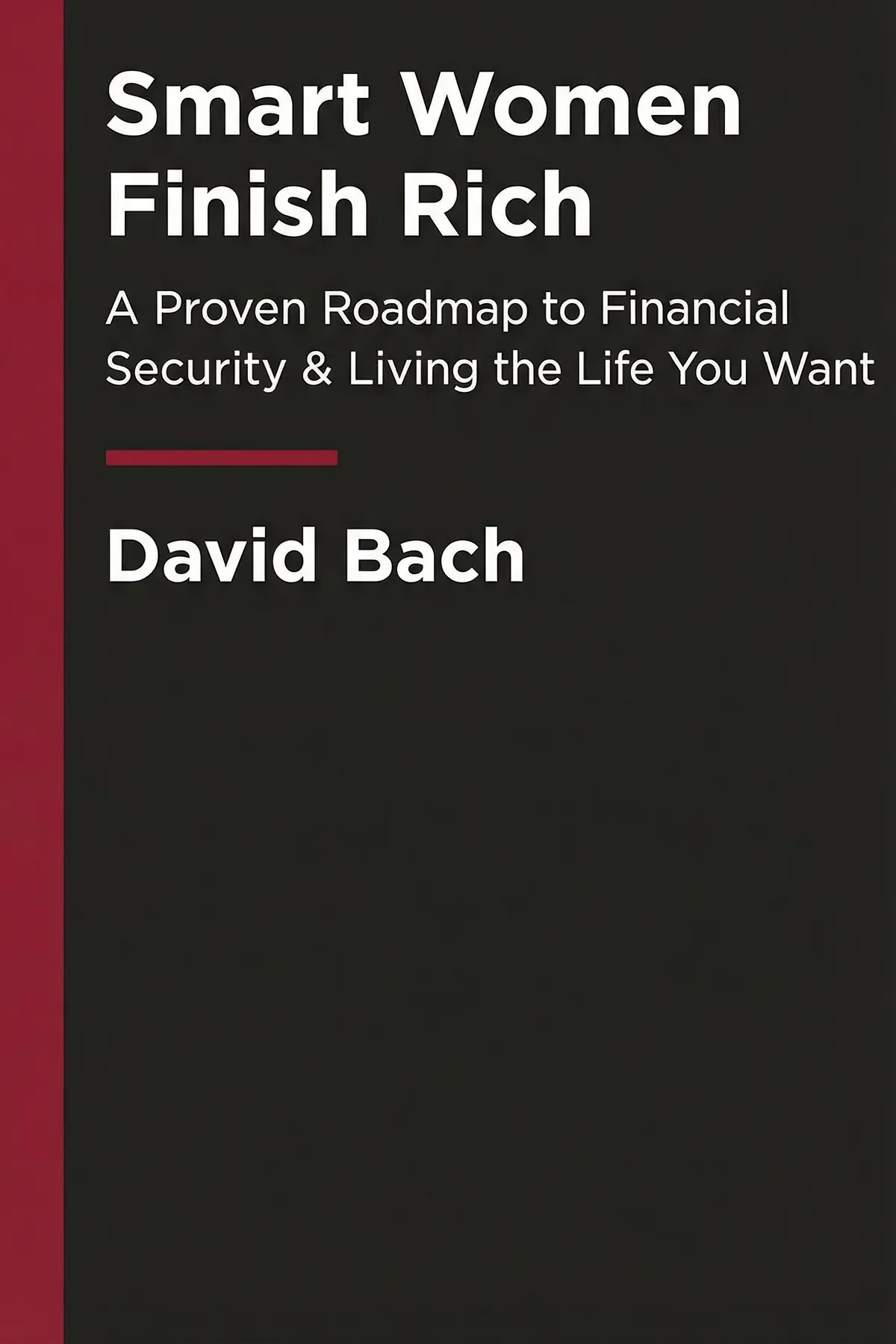
Table of Content
1. Introduction
58 sec
If money arrives each month and disappears just as fast, David Bach’s opening claim is a relief: you probably already earn enough to become wealthy. In Smart Women Finish Rich, first published in 1998, the former Morgan Stanley senior vice president argues that income is rarely the problem. How it is handled almost always is.
He writes for women because their climb is steeper. They tend to earn less, spend more years out of the workforce and live longer, so they need bigger retirement savings and face a higher risk of poverty in old age. Bach’s answer is a short set of habits: know why money matters to you, know exactly where you stand, pay yourself before anyone else and start sooner than feels comfortable. Each one can begin this week, with a few folders, a single percentage point and one small daily expense.
2. Build wealth from the income you already have
1 min 44 sec
Over a working life, close to a million dollars passes through the hands of someone on a modest salary. One of the best-paid performers of the 1990s shows what happens when none of it stays.
3. Find the reason that makes saving stick
1 min 54 sec
A financial expert asks a room full of people one simple question, and the room goes silent. A 72-year-old widow’s answer shows why that question matters more than any fund or interest rate.
4. Map your finances before you plan anything
1 min 44 sec
Nobody would try to book a flight without saying where they are leaving from. Yet that is exactly how most people approach their money, and Bach’s fix needs nothing more than a few labeled folders.
5. Pay yourself first and find your Latte Factor
2 min 05 sec
A 22-year-old in advertising was sure she could not spare $50 a month for retirement. Then she looked at one small daily purchase, and the numbers pointed toward a million dollars.
6. Split your savings into three baskets
1 min 55 sec
A seven-year-old who owned only McDonald’s shares got some advice from his grandmother. Decades later it became a plan for protecting yourself from bad luck while still paying for the life you want.
7. Stop waiting to invest or to own a home
1 min 45 sec
Bach learned one painful lesson at five with a screwdriver and an electric socket. The two money mistakes he warns about hurt more slowly, and young women make one of them especially often.
8. Pass good money habits to the next generation
1 min 55 sec
One of the richest families in modern history raised its children on 25 cents a week, with strict rules attached. A billionaire investor’s advice adds the piece that keeps the whole plan from feeling tight.
9. Conclusion
1 min 09 sec
What Bach offers in the end is a change of role. Instead of hoping a raise, a partner or an accountant will make things safe, the woman in his title takes the controls herself, starting from the income she already has. Women begin behind, he argues, with lower pay, more years out of work and longer retirements to fund. That is the reason to start early, not a reason to give up.
The first moves are small. Spend ten minutes asking what money is really for, and keep asking until the answer feels true. Fill a set of folders until your whole financial life fits on one table. Then move 1 percent of your pay into retirement this month, raise it a point each month after, and fund it with whatever plays the part of Deborah’s daily coffee and biscotti.
M. C. Hammer earned $35 million in one year and still went bankrupt. Deborah gave up an $8 snack and could retire with a million. The whole book sits between those two stories: how you finish depends on what you keep.
About this book
What is this book about?
Women start the money game behind. They tend to earn less, spend more years out of the workforce and live longer, so they need larger retirement savings and are more likely than men to be poor in old age. Many were also never taught how money works. David Bach wrote Smart Women Finish Rich to close that gap, and his central claim is encouraging: wealth depends far less on how much you earn than on how much of it you keep. Bach builds a plan from small, concrete steps. It starts with a question about what money is really for, then a simple folder system that shows where you stand. From there he moves to pre-tax saving that grows by one percentage point a month and the Latte Factor, the small daily spending that can fund a retirement. Savings go into three baskets for security, retirement and dreams. Readers also learn the two delays Bach considers most costly, waiting to invest and waiting to buy a home. He shows how to pass good money habits to children, and why he ends a book about wealth with gratitude.
Book Information
Who it's for
Women stretching each paycheck
Women living paycheck to paycheck who believe wealth needs a bigger salary.
New to retirement saving
Young professionals ready to start retirement saving but unsure how much or where.
Wanting their finances back
Anyone who has left money matters to a partner or accountant and wants to take them back.
About the Author
David Bach
David Bach was born in Oakland, California, and began his series of personal finance books with Smart Women Finish Rich in 1998. He was a senior vice president at Morgan Stanley and a partner in The Bach Group, then founded FinishRich Media. Financial advisors across North America have taught his FinishRich seminars. His books have more than seven million copies in print, and two of them, The Automatic Millionaire and Start Late, Finish Rich, reached number one on the New York Times bestseller list. He has appeared on television since 1994, including several times on The Oprah Winfrey Show.
Ratings & Reviews
Ratings at a glance

What people think
Listeners consider this an essential guide for women, providing functional tips that help demystify financial principles. Furthermore, the book is straightforward to track and apply, and listeners deem it worth its weight in gold. They also value the inspiring message, with one listener noting how it changed their thinking and strategies, while another mentions it provides a crash course on personal finance.
Top reviews
Thanakorn
Finally got around to reading this classic, and I’m genuinely glad I did because the organizational tips are life-changing. Bach doesn't just talk about vague theories; he literally tells you to go buy folders and how to label them. For someone like me who feels constantly overwhelmed by insurance papers and old bank statements, that level of granular detail was exactly what I needed to stop procrastinating. While some of the stock market examples are clearly from another era, the core philosophy of "paying yourself first" remains incredibly relevant for any woman looking to secure her future. I’ve already started setting up my retirement accounts more aggressively. Truth is, I feel significantly more confident about my financial trajectory now. It's simplified, actionable, and extremely motivating.
Show moreCarlos
After hearing David Bach on a podcast, I decided to grab this for my Kindle and I’m so glad I did. I grew up with zero financial savvy, so having someone explain "paying yourself first" in such simple terms was a massive lightbulb moment for me. I kept a notebook next to me and ended up with pages of action items, from moving my husband’s stagnant 401(k) to finally automating my savings. Some critics say it’s too elementary, but honestly, that’s exactly what I needed. It makes the world of money feel less like a gated community and more like a tool I can actually use. Worth every penny for the confidence boost alone.
Show morePruet
This book is essentially a manual for financial independence, and I think it should be required reading for every high school senior. It’s rare to find a guide that is this easy to follow and implement immediately. I loved the "folders" method—it sounds so simple, yet it’s the one thing that actually got me to look at my insurance policies. Personally, I found the tone a bit repetitive at times, but I suppose the repetition helps the concepts stick. It’s a great mix of psychological deep-dives into our spending habits and hard financial data. Even if you think you know the basics, the way Bach frames the "Automatic Millionaire" lifestyle is incredibly compelling.
Show moreTong
Wow, I didn't expect a book about money to make me feel so empowered and capable. I’ve always been "bad with money," but Bach breaks everything down into non-technical, un-scary terms that actually made sense to me. I started paying myself first this month, and seeing my savings account actually grow for the first time in years is an incredible feeling. The book is definitely a "crash course," and while some parts are outdated, the underlying message of self-reliance is timeless. It changed my thinking from "I can't afford this" to "How can I plan for this?" Truly a must-read for any woman who wants to finish rich and stay that way.
Show moreOksana
As someone who recently entered the workforce, this book felt like the crash course in adulthood I never received in school. Bach focuses on why women specifically need to save more—mostly because we live longer—and that reality check was quite motivating. I appreciated how he broke down the 401(k) and tax-deferred accounts without using the usual Wall Street jargon that makes my eyes glaze over. Gotta say, though, some of the gendered comments about how women are "naturally" better investors felt a bit unnecessary and dated. Still, the practical worksheets and the emphasis on aligning your spending with your actual values made this a worthwhile read. It’s a solid foundation for anyone starting from scratch.
Show moreTanyaporn
Ever wonder why personal finance feels so intimidating? Bach demystifies the whole process by focusing on the "Latte Factor" and the small ways we leak money every single day. I found the sections on life insurance and wills especially helpful because those are the things I’ve been avoiding for years out of pure confusion. The book is definitely a product of its time—referencing interest rates that we can only dream of now—but the step-by-step nature of the guide makes it very approachable. Frankly, the encouragement to involve my partner in these conversations has already improved our household dynamic. It’s not a perfect book, but it’s a very practical starting point for financial literacy.
Show moreBae
Look, I know this book is a bit of a relic from the late 90s, but the core principles are still worth their weight in gold. Bach’s "Values Circle" exercise helped me realize I was spending money on things I don't even care about while neglecting my long-term security. It’s a very motivational read, though you have to take the specific numbers with a grain of salt since the economy has changed so much since he wrote this. I didn't love the parts where he praises aggressive business models like Amazon's, as that doesn't really align with my own ethics. However, as a basic roadmap for getting your folders organized and your debt under control, it’s hard to beat.
Show moreManop
The chapter on the importance of women taking charge of their own wealth was particularly eye-opening for me. It’s a sad reality that divorce or the death of a spouse often leaves women in financial ruin, and Bach addresses this without being overly morbid. In my experience, most finance books are written for men, by men, so I appreciated the specific focus on our unique challenges. Yes, the references to 4% savings accounts are a bit of a laugh now, but the logic of compound interest remains the same. I’ve already bought copies for my sisters because I think every woman should have this basic level of literacy. It’s a quick, punchy read that yields immediate results.
Show moreJom
To be fair, I think I read this about ten years too late. Most of the advice feels pretty remedial if you’ve already been following any kind of personal finance blog or podcast. I also found myself rolling my eyes at some of the fictionalized "success stories" that seemed a little too perfect to be true. The author’s insistence that women invest differently because of their "patience" felt like old-school gender essentialism that we should probably move past. However, the section on tax-deferred accounts was a decent refresher, and I can see how this would be a helpful book for someone who is totally lost. It’s okay, just a bit dated and occasionally annoying.
Show moreWipada
The tone here is surprisingly condescending, which made it a real struggle to finish even though the advice is mostly sound. Bach writes as if his female audience has never seen a checkbook before, relying on some pretty tired stereotypes about women and their emotional relationship with shopping. Not gonna lie, hearing him chide a client for "only" having $300,000 in her retirement fund felt completely out of touch with how most people live today. The 2000-era investment advice about dot-com stocks is also dangerously outdated now. If you can ignore the "vagina-based investing" theories and the patronizing "Smart Girl" vibes, there might be a few good tips buried in here, but I’d recommend reading Suze Orman instead.
Show moreQuestions about this book
What is the main idea of Smart Women Finish Rich?
David Bach argues that wealth depends on how much of your income you keep, not on how much you earn. Women face a harder path because they earn less, spend more time away from the workforce and live longer, so he lays out simple habits: find your core value about money, organize your finances, pay yourself first, save into three baskets and start investing early.
What is the Latte Factor in Smart Women Finish Rich?
The Latte Factor is Bach’s name for small, routine purchases that quietly drain money you could invest. His example is Deborah, a 22-year-old in advertising who spent $8 a day on coffee and biscotti. Redirecting that money would let her invest nearly $240 a month, which Bach says could very likely grow to over a million dollars by retirement.
How much should women save for retirement according to David Bach?
Bach notes that the usual advice of 10 percent of pre-tax income was built around men. Because women’s retirements last about 20 percent longer on average, he recommends about 12 percent. If that feels like too much, start with 1 percent and raise it by one point each month, so you reach 12 percent within a year.
What are the three baskets in Smart Women Finish Rich?
Bach divides savings into security, retirement and dream baskets. Security covers emergencies, sized between three and 24 months of living costs and kept in a money market account. Retirement is funded by pre-tax saving. The dream basket, starting at about 5 percent of after-tax income, pays for goals like starting a business, travel or giving time to a cause.
How can I apply Smart Women Finish Rich right away?
Start with Bach’s ten-minute values exercise, asking what money means to you until you reach a personal answer. Next, set up labeled folders for taxes, retirement, investments, bank and household accounts. Then begin saving 1 percent of pre-tax pay for retirement, find one small daily expense to cut, and stop putting off investing or buying a home.
Readers also enjoyed




AUDIO SUMMARY AVAILABLE
Listen to Smart Women Finish Rich in 15 minutes
Get the key ideas from Smart Women Finish Rich by David Bach, plus 5,000+ more nonfiction titles.
- 5,000+ titles
- Listen as much as you want
- 7-day free trial
- Cancel anytime









