
14 min 33 sec
Available in: English
Know Yourself, Know Your Money: Discover WHY you handle money the way you do, and WHAT to do about it!
By Rachel Cruze
Shows how the money lessons you absorbed as a child still drive your spending, avoidance and worry. Then it gives concrete fixes: a $1,000 emergency fund, the debt snowball, honest purchase questions and saving tied to a dream.
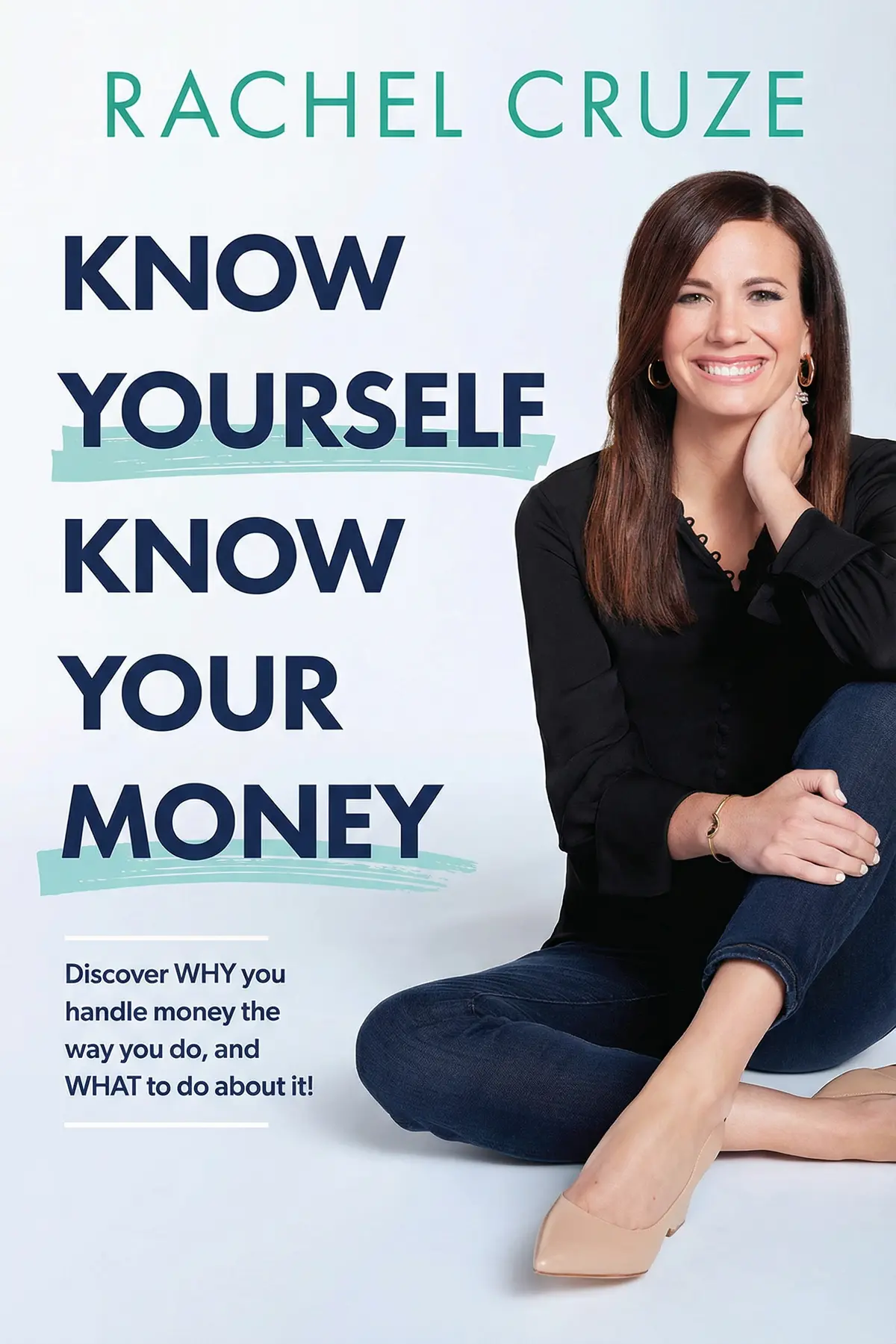
Table of Content
1. Introduction
1 min 02 sec
Plenty of people understand budgets in theory and still overspend, avoid their bank statements or lie awake over bills. In Know Yourself, Know Your Money, Rachel Cruze argues that the missing piece is rarely knowledge. What’s missing is a look at the money lessons you absorbed as a child, often from your parents’ faces more than their words. Those lessons keep steering your choices long after you leave home.
Cruze teaches saving, budgeting and debt-free living at Ramsey Solutions. Her book rests on one claim: once you see which money classroom shaped you, you can stop reacting to it and start choosing. Then come the practical repairs. She covers a small emergency fund, a way out of debt that gathers speed, two questions that catch spending meant to impress and a method that makes saving feel like something you want. By the end you should be able to say where your money habits came from and know your first move this week.
2. Trace your spending back to your first money lessons
1 min 29 sec
A woman with a good salary kept spending more than she earned until her marriage began to crack. The cause turned out to be decades old, and it probably shapes your own choices too.
3. Break the silence your anxious home taught you
1 min 34 sec
A boy noticed one small difference between his mother’s shopping and a friend’s mother’s. Her answer changed how he saw money, and it explains why so many adults still can’t talk about it.
4. Turn money chaos or blind comfort into control
1 min 30 sec
Some children grow up hearing about money constantly, and others never hear about it at all. Both can leave adults stuck, and the reasons differ in ways that matter for what to do next.
5. A $1,000 cushion that quiets the night worries
1 min 41 sec
Millions of people lie awake running through money disasters that haven’t happened yet. Cruze’s answer is smaller and more reachable than most people expect, and she explains why it works on the fear itself.
6. Clear the smallest debt first and build momentum
1 min 36 sec
A teacher on a modest salary paid faithfully every month and still watched her debt grow. What finally freed her was the extra income she earned, aimed at her debts in a set order with no clever math involved.
7. Stop copying neighbors who may be broke
1 min 28 sec
A couple spent a fortune on a Caribbean honeymoon and came home with their marriage in danger. The mistake behind it is common, and it often starts with what sits in a neighbor’s driveway.
8. Find the middle between splurging and penny-pinching
1 min 34 sec
One man won back eight dollars from a restaurant and lost something worth far more that evening. Cruze shows why being too careful with money can cost as much as being careless.
9. Save toward a dream you can price out
1 min 37 sec
For most people, saving feels like giving something up. Cruze argues that the feeling comes from a missing link, and she shows how to turn a vague hope into a number you can reach.
10. Conclusion
1 min 02 sec
Cruze’s message is hopeful. The way you handle money was taught to you, usually by people who meant well, and what was taught can be relearned. Think of Amanda’s shopping, the boy who saw fear behind a loaf of day-old bread, and the friend who stopped caring because money behaved like weather. Each habit made sense in the home that formed it. Each stopped serving the adult who carried it out.
The repairs she offers are small on purpose. Say one honest sentence about money to someone you trust. Put $1,000 aside so the next broken car is just a bill. List your debts smallest first and let each cleared payment roll into the next. Before a big purchase, ask who it is really for. Before a fight over a few dollars, ask whether it will matter in five years. Then give your savings a destination with a price beside it.
You cannot choose the classroom you grew up in. You can choose which of its lessons you keep.
About this book
What is this book about?
Many people know how a budget works and still overspend, avoid their bank statements or lose sleep over bills. Rachel Cruze argues that more information won't fix this. The deeper cause is what they learned about money as children, both from what their parents said and from what their parents felt. Cruze calls this early setting the money classroom. She describes three common types. The anxious classroom teaches silence. The unstable classroom teaches helplessness. The unaware classroom leaves adults without basic skills. She illustrates each with stories from friends, from a compulsive shopper raised by ultra-frugal parents to a boy who noticed his mother always bought day-old bread. From there the book turns practical. It covers why a $1,000 emergency fund is the first answer to money fear and how the snowball method pays off debt by building momentum. Readers also get two questions that expose spending meant to impress others, a five-year rule for penny-pinchers, and a way to price out a dream so saving feels like progress rather than sacrifice.
Book Information
Who it's for
Stuck despite knowing budgets
People who know how a budget works but keep overspending, avoiding their accounts or worrying about bills.
Couples fighting about money
Couples whose different money habits cause fights and who want to understand where those habits come from.
Needing a first step
Anyone living paycheck to paycheck or carrying debt who wants a simple first step.
About the Author
Rachel Cruze
Rachel Cruze is the daughter of Dave Ramsey and has worked at Ramsey Solutions since 2010. She teaches people how to stay out of debt, save and budget, drawing on what she learned growing up in the Ramsey household. She is also the author of Love Your Life, Not Theirs and Smart Money Smart Kids, and is part of The Rachel Cruze Show, available as a podcast and as videos on YouTube and Facebook.
Ratings & Reviews
Ratings at a glance
What people think
Listeners find this work to be a wonderful listen that is exceptionally well-composed and straightforward to follow. It offers helpful perspectives on financial behaviors, and one listener observed that the book takes them on a path toward self-discovery. Listeners also value its practicality as a recurring resource and its ability to inspire them to set money aside.
Top reviews
Noppadol
Finally got around to reading this and I’m genuinely surprised by how much it resonated with my current situation. Rachel Cruze has a way of explaining complex behavioral habits in a way that feels like a conversation with a friend rather than a lecture. The book acts as a mirror, forcing you to look at how your upbringing influenced your adult relationship with debt and savings while simultaneously offering a roadmap for how to change those deep-seated habits. Not gonna lie, some of the realizations were a bit uncomfortable, but that’s exactly what I needed to change my mindset. It’s well-written and serves as a powerful motivator to finally get my financial house in order.
Show moreBenjamin
Wow, this was a total eye-opener for me regarding my money classroom growing up. We often forget that our parents' attitudes toward wealth become our default settings, and Rachel deconstructs that beautifully throughout the chapters. The process of self-discovery she facilitates is both enlightening and practical for everyday life. I appreciate that the tone isn't judgmental, which makes it easier to stay motivated throughout the more difficult sections. My spouse and I read this together, and it opened up conversations about our future dreams that we had never dared to have before. It’s easily one of the most useful books on my nightstand right now and I highly recommend it.
Show moreAnong
This is a fantastic roadmap for anyone who feels stuck in a cycle of bad financial decisions and doesn't know why. Rachel Cruze breaks down the barriers between psychology and finance, making the content feel accessible and actually doable for the average person who might otherwise be intimidated. I’ve read a lot of books in this genre, but this one stands out because it focuses on the heart of the issue rather than just the math. It’s a well-written guide that kept me turning pages until I finished the whole thing in just two sittings. I feel much more motivated to tackle my savings goals now.
Show moreManee
After hearing Rachel on a podcast, I knew I had to check out this book to see if it lived up to the hype. It’s a great walk-through on how to use your money to get to your dreams rather than just surviving paycheck to paycheck. The writing is relatable and the advice is presented in such a straightforward way that anyone can implement it immediately. Got to say, I was skeptical about the self-discovery aspect at first, but it turned out to be the most helpful part of the book. This is a must-read for anyone looking to change their legacy and finally find peace with their finances.
Show moreEye
Cruze really nails the psychological aspect of personal finance by digging deep into our internal motivations. Instead of just focusing on spreadsheets, she takes you on a journey into your own history to explain current spending patterns. I found the writing style approachable and light, making it a very quick read even if you aren't a finance nerd. To be fair, some of the advice felt a bit repetitive if you already follow the Ramsey plan, but the self-discovery elements are worth the price of admission. It functions as a helpful guide that I’ll likely revisit when I feel my motivation slipping. It’s a solid pick for those who want to understand the heart behind their bank balance.
Show moreHarper
The chapter on childhood money classrooms was fascinating and helped me understand why I feel so anxious about spending even small amounts. Rachel’s writing is exceptionally clear, which makes this a fantastic read for someone who usually finds finance books incredibly boring or dense. Look, it’s not a revolutionary economic treatise, but it’s an excellent behavioral guide for the average person. I did feel like some sections dragged on a bit longer than necessary, but the overall message is very strong. It’s a great walk-through on how to align your spending with your actual values and long-term goals rather than just blowing cash on things that don't matter.
Show moreFrida
Picked this up from the library on a whim after a friend recommended it for my constant budgeting woes. It provides a very easy-to-understand framework for identifying your money triggers and how to navigate them without feeling deprived. The focus on how our past affects our present is a refreshing change of pace from standard math-heavy finance books. I wish there were more interactive worksheets included in the physical copy, but the insights provided are still very valuable. If you want to know why you keep making the same mistakes, this is definitely a good place to start your journey. It makes the daunting task of saving feel much more achievable.
Show moreYulia
As someone who struggles with impulsive shopping, I was looking for a very specific tactical plan to fix my habits. While this book was a great place to start, it felt a little too high-level at times and didn't provide enough technical depth for my liking. The truth is, the focus on childhood influences is interesting, but I needed more action items and fewer anecdotes about personality types. It’s an easy listen if you choose the audiobook version, which I did, and it certainly kept me engaged during my long commute. However, I’ll probably need to pick up a few more books on the subject to get the detailed strategy I’m after.
Show moreWit
Ever wonder why you spend money the way you do? This book tries to answer that question by looking at your personality traits and your family history with wealth. Personally, I found the early chapters about childhood a bit slow, though they did provide some context for my current habits. The tone is very encouraging, which is nice if you're feeling overwhelmed by debt and need a little boost. It’s a decent enough read, but I think I would have preferred more concrete steps to take after the self-reflection is over. It’s a good introductory guide for beginners, just don’t expect a magic wand for your finances.
Show moreNora
Not what I expected based on the hype surrounding Rachel’s other work. I managed to get this copy from the local library, so I’m glad I saved some money by not purchasing it outright for my shelf. Most of the content felt like common sense repackaged into fancy personality categories that didn't offer much new insight. Frankly, if you’ve followed her YouTube channel for more than a month, you’ve probably heard most of these stories and tips already. It’s a decent introductory text for a teenager, but for an adult with established finances, it lacks the meat needed to make a real difference. At the very least, it was an incredibly fast read.
Show moreQuestions about this book
What is the main idea of Know Yourself, Know Your Money?
Rachel Cruze argues that the way you handle money today was shaped by your childhood money classroom: what your parents said about money and how they felt about it. Once you recognize that pattern, she says, you can change your habits on purpose. She pairs that self-knowledge with practical steps such as an emergency fund, the debt snowball and saving toward clearly priced dreams.
What are the money classrooms Rachel Cruze describes?
Cruze describes three common types. The anxious classroom rarely discusses money but is full of quiet worry, so its graduates struggle to talk about finances. The unstable classroom is loud and chaotic, which tends to produce apathy. The unaware classroom never mentions money at all, either because the family was comfortable or because parents hid their struggles, and its graduates often lack basic skills.
How does the debt snowball method work?
Rank your debts by size, starting with the smallest and ending with the largest, and ignore the interest rate. Pay the minimum on every debt and put all spare money toward the smallest, using small budget cuts or a side job. When that debt is cleared, move its payment onto the next smallest. Cruze’s friend Elizabeth, a teacher who owed $40,000, used this method with extra jobs to get out of debt.
How much should an emergency fund be according to Rachel Cruze?
Cruze recommends starting with $1,000. That amount is realistic to save with some extra effort, and it is large enough to cover many common surprises, such as car repairs or smaller medical bills. She presents it as the first answer to money fear, noting survey figures that many Americans live paycheck to paycheck and would struggle with a $400 emergency.
How can I stop spending money to impress others?
Cruze suggests asking two questions before a purchase. First, would you still want it if nobody saw it, with no photos online and no colleague noticing? Second, will it really make you happy? If either answer is no, postpone the purchase. She adds that the neighbor whose lifestyle you envy may be paying for it with credit card debt.
Readers also enjoyed



Cashing Out: Win the Wealth Game by Walking Away
Julien Saunders
Charlie Munger: The Complete Investor
Tren Griffin
Big Mistakes: The Best Investors and Their Worst Investments
Michael Batnick
AUDIO SUMMARY AVAILABLE
Listen to Know Yourself, Know Your Money in 15 minutes
Get the key ideas from Know Yourself, Know Your Money by Rachel Cruze, plus 5,000+ more nonfiction titles.
- 5,000+ titles
- Listen as much as you want
- 7-day free trial
- Cancel anytime









