
12 min 44 sec
Available in: English
 ไทย
EnglishไทยSilent Spring
Rachel Carson shows how pesticides like DDT travel from their targets into water, birds, food and human bodies. She also explains why these chemicals can make pest problems worse, and what gentler, biological ways of controlling pests look like.
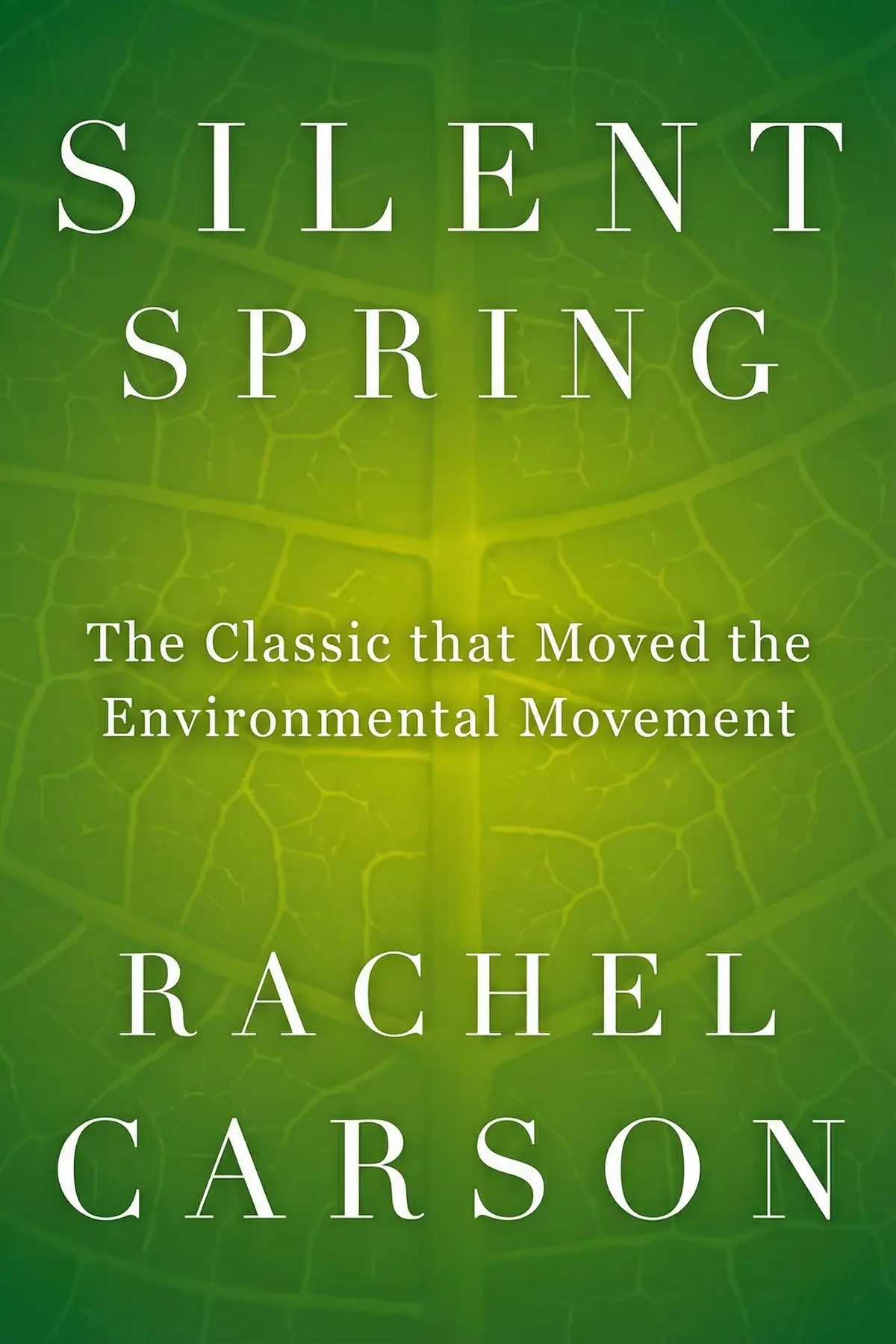
Table of Content
1. Introduction
59 sec
Most of us reach for a bug spray without a second thought, trusting that whatever kills an ant stays with the ant. In Silent Spring, published in 1962, biologist Rachel Carson argues that this trust is misplaced. Her most unsettling example is a simple chain: DDT sprayed on alfalfa was fed to hens, the hens laid tainted eggs, and people who had never touched the spray carried the poison in their bodies.
Carson’s case is that a poison never stays where we aim it, and that our wish to control nature with chemicals keeps backfiring on the living world we depend on, ourselves included. Her evidence runs from a campus littered with dying robins to a forest where spraying for one pest unleashed a worse one. By the end, you will be able to follow a chemical past its target, into water, soil and food, and you will know which gentler options exist.
2. Learn what made postwar pesticides deadlier than older ones
2 min 03 sec
The bug killers that spread across farms after the war had an unexpected family history. Their origins help explain why they were so much more dangerous than the toxic sprays they replaced.
3. Follow a spray from the field to the faucet
1 min 39 sec
Water treatment plants are supposed to stand between us and whatever runs off farms and gardens. One stream draining a cotton field showed how much could slip past them without anyone noticing.
4. Read a dead robin as an early warning
1 min 41 sec
Nobody aimed a single drop of spray at the robins on one American campus. Yet each spring they kept dying, and the path the poison took to reach them changes how you see any pesticide.
5. Trace the path of pesticides from field to breakfast plate
1 min 45 sec
A powder once dusted directly onto soldiers’ hair seemed proof that DDT was harmless. Carson explains why that comfort was misleading, and why people who never touched the chemical still carried it.
6. Kill one pest and you may breed another
1 min 39 sec
Protecting a herd of deer by removing its predators sounded like kindness. What followed in Arizona, and later in a sprayed forest, shows how a quick fix can leave a bigger problem behind.
7. Choose living allies over chemical weapons
1 min 44 sec
No one tested the water, few checked the food, and the makers called their products harmless. Carson’s answer to that gap involves sterile insects, natural enemies and a scent that leads pests astray.
8. Conclusion
1 min 14 sec
Silent Spring is, finally, a book about aim. People pointed poisons at beetles, budworms and lice, and the poisons landed on robins, fish, hens, forests and the families eating breakfast. Every story Carson tells repeats that gap between target and result, and every one grows from the same impulse: the belief that nature can be controlled by force without anyone paying for it.
She also names who was missing from the picture. Regulators did not test, officials sprayed without study, and companies called their products harmless. Her answer was stricter rules on pesticides and a public that knows what is being sprayed around it.
For a single listener, the habit worth keeping is small. Before you spray, follow the poison in your mind past its target: into the drain, the soil, the worm, the bird and your own plate. Then ask whether something alive, a predator, a parasite or a lure, could do the job instead. A robin feeding on a lawn in spring is a sign that the chain is still clean, and Carson wanted us to notice when it is not.
About this book
What is this book about?
After the Second World War, chemicals first studied for warfare were turned against insects, weeds and rodents. Production soared, the new compounds were far deadlier than the arsenic sprays before them, and the public largely assumed they were safe. Rachel Carson set out to show where these poisons actually went once they left the sprayer. Her answer is that they go almost everywhere. DDT slipped through water treatment plants and killed fish. It passed from sprayed leaves to earthworms to robins on a university campus. It moved from alfalfa to hens to the eggs on people's plates, until even people with no known exposure carried it in their bodies. Because these chemicals kill indiscriminately, they also wiped out the natural enemies of pests, and one spraying campaign against a forest pest turned the spider mite into a worldwide problem. Readers come away with a clear picture of how poisons spread through living systems, why weak testing and absent regulation let them spread unchecked, and which biological methods, from sterilizing pests to luring them with pheromones, offer safer ways to deal with unwanted bugs.
Book Information
Who it's for
Deciding whether to spray
Parents and home gardeners deciding whether to spray for pests around food, children and pets.
Wondering how chemicals spread
Health-conscious readers who want to know how chemicals reach the food chain.
Learning pesticide regulation's history
Students and professionals in environment or policy who want the classic case behind pesticide regulation.
About the Author
Rachel Carson
Rachel Carson (1907 to 1964) began her career as an aquatic biologist with the U.S. Bureau of Fisheries before writing about nature full time in the 1950s. Her bestseller The Sea Around Us won a U.S. National Book Award and, with Under the Sea Wind and The Edge of the Sea, formed her sea trilogy. Silent Spring, published in 1962, was fiercely opposed by chemical companies, yet it prompted a shift in national pesticide policy and a nationwide ban on DDT. She was awarded the Presidential Medal of Freedom after her death, in 1980.
Ratings & Reviews
Ratings at a glance

What people think
Listeners view this work as a timeless classic featuring thoroughly researched data and an ideal mix of essential scientific detail. They characterize it as a significant milestone for environmentalism, with one listener describing it as the original clarion call for environmental vigilance. The narrative is written in a clear, approachable style for a broad audience, offering a perspective that is both educational and deeply reflective. Listeners value the text’s historical perspective and modern significance, with one listener pointing out how effectively it reveals the impact of DDT.
Top reviews
Maya
This book is the quintessential clarion call that launched the modern environmental movement. Carson’s prose oscillates beautifully between cold, hard scientific evidence regarding DDT and a lyrical, almost elegiac tone that mourns the loss of birdsong. While some readers might argue the specific chemical data is outdated, the true value lies in the attitude Carson endorses. She challenges the primitive 'control of nature' mindset that characterized the post-war era. Frankly, it’s a haunting masterpiece that every citizen should digest. It isn't just about the facts; it is about the moral obligation we have to the fabric of life.
Show moreFang
Wow, the stark imagery in the opening chapter, 'A Fable for Tomorrow,' immediately sets a haunting tone for the rest of the work. Carson asks us to imagine a world where the spring is silent because we have poisoned all the songbirds. It is a chilling premise that still feels relevant in our age of climate change and microplastics. Her explanation of cellular oxidation as a turning wheel of life is a perfect example of her ability to make complex biology accessible to laypeople. This book didn't just change policy; it changed how we define our relationship with the earth.
Show moreTippawan
The way Carson exposes the arrogance of the 'control of nature' mindset is just as relevant today as it was sixty years ago. She rightly points out that we are using weapons from the 'Stone Age' of biology against a complex, interlinked cycle of life. Her research into the link between pesticides and man-made diseases was groundbreaking for its time and paved the way for the EPA. This is more than just a book about bugs; it is a profound meditation on human hubris. Gotta say, reading this during a time of global environmental crisis makes her warnings feel more like a prophecy than a history.
Show moreSaranya
Reading this made me feel like I was witnessing the birth of a new kind of global consciousness. Carson was warned and vilified by the industry, yet she persisted with a gentle voice that carried a massive weight. She doesn't just list horrors; she offers biotic alternatives and a more harmonious path forward. The audiobook narrated by Kaiulani Lee is also superb, as it captures the poetic lilt of the prose perfectly. This isn't just an important book—it’s a necessary one. We owe so much of our current environmental protection to this one woman’s refusal to stay silent.
Show morePete
After hearing so many references to Carson in biology class, I decided to see what the fuss was about. The truth is, it’s a dense read that demands your full attention, but the payoff is immense. She meticulously documents how poisons seep into the soil and water, eventually finding their way into our own bodies. I was particularly struck by the historical context of the chemical industry’s pushback. They spent a fortune trying to paint her as a hysterical woman to protect their profits. To be fair, the pacing slows down in the middle chapters, yet the overarching message remains incredibly urgent.
Show moreSuda
As someone who cares deeply about our oceans and soil, I found Carson’s breakdown of DDT’s persistence to be absolutely terrifying. She exposes the arrogance of a society that thinks it can hurl crude chemical weapons at the environment without consequence. The book is well-documented and provides a perfect balance of scientific content and philosophical inquiry. Look, we still see these same patterns of denialism and greenwashing in politics today. Even though some of these specific pesticides are no longer in use, the corporate playbook for discrediting scientists remains unchanged. It is an educational and thought-provoking look at our past mistakes.
Show moreOoi
Finally got around to this, and the truth is, Carson’s writing style is far more accessible than I anticipated for such a science-heavy text. She has this incredible way of describing the 'sinister touch of poison' that makes the danger feel personal. I was fascinated by the section on how raptors like the bald eagle almost went extinct because of weakened eggshells. It serves as a grim reminder that our actions have ripple effects we can barely calculate. My only minor gripe is that the book feels very rooted in its 1960s time frame, but the core message about ecological vigilance is timeless.
Show moreWittaya
Look, it’s easy to dismiss a book from 1962 as a relic of a bygone era, but Carson’s warnings are eerily prescient. While some of the specific chemical names might have changed, the underlying attitude of corporate denialism remains exactly the same. We see these same patterns in modern environmental documentaries like Seaspiracy, where industry giants fight tooth and nail to suppress the truth. Carson’s work is a masterclass in investigative science writing. It shows that one person with a vision can actually change the behavior of the most influential governments in the world. It’s a somber but ultimately inspiring read for the concerned.
Show moreChamnong
Ever wonder how a single publication could dismantle a multi-million dollar chemical empire? Silent Spring explains the mechanics of that shift, though I found the writing to be a bit repetitive at times. Carson hammers home the same point about bioaccumulation across several different species and habitats. While I appreciate the scientific rigor and her bravery, it felt more like a textbook than the 'poetic' experience I was promised by other reviewers. It is certainly a landmark work of environmental literature, but personally, I struggled to stay engaged through some of the longer lists of insect studies.
Show moreDing
I tried to approach this with an open mind, but frankly, the sheer volume of technical data about insect life cycles and chemical compounds felt incredibly tedious. I understand its historical importance as the original alarm for the environmental movement, but it hasn't aged particularly well as a reading experience for a non-scientist. Much of the book reads like a long litigation brief against the chemical companies of the 1950s. While I respect Carson’s courage and her role in getting DDT banned, I found the prose to be dry and overly clinical for a general audience. It's a classic I'm glad I finished, but I won't be revisiting it.
Show moreQuestions about this book
What is the main idea of Silent Spring?
Rachel Carson argues that synthetic pesticides such as DDT never stay with the pests they target. They move through water, soil and food chains, killing fish and birds and building up in people. Because they kill indiscriminately, they also destroy the natural enemies of pests and can create worse infestations. She calls for stricter regulation, safer biological methods and a public that understands the risks.
What happened to the robins at Michigan State University?
In 1954 the campus sprayed its elms with DDT to fight Dutch elm disease. The next spring robins were found dead, dying or unable to breed, and newly arriving birds died within weeks. The birds had eaten earthworms that fed on sprayed leaves, and their tissue held high levels of DDT. The case shows how poison travels through a food chain.
How can eggs contain pesticides if the hens were never sprayed?
Carson traces a simple chain. Farmers sprayed alfalfa with DDT to protect it, the alfalfa was fed to hens, and the hens laid eggs carrying the chemical. People then ate the eggs. That, according to her, explains why even people who had never knowingly come into contact with DDT carried average body levels of 5.3 to 7.4 ppm.
Why can killing a pest make things worse?
Pesticides kill predators along with pests, breaking the balance that keeps pest numbers down. The US Forest Service treated 885,000 acres of forest with DDT in 1956 to combat the spruce budworm, but the chemical also destroyed the predators that had kept spider mites in check, and those mites later turned into a worldwide pest. The Kaibab deer of Arizona show the same pattern after their predators were removed.
How can I apply the ideas in Silent Spring?
When pests appear at home, consider natural methods before chemical ones, and research what a product does before spraying it where you live and eat. Carson points to biological control, such as sterilizing pests, using their predators, parasites and pathogens, or luring them away with pheromones. Above all, stay informed about what is used on your food and in your surroundings.
Readers also enjoyed

Beyond Words: What Animals Think and Feel
Carl Safina
Cod: A Biography of the Fish That Changed the World
Mark Kurlansky
Comfortably Unaware: What We Choose to Eat is Killing Us and Our
Richard A. Oppenlander
Cradle to Cradle: Remaking the Way We Make Things
William McDonough
Drinking Water: A History
James Salzman

Earth for All: A Survival Guide for Humanity
Sandrine Dixson-Decleve
AUDIO SUMMARY AVAILABLE
Listen to Silent Spring in 15 minutes
Get the key ideas from Silent Spring by Rachel Carson, plus 5,000+ more nonfiction titles.
- 5,000+ titles
- Listen as much as you want
- 7-day free trial
- Cancel anytime









