

14 min 23 sec
Available in: English
Sex, Murder and the Meaning of Life: A Psychologist Investigates How Evolution, Cognition, and Complexity Are Revolutionizing Our View of Human Nature
Shows how instincts built for survival and reproduction still drive attraction, violence, prejudice, memory and showy spending, and how the same simple mechanisms add up to culture and point to where a meaningful life lies.
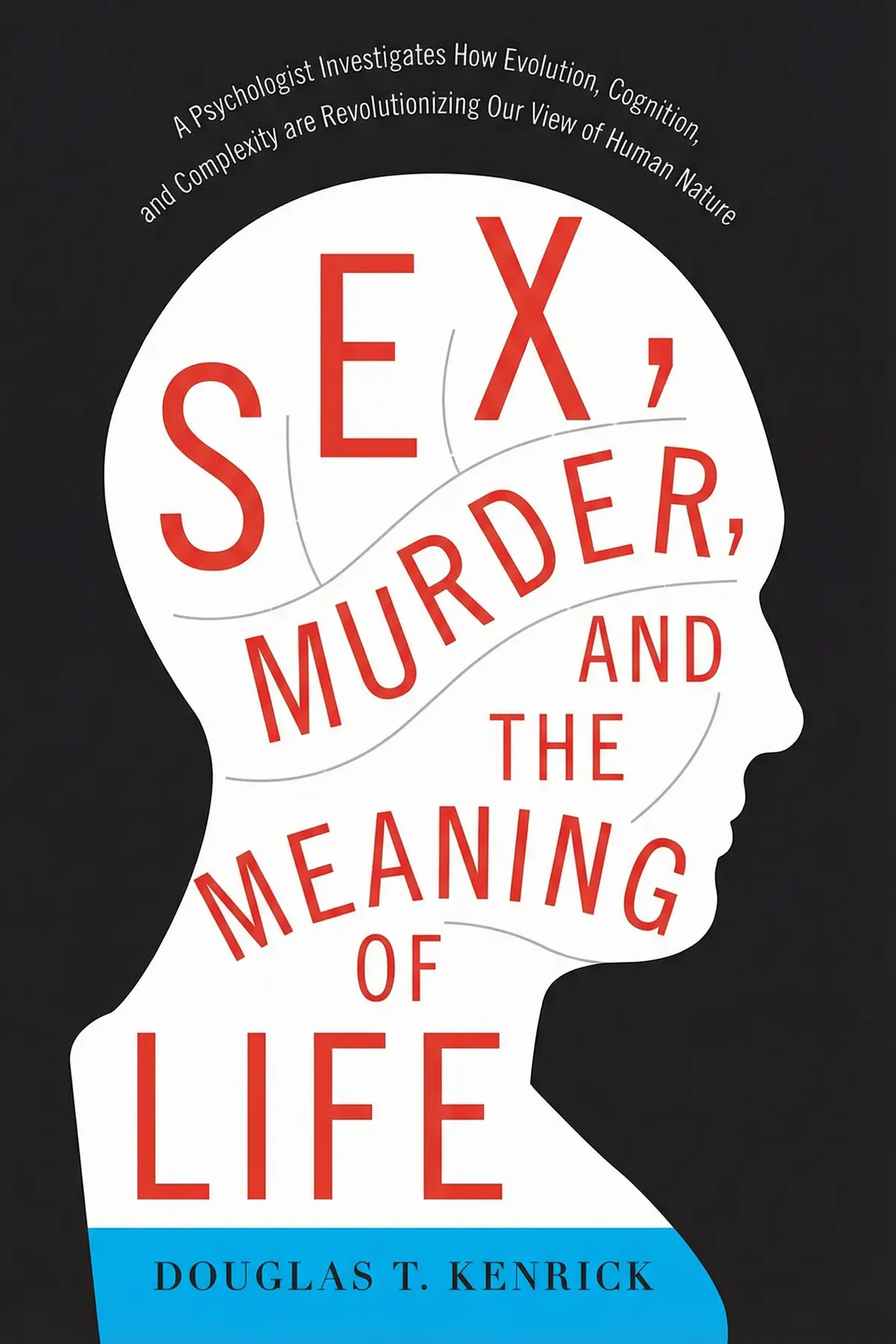
Table of Content
1. Introduction
58 sec
If your own behavior sometimes baffles you, from the stranger you keep glancing at to the purchase you cannot justify, there is a pattern underneath it. In Sex, Murder and the Meaning of Life, Arizona State psychologist Douglas T. Kenrick argues that much of what looks irrational is ancient logic still running. Even violent daydreams are ordinary: in one campus survey, about three in four men and more than six in ten women admitted to them.
Kenrick’s case is that a few simple, selfish mechanisms, passed down from ancestors fighting to stay alive and have children, shape our attraction, anger, fears, memories and spending. Added up across millions of people, the same mechanisms build culture, and they also point to where meaning lies. With his studies in hand, the strange moments in your own week start to make sense, and you get a clearer idea of what deserves your time, your money and your care.
2. Meet the hidden selves steering your daily choices
1 min 46 sec
Some of your strangest choices make more sense than they seem. Kenrick argues that a hidden committee inside the mind takes turns at the controls, and the situation you are in decides which member is in charge.
3. Protect your relationship from the wandering eye
1 min 48 sec
An evening of looking at beautiful strangers does something measurable to how people feel about the partner waiting at home, and men and women react to very different kinds of strangers. A bedroom wall shows the cost.
4. Understand where male violence really comes from
1 min 47 sec
Most students in one survey admitted to fantasies of killing someone, women included. Yet only one sex turns those fantasies into nearly all real homicides, and Kenrick links the difference to an old competition over mates.
5. Catch the ancient fear behind your snap judgments
1 min 50 sec
Whether you remember a stranger’s face depends on more than familiarity. An experiment with neutral and angry faces flips a well-known memory bias, and a group of ill students reveals an even older fear at work.
6. Know which moments your memory will keep for life
1 min 27 sec
You have forgotten almost everything you saw yesterday, yet some moments stay sharp for decades. A national tragedy and a first kiss turn out to share something that explains what the brain decides to keep.
7. A Rolex can beat a handsome face
1 min 45 sec
Critics blame modern shopping culture for luxury spending, yet the habit appears in Iceland, imperial Japan and a Pacific island chain. Two studies, one involving a Rolex and a fast-food uniform, point to a far older motive.
8. Find meaning where your oldest motives point
1 min 56 sec
Kenrick tears the top off one of psychology’s most famous diagrams and puts something unexpected there. A simple choice between twenty dollars and five dollars hints at where he thinks a meaningful life is found.
9. Conclusion
1 min 06 sec
Kenrick’s picture of the self is a committee of ancient specialists, each waking when its moment arrives. The glance across the bar, the flash of rage at an insult, the chill toward a stranger, the memory you cannot shake and the watch you cannot afford all obey one logic, built for staying alive and having children. The surprise is how far that logic reaches. The same selfish machinery, Kenrick argues, also produces generosity, art, love and family bonds.
So when a reaction catches you off guard, look at what woke it: a threat, a rival, an attractive face, an audience. Notice when fear or illness is coloring your view of people outside your group. Guard your eye from the wall of centerfolds that left Kenrick’s friend blind to ordinary beauty. And when you want a life that feels meaningful, follow the motives at the top of his rebuilt pyramid, toward the people who depend on you.
The coloring book came with its outlines. What fills them is still partly up to you.
About this book
What is this book about?
A committed partner who feels less devoted after an evening of looking at attractive strangers, a student with violent daydreams, a buyer who pays for a Rolex: Douglas T. Kenrick argues that none of these is a random lapse. Each follows what he calls Deep Rationality, logic inherited from ancestors whose main tasks were surviving and reproducing. Kenrick combines evolutionary psychology, cognitive science and complexity theory, and draws heavily on research by him and his colleagues at Arizona State. He shows how a mind made of situation-specific subselves shapes whom we notice, whom we fear, what we remember and what we buy. He then follows those simple, selfish rules upward into culture, religion and economics, and rebuilds Maslow's pyramid of needs with mating and parenting at the top. Readers get a single framework for the odd moments in their own behavior, practical cues for spotting which motive is in charge, and a direct answer to the last question in the title: meaning, for Kenrick, lies in caring for the people we love.
Book Information
Who it's for
Professionals curious about impulses
Curious professionals who want a science-based explanation for their own odd impulses, from jealousy to impulse buys.
Managers, teachers and parents
Managers, teachers and parents trying to understand status contests, snap prejudice and what people remember.
Already know some psychology
Readers who already know some psychology and want one framework linking mating, violence, culture and meaning.
About the Author
Douglas T. Kenrick
Douglas T. Kenrick, born in 1948, is a professor of psychology at Arizona State University, where he earned his PhD in 1976 after studying social psychology under Robert B. Cialdini. Most of his research applies an evolutionary lens to human thought and behavior, and his work draws on dynamical systems theory as well as evolutionary psychology and cognitive science. He has edited books on evolutionary psychology, co-authored textbooks, among them Social Psychology: Goals in Interaction, and written a Psychology Today blog that shares this book's title.
Ratings & Reviews
Ratings at a glance
What people think
Listeners consider this work a solid entry point into Evolutionary Psychology, noting how it successfully integrates recent developments in evolutionary biology. They value how easy the material is to consume, as one listener points out its approachable writing style, and they also appreciate its humorous tone. Both the narrative quality and the experiments receive mixed reactions from listeners.
Top reviews
Arm
Wow, this was an absolute riot to read while still being packed with enough empirical evidence to satisfy my skeptical side. Kenrick writes with an irreverent, almost Sapolsky-esque humor that makes even the darkest topics like murder and reproductive competition feel strangely relatable. I love how he takes Darwin’s 'dangerous idea' and applies it to everything from why we buy fancy cars to how we choose our friends. Not gonna lie, I was worried the 'meaning of life' part would be some fluff, but his reimagined pyramid of needs is a total game-changer for understanding human motivation. The personal stories about his son and his own mistakes actually humanize the science rather than distracting from it. This is exactly what pop-science should be: funny, provocative, and deeply grounded in reality. Highly recommended for anyone who isn't afraid to see humans as the biological animals we are.
Show moreCha
Finally got around to reading Kenrick's work and I have to say the way he explains mating strategies is both hilarious and deeply insightful. It is rare to find a book that manages to bridge the gap between heavy academic research and genuinely entertaining storytelling so effortlessly. Frankly, the sections on how our ancestral history dictates our modern, often irrational choices changed the way I look at my own behavior and social circle. He tackles the 'offensive' nature of evolutionary psychology head-on, refusing to sugarcoat the realities of human nature. The writing is punchy, the data is solid, and the overall message about finding meaning through our social connections is surprisingly touching. It is a fantastic introduction for anyone curious about why we do the things we do. I couldn’t put it down.
Show moreOtt
Picked this up on a whim and found Kenrick’s take on the 'pyramid of needs' surprisingly refreshing. Most psychology books just regurgitate Maslow, but he actually uses evolutionary biology to explain why we prioritize certain things at different life stages. I gotta say, the writing style is very accessible and the humor kept me turning pages even when the concepts got a bit dense. There is a lot of focus on mating and status, which might turn some people off, but it is handled with a blunt honesty that I appreciated. Some of the experiments he describes are genuinely fascinating and provide a great look at the subconscious drives we all share. My only real gripe is that some of the broader 'meaning of life' questions felt a little tacked on at the end. It’s a solid four-star read that makes you think twice about your own daily choices.
Show moreMaksim
Honestly, it’s rare to find a social scientist who can weave together evolutionary biology and day-to-day social blunders with such a light touch. This book serves as a fantastic primer on why our 'stone-age' brains struggle with modern life, using everything from consumerism to religion as examples. The narrative is fast-paced and Kenrick’s voice is distinct, making the complex theories feel much more approachable for a layperson. I particularly enjoyed the discussion on 'positive psychology' and how it overlaps with our biological imperatives for survival and reproduction. While I think he spends a little too much time on his personal history, the data he presents is compelling enough to overlook the occasional tangent. It’s a witty, thought-provoking journey through the human psyche that doesn't take itself too seriously. If you want a dry textbook, look elsewhere.
Show moreOlivia
As someone who finds the intersection of Darwinism and psychology fascinating, I appreciated how this book bridges that gap without being too dry. Kenrick does a great job of explaining the 'why' behind behaviors that usually seem irrational, like why we overspend on luxury goods. The connection between our evolutionary past and our modern social structures is explored with a lot of wit and some very clever experimentation. Not gonna lie, I found the chapter on why young men are prone to violence particularly eye-opening and well-reasoned. The book does feel a bit broad, and some deeper concepts are introduced only to be glossed over a few pages later. However, the overall accessibility makes it a great entry point for anyone interested in human nature. It’s a fun, informative read that manages to be both academic and conversational at the same time.
Show moreSebastian
Not what I expected from a book with such a lurid title, but the content is actually a solid primer on why we act like animals. The writing is snappy and the author doesn't shy away from controversial topics, which kept things interesting throughout. Frankly, the way he ties together evolutionary goals with our everyday decision-making is pretty brilliant, even if the 'meaning of life' part is a bit subjective. I enjoyed the blend of personal history and hard science, though the stories sometimes felt like they were there just to fill space. It’s a very quick read that provides a lot of 'aha!' moments about human behavior. I’d recommend it to anyone who enjoyed books like 'Freakonomics' or 'The Selfish Gene.' It’s not perfect, but it’s a very engaging look at the biological roots of our social lives.
Show moreTim
The chapter on murder was definitely the highlight, providing some gritty data that most pop-psych books tend to shy away from. While I enjoyed the humor, the truth is that the book feels a bit disorganized at times, jumping between personal anecdotes and high-level theory. Kenrick’s focus on the 'four levels of analysis' was a great concept, but I felt it wasn't developed enough to be truly useful. It’s like he starts a fascinating conversation at a bar and then gets distracted by another story before finishing his point. Still, his take on why men and women have different mating strategies is backed by solid research. I’d recommend it as a supplemental read, though it shouldn't be your only source for this field. A bit more editing could have made the overarching 'meaning of life' argument much stronger.
Show morePhichai
I’ve read quite a few books on evolutionary psychology, so I was curious to see how Kenrick would handle such a broad, ambitious title. It is a decent introduction for those new to the field, tying together biology and social behavior in a way that is very easy to digest. However, I found the author’s tone to be a bit overly defensive, as if he’s constantly bracing for an attack from his academic peers. This 'you-against-me' framework can be a little exhausting for a reader who just wants to learn the science. To be fair, his passion for the subject is obvious, and the personal stories about his family are quite heartwarming. It’s a bit of a mixed bag overall—great information, but the delivery is occasionally marred by a chip on the author's shoulder. It’s definitely not a homerun, but it’s worth a look.
Show moreKasemsan
After hearing the sensational title, I expected a profound exploration of human existence, but what I mostly got was a memoir masquerading as science. Kenrick has a very specific, almost streetwise New York persona that he leans into heavily throughout the chapters. To be fair, some of the studies regarding mating habits and social status are genuinely intriguing and well-cited. However, the author's defensive posture against critics of evolutionary psychology starts to feel like a soapbox after a while. I found myself wishing he would spend less time talking about his own divorces and more time developing the complex psychological concepts he introduces. It’s an entertaining enough read if you want a breezy intro to the field, but don't expect the life-changing wisdom promised by the title. The science often feels secondary to the personal anecdotes.
Show moreChan
Look, if you enjoy a writer who constantly reminds you of his 'blue-collar' New York roots while defending his academic tenure, this might be for you. In my experience, the narrative voice felt like a fabricated shtick that distracted from the actual research. The book tries to cover way too much ground—from homicide to religious fervor—without ever really digging deep into any single topic. Truth is, many of the evolutionary explanations felt a bit dated or oversimplified for the sake of a punchline. I appreciate the attempt to make psychology accessible, but the self-congratulatory tone made it hard to stay engaged. It feels like wading through a series of long-winded yarns just to get to a single nugget of data. There are better, more objective introductions to evolutionary biology out there.
Show moreQuestions about this book
What is the main idea of Sex, Murder and the Meaning of Life?
Douglas T. Kenrick argues that behaviors which look irrational, from flashy spending to prejudice, follow a Deep Rationality inherited from ancestors focused on survival and reproduction. The mind works as a set of subselves that switch on in different situations. Multiplied across millions of people, these simple, selfish rules build culture and economics, and Kenrick argues they also give rise to generosity, love and family bonds.
What does Kenrick say about homicidal fantasies?
Among 760 students surveyed at Arizona State, 76 percent of the men and 62 percent of the women said they had fantasized about killing another person. Yet men commit about 90 percent of homicides each year in the United States. Kenrick links the gap to differential parental investment and sexual selection: because women choose mates carefully and value status, men compete harder, and a public insult can feel like a threat to their chances.
How did Kenrick change Maslow's hierarchy of needs?
Kenrick drops self-actualization from the peak of Maslow’s pyramid and fills the top levels with mate acquisition, mate retention and parenting. The levels overlap: later motives appear as people age without switching off earlier ones. He sees self-actualization as a self-centered step toward caring for others. Kirkus predicted this rebuilt pyramid would be the most contested idea in the book.
How can I apply the ideas in the book?
Start by noticing which motive a situation has switched on: fear, attraction, rivalry or an audience to impress. Limit your exposure to idealized beauty and status displays if you want to stay content with a partner or see real people clearly. Before a showy purchase, ask who it is for. And follow Kenrick’s advice on meaning by giving time and money to the people you love, especially children.
Readers also enjoyed


A Liberated Mind: How to Pivot Toward What Matters
Steven C. Hayes


Acting with Power: Why We Are More Powerful Than We Believe
Deborah Gruenfeld


Age of Propaganda: The Everyday Use and Abuse of Persuasion
Anthony Pratkanis



AUDIO SUMMARY AVAILABLE
Listen to Sex, Murder and the Meaning of Life in 15 minutes
Get the key ideas from Sex, Murder and the Meaning of Life by Douglas T. Kenrick, plus 5,000+ more nonfiction titles.
- 5,000+ titles
- Listen as much as you want
- 7-day free trial
- Cancel anytime









