
15 min 08 sec
Available in: English
Selfie: How We Became So Self-Obsessed and What It’s Doing to Us
By Will Storr
Will Storr traces how culture built today's anxious ideal of the perfect self, from Greek statues and Victorian self-help to California's self-esteem campaign and Silicon Valley. He also shows what that ideal costs us.
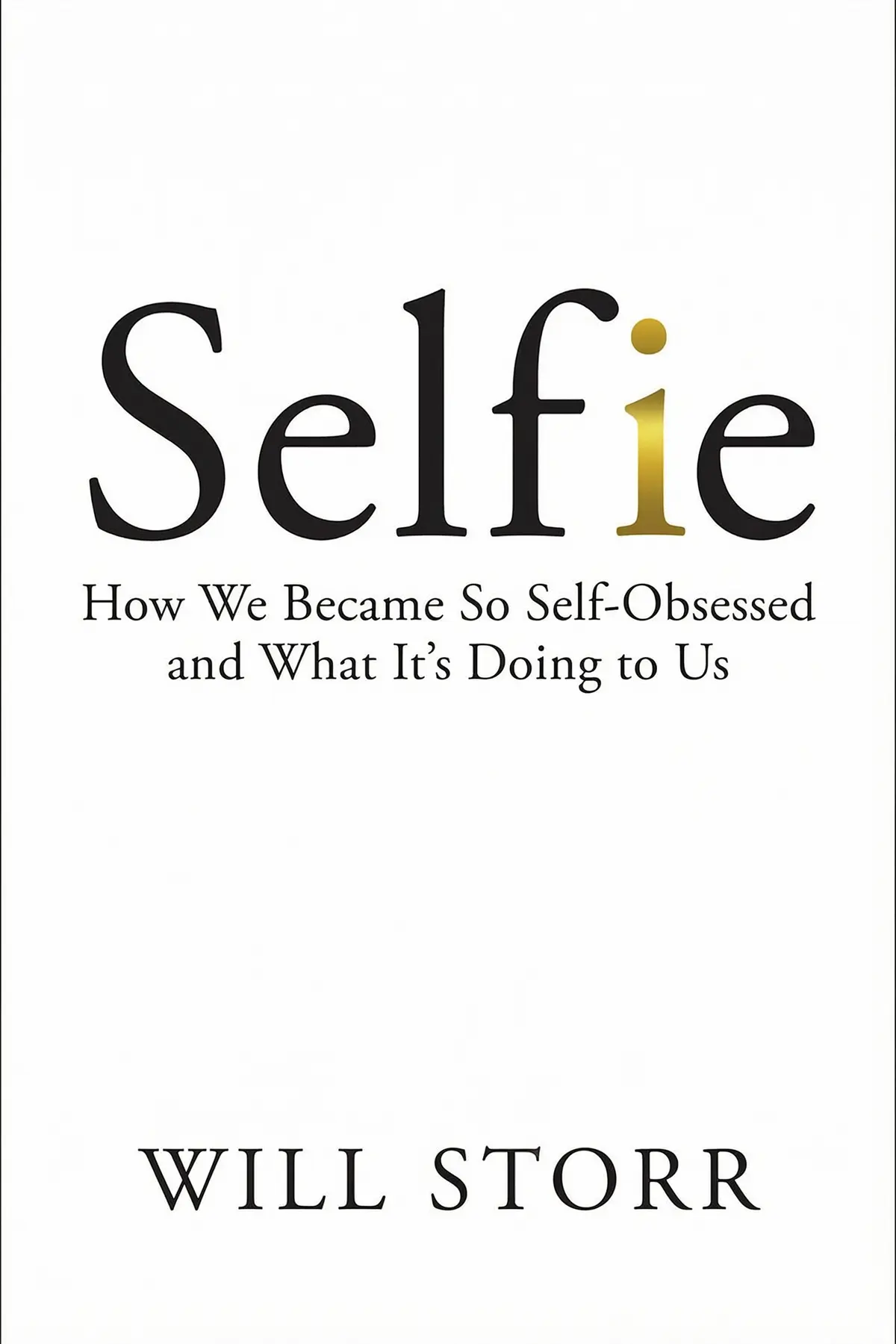
Table of Content
1. Introduction
1 min 02 sec
When you look in the mirror and start judging what you see, the standard you are measuring against is not really yours. In Selfie, British journalist Will Storr argues that culture shapes the self we try to become far more than free choice does. Today’s version is slim, successful and always performing online, and its history can be traced. It runs from the sculpted heroes of ancient Greece to Victorian self-help, then to a group of Californian politicians in the 1980s, and finally to the camera in your pocket.
Storr’s case is that once you know where this pressure came from, it holds you less tightly. Along the way you meet a culture in Tanzania where body fat signals status, a banker’s Ferrari that impresses you more than you admit, and a figure about school self-esteem programs that should worry any parent. By the end, the feeling of never measuring up looks less like a personal failing and more like something you inherited and can examine.
2. See which parts of your ideal self are borrowed
2 min 07 sec
A glance in the mirror can ruin a good morning. The rules behind that harsh verdict feel like plain common sense, yet travel far enough and you find people who judge the same body in the opposite way.
3. Spot the status cues that steer you unnoticed
2 min 09 sec
You may be certain that flashy cars and designer labels leave you cold. Research on babies, voices and hunter-gatherers suggests a much older part of you disagrees, and that attention itself can manufacture importance.
4. Where the drive for self-improvement came from
2 min 03 sec
The guilt you feel on a lazy Sunday has a birthday. Railways, electricity and one plainly titled British book helped turn the self into a project that is never finished.
5. Spot the hidden cost of self-esteem programs
2 min 10 sec
Telling children they are special sounds like the kindest thing a parent or teacher can do. The research behind that belief tells a very different story, and so do the people who buried it.
6. Read your social feed as a marketplace of brands
2 min 14 sec
A quick photo of your own face looks like harmless fun. Storr sees it as a small act of marketing in a contest that Silicon Valley built on purpose, with a hidden cost to everyone playing.
7. Protect yourself from the culture of online shaming
2 min 08 sec
One careless post can travel around the world before its author wakes up. Storr explains who profits from that outrage, and why young people pay the heaviest price for a single misunderstood moment.
8. Conclusion
1 min 15 sec
Selfie offers an odd kind of relief. The voice in the mirror that says you are not thin enough, successful enough or admired enough is not your own private verdict. Storr traces it through layers of culture: Greek ideals of the body, ancient reflexes that make us copy whoever seems to be winning, a nineteenth century faith in self-made success, a self-esteem campaign that ignored its own research, and platforms that turn each person into a competing brand. Every era gets the perfect self it deserves. Ours is intensely individual, always online and terrified of slipping.
Seeing this gives you room to move. When a standard makes you feel small, ask where it came from and whether you would ever have chosen it. When someone dazzles you, check whether it is their work or only the attention around them. Praise the children and colleagues in your life for what they actually do. And before joining an online pile-on, remember the girl whose photograph was judged by strangers who had no idea what it meant.
The self you strive for was handed to you by culture, which means you can hand some of it back.
About this book
What is this book about?
Many people feel they never quite measure up. They are not thin enough, successful enough or admired enough, and social media shows them a polished rival every few seconds. Will Storr argues that this feeling is not a private flaw. The self we try to become is largely shaped by the culture around us, and the current version has a history you can trace. Storr follows that history through several layers. Body ideals go back to the heroes of ancient Greece. Ancient reflexes make us copy whoever shows signs of success. The nineteenth century gave us faith in self-improvement and the first self-help book. A group of Californian politicians in the 1980s sold self-esteem as a cure for social problems, against their own research. And Silicon Valley turned the self into a brand competing for likes, jobs and money. Readers get a clear map of where the pressure to be perfect comes from. They also see its darker effects, rising narcissism and a shaming culture that leaves no room for mistakes, and they get a way to stand back and choose which standards are really their own.
Book Information
Who it's for
Young professionals feeling behind
Young professionals who measure themselves against polished social media feeds and feel they never measure up.
Wondering about constant praise
Parents, teachers and managers wondering whether constant praise really builds confident people.
Curious about modern self-obsession
Curious readers who want to know how history, status and technology shaped modern self-obsession.
About the Author
Will Storr
Will Storr is a British author and journalist and a former contributing editor at Esquire. His reporting has appeared in The Guardian Weekend and The Observer Magazine and has taken him to refugee camps in Africa, rural Colombia and Aboriginal communities in Australia. His awards include New Journalist of the Year, Feature Writer of the Year and a National Press Club award. Besides Selfie, he has written The Science of Storytelling, The Status Game, Will Storr versus The Supernatural and the novel The Hunger and the Howling of Killian Lone.
Ratings & Reviews
Ratings at a glance

What people think
Listeners consider the work to be highly insightful; one listener points out that it is packed with surprising observations and facts, while numerous others call it an enjoyable book featuring witty writing. The intricate nature of the narrative earns favorable reviews, including one listener who characterizes the conclusion as satisfying. Views on the prose and accessibility are varied, with one listener commending the depth of its investigation whereas others feel it is not particularly reader-friendly.
Top reviews
Bird
Finally got around to reading this after seeing it compared to Harari’s Sapiens, and the hype is totally justified. Storr manages to weave a complex tapestry that connects ancient Greek individualism to our current obsession with Instagram likes. It’s an ambitious journey through history that explains how we became so relentlessly focused on self-perfection. The section on the Esalen Institute was particularly eye-opening, revealing the somewhat shaky foundations of the modern self-esteem movement. While some parts feel like a memoir, his investigative rigor keeps the narrative grounded. It's not just a book about social media; it’s a deep dive into the very architecture of the Western soul. Highly recommended for anyone trying to understand why we feel like we're never "enough" in this neoliberal age.
Show moreBee
This book is a masterclass in connecting seemingly unrelated dots. Storr argues that our current mental health crisis isn't just about phones, but about a "perfectible self" narrative that has been centuries in the making. He brilliantly dissects how neoliberalism forces us to act like mini-corporations, constantly marketing ourselves to a world that demands extroversion and boundless optimism. The way he links Alan Greenspan’s policies back to Ayn Rand’s inner circle was a lightbulb moment for me. The writing is incredibly smooth and engaging, making complex philosophical concepts feel accessible. It’s rare to find a book that is this intellectually stimulating while also being genuinely funny in its observations of human absurdity. It changed how I view my own internal monologue and the pressures I feel daily.
Show moreBo
Will Storr has a rare gift for making high-level sociology feel like a page-turning detective novel. He goes on a literal journey—visiting monasteries and workshops—to figure out why we are so obsessed with our own reflections. The facts he unearths about the self-esteem movement being essentially a political scam in California were absolutely astonishing. I loved his "get-off-my-lawn" energy when discussing participation trophies and the way parents treat their kids like little deities. The prose is witty, self-deprecating, and sharp as a tack. It’s one of those books that you find yourself constantly highlighting and reading aloud to whoever is in the room. If you enjoyed Storr's other work, you absolutely need to read this one. It’s an essential map for navigating the 21st century.
Show moreRatchanee
Ever wonder why every kid started getting participation trophies in the 90s? Storr tracks this back to a Californian politician named John Vasconcellos and a state-funded task force that essentially "vibed" self-esteem into the national curriculum without much hard evidence. The truth is, the book is a bit of a genre-bender—part history, part journalism, and part personal confession. I found the analysis of how Ayn Rand’s rugged individualism merged with neoliberal economics to be fascinating, if a bit terrifying. My only gripe is that the "Selfie" title suggests a heavier focus on smartphones than what is actually provided. Most of the book deals with the historical "self" rather than the digital one. Still, the prose is sharp and often funny. It’s a satisfying read that leaves you questioning your own drive for success.
Show morePor
Picked this up during a low point, and surprisingly, Storr’s exploration of suicide and failure was strangely comforting. He starts with a heavy premise—why do we kill ourselves?—and concludes that it’s often because we can’t live up to the impossible "hero" myths our culture creates. The investigation into the Esalen Institute was hilarious and weirdly cult-ish, illustrating how far we've gone to "find ourselves." Look, the book isn't perfect; some of the scientific studies he cites feel a bit cherry-picked to support his narrative. However, the core message about accepting our biological limitations is powerful. We are just "lumps of biology" trying to survive in a world that demands we be superstars. It's a sobering but necessary reality check for the digital age.
Show moreChai
The chapter on the "digital self" is where this book really hits its stride, even if it takes a while to get there. Storr introduces us to influencers who spend hours editing a single photo, highlighting the "social perfectionism" that is draining our collective psyche. He makes a compelling case that we are tribal animals trying to compete in a global village where the standards are impossibly high. I appreciated the distinction between the communal "we" of ancient China and the individualistic "I" of the West. It explains so much about our current cultural friction. Some sections on the split-brain experiments felt a bit dense and disconnected from the main point, but the storytelling is strong enough to carry you through. A very insightful look at the modern condition.
Show moreNatnicha
As someone with a background in sociology, I appreciated the nuanced way Storr handles the "ideal self." He doesn't just blame the iPhone; he blames the entire Western philosophical tradition that prizes the individual over the collective. The discussion on how we "confabulate" reasons for our actions was a bit trippy but fascinating. It really makes you realize how little control we have over our own personalities. I did feel like the section on Ayn Rand was a bit heavy-handed, though the connection to Alan Greenspan was a solid piece of investigative work. It’s a dense read that requires focus, but the payoff is a much clearer understanding of why we are so stressed out. A solid four stars for the sheer depth of the research.
Show moreUdom
Not quite what I expected based on the cover art and the catchy title. I was looking for a data-driven analysis of social media’s impact on the brain, but instead, I got a lot of sociological anecdotes and historical theory. Storr spends a significant amount of time discussing Aristotle and medieval Christianity, which was interesting but felt a bit long-winded at times. The author inserts himself into the narrative quite a bit, sharing his own struggles with depression and "grumpiness." While some might find this vulnerability charming, I felt it distracted from the broader investigation. The chapters on the Silicon Valley elite were definitely the highlight for me. Overall, it's a decent read, but be prepared for a journey through the history of ideas rather than a scientific study on tech addiction.
Show moreSun
To be fair, the title is a bit misleading if you're expecting a book solely about Instagram culture. It’s more of a sociological history of Western individualism that eventually lands on social media in the final third. I struggled with the author's tendency to rely on long-form anecdotes—like the story of the reformed gangster—to prove psychological points. While the writing is undeniably stylish and the research into John Vasconcellos is top-notch, the pacing is uneven. I found myself skimming the parts about medieval monasteries to get to the modern stuff. It’s an ambitious project, but it feels like it’s trying to be three different books at once: a memoir, a history text, and a tech critique. It’s worth a read for the insights on neoliberalism, but keep your expectations in check.
Show moreFelix
Frankly, I found this exhausting and ironically self-centered. For a book about the dangers of narcissism, the author spends an inordinate amount of time talking about his own therapy sessions and his personal moods. I wanted a rigorous scientific exploration of how technology is changing our brains, but what I got was a collection of "woolly" theories and long-winded stories about people I didn't care about. The comparison between the Greeks and the Chinese felt like a massive oversimplification of complex cultures. I agree that our culture is becoming more selfish, but I don't think Storr needed 400 pages of anecdotes to say that. The "selfie" focus is a marketing gimmick for what is essentially a disorganized history of the ego. It was a chore to finish.
Show moreQuestions about this book
What is the main idea of Selfie by Will Storr?
Storr argues that the self we strive to become is shaped mainly by culture, not by free choice alone. He traces today’s ideal, slim, successful and always performing online, through ancient Greek body ideals, our instinct to copy high-status people, the nineteenth century self-help movement, the 1980s self-esteem campaign in California and the competitive personal branding encouraged by Silicon Valley.
What does Selfie say about self-esteem?
Storr says the belief that high self-esteem benefits society only spread in the 1980s. Californian politicians led by John Vasconcellos commissioned research expecting to link low self-esteem to crime, drug abuse and other problems. The researchers found almost no such link, but the commissioners misrepresented the findings. Self-esteem programs spread widely anyway, and Storr connects them to a sharp rise in narcissism among young people.
Why does Will Storr see selfies as a problem?
For Storr, selfies stand for an individualistic, competitive society in which each person becomes a personal brand. Likes and comments act as a scoreboard. He argues that Silicon Valley built this competition into the internet on purpose, and that while it brings more personal freedom, it erodes collective solidarity and feeds an online culture where mistakes are publicly punished.
How can I apply the ideas in Selfie?
When a standard makes you feel inadequate, ask where it came from and whether you would choose it yourself. Check whether you admire people for what they do or only for the attention around them. Praise children and colleagues for real effort or results. Before sharing outrage online, consider the missing context and who profits from your anger.
Who should read Selfie?
It suits young people who compare themselves to curated social media feeds, and parents, teachers and managers thinking about praise and confidence. It also suits anyone curious about how history and technology shaped modern self-obsession. Storr links ancient Greek statues, hunter-gatherer status symbols, Victorian self-help and Instagram into one account of where our pressure to be perfect comes from.
Readers also enjoyed


A Room of One’s Own
Virginia Woolf


Abolish Rent: How Tenants Can End the Housing Crisis
Tracy Rosenthal

A Liberated Mind: How to Pivot Toward What Matters
Steven C. Hayes

Abortion: Our Bodies, Their Lies, and the Truths We Use to
Jessica Valenti



Acting with Power: Why We Are More Powerful Than We Believe
Deborah Gruenfeld

AUDIO SUMMARY AVAILABLE
Listen to Selfie in 15 minutes
Get the key ideas from Selfie by Will Storr, plus 5,000+ more nonfiction titles.
- 5,000+ titles
- Listen as much as you want
- 7-day free trial
- Cancel anytime









