

A Long Way Gone: Memoirs of a Boy Soldier
Ishmael Beah
 English
 ไทย
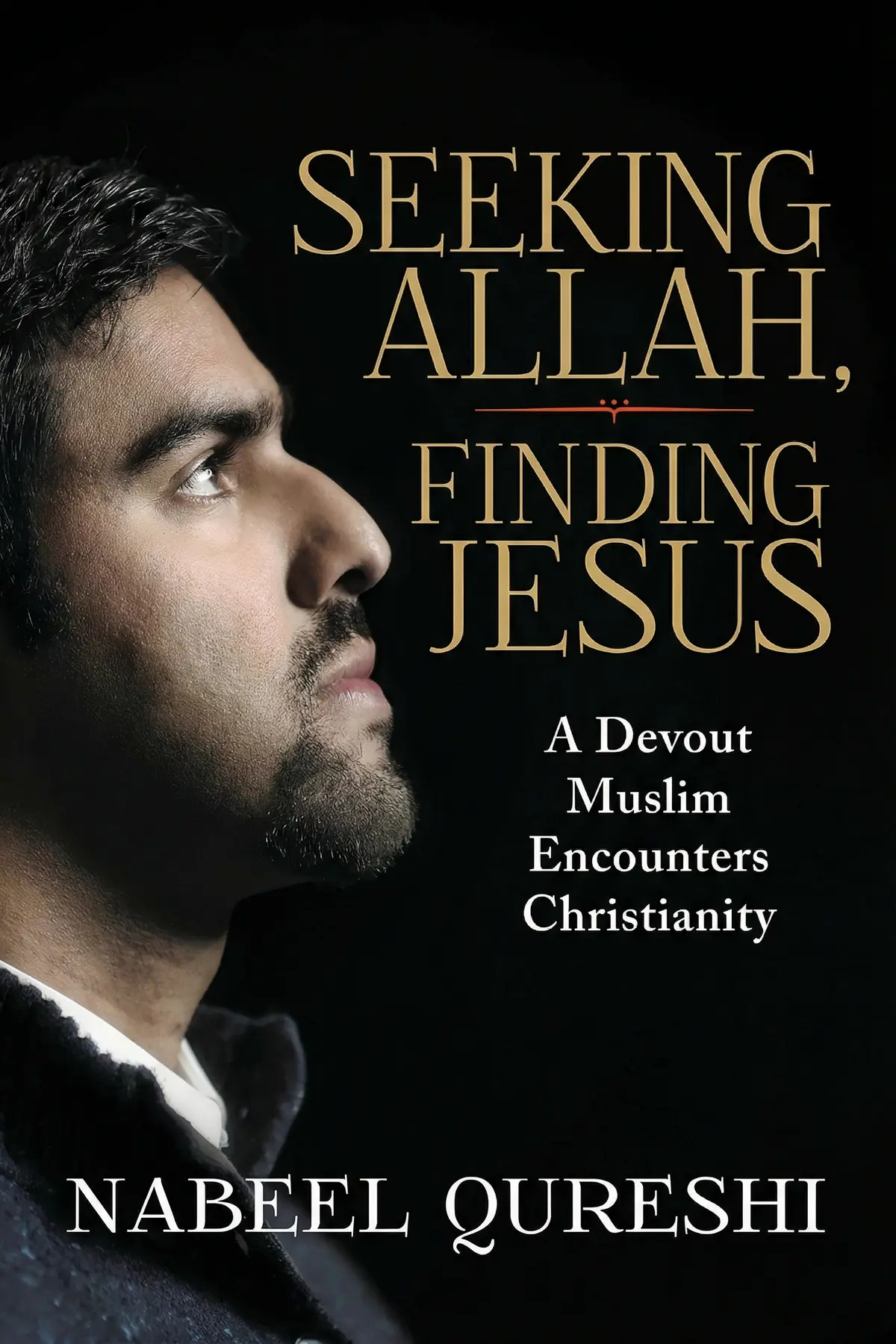
A personal account of how a devout Muslim raised in America tested his faith against history, argued for years with a Christian friend, and came to believe in Jesus.
1 min 03 sec
If you hold beliefs you were handed as a child, a day may come when you want to know whether they would survive your own questions. In Seeking Allah, Finding Jesus, Nabeel Qureshi tells how a young man raised as a devout Ahmadi Muslim in America tried to defend Islam and ended up a Christian. The first surprise is where the change began: not in a sermon, but in a college friendship with a Christian philosophy student named David Wood, who argued with him for years and never stopped caring about him.
This is a personal story told by the man who lived it. Its thread is simple to state. Qureshi’s faith changed because he tested his inherited certainties against history, and he did it inside a friendship strong enough to survive the disagreement. Follow that thread and you will see the exact point where Islam and Christianity part ways, how Qureshi weighed the evidence on both sides, and what honest questioning can look like when family and identity are at stake.
1 min 59 sec
Some beliefs arrive before a child can speak, spoken into the ear in the first minutes of life. Qureshi’s upbringing shows how much more than doctrine rides on a faith, and why questioning it later is never a small act.
2 min 03 sec
At home, a question could sound like disrespect. At school, it was the whole point. Qureshi describes growing up between two ideas of how truth is found, and one assumption he carried that shaped how he saw Christians.
1 min 57 sec
Two young believers arrived at college each hoping to convert the other. Their debates grew heated for years, yet something kept them talking, and Qureshi came to see that bond as the real reason he ever listened.
2 min 02 sec
One question from a friend turned years of circling debate into something sharper. Qureshi had to say, out loud, what would make him accept Christianity, and then he had to go and check the evidence himself.
2 min 00 sec
Qureshi had always been told the Quran reached Muslims exactly as it was first revealed. Then he read the early Islamic accounts of how the text was gathered, and what he found there shook the center of his faith.
1 min 57 sec
With his old certainty gone, Qureshi opened two books looking for God and found very different things in each. What followed outside his apartment door gave the rest of his life its direction.
1 min 13 sec
Seeking Allah, Finding Jesus is the story of a mind trained to obey that learned to question, and of where the questions led. Qureshi did not leave his family’s faith in a single leap. He took his certainties apart one at a time: the cultural assumptions he had absorbed, the claim that Jesus never died on the cross, the account of how the Quran was gathered. And he did it beside a friend who disagreed with him for years without walking away.
Whatever you believe, the book supports a few habits. Decide in advance what evidence would change your mind, as Nabeel did when David asked him. Keep a belief separate from the culture you link it to, the mistake he made when he blamed Western habits on Christianity. Read for yourself the sources your certainty depends on. And if you hope to persuade someone, be their friend first, since Nabeel never listened to Christians who did not care about him.
The image worth keeping is the last one: a young man stepping out of his apartment after hours of reading, watching a stranger walk toward the medical school, and wondering whether anyone had ever told him he was loved.
Nabeel Qureshi grew up in a devout Ahmadi Muslim family in the United States. He learned the Quran in Arabic as a small child, inherited his father's love of religious debate, and was taught that being Muslim was both his identity and his calling. At university he set out to argue the case for Islam. Instead he found a Christian friend, David Wood, who argued with him for years and never stopped taking him seriously. Their debates turned on two questions: did Jesus really die on the cross and rise again, and had the Quran truly come down unchanged? When Qureshi read the early Islamic sources for himself, his certainty gave way, and a quiet moment with the New Testament changed the direction of his life. The book is a memoir, not a theology textbook. Readers get a clear picture of where Islam and Christianity part ways, the evidence Qureshi weighed, and an honest example of examining an inherited belief without losing the people who matter.
Readers raised in one faith who want to see how someone honestly examined an inherited belief.
Christians and Muslims curious about where their traditions part ways on Jesus and the Quran.
Children of immigrants caught between family expectations and the way they were taught to think at school.
Nabeel Qureshi was born in 1983 and raised in a devout Ahmadi Muslim family. He became a Christian as a university student after several years of debate with his friend David Wood. He earned a medical degree at Eastern Virginia Medical School and a master's in religion at Duke University, then worked as an apologist with Ravi Zacharias International Ministries from 2013 to 2017. He spoke at more than 100 universities and took part in 18 public debates. This book, his first, won two Christian Book Awards in 2015. He died of stomach cancer in September 2017.
Listeners find this work exceptionally clear and well-crafted, with one listener mentioning it ranks as their top pick after the Bible. They also value the way it offers a window into Muslim perspectives and clarifies the fundamentals of Islam, all while unfolding a masterfully narrated life journey. Furthermore, the title is praised for its sincere tone, impactful themes regarding divine love, and side-by-side examination of Christian and Islamic faiths. Listeners characterize the experience as both gripping and profound.
This book destroyed me in the best way possible. Nabeel’s story is a beautiful, heart-wrenching account of what it means to actually pursue truth, regardless of the cost to your family or your identity. The way he describes his childhood in a loving Muslim home was so eye-opening; it broke all my preconceived notions of what Islamic life looks like in the West. I was particularly moved by the deep pain he felt as he realized he might lose his parents' respect by following Jesus. The theological debates with his friend David were rigorous but remained grounded in a genuine friendship that I found incredibly inspiring. It’s a rare find to see a memoir that balances dense historical apologetics with such raw, emotional vulnerability. I finished this feeling a profound sense of God’s love and a much deeper respect for the sacrifices made by those from different faith backgrounds. Highly recommended for anyone wanting to understand the bridge between Islam and Christianity.
Show moreWow. I’ve read a lot of conversion stories, but none have felt quite as intellectually honest as this one. Nabeel doesn't just wake up one day and decide to change his mind; it’s a grueling, years-long process of debate, study, and prayer. The friendship between him and David is the absolute heartbeat of the narrative. It shows how true evangelism should look—not shouting, but walking alongside someone through their hardest questions. I especially loved the sections explaining Islamic basics, which were presented with so much respect and clarity. Not gonna lie, the ending where he talks about his parents' reaction actually made me tear up. It’s a powerful reminder that following your convictions often comes with a heavy price tag. This should be required reading for anyone interested in apologetics or simply looking for a beautifully told life story. It is easily one of my favorite books of the year.
Show morePicked this up on a whim and couldn't put it down. Nabeel Qureshi’s writing is so engaging that even the heavy theological chapters feel like a fast-paced conversation. I was surprised by how much I learned about the history of the Quran and the life of Muhammad. Before this, I had a very surface-level understanding of Islam, but Nabeel explains everything with such care. The journey he takes—from being a passionate ambassador for Islam to finding Jesus—is both intense and inspiring. I particularly enjoyed the focus on the historical reliability of the resurrection, as it moved the discussion from 'just faith' to 'actual evidence.' The three dreams he mentions toward the end added a supernatural element that made the whole experience feel complete. It’s a powerful message about seeking the truth no matter where it leads you. This is a must-read for Christians who want to better understand and love their Muslim neighbors.
Show moreThe dialogue between Nabeel and David in this book is some of the most compelling writing I've seen in a long time. It’s rare to find a book that handles religious debate with such intellectual rigor while maintaining a deep sense of compassion. Truth is, many people are afraid to ask the hard questions Nabeel asked, but his courage to look at the evidence is refreshing. I felt for him every step of the way, especially when he was dealing with the weight of tradition and family expectations. The book does an amazing job of showing that Christianity isn't just about a set of rules, but about a relationship with a living God. Some might find the apologetics a bit heavy, but I thought it was necessary to show why he made such a radical life change. It’s a heartfelt, powerful testimony that stayed with me long after I finished the last chapter. Definitely worth every second of your time.
Show moreAfter hearing so many people talk about this book, I finally jumped in, and I totally get the hype. It is an intense, engaging read that manages to explain complex Islamic traditions in a way that anyone can understand. Nabeel’s love for his family and his former faith is evident on every page, which makes his eventual conversion feel even more significant. It wasn't an act of rebellion, but an act of submission to what he found to be true. The way he compares the character of Jesus to the history of Muhammad was eye-opening and clearly well-researched. In my experience, most memoirs like this focus too much on the 'what' and not the 'why,' but Qureshi gives you both in spades. This isn't just a book for religious people; it's for anyone who values truth and the courage it takes to change your mind. A beautiful, tragic, and ultimately hopeful story.
Show moreEver wonder what it actually costs to switch faiths in a traditional culture? This book gives you the answer in excruciating, beautiful detail. Nabeel Qureshi’s journey is a powerful testament to the fact that seeking God is a journey of both the heart and the head. I appreciated the footnotes and the scholarly resources he included, as it showed this wasn't an emotional whim but a calculated decision based on evidence. The chapters on the reliability of the New Testament were particularly strong and helped clarify a lot of common misconceptions. Personally, I found the message of God’s love to be the most impactful part of the whole narrative. It’s a beautifully told story that bridges the gap between two of the world's largest religions without being condescending to either. If you want a book that will make you think, cry, and ultimately rejoice, this is the one for you.
Show moreAs a student of world religions, I found Qureshi’s comparative analysis of the Bible and the Quran to be the highlight of this memoir. He doesn't just give you a testimony; he walks you through the actual historical evidence and textual criticism that led him to question his original faith. To be fair, some of the arguments regarding the reliability of the New Testament felt a bit rushed compared to his deep dive into the Hadith. I would have loved to see him grapple more with the Old Testament challenges mentioned by his skeptics. However, the insight into the Ahmadiyya community and the cultural nuances of a Pakistani-American family provided a rich context I hadn't encountered before. It’s a dense read at times, but Nabeel’s voice is so sincere that you can't help but keep turning the pages. It definitely challenges you to think about what you actually believe and why.
Show moreGotta say, the transition Nabeel describes is one of the most stressful things I've ever read about. You can literally feel his world crumbling as he realizes that the foundation he built his life on might not be what he thought. The cultural details were fascinating, particularly how he balanced his Pakistani heritage with his life in America. One minor gripe is that some of the 'learned scholars' mentioned at the religious panels felt a bit like a vague appeal to authority. I wanted to see more of the 'cold hard facts' they were referencing in those moments. Still, the emotional core of the book—the seeking of God and the finding of peace—is undeniably powerful. The role of dreams in his conversion was a surprising but authentic touch for someone from his background. It’s a very well-written biography that manages to be both educational and deeply moving at the same time.
Show moreFinally got around to reading this and I was struck by how much it felt like a detective story. Nabeel is essentially investigating his own life and faith, and we get to be right there in the room with him. The comparative analysis is handled with a lot of respect, though I think the book could have benefited from more detailed conversations with his parents toward the end. Their heartbreak was so palpable, yet the final chapters moved very quickly through those interactions. Look, if you’re looking for a book that perfectly solves every theological contradiction, this might not be it, but as a personal life story, it’s incredible. It gave me a much-needed perspective on the mindset of Westernized Muslims and the challenges they face when considering Christianity. It’s readable, heartfelt, and provides a great deal of food for thought for believers and skeptics alike.
Show moreWhile I appreciate the effort and the raw honesty Nabeel brings to his story, I had a hard time with how he dismissed certain textual issues. The parts where David essentially admits segments of the Bible aren't original, yet Nabeel moves past it, felt like a missed opportunity for deeper exploration. Frankly, I was also hoping for more detail on his life post-conversion. He spends hundreds of pages on the struggle, but the aftermath with his family is squeezed into a relatively brief conclusion. It felt a bit lopsided, especially since the emotional stakes were so high by that point. That said, the book is incredibly readable and offers a fascinating window into Muslim culture that many Westerners lack. It’s a solid biography, even if I didn't find the 'logical' arguments for Christianity as airtight as the author did. Interesting, but it left me with just as many questions as answers.
Show moreIt is Nabeel Qureshi’s memoir of growing up as a devout Ahmadi Muslim in the United States and becoming a Christian at university. Through years of debate with his friend David Wood, he examined whether Jesus was crucified and rose again, and how the Quran was compiled. Reading early Islamic sources unsettled his faith, and reading the New Testament for guidance, not argument, led to his conversion.
Two lines of evidence moved him. He concluded that the crucifixion of Jesus, which the Quran denies, is supported by Christian and non-Christian writers and accepted by historians generally. He also read early Islamic accounts of how Abu Bakr and Uthman gathered and standardized the Quran, which led him to believe the text had changed. Finally, a personal reading of the New Testament gave him a sense of unconditional love.
David Wood was a Christian philosophy student Qureshi met at college, where he had enrolled to study biology in 2001. The two debated the New Testament, the Quran and the claims about Jesus for years, yet became inseparable friends. Qureshi says Wood took him seriously, which made him take Christianity seriously, and he later believed God placed Wood in his life so the message could reach him through friendship.
The book models a way of testing any important belief. Name the evidence that would change your mind before you argue. Notice when you are judging an idea by a culture you link to it. Read the original sources yourself rather than relying only on authorities. And remember that people rarely listen to someone who has not first shown they care about them.
It suits readers interested in how Islam and Christianity differ on Jesus and on scripture, and anyone who has wrestled with a faith they inherited. Children of immigrant families may recognize Qureshi’s struggle between obedience at home and critical thinking at school. Christians interested in sharing their faith will find his argument that friendship comes before persuasion.
Ishmael Beah

James Herriot


Barack Obama


Masaji Ishikawa


Ben Macintyre

Daniel Goleman

AUDIO SUMMARY AVAILABLE
Get the key ideas from Seeking Allah, Finding Jesus by Nabeel Qureshi, plus 5,000+ more nonfiction titles.









