
14 min 19 sec
Available in: English
 ไทย
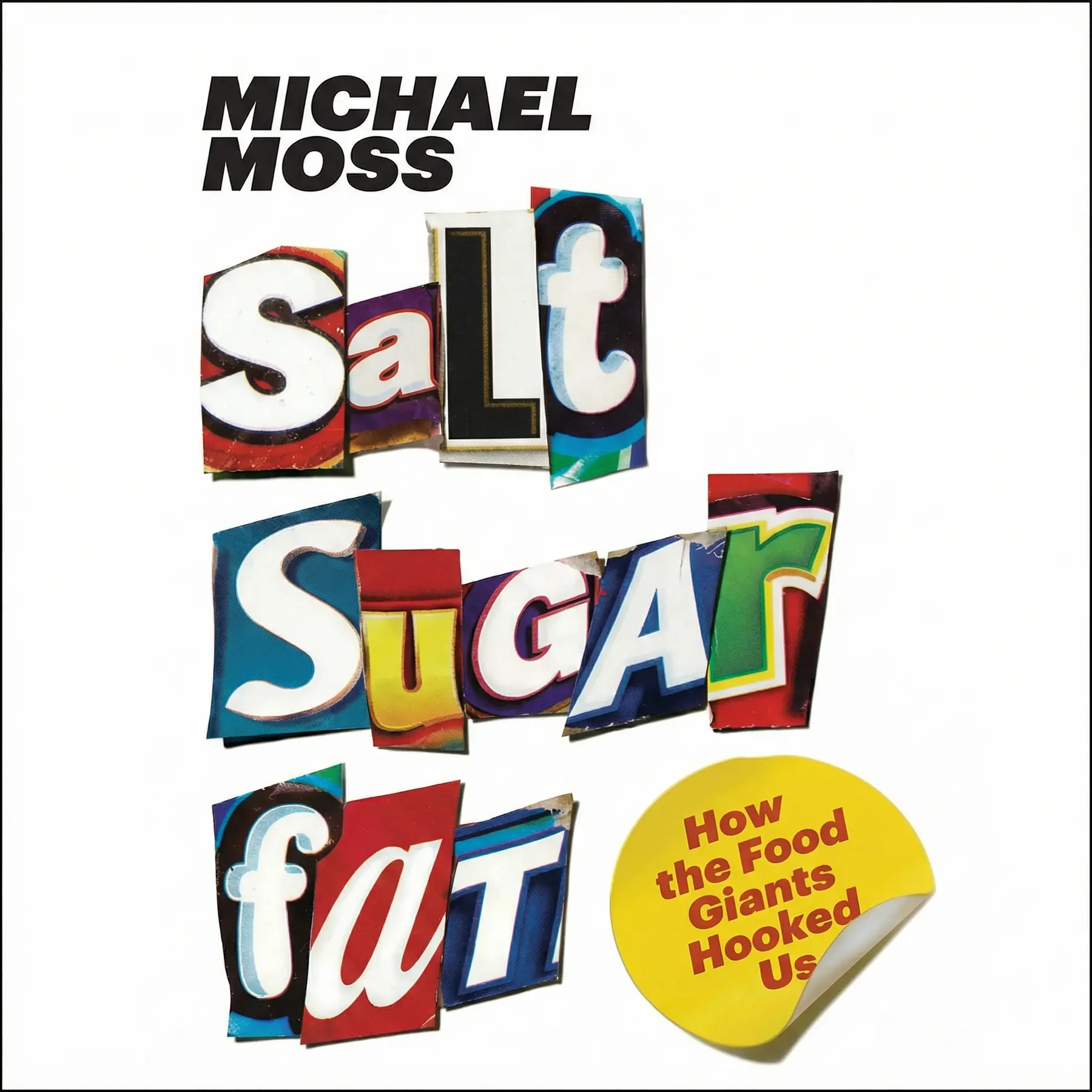
EnglishไทยSalt Sugar Fat: How the Food Giants Hooked Us
By Michael Moss
Shows how processed-food companies tune salt, sugar and fat to our cravings, why decades of health warnings barely dented sales, and which everyday foods to cut first to take back control of your diet.
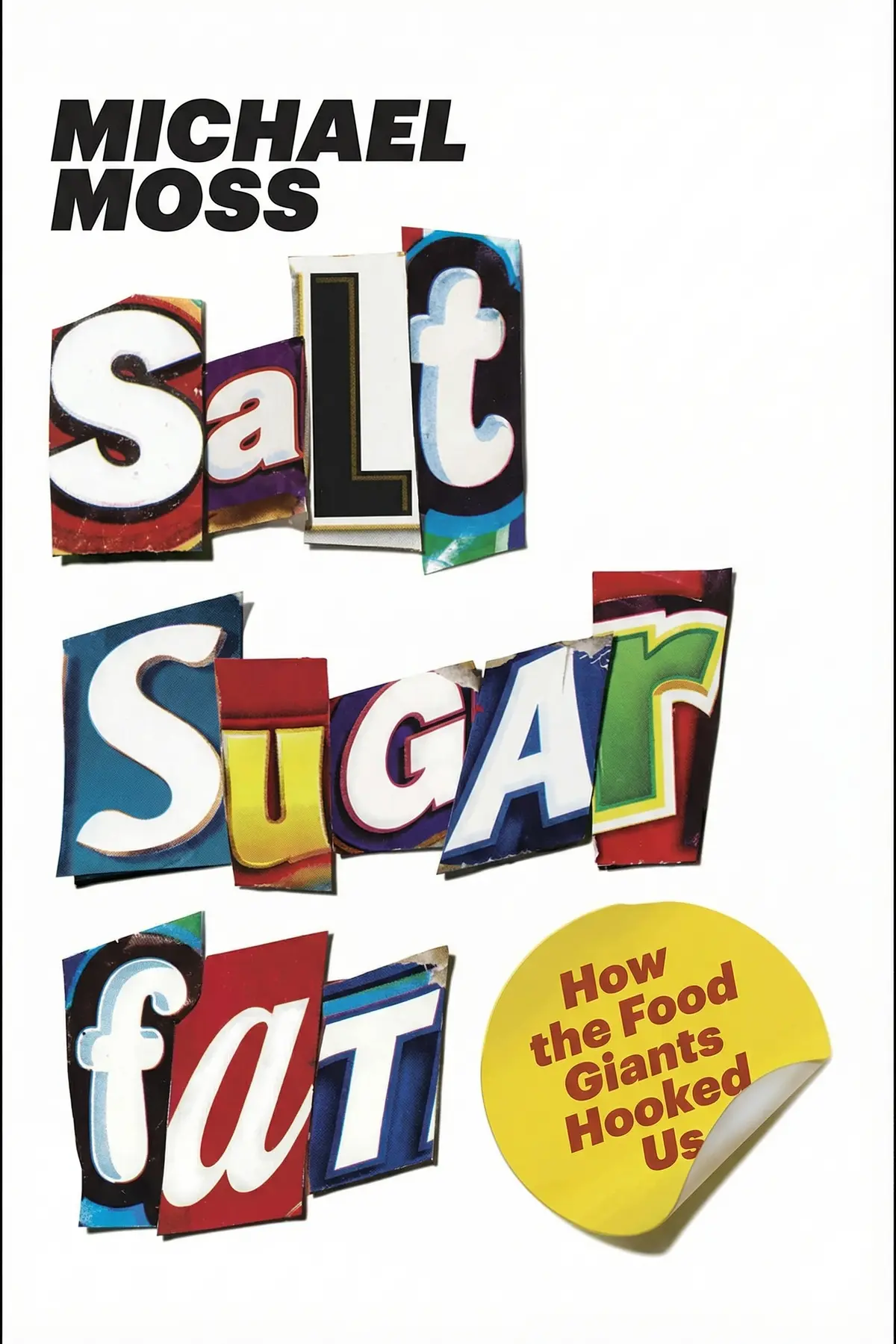
Table of Content
1. Introduction
1 min 02 sec
If your weeknight dinners come out of a box or a microwave tray, you are eating food built to hit three cravings at once. In Salt Sugar Fat, Pulitzer Prize winning journalist Michael Moss shows how food companies tune salt, sugar and fat to the levels our bodies find hardest to resist. That design sits behind much of the rise in obesity, diabetes and heart disease. His account moves from post-war kitchens through cereal aisles and soup factories to a government stockpile of 1.9 billion pounds of cheese.
The thread running through it is uncomfortable. The industry fills its products with this trio because we keep buying them, and when companies have tried to cut back, shoppers walked away. So the lasting fix sits with the person doing the shopping. By the end, you will know where each of the three hides, why the taste for salt keeps climbing, and which food to drop first.
2. See how convenience food took over dinner
1 min 41 sec
Two things pulled families out of the kitchen after World War II, and one of them was a TV dog. Then food companies hired a teacher who never existed to finish the job.
3. Spot the sugar hiding in everyday food
1 min 40 sec
Food makers know exactly how sweet a pudding should be for a child and for an adult. The real surprise is where else that sugar shows up, including a jar that never tastes sweet.
4. See how sugar sales soared despite every warning
2 min 05 sec
A dentist testing cereals himself and a Harvard nutritionist raised the alarm in the 1970s. Regulators nearly acted. What the industry changed instead, and what buyers did next, tells you a lot.
5. Catch the fat your tongue cannot measure
1 min 44 sec
Sugar has a point where enough becomes too much. Fat seems to have no such point, and a study on milk and a trick with sweetness show why it slips past us so easily.
6. Cut cheese first to lower your saturated fat
1 min 44 sec
A government program meant to protect farmers ended up storing cheese weighing 1.9 billion pounds. How that stockpile turned into an everyday eating habit is a lesson in who shapes your plate.
7. Find the salt that never touches your shaker
1 min 34 sec
Health officials once told everyone to put away the salt shaker, then realized they were looking in the wrong place. A tasting of unsalted canned soup reveals why companies cannot easily let go.
8. Turn your shopping cart into the real fix
1 min 40 sec
Two countries cut deaths from strokes and heart disease sharply by targeting salt. Two big American food companies tried something similar on their own, and their customers delivered an unexpected verdict.
9. Conclusion
1 min 09 sec
Salt Sugar Fat has no cartoon villain. Companies follow our cravings, our cravings follow evolution, and when a firm like Campbell’s or Kraft tries to step off that cycle, shoppers pull it back. Even a government that set out to support dairy farmers ended up holding 1.9 billion pounds of cheese, then helping sell it back to the public. The system serves what people buy, and Moss argues it will keep doing so until buying changes.
So his advice goes after the source instead of each ingredient. Counting grams of salt, sugar and fat separately is tiring and easy to abandon. Buying fewer processed foods handles all three together. Cook from fresh ingredients, and if weeknights are short, make big batches and freeze the leftovers for the nights a microwave tray would tempt you. Let frozen pizza go first, since it mostly carries cheese, the top source of saturated fat in a typical American diet.
Betty Crocker was invented to coax families out of their kitchens. Walking back into them is a choice anyone can make this week.
About this book
What is this book about?
Most people rarely eat a meal made only from fresh, unprocessed ingredients. Michael Moss, a Pulitzer Prize winning journalist, explains how that came about and what it has cost. After World War II, women took paid jobs and televisions filled living rooms. Food companies answered with convenience, helped by a home economics teacher named Betty Crocker who never existed. Moss then takes the industry's three favorite ingredients in turn. Sugar is tuned to a precise bliss point. Fat has no ceiling and hides behind sweetness. Salt masks the off tastes of processing, and our taste for it rises the more we eat. Along the way come a dentist testing cereals, a government cheese stockpile of 1.9 billion pounds, and two food giants whose healthier recipes were rejected by their own customers. Readers get a clear account of why health warnings barely touched sales, what worked in Britain and Finland, and why Moss believes the decisive change has to come from shoppers, starting with fewer packaged meals and less frozen pizza.
Book Information
Who it's for
Relying on ready meals
Busy professionals who rely on ready meals and want to know what is really in them.
Parents wanting less sugar
Parents trying to cut the sugar in their children's cereals, drinks and snacks.
Watching their health numbers
Anyone watching their blood pressure, weight or blood sugar who wants to know which foods to drop first.
About the Author
Michael Moss
Michael Moss is an American journalist, author and public speaker. He reported for The Wall Street Journal, New York Newsday and The Atlanta Journal-Constitution before joining The New York Times. He won the 2010 Pulitzer Prize for explanatory reporting after being a finalist in 1999 and 2006, and has received a Gerald Loeb Award and a James Beard Foundation award. Salt Sugar Fat reached number one on the New York Times best seller list and has appeared in 22 languages.
Ratings & Reviews
Ratings at a glance
What people think
Listeners find this work gripping and meticulously documented, characterizing it as a deep factual dive that reads like fiction. They prize the revelatory material, with one listener pointing out how it transforms their perspective on daily nourishment. The title earns high marks for its narrative approach, educational merit, and health-conscious perks, particularly for those keen on nutrition. Listeners prize its perspective on ingredient standards, with one review calling out how it lucidly details the complications of processed items.
Top reviews
Ingrid
Wow. This book completely shattered my perspective on what I’m actually putting into my body every single day. I expected a boring health lecture, but it reads more like a fast-paced thriller about corporate greed and biological manipulation. Moss dives deep into the labs where scientists calculate the exact 'bliss point' of sugar to keep us coming back for more. It’s scary to realize how much the government actually helps these companies push cheese and meat on us through subsidies. I found myself checking every label in my pantry and feeling a little betrayed by the brands I used to trust. If you care about your long-term health or just want to know why you can’t stop eating that bag of chips, you need this. It’s an eye-opening deep dive that manages to be educational without being preachy.
Show moreRuangrat
Walking through the grocery store feels different now, almost like that scene in 'They Live' where the hidden messages become visible. Michael Moss has written a masterpiece of investigative journalism that exposes the dark side of the processed food industry. The details about how salt is used to mask the metallic taste of industrial processing were absolutely revolting. I couldn't believe the section on Lunchables and how they were marketed to busy parents as a form of empowerment. This book is well-researched, compelling, and honestly a bit heartbreaking when you consider the health consequences for children. It’s a novel-like experience that provides a wealth of information without feeling like a dry textbook. Everyone who buys groceries for a family should read this at least once.
Show moreDiego
The chapter on Lunchables was a total gut punch for me as a parent who grew up eating them. Seeing the cold, hard numbers behind the fat and salt content made me feel sick to my stomach. Moss humanizes the scientists involved, showing they aren't necessarily "evil," but they are trapped in a cycle of corporate competition. This book is a fascinating look at the arms race of flavor that has left our collective health in shambles. I love how the author connects the dots between different industries and government agencies. It's an educational journey that manages to be both infuriating and enlightening at the same time. This is easily one of the most important books I’ve read in the last decade.
Show moreAna
Moss’s investigative work is top-tier, providing a historical roadmap of how we ended up in an obesity epidemic. He doesn't just blame the consumer; he shows how the entire system is rigged to favor salt, sugar, and fat. The stories about Philip Morris moving from tobacco into food brands like Kraft were particularly chilling. To be fair, some of the sections on specific food scientists dragged on a bit too long for my taste. However, the revelation that these executives often avoid their own processed products says everything you need to know. It’s a compelling read that feels like a necessary wake-up call for the modern shopper. I’ll definitely be spending a lot more time in the produce section from now on.
Show moreWacharapol
After hearing about the 'bliss point' concept, I knew I had to pick this up to understand my own cravings. It turns out that my addiction to certain snacks isn't just a lack of willpower, but a calculated result of intense food engineering. The book does a fantastic job of explaining complex biology in a way that feels accessible and even entertaining at times. I was shocked to learn about the government's role in campaigns that weren't actually about our health. My only gripe is that the writing style can feel a little disjointed as it jumps between different decades and companies. Still, it’s a powerful piece of journalism that makes you rethink every meal. It's not a diet book, but it will definitely change the way you eat.
Show moreWilliam
It’s fascinating and terrifying to learn how the executives themselves don’t even touch this stuff. This class issue in food production really stuck with me throughout the entire reading experience. Moss presents a wealth of facts that are impossible to ignore, especially regarding the rise of Type 2 diabetes. The writing is sharp and investigative, reminding me of a long-form New Yorker piece that never loses its momentum. I do wish there were more actionable steps included for readers, but the awareness alone is worth the price of admission. It certainly makes you question the health claims on every box of cereal you see. A great choice for anyone interested in the intersection of science, business, and nutrition.
Show moreTen
This is not your typical diet book; it’s an autopsy of the American food system. Moss does a brilliant job of showing how salt, sugar, and fat are the three pillars holding up a trillion-dollar industry. I found the sections on the pre-1980 weight charts particularly enlightening and disturbing. It’s not that we suddenly became lazy; it’s that our food was redesigned to bypass our internal full signals. Personally, I found the technical details about fat and cream mixtures to be the most interesting part of the book. It’s a long read, but the depth of research justifies the page count. Highly recommended for anyone who wants to understand the why behind our national health crisis.
Show moreLily
As someone who grew up in the 80s, reading about the rise of convenience foods felt like a trip down a very unhealthy memory lane. Moss captures the era perfectly, explaining how marketing and science combined to change the way we think about dinner. The book is dense with information, but the prose is clear enough that it never feels overwhelming or confusing. I was especially interested in the Cola Wars and how they led to the supersizing of everything in our diets. To be fair, I think he could have spent a bit more time on the global impact outside of just the US. Regardless, it’s a stellar piece of reporting that will stay with you long after you finish the last page.
Show moreMoo
While the information here is undeniably vital, the delivery occasionally feels a bit dry and overly academic. I appreciated the deep dive into the history of Kellogg’s and General Mills, but some chapters felt like they were retreading the same ground. It’s a thick book that requires a lot of patience to get through all the data and interview transcripts. Look, the core message is important, but I think a shorter, punchier version would have been more effective for the average reader. That said, the insights into how sugar is added to almost everything—even bread—were quite surprising. It’s a solid 3-star read that provides great reference material even if it isn't always a page-turner.
Show moreMadison
I really wanted to like this more, but it felt incredibly one-sided and repetitive after the first hundred pages. We get it: companies want to make money and people like things that taste good. The author seems to demonize basic business practices as if there's some grand conspiracy behind a cracker tasting salty. Frankly, the book is about 150 pages longer than it needs to be to make its core points. While the research is clearly there, the tone felt a bit too cynical and "doom and gloom" for me to enjoy. It didn't offer many solutions other than just avoiding the center aisles, which isn't exactly groundbreaking advice. I appreciate the effort, but I struggled to stay engaged until the end.
Show moreQuestions about this book
What is Salt Sugar Fat by Michael Moss about?
Michael Moss, a Pulitzer Prize winning journalist, explains how processed-food companies load their products with salt, sugar and fat because people crave all three. He traces the rise of convenience food after World War II, shows how each ingredient works on our tastes, and links the result to rising obesity, diabetes and heart disease. His conclusion is that companies will keep selling these foods as long as consumers keep buying them.
What is the bliss point in food?
The bliss point is the level of an ingredient at which people enjoy a food most. Moss describes how companies search for it with sugar: in vanilla pudding, children peak at about 30 percent sugar while adults prefer about half that. Salt seems to have a bliss point that rises as people eat more of it. Fat appears to have none, so more always seems better.
Why do processed foods contain so much salt?
Moss gives several reasons. Salt strengthens flavor and hides the unpleasant off notes that processing leaves behind; he tasted Campbell’s Vegetable Beef Soup before salting and found it bitter and metallic. Sodium compounds also extend shelf life and bind ingredients together. In the 1980s, processed foods supplied more than three quarters of the sodium Americans ate, far more than the salt shaker did.
Why don't food companies just make healthier products?
Some tried. Campbell’s lowered the sodium in many of its soups in the late 2000s, but sales fell so far that in 2011 it announced it would raise the sodium again. Kraft capped salt, sugar and fat in new products from 2003 and stopped advertising poor products to children, yet customers still preferred the old ones. Moss concludes that change has to come from what consumers buy.
How can I apply the ideas in Salt Sugar Fat?
Moss suggests cutting down on processed food instead of tracking salt, sugar and fat one by one. Cook from fresh ingredients, and if time is short, cook large batches and freeze the leftovers. Drop frozen pizza, which he describes as mainly a way to deliver cheese, the leading source of saturated fat for most Americans. Reading the labels on sauces, cereals and fruit drinks helps too.
Featured in
Readers also enjoyed





AUDIO SUMMARY AVAILABLE
Listen to Salt Sugar Fat in 15 minutes
Get the key ideas from Salt Sugar Fat by Michael Moss, plus 5,000+ more nonfiction titles.
- 5,000+ titles
- Listen as much as you want
- 7-day free trial
- Cancel anytime









