

A New Earth: Awakening to Your Life’s Purpose
Eckhart Tolle
 English
Queen Afua's guide treats women's health as a sacred practice rather than a purchase. Healing starts in the womb and in a circle of women, then grows through cleansing food, careful speech, dance and purposeful work.
1 min 07 sec
Wellness is sold today one candle, retreat or bubble bath at a time, and it is usually pictured as something a woman does alone. Long before that market existed, the healer Queen Afua wrote Sacred Woman from the opposite belief. For her, a woman’s health is a sacred practice shared with other women, and it starts with the womb. She wrote it for women, and above all for African American women, though she opens it to every woman.
Her method joins prayer with food, social justice with dance, and ancient Egyptian spirituality with plain daily routines. Its promise is a passage from what she calls a wounded woman to a Sacred Woman, from fear toward courage and from confusion toward calm. The path below runs in an order you can use. It starts with the circle that holds you, then the cleansing that comes first and the spiritual frame behind it. Last come the gateways of speech, movement and purpose that make healing part of ordinary days.
2 min 00 sec
Women kept calling a Brooklyn healer because the medical system had let them down. What she built in response asks for no clinic, no fee and no expert, only a few committed women and a signed promise.
1 min 56 sec
Before any ceremony or prayer, Afua sends women somewhere far more ordinary. Her rule about who may begin the spiritual work is strict, and it changes what a daily meal is for.
2 min 05 sec
Afua reads the history of philosophy and religion very differently from most textbooks. Her version reaches back to the Nile Valley, and it turns a bath or a cup of tea into something closer to worship.
2 min 01 sec
Most people never notice how often they announce their own exhaustion. Afua’s remedy sounds almost too simple, a week of saying less, yet she compares learning it to earning a black belt.
2 min 02 sec
A car hit Afua’s bicycle on a Brooklyn street, and an inner voice told her to do something no safety course would suggest. What happened next became the center of her teaching about the body.
1 min 52 sec
Bills and children seem to make chasing a calling a luxury. Afua answers that the choice may not be yours to avoid, and she offers an unusual hour of the day for hearing what comes next.
1 min 20 sec
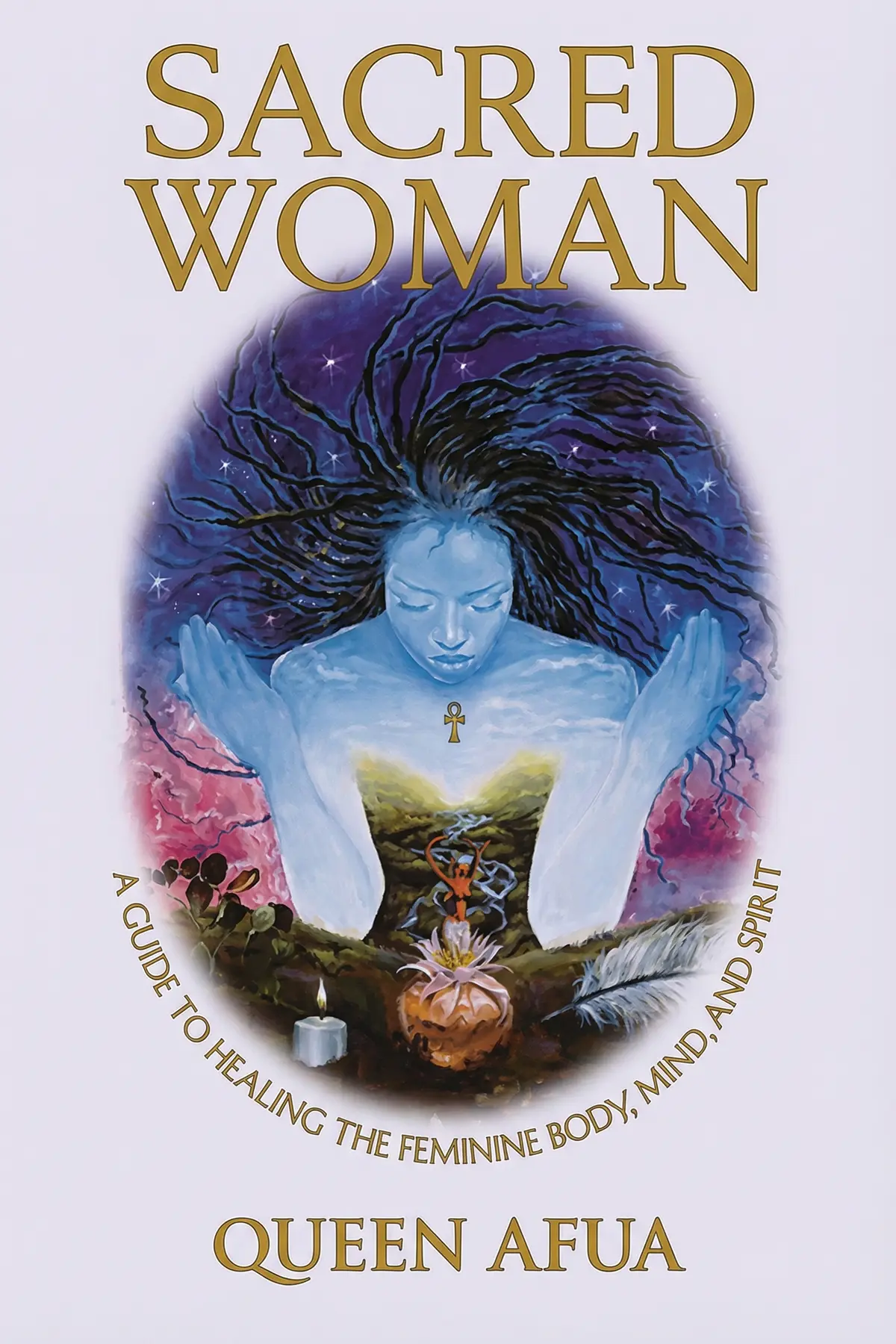
Sacred Woman closes its vision of change with one image, a lotus opening in the sun. On the cover, a uterus sits inside the flower. It is Afua’s way of saying that a womb can be restored naturally, even after trauma or abuse. The final gateway, Nefer Atum, turns that image into a ceremony of rebirth, with chanting, prayer, smudging and offerings, and sometimes a new sacred name.
The book adds up to a refusal to buy wellness. Afua asks women to cleanse, speak, move and work as if each act were a prayer, and to do it in company. Her stated mission runs outward from one woman to the women of her family across generations, then to her community and the world. The book suggests three months for the full program, and no professional’s permission is needed to begin.
The first steps are small. Ask a few women who are working on their own health to meet weekly for 21 days. Spend one week listening to how you speak, then a week saying only what matters. Tonight, put on music and move however your body wants. A lotus needs sun to open, and in Afua’s view a woman needs her circle.
Wellness is often sold as a private purchase: a candle, a retreat, a bath taken alone. Queen Afua wrote Sacred Woman decades before that market took off, and she starts from the opposite place. In her view, a woman's healing is a sacred calling. It begins with the womb, and it happens best in the company of other women. Afua wrote mainly for African American women, though she opens the book to every woman. She roots her program in what she calls Khamitic, or ancient Egyptian, spirituality. Women first cleanse the body through living, plant-based foods and fasting. Then they pass through a series of gateways: Sacred Words, Sacred Movement, Sacred Space, Sacred Relationships and more. Each gateway comes with daily rites, affirmations and a seven-day worksheet. Readers get concrete practices to try. They learn how to start a weekly healing circle, how to run a week-long talk fast, how to dance through stress and how to search for work that fits their purpose. They also get the spiritual framework that gives all of these practices meaning.
Women tired of wellness sold as products who want daily practices rooted in spirit and community.
Black women seeking a healing tradition that speaks to their history and their experience with medicine.
Anyone burned out by work that feels wrong and looking for a way back to purpose.
Queen Afua, born Helen Odel Robinson in Brooklyn in 1953, has worked in natural health and wellness coaching for more than five decades. She helped pioneer the green foods movement and is regarded as an influential figure in Black veganism. She created the Heal Thyself product line and the Sacred Woman Rites of Passage program. Her message, Liberation Through Purification, reaches audiences through workshops, books, products and talks, all aimed at teaching people to live naturally through food and self-care.
Listeners find this guide very accessible and value the thorough details it provides regarding women’s bodies. Furthermore, the content feels empowering, aiding in the expansion of their spiritual paths and offering direction for sacred practices. Many also prize the restorative nature of the material; one listener highlighted how it outlines a long-term healing process, deeming it a necessary listen that is well worth the money. They further applaud the focus on feminine strength, with one review specifically noting its importance for melanated women.
After hearing so much buzz in my community, I finally committed to the gateways of initiation presented here. This isn't just a book; it’s a manual for any woman of color looking to reconnect with her ancestral roots and reclaim her body. Queen Afua provides such a comprehensive guide to womb wellness that it feels like a spiritual homecoming. Some people might find the transition to a completely meatless diet or the early 4 AM wake-up calls a bit extreme, but the healing power is undeniable. I’ve started incorporating the Epsom salt baths and the sacred words into my daily routine, and the shift in my energy is palpable. To be fair, you have to be ready to do the actual work rather than just reading it casually. It’s a long-term healing process that is well worth every penny for the spiritual growth it facilitates.
Show moreEvery melanated woman needs this on her nightstand as a constant reference. It functions like a 'Sistas Bible,' offering rituals and affirmations that help navigate a world that often ignores our specific health needs. I’ve been struggling with hormonal balance for years, and following the guidance on red berries and womb cleansings has provided more relief than anything else I’ve tried. The book encourages you to look at your home as a sacred space—right down to the cast iron pots in your kitchen and the plants by your door. It’s a beautiful rites of passage for young women that I wish I had discovered years ago. You can’t just intellectualize this material; you have to live it. This book is essential for anyone serious about elevating their vibration and honoring their sacred womanhood through ancient traditions.
Show moreThis isn't just a book; it's a rigorous manual for total life transformation that requires you to step back and reflect. I’ve been reading and re-reading my copy for over a year now because there is just so much information to disseminate. From the sacred relationships to the toxic word fasts, Queen Afua covers every aspect of a woman's existence. I found the rating system for womb wellness particularly enlightening as it forced me to be honest about my habits. Some might find the meatless, dairy-free lifestyle difficult, but the results in terms of mental clarity and physical energy are worth the sacrifice. The book empowers you to take control of your own healing journey rather than relying on outside sources. It’s an investment in yourself that pays off daily through improved spirit and body awareness.
Show moreThe chapter on the Sacred Office and beautifying the home changed how I view my living space entirely. I never thought about how the furniture in my living room or the colors in my kitchen could impact my spiritual well-being, but Queen Afua explains it so beautifully. This book is an amazing tool for those of us who feel disconnected from our culture and want a more authentic way to live. I especially appreciated the focus on forgiveness and processing old hurts within our relationships. It’s a very emotional read at times, but the healing power is undeniable if you are willing to embrace the guidance offered. The rituals are practical and easy to start, even if you don't follow the diet perfectly. This is a must-read for any woman who wants to tap into her true power and roles.
Show morePicked this up during a difficult season and it guided me back to myself in ways I didn't expect. The focus on womb wellness and the sacred clock helped me establish a routine that grounded my erratic energy. I love how the book blends ancient Egyptian history with practical modern advice on things like headdresses and essential oils. It’s definitely a 'doing' book—you have to be prepared to fast, to meditate, and to look deeply at your own shadows. To be fair, the section on bowel movements was a bit much, but I understand the holistic point she’s making about detoxification. This is a brilliant resource for melanated women who want to enhance their spiritual journey and find a sense of true roles. It’s dense, it’s deep, and it’s absolutely worth the money for the long-term healing it provides.
Show moreTruth is, you can’t just read this once and put it away; it’s a lifetime companion. As someone who grew up with mainstream teachings, this was a radical and necessary shift in perspective regarding my body and my spirit. Queen Afua writes with such authority and love that you can't help but feel empowered by her words. The guidance on avoiding 'toxic words' and gossiping has helped my mental health just as much as the dietary changes have helped my physical health. I’ve started using the sacred essential oils and my home feels so much more peaceful. While the workbook style and black-and-white images are simple, the content is incredibly rich and profound. If you are ready to take the journey toward becoming a Sacred Woman, this is the only map you need. It’s truly an excellent offering for the soul.
Show moreThe layout is a bit unconventional with the double columns and the textbook-like feel, which took me some time to get used to. Honestly, the black and white photos aren't the most visually appealing, and the workbook texture of the pages makes it feel more like a course than a leisure read. However, once you dive into the content, the wisdom is undeniable. I specifically appreciated the focus on the Sacred Clock and how to structure my day for maximum productivity and peace. While I’m not quite ready to commit to a two-day menstrual cycle or give up pasta entirely, the holistic advice regarding essential oils and clearing toxic words from my vocabulary has been life-changing. It’s an empowering read that challenges your mainstream perspective on health and femininity. Just be prepared for a very dense, spiritual journey that requires an open mind.
Show moreFrankly, some of the health claims made me raise an eyebrow, especially the part about aiming for a one-day period. As someone who has always struggled with their cycle, that felt a bit unrealistic, but I tried to stay open-minded. The sections on the nine gateways are incredibly detailed and offer a structured path toward healing that you just don't find in mainstream wellness books. I love the emphasis on high-vibrational oils like frankincense and the specific dietary shifts toward sprouts and lentils. It’s definitely a commitment, and the tone can feel a bit intense if you aren't ready for a total lifestyle overhaul. But if you can get past the dense formatting and the lack of scientific citations, there is a wealth of ancestral knowledge here that is deeply empowering. It’s a unique perspective on the goddess energy that everyone should at least consider.
Show moreNot what I expected at all when I first picked this up. I was looking for a general book on female empowerment, but this is deeply rooted in a specific religious and spiritual framework that feels a bit like a textbook. The author makes some very bold claims, like the idea that eating meat makes you bleed more or that specific foods cause certain emotions, and she doesn't provide many sources for this information. It's very dense and, frankly, a bit overwhelming to try and digest in one sitting. I did find the sections on beautifying the home and the importance of mother-daughter relationships to be quite moving and helpful. If you’re into ancient Egyptian history and very strict holistic living, you’ll love it. For me, I had to take a lot of it with a grain of salt and just pick out the parts that resonated with my lifestyle.
Show moreLook, I’m all for female empowerment, but this felt more like an indoctrination into a new religion than a health guide. I found the writing style very difficult to follow, especially with the heavy use of italics and the weird column layout that made it feel like an old manual. The author makes massive claims about medical health and 'mucus-forming foods' without providing a single source or bit of scientific evidence to back it up. For a book that's supposed to be a 'Bible' for women, it felt very narrow in its view, focusing almost entirely on those who want children or follow a very specific Afrocentric spiritual path. I tried to stick with it for the holistic advice, but the constant pressure to wake up at 4 AM and eat only fruit was just too much for me. I ended up returning it.
Show moreQueen Afua argues that a woman’s healing is a sacred practice, not a product, and that it begins with the womb. She builds a program rooted in Khamitic, or ancient Egyptian, spirituality. Women cleanse the body first, then pass through gateways such as Sacred Words, Sacred Foods, Sacred Movement and Sacred Relationships. The aim is a change from what she calls a wounded woman to a Sacred Woman, done together with other women.
A Sacred Womb Circle is a group of four to eight women who meet to share stories, release old hurts and celebrate each other’s progress. Afua suggests a relaxed first meeting where each woman names her goal and the group agrees on a shared purpose. Members then sign personal contracts and meet weekly for at least 21 days, rotating between homes and opening each session with music, an altar and prayer.
In the Sacred Foods gateway, Afua treats food as medicine and the kitchen as a healing space. She encourages a plant-based diet that is mostly raw and vegan, with regular fasting. Before that, the Sacred Womb stage teaches living foods and womb rejuvenation techniques, and the book includes a twenty-eight-day womb purification program, along with recipes.
The talk fast is Afua’s tool for changing how you speak. For one week you speak only when necessary and choose words that frame your experience with strength. Saying I am tired becomes I need rest, and trying becomes doing. She recommends spending a week simply listening to your conversations first, then adding daily affirmations, even if they feel unnatural at the start.
Afua wrote it for women, and especially for African American women, though she opens it to all women. It speaks to readers who distrust a medical system that has failed them, women dealing with womb health concerns from menstruation to menopause, and anyone who wants healing grounded in spirit, food, movement and community instead of products bought alone.
Eckhart Tolle
Marianne Williamson

Deepak Chopra

Pico Iyer

Alcoholics Anonymous World Services





Daniel Goleman
AUDIO SUMMARY AVAILABLE
Get the key ideas from Sacred Woman by Queen Afua, plus 5,000+ more nonfiction titles.









