

A Promised Land
Barack Obama
 English
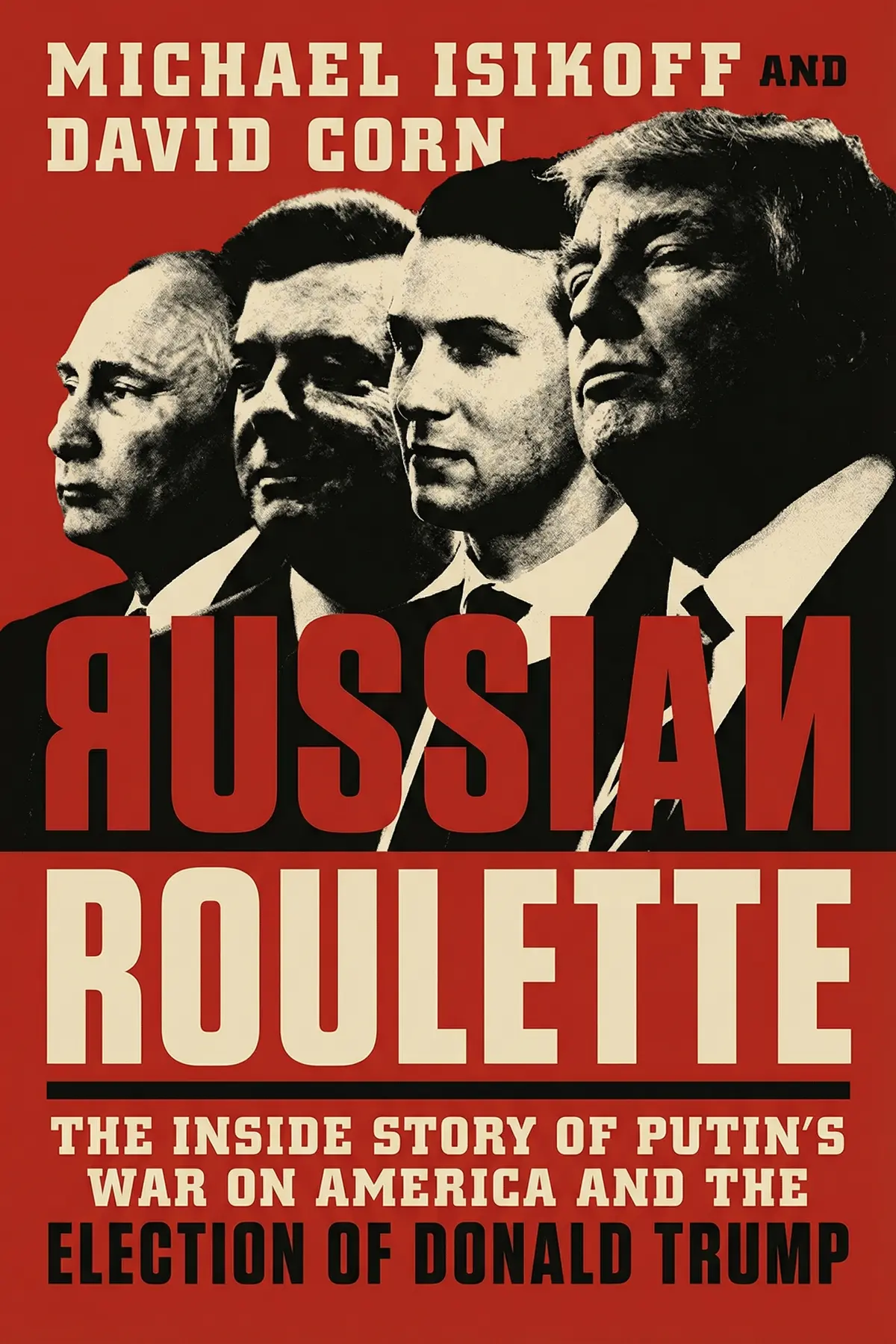
Two investigative journalists piece together how Russia hacked, leaked and trolled its way into the 2016 American election, and how Trump's business ambitions, campaign contacts and a crowded news cycle kept warnings from landing.
1 min 00 sec
Most people remember the 2016 American election as noise: scandals, leaks and a result that shocked even the sitting White House. In Russian Roulette, investigative journalists Michael Isikoff and David Corn sort that noise into one story. They argue that the Russian government ran a broad operation to create chaos, damage Hillary Clinton and help Donald Trump, using stolen emails, fake social media accounts and contacts with people around the Trump campaign.
Their account also explains why it worked so well. At almost every stage, the warning signs were hidden, waved away by those who saw them, or buried under louder headlines. The story starts years before the campaign, with a beauty pageant in Moscow and a tower that was never built. Follow it through and the tangled headlines of that year line up into a sequence you can explain to a friend in a few minutes, along with a sharper sense of how foreign influence actually travels.
1 min 47 sec
In 2013 a reality TV star brought his favorite contest to Russia, ignored a protest and waited for one special guest. The people he met there would turn up again in a far bigger story.
1 min 44 sec
A treaty signed in 2010 suggested old rivals were finally talking again. Within a few years the warmth had turned to fury, aimed at one American official in particular.
2 min 02 sec
The most damaging break-in of the 2016 race needed no clever code or inside agent. It needed one believable message and one busy person, while a candidate revived a secret deal abroad.
1 min 44 sec
A veteran strategist who reportedly disappeared with about $18.9 million of an oligarch’s money, an adviser invited to give a speech in Moscow and an aide meeting a Scottish professor in London. Each brought something extra into the campaign.
1 min 44 sec
An email promised help from Moscow and damaging material on a rival. The meeting that followed delivered little, yet what the campaign did afterward became, for the authors, one of their central concerns.
2 min 02 sec
One FBI case closed and another opened out of public view. A British investigator heard a disturbing claim, a leak landed the day before a convention, and the president found his hands tied.
1 min 54 sec
For the first time, the American government formally accused a foreign nation of meddling in its election. Within hours, two other stories had swallowed the news almost completely.
1 min 39 sec
Applause in a foreign parliament, a friendly phone call and a dossier suddenly made public. The election was over, but the questions about what had happened were only beginning to surface.
1 min 13 sec
What makes Russian Roulette unsettling is how ordinary most of its moments were. A pageant booking. A password reset. An eager reply to a publicist. A meeting that produced nothing useful. In the authors’ account, a hostile government linked those small openings into an operation of hacking, timed leaks and fake accounts, while the people best placed to sound the alarm were blocked, disbelieved or drowned out. The FBI knew a great deal before the vote. The voters did not.
A few takeaways can be drawn from the authors’ account. When a report about foreign interference appears, look at what else is fighting for attention that day, because October 7 showed how a historic warning can disappear behind louder news. Treat silence as information: what a campaign or a company chooses not to report can tell you as much as what it says. And never follow a link that urgently asks you to reset a password.
In 2013 a traffic jam was enough to keep Putin away from Trump. Three years later, in the authors’ telling, nothing so simple stood between Russia and an American election.
The 2016 American presidential election produced so many scandals that it is hard to say what actually happened. Investigative journalists Michael Isikoff and David Corn followed the campaign closely and argue that one thread ties much of it together: a Russian government operation to sow chaos, damage Hillary Clinton and help Donald Trump win. They trace that thread from Trump's 2013 Miss Universe pageant in Moscow and his hopes for a Trump Tower there, through the collapse of the Obama administration's reset with Russia, to Russian hackers inside the Democratic Party and campaign staff with deep Russian ties. They pay special attention to the June 2016 Trump Tower meeting with Russian visitors and the campaign's choice not to report it. Readers get a clear sequence of events, from the hacking of John Podesta's email to the chaotic news day of October 7, 2016, when a historic government warning went almost unheard. The result is a guide to how foreign influence moved through business deals, inboxes and headlines, and why so few people saw it in time.
Readers who followed the 2016 election in fragments and want the Russia story told in order.
Students and professionals interested in cyber security, disinformation and how foreign influence works.
News watchers who want to understand the events behind later investigations into Trump and Russia.
Michael Isikoff is an investigative journalist who has worked at the Washington Post, Newsweek, NBC News and Yahoo News, covering the war on terror, Abu Ghraib, campaign finance and presidential politics. David Corn, born in 1959, was Washington editor of The Nation from 1987 to 2007 and now leads the Washington bureau of Mother Jones. He also writes the newsletter Our Land and analyzes politics on television. Together they also wrote Hubris, a New York Times bestseller.
Listeners feel this work plays out like a spy novel, featuring extensively researched details and an exhaustive timeline of occurrences. Furthermore, the prose is lucid and specific, offering a glimpse into constant political turmoil while staying grounded in proven facts. Listeners also value the way the story is told, characterizing it as a true-to-life espionage tale, and they commend the reporting for its professional journalistic caliber.
Michael Isikoff and David Corn have delivered a masterclass in investigative reporting that rivals their previous work in Hubris. This book functions as a definitive account of a political scandal that is still shifting beneath our feet, yet they manage to ground it in solid, documented evidence. Their writing style is incredibly brisk and economic, which helps when you are trying to digest the murky depths of international spycraft and cyber warfare. I found the section on the Gerasimov doctrine particularly illuminating because it explains how information was weaponized to exploit American social rifts. To be fair, the narrative can feel a bit soul-crushing as it details the various failures of the Obama administration to act sooner. However, the sheer professionalism on display here makes it an essential read for anyone trying to understand the 2016 timeline. It reads like a high-stakes espionage thriller, but the consequences are all too real for our democracy.
Show moreWow, this was a heavy read that felt more like a Tom Clancy novel than a piece of non-fiction journalism. The authors do a fantastic job of connecting the dots between Trump’s long-standing obsession with a Moscow hotel and Putin’s personal vendetta against Hillary Clinton. It is fascinating to see how the Miss Universe pageant served as a pivotal moment for these two worlds to collide. Personally, I was most struck by the accounts of the Russian troll farms and how brazen their attacks on the DNC actually were. The book is well-researched and avoids the trap of mere speculation by sticking to what can be proven through interviews and records. My only gripe is that it makes the current political landscape feel even more chaotic than it already does. If you want a clear-eyed look at the 2016 election interference, this is the gold standard. It is a terrifying yet necessary piece of work.
Show morePicked this up on a recommendation and couldn't put it down despite how infuriating the content is. The way the authors weave together the Miss Universe pageant, the DNC hacks, and the internal friction at the FBI is nothing short of brilliant. They have a knack for choosing exactly the right facts to illuminate the darkest corners of this complex situation. I especially liked the focus on how the 'pee-pee tape' rumors might have originated from actual events at a Moscow nightclub called The Act. It’s these kinds of specific details that make the book feel authentic and deeply researched. The truth is, this account makes the political chaos of the last few years feel much more calculated and sinister. It’s a brisk read that manages to be both informative and incredibly cinematic in its presentation. Even if you think you know the story, the authors’ ability to clarify the timeline is worth the investment. This is top-tier investigative journalism.
Show moreAs someone who appreciates deep investigative reporting, I found the level of detail regarding the DNC hacking to be astounding. This isn't just a book about Trump; it's a book about the changing face of global warfare in the 21st century. Isikoff and Corn exhibit the same solidity and professionalism that made Hubris such a success. They manage to navigate the revolving carousel of malefactors without losing the thread of the main narrative. I found the ending particularly poignant, describing the Moscow bar where patrons cheered for Trump’s victory. It captures a moment in time that changed the world forever. The writing is clear, detailed, and backed by a mountain of evidence that makes the 'fake news' labels look ridiculous. Even though the subject matter is frustrating, the book itself is a triumph of journalism. It provides the definitive account of how we got here and who was responsible for the chaos. Highly recommended for any political junkie.
Show moreEver wonder how the 2016 election actually spiraled into such a mess of foreign influence and internal investigation? Isikoff and Corn provide a comprehensive timeline that helps clear up the confusion surrounding names like Felix Sater and Aras Agalarov. The level of detail regarding the hacking of John Podesta’s emails is genuinely gripping and illustrates just how vulnerable our systems were. While much of this material has been covered in the news, having it all in one cohesive narrative makes a world of difference. Frankly, the book is a bit depressing because it highlights so many missed opportunities to stop the interference before it took hold. The prose is sharp and moves at a lightning pace, never letting the reader get bogged down in technical jargon about IT or hacking. It is a solid piece of journalism that prioritizes facts over hyperbole. I highly recommend it for those who want to see the 'big picture' of the Russia scandal.
Show moreThe chapter on the 2013 Miss Universe pageant in Moscow is worth the price of admission alone. It paints a vivid picture of a man desperate for the approval of an autocrat while surrounded by Russian oligarchs. Isikoff and Corn are old-fashioned reporters who don't rely on flashy language to make their point. Instead, they let the documented facts build a case that feels almost indisputable. I found their analysis of the Obama administration’s internal debates to be the most revealing part of the entire book. It shows a government paralyzed by the fear of appearing partisan while a foreign power attacked their democratic institutions. My only minor complaint is that the two authors' voices are so similar that the narrative can feel a bit flat in places. Regardless, it is a sturdy and professional account of a crisis that we are still living through today. It’s a must-read for anyone interested in the intersection of money, power, and international espionage.
Show moreAfter hearing about 'collusion' for months, I wanted a clear timeline that separated the noise from the documented facts. Russian Roulette does exactly that by tracing the connections from Trump’s early Russian business interests all the way to the 2016 victory. The authors are very careful to distinguish between what is known, what is surmised, and what is total speculation. This level of intellectual honesty is refreshing in such a polarized political climate. The details about the GRU hacking operations were particularly eye-opening and read like something out of a spy movie. Gotta say, it’s a bit of a marathon to get through all the names and dates, but the authors' economic style keeps things moving. It’s a comprehensive look at how a perfect storm of factors led to an unprecedented election outcome. While it doesn't offer many happy endings, it provides the clarity that is often missing from daily news cycles. A very strong four-star effort.
Show moreNot what I expected from a political book, as it reads with the brisk, economic style of a high-stakes thriller. Michael Isikoff and David Corn have a talent for taking incredibly complex IT and hacking details and making them accessible to the average reader. I was particularly interested in the role of the Russian Internet Research Agency and their use of social media to manipulate public opinion. The book does a great job of showing how the Trump campaign’s own chaos provided a perfect smokescreen for these external actors. While some of the historical background on Putin felt a little long-winded, it was necessary to understand his motivations. The authors don't try to overtax your intellect, but they don't talk down to you either. It’s a balanced and informative look at a very messy period in American history. I finished it feeling much more informed, even if I was also a lot more worried about the future of our elections.
Show moreLook, if you have been glued to cable news for the last two years, you might not find a ton of brand-new revelations here. This book is a very workmanlike product that organizes existing reporting into a chronological format, which is helpful but not necessarily groundbreaking. Isikoff and Corn are clearly talented journalists, but at times the book feels like a refresher course rather than an original investigation. I appreciated the historical context on Putin’s rise and his KGB roots, though some sections felt a bit padded. To be fair, the writing is clear and the pace is fast, making it a quick read for such a dense subject. It is certainly a useful resource for future historians, but casual news junkies might find themselves skimming parts they already know. It provides a good summary of the Steele dossier and the Trump Tower Moscow deals, but don’t expect a smoking gun that hasn't already been discussed on Twitter. It's a decent overview but lacks that extra punch.
Show moreFrankly, this book is exhausting because it lays out a series of missed opportunities by the Obama administration and the HRC campaign. While I appreciate the journalistic quality, the tone is so relentlessly bleak that it becomes difficult to finish. It feels like reading a detailed autopsy of a tragedy you're still mourning. The authors lean heavily into the Steele dossier material, which felt a bit like retreading old ground for me. I also found the focus on Trump’s personal life in Moscow to be a bit salacious compared to the more serious policy discussions. If you are looking for an objective, non-partisan take, you might find some of the framing here a bit lopsided. It is well-documented, sure, but it definitely has a specific perspective that won't sit well with everyone. It’s a professional piece of work, but the 'soul-crushing' nature of the content made it a chore to get through. Not exactly the light reading I was hoping for this weekend.
Show moreInvestigative journalists Michael Isikoff and David Corn argue that the Russian government ran a large operation to interfere in the 2016 American election, aiming to create chaos, damage Hillary Clinton and help Donald Trump. They trace it from Trump’s 2013 Miss Universe pageant in Moscow, through Russian hacking of Democratic institutions and social media disinformation, to campaign staff with Russian ties and the June 2016 Trump Tower meeting.
According to the book, a hacking group called APT 28, which had connections to the Russian intelligence agency GRU, sent campaign chairman John Podesta a fake message in his Gmail account in March 2016. It warned of suspicious activity and asked him to reset his password. Podesta clicked the link, giving the hackers access to the campaign’s details. Wikileaks later began publishing his emails on October 7, 2016.
Publicist Rob Goldstone emailed Donald Trump Jr. claiming that Putin wanted Trump to win and that a Russian prosecutor had incriminating information on Clinton. Trump Jr., Paul Manafort and Jared Kushner then met Russian visitors on June 9. The authors say nothing useful was offered, but the Russians made clear their government would help in secret, and the campaign never reported the approach to the FBI.
The intelligence agencies released their statement linking the hacks to Russia on October 7, 2016, the first time the United States had accused a foreign nation of election interference. The same day, Hurricane Matthew struck the Caribbean, the Access Hollywood tape was released and Wikileaks began publishing Podesta’s emails. Earlier, Mitch McConnell and other Republicans had refused to join a bipartisan warning.
It suits readers who want the 2016 Russia story told as one clear sequence, from Trump’s business hopes in Moscow to the election result. It also helps anyone interested in how disinformation and hacking work in practice, and why warnings can fail when they compete with louder news or when the people who receive them stay silent.
Barack Obama

Masaji Ishikawa

John Rawls



Miles Taylor



Tracy Rosenthal

Jessica Valenti
AUDIO SUMMARY AVAILABLE
Get the key ideas from Russian Roulette by Michael Isikoff, plus 5,000+ more nonfiction titles.









