

14 min 25 sec
Available in: English
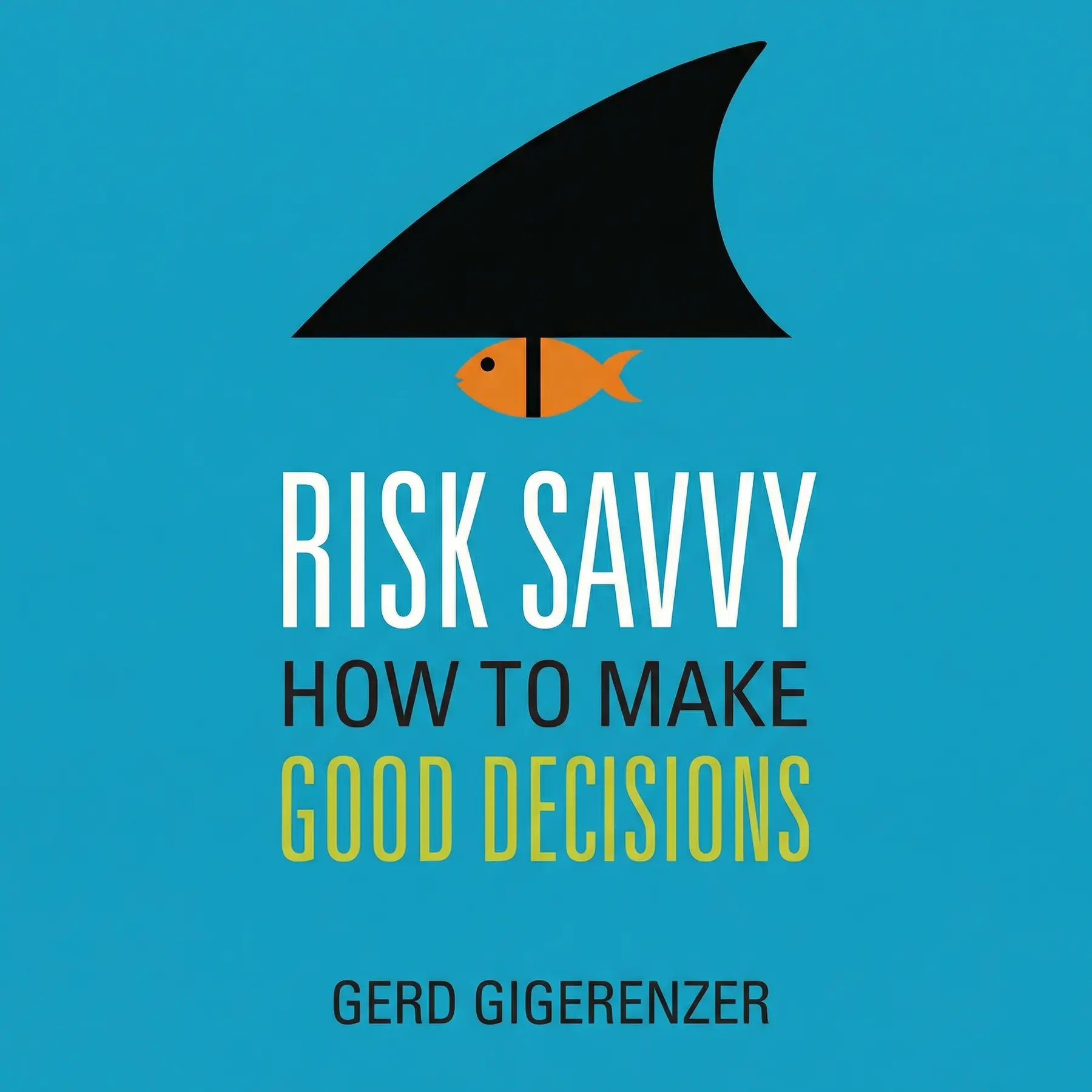
Risk Savvy: How To Make Good Decisions
Shows how to tell a calculable risk from real uncertainty, see through frightening statistics, and make sound choices with simple rules of thumb when the odds cannot be known.
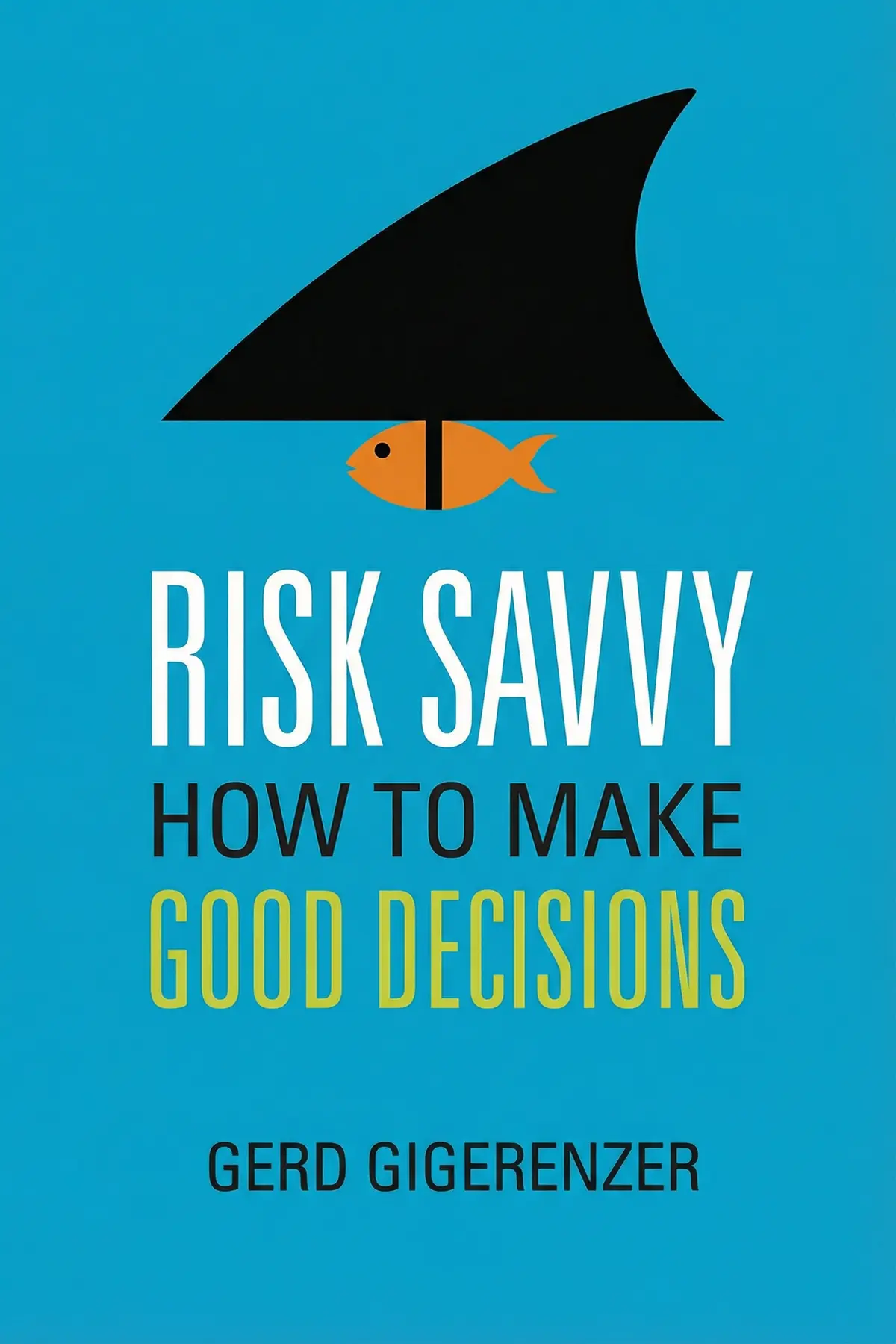
Table of Content
1. Introduction
1 min 07 sec
Most of us assume a hard decision needs more information. In Risk Savvy, Gerd Gigerenzer, who studies how people reason in an uncertain world, argues that what you need first is to know which kind of problem you face: a risk, where the outcomes and their odds can be known, or an uncertainty, where they cannot. Confuse the two and even careful reasoning fails, whether the choice is a medical test, an investment or a marriage.
Gigerenzer, who led the Center for Adaptive Behavior and Cognition at the Max Planck Institute for Human Development in Berlin, builds the book on one claim. Known risks call for clear numbers and sharp questions about where those numbers came from. True uncertainty calls for different tools: a simple rule of thumb, a choice that is good enough, and a trained gut. Along the way come a jet gliding onto a river, a pill warning that frightened a nation, and a cancer screening that is usually wrong when it says yes. By the end, a scary statistic or a fog of unknowns should feel like something you can work with.
2. Tell risk apart from uncertainty
1 min 42 sec
A poker table and a weather forecast both feel unpredictable, yet Gigerenzer puts them in different categories. Knowing which one you are facing changes everything about how you should decide.
3. Spot the outcome you forgot to count
1 min 37 sec
A well-fed turkey grows more confident every single day, right up until the worst one. Its mistake is common among people too, and so is its mirror image.
4. Ask where a frightening number came from
1 min 45 sec
A British health warning about a doubled risk led to around 13,000 more abortions the following year. The relative figure was technically correct. What went wrong was how it was presented, as a relative jump rather than an absolute one.
5. Read medical tests in counts of people
1 min 49 sec
A breast cancer screening sounds reliable when its accuracy is stated as a percentage. Count the actual women instead, and a positive result starts to mean something very different.
6. Decide fast with one simple rule
1 min 53 sec
Two pilots, 3,000 feet up with both engines gone, had a falling plane, no time and a three-page checklist they could not use. What saved everyone on board was a single sentence every pilot already knows.
7. Choose good enough and trust your gut
1 min 32 sec
One man ranked potential wives by careful estimates of how each would fit his life, and still ended up divorced. Gigerenzer explains what he should have done instead.
8. Stop fearing mistakes and start making better choices
1 min 44 sec
A surgeon left a clamp inside a patient and turned the error into lasting protection for everyone after. Meanwhile, most doctors in one study were making safer-looking choices that harmed patients.
9. Conclusion
1 min 16 sec
Risk Savvy ends on a modest claim about knowledge. Being good with risk does not mean knowing everything. It means knowing where your knowledge stops. The turkey, the insurance firm with its sophisticated model and the friend who calculated his marriage all assumed they had counted every outcome. The pilots over the Hudson assumed nothing, used one rule, and saved everyone on board.
Gigerenzer also refuses to leave this to experts. You need no economics degree to see that finance is uncertain, and no medical degree to read a fact box. He wants children taught early, through lessons in health, money and the risks of digital technology, plus statistical thinking, rules of thumb and the psychology of risk. A teenager who understands risk in terms that make sense to them is one a parent can worry about less.
For your own decisions, the book points two ways. When a number frightens you, ask who calculated it and turn the percentage back into a count of people. When no honest number exists, stop hunting for the perfect answer: name what matters most, use a simple rule and listen to your gut. Uncertainty will not go away, but you can stop treating it as something you can calculate.
About this book
What is this book about?
Every day brings choices whose outcomes are unclear, from medical tests and loans to who to hire or marry. Most people respond by looking for more information or by trusting whatever number an expert or a news report hands them. Gerd Gigerenzer argues that both habits can lead you astray. His starting point is a distinction most people blur. A risk is a situation where every outcome and its odds can be known, like a slot machine. Uncertainty is a situation where they cannot, like tomorrow's weather. Mistaking one for the other produces turkeys surprised by Thanksgiving and patients despairing over a test that may be wrong, while presenting a pill's risk in relative terms set off a panic and thousands of extra abortions. Gigerenzer then gives readers tools for both cases. For risk: ask how a number was calculated, prefer absolute figures to relative ones, and turn percentages into counts of real people. For uncertainty: use one simple rule, settle for good enough, trust experienced gut feelings and stop fearing mistakes. Readers come out able to question statistics and decide with confidence when the facts run out.
Book Information
Who it's for
Patients and caregivers
Patients and caregivers who need to make sense of test results and health warnings.
Managers, investors and founders
Managers, investors and founders who must decide fast when the facts are incomplete.
Parents and teachers
Parents and teachers who want children to grow up able to judge risk for themselves.
About the Author
Gerd Gigerenzer
Gerd Gigerenzer, born in 1947 in Wallersdorf, Germany, led the Center for Adaptive Behavior and Cognition at the Max Planck Institute for Human Development in Berlin. His research covers bounded rationality and heuristics, the simple rules of thumb people use to reason under uncertainty. He argues that such rules are not simply irrational, has shown cases where less information produces more accurate decisions, and has challenged Daniel Kahneman and Amos Tversky's views on cognitive bias. His other books include Reckoning with Risk and Gut Feelings.
Ratings & Reviews
Ratings at a glance
What people think
Listeners find this work remarkably educational and straightforward, with one person noting that it merges broad intellectual concepts with actionable tips. Additionally, the prose is well-liked, and listeners feel the book is worth the cost. They also value the method for teaching risk awareness, with one individual stating it improves survival by a factor of two. However, the material gets some conflicting feedback, and one listener points out that it does not work effectively as a reference source.
Top reviews
Jonathan
Ever wonder why your doctor seems so confident about confusing statistics that don't quite add up? This book acts as a powerful bullshit detector for anyone trying to navigate health, finance, or even romance in an age of data overload. Gigerenzer explains concepts like lead-time bias with remarkable clarity, showing why a '98% survival rate' doesn't always mean what we think it does. I was genuinely shocked to read about the gynecologists who couldn't solve a simple probability problem regarding breast cancer screenings. It makes you realize that experts are often just as probability-blind as the rest of us, which is terrifying but necessary to know. Not gonna lie, some of the calculations require a second read, but the practical advice here could literally save your life. It’s an essential manual for the modern citizen.
Show moreSuthee
Wow, talk about a wake-up call for how we process health data and personal safety in the 21st century. This book completely changed how I look at cancer screening statistics and the fear-mongering that often dominates our news cycles. The distinction between survival rates and mortality rates is something every single adult needs to understand before they walk into a clinic. Gigerenzer has a blunt, no-nonsense style that cuts through the noise and forces you to ask better questions of your doctors and financial advisors. It’s depressing that our education system doesn't teach these basic concepts, but this book is the perfect remedy for that failure. I’ve already recommended it to several friends who struggle with anxiety over health screenings or investment decisions. It’s a life-changing read that equips you with a mental toolkit for surviving a world designed to keep you afraid.
Show moreTeng
Finally got around to reading this and I’m convinced that gut feelings aren't just 'magic'—they're based on years of subconscious pattern recognition. Gigerenzer does a fantastic job of explaining why 'simpler is better' when we are dealing with things that cannot be perfectly predicted. I loved the practical breakdown of how to use icon boxes to understand relative versus absolute risk, which is a total game-changer. The book is written in a very accessible way, making it easy to share these concepts with family members who might be intimidated by math. It’s not just an intellectual exercise; it’s a survival guide for making better choices in every area of your life. The author's passion for improving human wellbeing really shines through in every chapter, even when he's being a bit cynical about the experts. A must-read for anyone who feels overwhelmed by the 'data' being thrown at us every day.
Show moreCaleb
This book is a fascinating dive into why we fear the wrong things and how we can regain control through simple logic. Gigerenzer takes a bold stance against the popular idea that humans are naturally 'irrational,' arguing instead that we simply lack the right tools for a world of uncertainty. While he occasionally misrepresents the work of Kahneman and Tversky, his core message about 'fast and frugal' heuristics is genuinely empowering for the average reader. I loved the practical breakdown of how to interpret medical screenings, as it makes the complex math of false positives feel intuitive. It’s a bit long-winded in parts, following the classic business book structure of anecdote-then-explanation, but the payoff is worth the effort. Ultimately, it’s a refreshing take that challenges the status quo of expert-led decision making.
Show moreKae
Picked this up after seeing a recommendation for improving general decision-making, and I wasn't disappointed by the practical tools it offers. Gigerenzer makes a compelling case that simple rules of thumb—heuristics—often outperform complex mathematical models in the real world where uncertainty reigns. I particularly enjoyed the section on how we misunderstand daily probabilities, like the weather report or the chance of rain over a full weekend. It’s written in a way that’s incredibly easy to understand for laypeople, even if you haven't touched a math textbook since high school. My only gripe is that it feels a bit light on the data-heavy side, making it more of an introductory guide than a deep dive. Still, it’s a great way to sharpen your critical thinking skills and stop being intimidated by 'experts.' It’s a solid four-star read for anyone wanting to be more risk literate.
Show moreChee
After hearing Gerd Gigerenzer speak, I expected a dense academic text, but this is surprisingly accessible for a general audience. The book focuses on the difference between known risk and true uncertainty, which is a distinction most people (and banks) completely ignore. I found the 'icon boxes' for visualising data to be a brilliant way to make sense of confusing percentages that doctors usually throw at you. Personally, I think the section on financial advisors was the most valuable, as it exposes how little 'professional' models actually contribute to success. The writing style is casual and punchy, though it does get a bit repetitive by the middle chapters. It’s definitely worth the price of admission for the health chapters alone, though I wish it were organized better for quick reference. It definitely helps you see the world through a much more skeptical lens.
Show moreBrahim
As someone who has always been a fan of 'Thinking, Fast and Slow,' reading this was a bit of a shock to the system. Gigerenzer takes a contrarian approach, arguing that our gut feelings are actually sophisticated tools evolved to handle complex, uncertain environments. While I don’t agree with everything he says—especially his habit of over-simplifying his opponents’ views—the logic behind simple heuristics is very hard to ignore. The examples from the healthcare industry are particularly damning and provide a much-needed critique of how statistics are used to manipulate patient choices. It’s a bit wordy in places, and the business-style anecdotes can get a little tiresome after a while. However, the core message about becoming 'risk savvy' through rules of thumb is a vital perspective for any modern thinker. It’s a healthy challenge to the idea that we are all just 'predictably irrational' beings.
Show moreCamila
Look, the truth is that we are mostly illiterate when it comes to probability, and that makes us easy targets for manipulation. Gigerenzer's book is an attempt to fix that by teaching us how to think clearly about risk without needing a PhD in mathematics. He uses simple examples, like the Monty Hall problem and rain forecasts, to show how easily our intuition can be led astray—or how it can be trained. I appreciated the bluntness of the writing; it’s refreshing to see someone call out the 'greedy schemes' that sometimes hide behind medical statistics. My only real issue is that the book can feel a bit scattered as it jumps from terrorism to romance to finance. It’s more of a collection of insights than a cohesive manual, but each insight is incredibly valuable. It’s an eye-opening read that makes a strong case for teaching risk literacy in every high school.
Show moreAnong
In my experience, most business-focused non-fiction could be condensed into a long-form essay, and this book definitely falls into that trap. While the information is incredibly informative, the author repeats his main points about heuristics versus complex models far more than necessary. To be fair, the specific advice on how to talk to your doctor and how to evaluate financial risk is worth the slog. Gigerenzer is at his best when he’s explaining why simple rules work better in high-uncertainty environments than sophisticated computer algorithms. I just found the constant jabs at other psychologists to be a bit distracting and unnecessary for the point he was trying to make. It’s a good book with a very important message, but it requires some patience to get through the fluff. If you can handle the 'business book' pacing, there is a lot of gold to be found here.
Show moreLuckana
Frankly, the author spends way too much time attacking straw men rather than engaging with actual psychological research. While Gigerenzer has some interesting points about the value of intuition, his dismissal of Kahneman and Tversky feels intellectually dishonest and undermines his overall credibility. The book follows that tired business-book formula where a single idea is stretched across hundreds of pages using repetitive anecdotes and vague generalizations. He lauds the 'gut feeling' of business leaders without acknowledging that intuition requires years of feedback in stable environments to be even remotely reliable. To be fair, the section on medical statistics is eye-opening and provides some genuine utility for those facing health decisions. However, the patronizing tone and the constant overreaching make this a frustrating read for anyone looking for a balanced scientific discussion. It’s not suitable as a reference source if you want a rigorous understanding of cognition.
Show moreQuestions about this book
What is the main idea of Risk Savvy by Gerd Gigerenzer?
Gigerenzer argues that good decisions depend on knowing whether you face a risk, where outcomes and odds are known, or uncertainty, where they are not. Known risks call for clear numbers and questions about how they were calculated. Uncertainty calls for simple rules of thumb, good-enough choices and trust in experienced gut feelings, since searching for complete information is usually impossible.
What is the difference between risk and uncertainty?
In Gigerenzer’s terms, a risk is a situation where you know every possible outcome and its probability, like a slot machine or even poker, since a deck holds a fixed number of cards. Uncertainty means you cannot know the probabilities and may not know all the outcomes, like tomorrow’s weather. The turkey that never imagined Thanksgiving shows what happens when uncertainty is treated as a calculable risk.
Why does Gigerenzer prefer absolute risk and natural frequencies?
Relative figures can cause panic. A UK warning that a contraceptive pill raised thrombosis risk by 100 percent meant two cases in 7,000 instead of one, and around 13,000 more abortions followed. Counting people helps too: of 98 women flagged by mammography, only 9 have cancer. Natural frequencies make such facts clear, and even fourth graders could solve problems framed this way.
How can I apply Risk Savvy in everyday decisions?
When a statistic alarms you, ask who calculated it and on what basis, and convert percentages into counts of people. When outcomes are unknowable, use one simple rule, such as never taking a loan you cannot repay, or the 1/N rule of splitting money evenly. For choices like hiring or partners, name what matters most and take the first good-enough option.
Does Risk Savvy say to trust your gut?
Yes, in the right situations. Gigerenzer describes gut feelings as a form of unconscious intelligence built on personal experience, useful when information is too thin for an informed decision. He pairs this with accepting mistakes, since fear of error drives poor choices, as with the 93 percent of doctors in one study who ordered unnecessary tests to protect themselves.
Featured in
Readers also enjoyed

Acting with Power: Why We Are More Powerful Than We Believe
Deborah Gruenfeld


Age of Propaganda: The Everyday Use and Abuse of Persuasion
Anthony Pratkanis




59 Seconds: Change Your Life in Under a Minute
Richard Wiseman


AUDIO SUMMARY AVAILABLE
Listen to Risk Savvy in 15 minutes
Get the key ideas from Risk Savvy by Gerd Gigerenzer, plus 5,000+ more nonfiction titles.
- 5,000+ titles
- Listen as much as you want
- 7-day free trial
- Cancel anytime









