

14 min 39 sec
Available in: English
Reversing Alzheimer’s: The New Toolkit to Improve Cognition and Protect Brain Health
Explains why Alzheimer's has many causes instead of one. Offers a practical toolkit of daily routines, exercise, a ketogenic eating plan and home changes aimed at protecting memory and preventing or reversing cognitive decline.
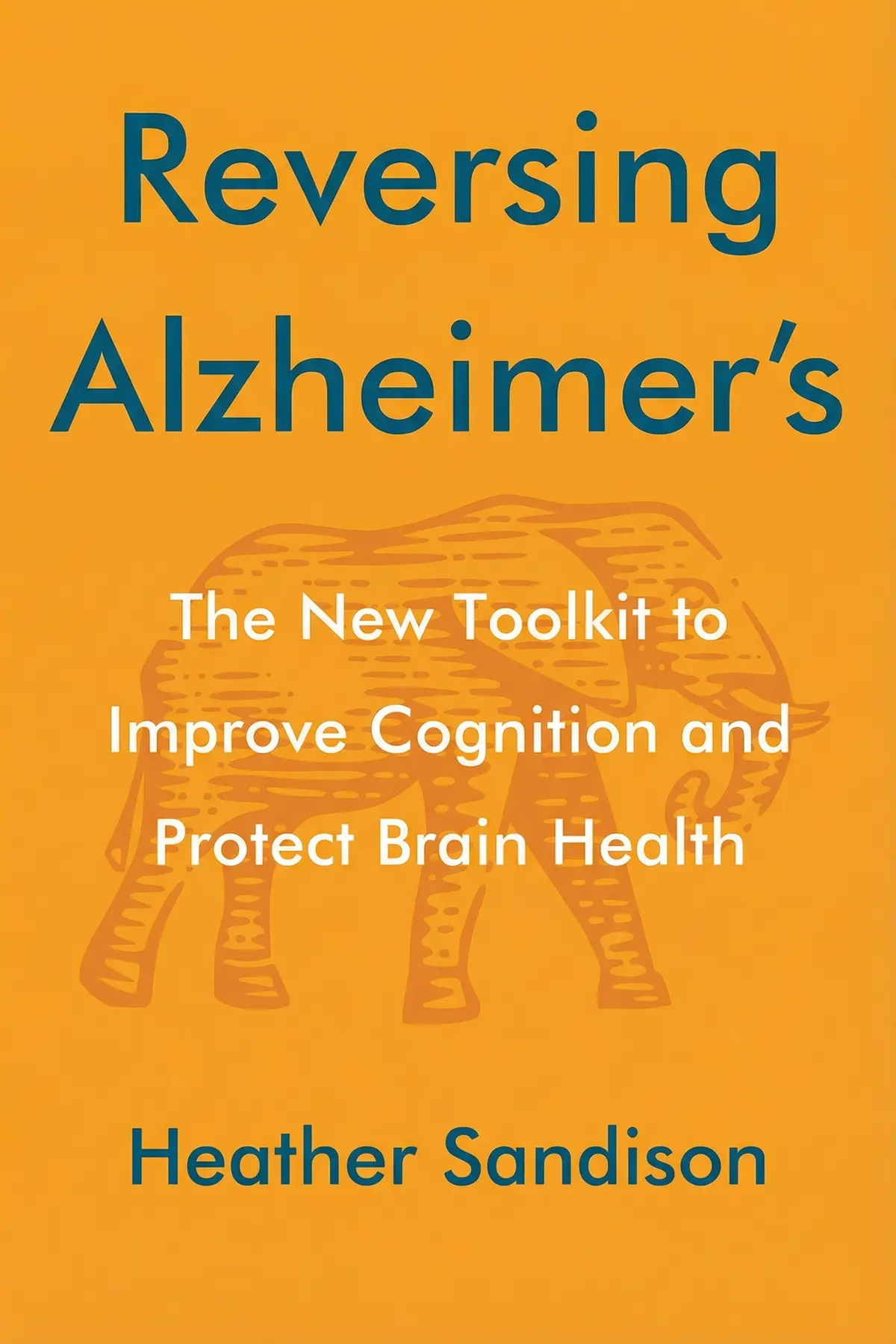
Table of Content
1. Introduction
1 min 03 sec
If someone you love is losing their memory, or you have started to worry about your own, the usual message is that nothing can be done. Heather Sandison disagrees, and her opening fact is striking: almost everyone carries the plaques and tangles long blamed for Alzheimer’s, and only 2 percent of people have none at all.
In Reversing Alzheimer’s, the naturopathic doctor argues that the disease is driven by many causes at once, from toxins and poor food to stress, infections and broken sleep. Many of those causes sit within reach. Her central claim is that a brain supported on many fronts, through daily routine, movement, food and the home itself, does better than a brain waiting for one drug.
What follows is her toolkit in usable form: the eight tools, the weekly exercise targets, the eating plan and the room-by-room changes, along with ways for caregivers to make each one feel less like a chore.
2. Find the risk factors you can actually change
2 min 09 sec
Nearly every adult brain carries the deposits long blamed for Alzheimer’s, which makes decades of drug research look aimed at the wrong target. Sandison shifts attention to causes much closer to home, and many of them are yours to change.
3. Make your mornings and evenings protect your brain
2 min 03 sec
Finding time for brain health feels impossible when every day is already packed. Sandison’s starting point is two moments you repeat daily anyway, and the small changes that turn them into steady support for memory.
4. A week where one activity counts twice
1 min 45 sec
Thinking, creating, moving and connecting can look like four extra jobs on a crowded calendar. A single afternoon outing shows how they can collapse into one, and why caregivers should plan for their own needs too.
5. Move your body to grow a sharper memory
2 min 10 sec
Exercise is usually sold as a way to lose weight. Sandison sees it reaching straight into the part of the brain that handles memory, and she gives exact weekly targets plus an odd little trick involving counting.
6. Feed your brain the fuel it prefers
2 min 15 sec
A man named Dean could not recall his grandchildren’s names, until something changed in his kitchen. Sandison explains the eating plan behind it, why she would not keep it forever, and what makes the first days hard.
7. A home that works for your brain
1 min 56 sec
Your pans, your water, your bedroom temperature and even where the television sits all affect the brain, in Sandison’s view. She moves through the house room by room and shows where the easiest wins are hiding.
8. Conclusion
1 min 18 sec
Reversing Alzheimer’s asks the listener to give up one hope and take on another. The hope it drops is the single drug that will one day make the problem disappear. The hope it offers is less dramatic and more within reach: a brain that responds to how it is fed, moved, rested and housed. Sandison builds that case on the plaques almost everyone carries and on the dozen risk factors tied to about 40 percent of dementia cases. If the disease has many roots, the response needs many branches, and each one added supports the others.
That turns an overwhelming diagnosis into a series of ordinary decisions. Tonight, the lights can go down at the same hour as yesterday. Tomorrow’s walk can include counting backward from 100, or a friend, or both. When a plastic container wears out, glass can replace it, and a talk with a doctor can come before any move toward keto. For caregivers, the same choices come with permission to ask for help and to forgive both people for the imperfect days.
In Sandison’s telling, Dean found his grandchildren’s names again after six weeks of different meals, with no miracle drug involved.
About this book
What is this book about?
A diagnosis of Alzheimer's still feels like a final verdict, and most hope depends on a medication that has yet to appear, even after many years of study and billions of dollars spent. Naturopathic doctor Heather Sandison argues that the search went wrong from the start. The plaques and tangles researchers targeted show up in almost everyone. The real drivers, in her account, are many: toxins, poor food, chronic stress, sleep apnea, infections and hormone problems. Many of those drivers can be changed. Her response is a toolkit of eight tools that work together, from a high-fat, low-carb diet and regular exercise to restorative sleep, social connection, self-care and a calm, low-toxin home. She shows how to fit them into the morning and evening routines people already keep. She sets clear weekly exercise targets, explains how and for how long to follow a ketogenic plan, and goes through the home room by room. Readers worried about their own memory, caregivers and health professionals get concrete steps they can begin this week. They also get advice for making each step gentler and more enjoyable for someone already in decline.
Book Information
Who it's for
Noticing memory slips
Adults noticing memory slips who want steps they can start before or after a diagnosis.
Caring for family
Family caregivers looking after a parent or partner with cognitive decline.
Practitioners seeking lifestyle plans
Health practitioners seeking a lifestyle-based plan to discuss with patients worried about dementia.
About the Author
Heather Sandison
Heather Sandison is a naturopathic doctor who has spent her career caring for people affected by dementia. Her multimodal approach reaches across clinical care, residential care, research and education. She founded Solcere Health Clinic and Marama, a residential memory care home whose goal is helping people with cognitive decline move back to living on their own.
Ratings & Reviews
Ratings at a glance

What people think
Listeners find this book highly useful for its clear explanations and hands-on advice, with one listener mentioning how it translates complicated science into doable tasks. It provides a well-rounded method for tackling memory issues, detailing specific steps to improve brain function while offering meal suggestions and recipes. Listeners also value its encouraging perspective, which is bolstered by authentic success stories, and one listener notes its success in deconstructing essential lifestyle modifications.
Top reviews
Isabelle
After watching my mother struggle for years, I was desperate for anything that offered more than just 'managing' the decline. Dr. Sandison’s book feels like a lifeline because it treats Alzheimer’s as a puzzle with many pieces rather than a single, hopeless dead end. I loved how she broke everything down into eight clear pillars, especially the focus on nutrient-dense, high-fat diets. To be fair, switching to a ketogenic lifestyle isn't easy, but the success stories included gave me the motivation to try. The recipes at the back, like the Zoodle Shrimp, are actually delicious and don't feel like 'diet' food at all. It’s a hopeful, well-researched guide that makes you feel empowered rather than defeated. If you are dealing with a diagnosis or even just 'senior moments,' this is the toolkit you need to start reclaiming your brain health right now.
Show moreRatchada
Sandison has essentially created a user-friendly field guide for anyone terrified of cognitive decline. I’ve read a lot on this topic, and what sets this book apart is the emphasis on the caregiver's own health. It was a total eye-opener to learn that caregivers are at a significantly higher risk for Alzheimer's themselves due to the sheer stress of the job. The toolkit provides specific communication strategies to reduce anxiety for the patient, which has already helped my family navigate some difficult evenings. Not gonna lie, the lifestyle changes are intense, but the book does a great job of encouraging progress over perfection. I particularly appreciated the links to functional medicine resources and the focus on things like hearing loss and hypertension. This isn't just a book you read once; it’s a manual you keep on the nightstand to reference daily.
Show moreSiraporn
The Zoodle Shrimp recipe alone was worth the price of admission, but the real value is in the mindset shift this book provides. For too long, we’ve been told that Alzheimer’s is just a matter of bad luck or genetics. Sandison proves that we have much more control than we think. I loved the focus on 'metabolic flexibility' and the clear explanation of how environmental factors like air quality and chronic stress impact our neurons. The toolkit approach is brilliant because it allows you to pick one or two things to work on at a time rather than trying to overhaul your entire life overnight. I’ve already started the dual-task training exercises and feel sharper already. It’s an inspiring, research-backed, and deeply practical book that I’ve already recommended to several friends who are starting to worry about their own 'senior moments'.
Show moreCaleb
Finally, a book that doesn't treat Alzheimer's like a death sentence but rather a metabolic puzzle to be solved. I first heard about Dr. Sandison through her work with the Bredesen protocol, and this book feels like the next evolution of that approach. It’s packed with resources, from online cognitive assessments to links for finding functional medicine providers. What I appreciated most was the focus on the 'why' behind the recommendations—understanding how beta-amyloid plaques are actually a response to various insults to the brain made the lifestyle changes much easier to commit to. Not gonna lie, the keto transition was rough for the first week, but the mental clarity I've gained is undeniable. This is a must-read for anyone who wants to take a proactive approach to their long-term brain health and vitality.
Show moreJoe
Can we actually turn back the clock on dementia? This book argues a resounding 'yes,' and while I’m naturally a bit skeptical of such big claims, the logic here is hard to ignore. Sandison builds on the work of Dr. Dale Bredesen but makes it significantly more accessible for the average person who doesn't have a medical degree. Personally, I found the chapter on environmental toxins and 'detoxing' the home a bit overwhelming—it’s expensive to swap out every plastic container and filter all your air. However, the sections on sleep hygiene and dual-task exercise were incredibly practical and easy to implement immediately. It’s a holistic approach that covers everything from biological dentists to stress management. It’s a lot of information to digest, but the 'one thing to change' summaries at the end of each section help keep you from feeling totally buried by the requirements.
Show moreSirinat
Picked this up because the '8 pillars' approach sounded more manageable than other complex medical texts I’ve tried to tackle. Sandison does a great job of distilling complex research into actionable steps that anyone can follow, regardless of their starting point. The focus on a high-fat, low-carb diet was particularly enlightening, especially the explanation of how ketones provide better fuel for a struggling brain. In my experience, most doctors just give you a prescription and tell you to come back in six months, so having a list of things I can actually *do*—like optimizing my sleep sanctuary or trying new brain games—felt very empowering. My only real gripe is that some of the clinical anecdotes felt a little too perfect, but the underlying message of hope is something the medical community desperately needs more of right now.
Show moreMoo
As someone currently navigating the care of an aging parent, I found the specific advice for caregivers to be the most touching and necessary part of the toolkit. This book doesn't just focus on the patient; it recognizes that Alzheimer's is a family disease. The sections on how to simplify daily routines and use 'optimal communication' to reduce confusion were life-changing for us. We've started incorporating the morning rituals Sandison suggests, and I've noticed a real difference in my father's mood and clarity during the day. Frankly, some of the stuff about 'biological dentists' and mold testing feels a bit 'woo-woo' for my taste, but the core advice on nutrition and movement is solid. It’s a well-written guide that provides a much-needed roadmap through a very dark and confusing time. Definitely worth a read for the practical tips alone.
Show moreAmy
While some of the advice regarding 'detoxing' your home felt a bit fringe, the core message about metabolic flexibility and the ketogenic diet is backed by solid reasoning. This book provides a comprehensive toolkit for anyone looking to protect their cognitive function as they age. I especially liked the chapter on exercise, which goes beyond just 'walking' and explains why strength training and coordination are so vital for the brain. The writing is clear and the tone is generally very encouraging, though it does get a bit 'salesy' when she mentions her assisted living center. In my experience, the most valuable part was the 12 modifiable risk factors list—it gave me a very clear checklist of things to talk to my own doctor about. It’s a great companion to the Bredesen books and offers a more hands-on, practical way to implement those high-level concepts.
Show moreRafael
The truth is, I struggled with the tone of this book at times. There is a lot of repetition regarding the author's specific clinic and her proprietary supplements, which made some chapters feel more like a long-form marketing brochure than an educational text. I’m also not entirely sold on the science behind 'pooping your toxins daily' as a primary medical strategy for cognitive repair. That being said, it isn't a bad book. There is plenty of solid, foundational advice about the importance of metabolic flexibility and social connection. The exercise recommendations, particularly combining physical movement with mental challenges, were new to me and quite interesting. If you can filter out the constant plugs for her business, there is a decent skeleton of a health plan here, but I’d probably recommend Bredesen’s original work for a deeper dive into the actual science.
Show moreSarocha
Look, I really wanted to like this book, but the constant product placement for the author's own supplements and clinic was a massive turn-off. Every few pages felt like an advertisement, which makes me question the objectivity of the advice being given. Furthermore, the writing is incredibly repetitive; I felt like I was reading the same three paragraphs about the ketogenic diet over and over again. While I agree that lifestyle changes like exercise and better sleep are important for everyone, the claim that these things 'reverse' late-stage Alzheimer's feels a bit irresponsible without more rigorous, peer-reviewed data. To be frank, it gives people a lot of false hope for a very expensive price tag once you factor in all the recommended tests and high-end supplements. There are better, more scientific books on brain health out there that don't feel like they're trying to sell you something on every page.
Show moreQuestions about this book
What is the main idea of Reversing Alzheimer's?
Heather Sandison argues that Alzheimer’s does not come from a single cause, so a single drug is unlikely to fix it. Almost everyone has the plaques and tangles researchers targeted, and only 2 percent of people have none. She points instead to many drivers, including toxins, nutrition, stress, sleep apnea, infections and hormones, and to research tying 12 modifiable risk factors to about 40 percent of dementia cases. Her answer is a set of tools used together.
What are the eight tools in Sandison's Alzheimer's toolkit?
The eight are a nutrient-dense diet high in fat and low in carbohydrates, regular exercise, activities that challenge the brain, a supportive daily routine, a calm and non-toxic home, restorative sleep, social connection and self-care. Sandison says nobody needs to adopt all of them at once. Any step helps, and because the tools reinforce one another, each additional one increases the potential benefit.
How long should you follow a ketogenic diet for brain health?
For people trying to reverse cognitive decline, Sandison recommends three to six months of strict ketosis, followed by cycling in and out of it. The aim is metabolic flexibility, meaning the body can move easily between burning glucose and burning ketones. Early fatigue or cravings usually fade within days, she says, helped by enough water and minerals. She also advises consulting a healthcare provider first, especially for anyone with an existing health condition.
How much exercise does Heather Sandison recommend for brain health?
She suggests 150 to 200 minutes of aerobic activity a week, such as brisk walking or jogging, plus at least two strength sessions. She also recommends dual-task training, which adds a mental challenge to movement, like counting backward from 100 during a brisk walk. Beginners can start with daily walks and build up. In her account, exercise boosts blood flow to the brain and can enlarge the hippocampus.
How can caregivers use the ideas in Reversing Alzheimer's?
Sandison advises making each change enjoyable for the person receiving care. Movement can be a dance class, balloon volleyball or an outing to see a favorite tree. A new diet goes down better when the talk is about tasty foods and meals are cooked together. At home, hiding stove knobs and sharp knives adds safety. She also urges caregivers to treat themselves with compassion and to seek help from family, friends or professionals.
Readers also enjoyed






AUDIO SUMMARY AVAILABLE
Listen to Reversing Alzheimer’s in 15 minutes
Get the key ideas from Reversing Alzheimer’s by Heather Sandison, plus 5,000+ more nonfiction titles.
- 5,000+ titles
- Listen as much as you want
- 7-day free trial
- Cancel anytime









