
12 min 44 sec
Available in: English
 ไทย
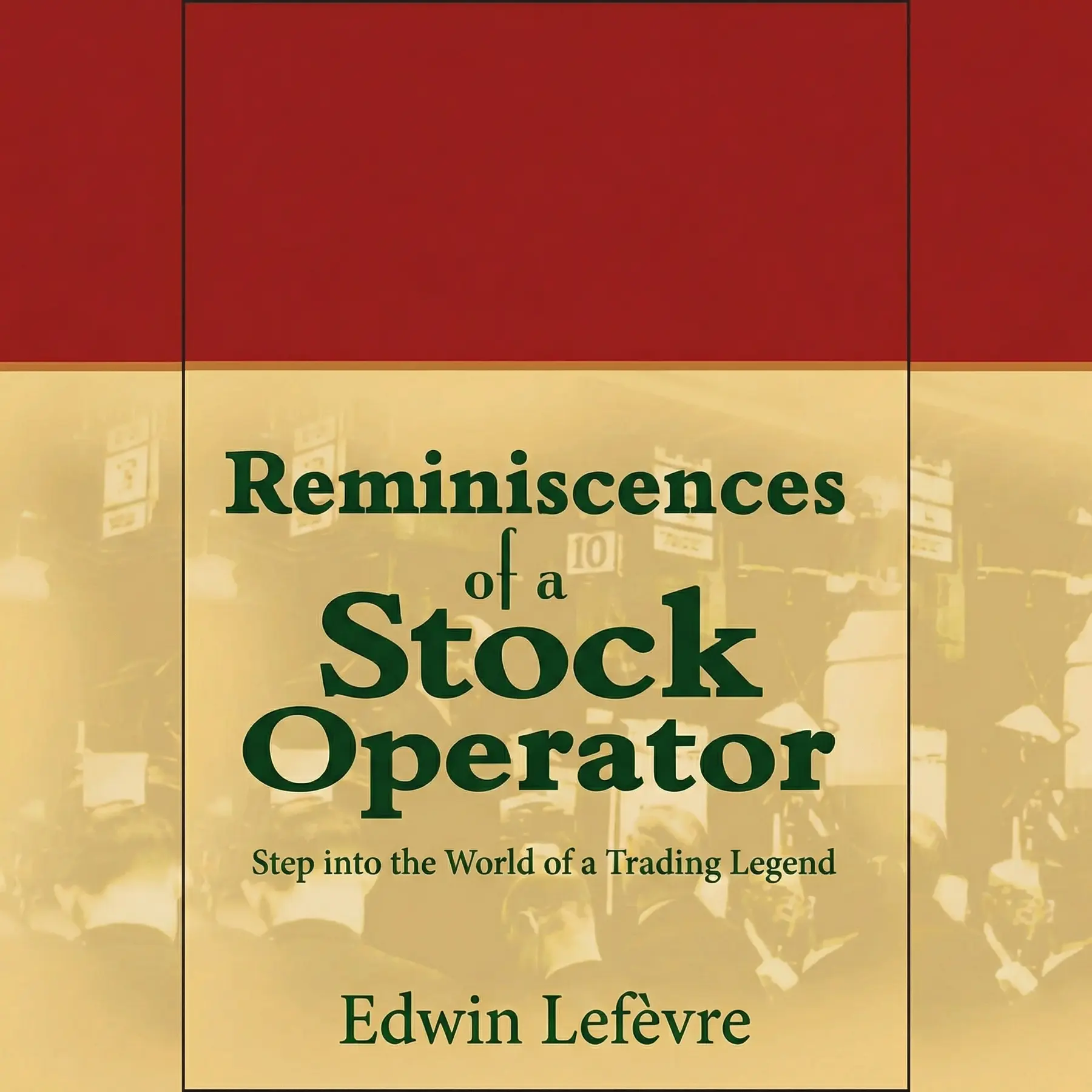
EnglishไทยReminiscences of a Stock Operator
Follows a fictional trader from small betting parlors to the panic of 1907. It shows why trading gains come from your own analysis, patience and emotional control, and why tips and personal loyalties tend to cost money.
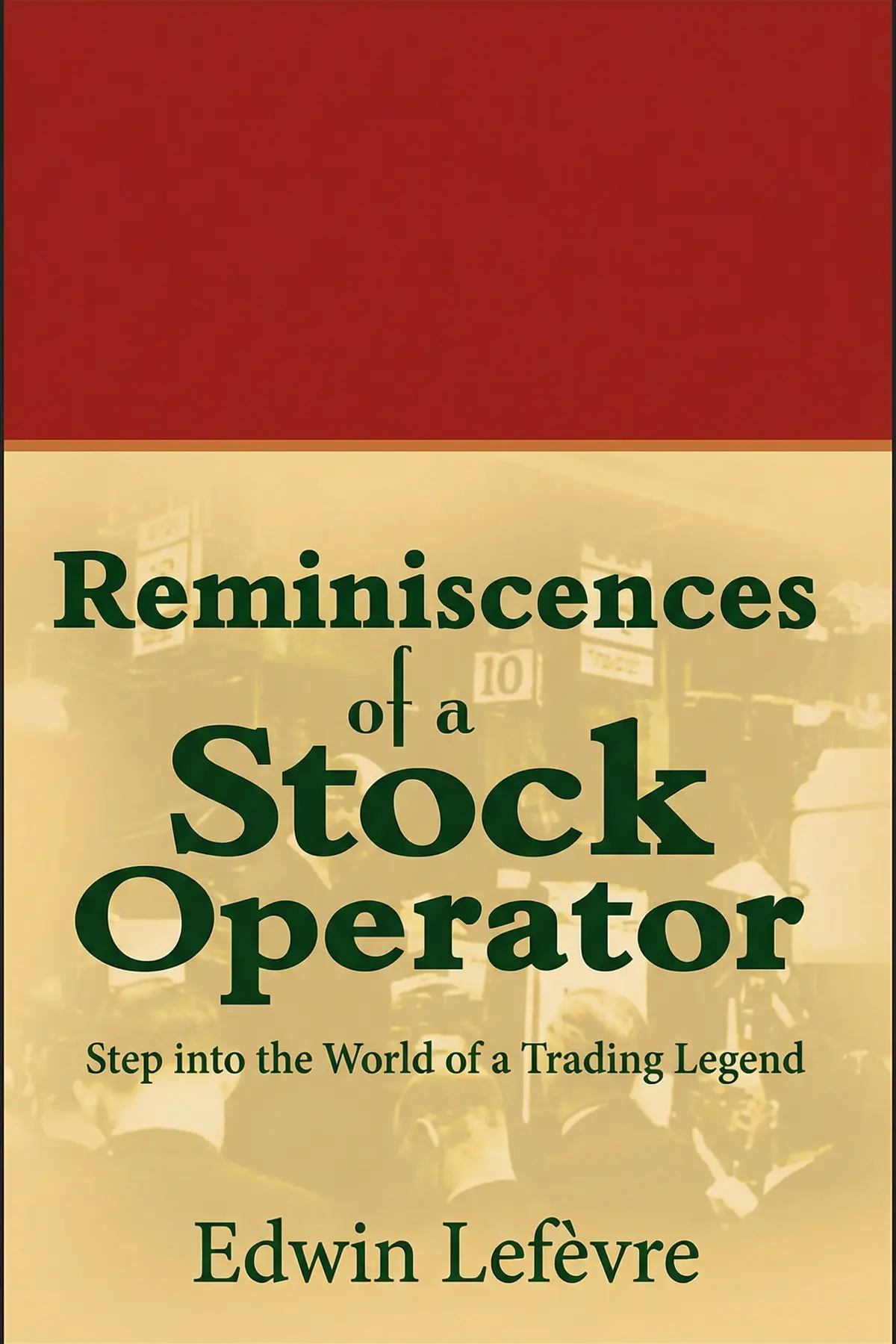
Table of Content
1. Introduction
1 min 02 sec
In Livingston’s view, acting on someone else’s opinion or on emotion, instead of on what prices are actually doing, could lead to costly mistakes. In Reminiscences of a Stock Operator, journalist and former stockbroker Edwin Lefèvre tells that lesson through Larry Livingston, a fictional trader widely believed to be modeled on the famous speculator Jesse Livermore. One of Livingston’s biggest wins came when he ignored the warnings of others and sold short before a market break, earning more than a million dollars.
The pattern behind his story is simple to state and hard to live by. Livingston made his fortunes when he trusted his own reading of the broad market, and he lost them whenever tips, loyalty or overconfidence took control. His path runs from small betting parlors to the panic of 1907, and each stage adds a rule. By the end you will have a short set of tests for any decision made under pressure, in a market or anywhere else.
2. Spot the trend without trusting your ego
1 min 36 sec
From a young age, he showed a gift for reading prices and started winning bets in bustling, chaotic betting parlors. The very talent that made him money there was about to become a liability in a much bigger arena.
3. Profit from the big moves, not the wiggles
1 min 40 sec
Watching every small price swing feels like being in control. On the New York Stock Exchange, Livingston found that this approach would not bring him success, and he had to learn to anticipate major market moves with patience and discipline.
4. Trust your own analysis instead of a friend's tip
1 min 41 sec
The same railroad stock, the same trader, two very different results. What separated a quarter-million-dollar win from an expensive mistake had nothing to do with the stock and everything to do with whose voice he listened to.
5. Turn your own analysis into lasting conviction
1 min 52 sec
Livingston saw a crash coming and bet heavily on it, ignoring everyone who said he was wrong. Then, at the height of the panic, he chose to hold back instead of selling hard enough to deepen it.
6. Keep loyalty out of your trading decisions
1 min 49 sec
A favor for a powerful firm looked harmless, even flattering. It ended with a railroad stock, a senior partner’s confident advice and losses that took Livingston years to recover from.
7. Survive lean markets with your capital intact
1 min 49 sec
Dry spells, sudden crashes and schemes to push prices up all test a trader’s patience. Livingston’s hardest-won advice concerns what to do when there seems to be nothing worth doing.
8. Conclusion
1 min 15 sec
Livingston’s story is a long argument against borrowed judgment. The habit took him from the bucket shops all the way to the New York Stock Exchange, and the pattern held throughout. When he read the broad market himself and held his position, he made $250,000 on Union Pacific and more than a million in the 1906 break. When he let a friend’s warning outrank his analysis, he gave up a bigger profit, and when he deferred to a senior partner’s advice, he lost money he then spent years earning back. Skill, patience and timing all mattered, but whose voice was in charge mattered most.
What the book supports is a modest daily discipline. Do your own analysis before you hear anyone else’s view, so that advice arrives as information and not instruction. Trade with the broad trend until clear evidence says it has turned. Stay out of debt, protect your capital, and when you are wrong, fix it quickly instead of defending it.
On the worst day of 1907, Livingston could have sold harder and made the panic worse. He held back. The trader who could control himself in that moment was the one nobody could tell what to do anymore.
About this book
What is this book about?
Many people who trade or invest act on a friend's tip, a boss's opinion or their own excitement. Edwin Lefèvre's classic shows what that habit costs, through the story of Larry Livingston, a trader widely believed to be modeled on the famous speculator Jesse Livermore. Livingston starts in bucket shops, where he learns to spot trends and pays for early overconfidence. He moves to the New York Stock Exchange, learns to aim for the big moves and wait, and wins large sums on Union Pacific and in the market breaks of 1906 and 1907. He also pays a price when others outrank his own analysis: a friend's warning costs him a bigger gain, and a senior partner's advice costs him heavily. The book turns these episodes into lasting rules: follow the line of least resistance, wait for clear signals, avoid trading on credit, protect your capital, distrust tips and keep loyalty out of decisions. Readers get a set of tests for any choice made under pressure, in markets or elsewhere.
Book Information
Who it's for
Beginners acting on tips
New traders and investors who tend to act on tips, forums or a friend's confident opinion.
Professionals under pressure
Professionals who make high-stakes calls under pressure from bosses, partners or clients.
Into Wall Street history
Readers curious about early Wall Street, from bucket shops to the panic of 1907.
About the Author
Edwin Lefèvre
Edwin Lefèvre (1871 to 1943) was born in Colón, in what is now Panama, and moved to the United States as a boy. He trained as a mining engineer at Lehigh University but became a journalist at nineteen, later also working as a stockbroker and writing on finance for the New York Sun. He served as a US ambassador to several countries, including Italy, Spain and France, under President William Howard Taft. After 1913 he returned to Vermont and wrote novels and magazine stories, including for The Saturday Evening Post.
Ratings & Reviews
Ratings at a glance
What people think
Listeners consider this work a famous essential read that offers a deep look into the psyche of investors while explaining the fundamentals of stock market trading and investment. Furthermore, the text is packed with many tips, and one listener points out how applicable it remains to current market conditions. They also enjoy the engaging narrative, historical details, and overall fun of the book, which one listener characterizes as having "never a dull moment."
Top reviews
Selin
Rarely does a book written a century ago feel so immediately applicable to my current portfolio. While the tech has moved from ticker tape to high-frequency algorithms, the underlying human engine remains fueled by greed and panic. Lefèvre perfectly captures the internal monologue of a man obsessed with the tape, making Larry Livingston feel like a modern-day trader trapped in a vintage suit. The truth is, the market doesn't change because people don't change. I found the segments on "sitting tight" to be more valuable than any technical indicator I've learned recently. It’s a compelling narrative that functions as both a history lesson and a psychological mirror. Every serious investor needs this on their shelf.
Show moreLandon
The pace of this fictionalized biography is absolutely relentless. From the moment young Livingston starts posting numbers as a kid, you are sucked into the high-stakes world of Wall Street's "Wild West" era. I've been searching for a book that explains investor psychology without using academic jargon, and this is it. The description of how fear keeps you from profit while hope keeps you in a losing trade is a masterclass in self-awareness. It’s not just about stocks; it’s about the discipline required to master your own impulses under pressure. Truly a must-read for anyone who has ever felt their heart race when a position goes red.
Show moreMint
There is a reason professional traders keep a dog-eared copy of this on their nightstand. Not gonna lie, I expected something much drier, but the narrative voice is incredibly engaging and clear. The central takeaway—that there is only one side to the market, the "right side"—should be tattooed on every investor's forearm. Lefèvre manages to distill complex market movements into relatable human dramas. I found the chapter on how he broke a commodity corner particularly gripping. It’s a brilliant study of how the unusual always happens, and how the successful operator must provide against his own human weaknesses. Best investment book I’ve read this year.
Show moreCharles
Edwin Lefèvre has a way of turning a dry series of trades into a high-stakes psychological thriller. I was constantly impressed by the protagonist’s ability to analyze his own failures without making excuses. He calls his losses his "tuition," which is a mindset every beginner needs to adopt. The writing style is punchy and direct, avoiding the fluff found in modern finance books. It feels like you’re sitting in a bar with a veteran trader who is finally telling you the truth about how the game works. I finished it in two sittings and immediately started highlighting passages for my own trading notes. Five stars for the entertainment value alone.
Show moreSudarat
After hearing about Livermore for years, I finally dipped into this 'trader's bible' to see if the hype was real. To be fair, the book is less of a tactical guide and more of a moral fable about the hazards of total obsession. The story is engrossing, especially the sections where he manipulates the market or gets cornered by his own hubris. However, knowing the tragic end of the real Jesse Livermore casts a dark shadow over the "brilliance" of his trades. It makes you realize that being right about the market isn't the same as winning at life. Still, the historical facts and the sheer atmosphere of the era make it a classic worth owning.
Show morePatcharaporn
Walking through the doors of a 1920s brokerage via Lefèvre’s prose is a sensory experience I didn't expect. You can almost smell the cigar smoke and hear the frantic clicking of the ticker tape machines as the characters chase their fortunes. The book provides a solid understanding of how market manipulation worked before the SEC came along to clean things up. I especially appreciated the nuanced look at how Livingston learned from his "tuition fees"—his massive losses. Some parts felt a bit repetitive, particularly the long-winded commodity trades, but the overall entertainment value remains high. It’s a fascinating glimpse into a vanished world that still somehow mirrors our own.
Show morePranee
Don't let the dated jargon about bucket shops and telegrams fool you. The core principles of human psychology discussed here are as relevant to a crypto trader today as they were to a cotton speculator in 1910. The truth is, the technology changes but the greed stays exactly the same. I liked how the book focuses almost exclusively on the trading floor, barely mentioning the protagonist's personal life until it impacts his margin. My only gripe is that it glosses over some of the more unethical aspects of his "operations" as if they were just part of the game. It’s a gritty, honest look at what it takes to survive in a zero-sum game.
Show moreRotjanee
Is it possible to enjoy a book about a man who loses his fortune multiple times? Surprisingly, yes. This memoir is a rollercoaster ride through the pre-SEC markets where the fixes were in and the risks were astronomical. Personally, I found the early chapters about the "boy plunger" in the bucket shops to be the most entertaining part of the whole journey. It’s a refreshing tour of a world where news was routinely withheld and rumors were the primary currency. Even though I’ll never trade on margin the way he did, the lessons on patience and observation were invaluable. It’s a classic for a very good reason, despite the tragic historical reality.
Show moreA
Maybe it's a classic, but I struggled with the sheer amount of repetition regarding 1900s cotton and wheat trades. Frankly, 300 pages of "I bought this, I sold that" can become a bit of a slog if you aren't a die-hard market historian. The unregulated "bucket shops" described early on are fascinating, yet the lack of modern context makes it hard to translate some of these maneuvers into 21st-century strategies. It's essentially an endless rant on speculation during a lawless era of finance. I respect the historical significance and the lessons on trader psychology, but the writing style feels a bit dated and dry for a casual reader looking for actionable advice.
Show moreKomsan
Call me a conservative investor, but I found this account of reckless speculation more terrifying than educational. It is essentially a 300-page confession of a man who treated the economy like a casino, fluctuating between extreme wealth and total bankruptcy. While the prose is sharp, the advice is dangerous for anyone who isn't a professional gambler. Look, if you want to learn how to lose your life savings on a "tip" or a "hunch," this is your roadmap. For the rest of us looking for financial literacy, it serves better as a cautionary tale than a manual. It's a bit of a 'hater' take, but I don't see the value for the modern index-fund crowd.
Show moreQuestions about this book
What is Reminiscences of a Stock Operator about?
Edwin Lefèvre tells the career of Larry Livingston, a fictional trader widely believed to be based on Jesse Livermore. Livingston starts in bucket shops, moves to the New York Stock Exchange and wins and loses fortunes in the early 1900s. The central lesson is that his gains came from trusting his own reading of broad market conditions, while his losses came when tips, loyalty or overconfidence overrode that judgment.
What is the line of least resistance in Reminiscences of a Stock Operator?
It is Livingston’s term for the direction in which prices move most easily, judged by crowd psychology and technical factors together. He advised traders not to fight the prevailing trend, to wait for a clear signal of a reversal before acting on one, and to base decisions on market facts rather than opinions, however experienced they were.
Why does Livingston warn against stock tips?
In his experience, the price swings that follow tips more often bring losses than gains. He learned this personally: after making $250,000 by ignoring warnings and shorting Union Pacific in 1906, he later dropped a bullish position in the same stock because a friend warned him forcefully, and missed a bigger profit. His remedy was building his own system of analysis.
What are the main trading lessons in the book?
Livingston’s lessons include aiming for major market moves instead of small swings, holding a position patiently once you have taken it, avoiding trading on credit, taking profits regularly, protecting your capital and never fighting the overall trend. He also warns against cornering stocks, against letting loyalty shape decisions, as in his costly Chesapeake and Atlantic episode, and against defending mistakes instead of fixing them quickly.
Who should read Reminiscences of a Stock Operator?
It suits beginning traders and investors who want to understand the psychology behind winning and losing, especially those tempted to follow tips. Experienced traders will recognize the pressures it describes, from overconfidence to peer pressure. Its lessons on independent judgment also apply to anyone making high-stakes decisions while others push their own opinions.
Readers also enjoyed




AUDIO SUMMARY AVAILABLE
Listen to Reminiscences of a Stock Operator in 15 minutes
Get the key ideas from Reminiscences of a Stock Operator by Edwin Lefèvre, plus 5,000+ more nonfiction titles.
- 5,000+ titles
- Listen as much as you want
- 7-day free trial
- Cancel anytime









