


12 min 31 sec
Available in: English
Relational Intelligence: The People Skills You Need for the Life of Purpose You Want
A faith-based guide to telling true friends from associates, rethinking relationships as people change, having the hard conversation kindly, setting boundaries that hold and becoming a friend worth trusting.
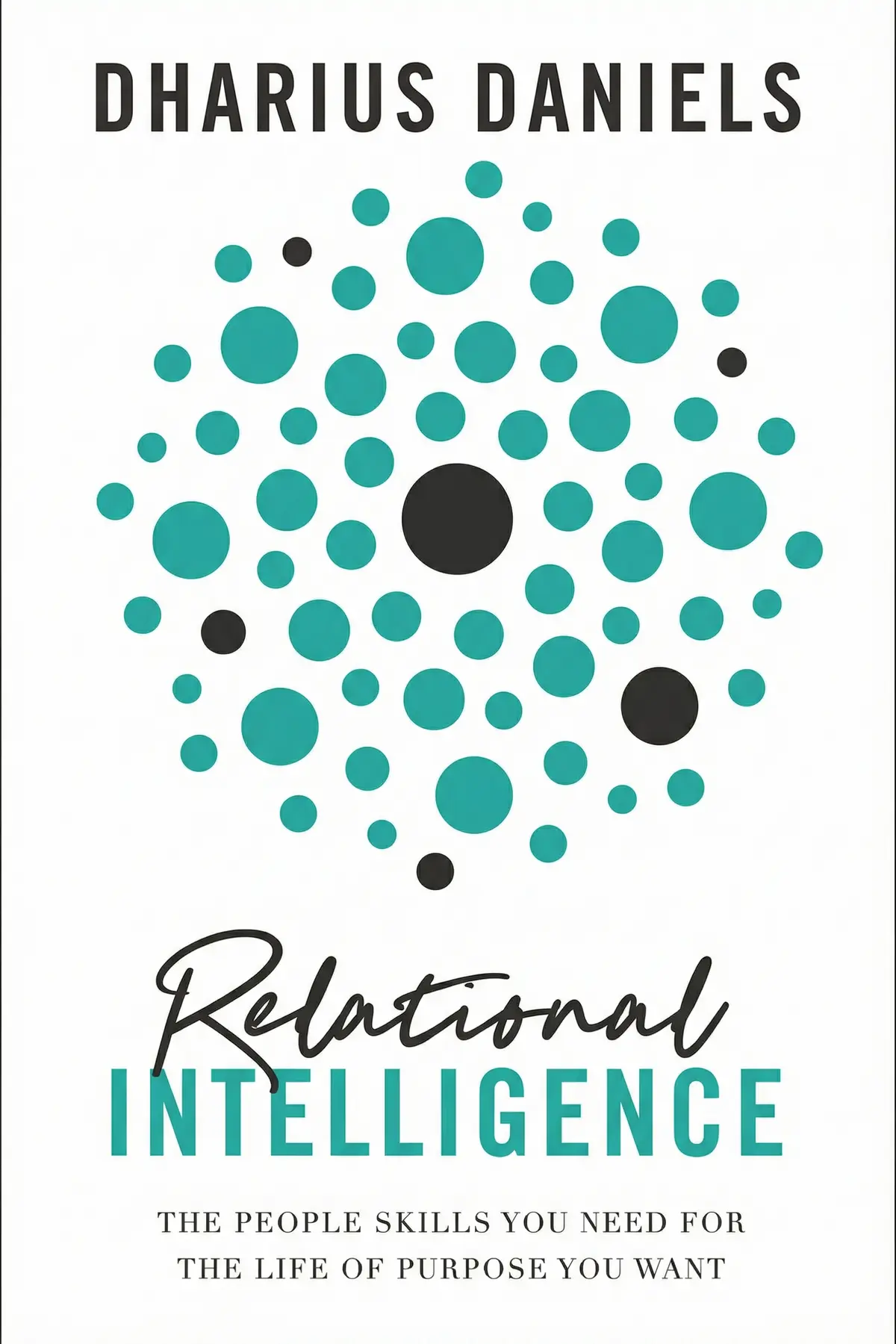
Table of Content
1. Introduction
1 min 04 sec
Most people learn the cost of misplaced trust the hard way: a secret told to the wrong person, or a friendship that turns out to run in only one direction. In Relational Intelligence, pastor Dharius Daniels, who holds a doctorate in organizational leadership, argues that much of this hurt can be avoided. The people around us play very different roles, and only a few of them belong close to the center. He calls the skill of reading those roles relational intelligence: knowing where each person stands in your life and building connections that match.
Drawing on biblical stories and on the case of a man named James, Daniels makes a simple case. Sort people honestly, check again as they change, adjust with kindness and firm boundaries, and expect from yourself what you expect from others. Follow his method and you get a clear way to decide who hears your confidences, a script for the hardest conversation in any friendship, and a picture of the friend you are trying to become.
2. Give your trust to friends, not associates
2 min 09 sec
Someone can laugh with you every day and still not be safe to confide in. Daniels offers a two-group test for deciding who gets the private version of you, and he warns about the person who passes for a friend.
3. Check where people stand as life changes
2 min 02 sec
A man close to his friend’s family and working in the same field slowly began to feel used. What he did next shows how to look at an old friendship honestly without turning it into a war.
4. Let your feelings show what each relationship needs
1 min 53 sec
Telling a close friend that they are no longer your closest confidant ranks among the hardest talks there is. Daniels suggests beginning somewhere unexpected, long before you open your mouth.
5. Boundaries that hold after the hard talk
1 min 58 sec
You said what you needed, kindly and clearly, and nothing changed. Daniels explains what to do in the days after, and how an ancient king’s envy shows when a relationship has gone too far to repair.
6. Become the friend you hope to find
2 min 07 sec
Loyalty can go wrong when it covers up a friend’s mistake instead of telling the truth. Two biblical stories show the difference, and one of them ends somewhere that nobody involved could have predicted.
7. Conclusion
1 min 18 sec
Relational intelligence, as Daniels describes it, is honesty pointed in two directions. Looking outward, it means seeing each person for the role they can actually play, so trust goes where it has been earned and nobody is asked to carry more than their place allows. Looking inward, it means knowing what you feel, what you need and what kind of friend you are being. Each depends on the other. Sorting people without kindness turns cold, and kindness without sorting leaves you exposed to the associate who looked like a friend.
Begin with a short list of the people you confide in, and check each name against what they have actually shown you over time. When a relationship unsettles you, talk it through with someone outside it, as James did with his mentor. If a hard conversation is needed, lead with your own needs and follow it with a boundary you can keep. Then expect of yourself the support, honesty and encouragement you hope others will give you, the way Ruth did when she stayed beside Naomi.
The deepest point in the book is the simplest one. People need close, rewarding relationships, because no one was made to go through life alone.
About this book
What is this book about?
Some relationships give you strength and some leave you tired and let down, and often you only learn which is which after your trust has been misplaced. Pastor Dharius Daniels says you can learn to read people better. He calls that skill relational intelligence: knowing where each person stands in your life and building connections that fit those places. His method starts with a simple split between friends, the honest and dependable few, and associates, everyone else you know. From there he shows how to look at relationships again as lives change, how to use emotional intelligence to work out what you need, how to tell someone kindly that your relationship is changing, and when a harmful relationship has to end. He draws on the case of a man named James, who came to feel exploited by a close friend, on research about emotions, and on biblical figures such as Jesus and his circles of disciples, Saul and David, and Ruth. The book ends by turning the test on the reader. It describes three roles a good friend tries to fill and gives readers a clear standard for the friend they want to become.
Book Information
Who it's for
Hurt by misplaced trust
People who keep getting hurt by trusting the wrong friends and want a clear way to decide who belongs close.
Facing a changed friendship
Anyone facing a friendship that has changed and dreading the conversation it needs.
Christians wanting biblical models
Christian readers who want biblical models for loyalty, boundaries and friendship.
About the Author
Dharius Daniels
Dharius Daniels is a pastor, speaker and author who has led churches and holds a PhD in Organizational Leadership from Regent University. Pastoral work and leadership study both come down to how people relate to each other, and that is the subject of this book. His other best-selling books include Your Purpose is Calling and The Misfits Manifesto.
Ratings & Reviews
Ratings at a glance
What people think
Listeners describe this work as an essential, accessible, and highly practical guide, with one listener remarking on how it simplifies complex ideas using straightforward language. They also value the scriptural basis of the content, noting that the author frequently cites the Bible, which makes it an excellent resource for a Christian audience. Furthermore, the material offers a framework for establishing healthy bonds with others; listeners describe the impact as life-altering, with one listener explaining how it helped them shift their entire outlook on relationships.
Top reviews
Rotjanee
Relational Intelligence completely shifted my perspective on how I interact with people on a daily basis. It's a must-read if you feel like your social battery is constantly drained by the wrong people. I’ve never thought about my connections in terms of categories before, but seeing them as associates versus friends was life-changing for me. Dr. Daniels explains that while we are called to love everyone, we are not required to give everyone the same level of access to our lives. This practical advice, rooted in a strong biblical foundation, helped me stop feeling guilty about setting necessary boundaries. I found the writing style to be extremely accessible and the concepts were broken down into very comprehensible language. If you want to strengthen your connections while maintaining your own peace of mind, this is the perfect investment for your personal growth.
Show moreHazel
As a leader in my church, I desperately needed the tools Dr. Daniels provides here to help navigate complex social dynamics. For years, I struggled with setting healthy boundaries and often felt overwhelmed by the constant demands of my congregants. The concept of 'shaking the dust off' was a total game-changer for me, allowing me to let go of toxic interactions without feeling a crushing weight of spiritual failure. I especially appreciated how he utilized scripture to illustrate why we need to categorize our connections into different groups. This isn’t about being cold or elitist; it’s about being a good steward of your limited emotional energy. Honestly, this book gave me the permission I needed to stop treating every casual associate like a primary inner-circle friend. It is an essential read for anyone in ministry.
Show moreSurasit
The truth is, most of us are far too casual about who we let into our inner circles. Dr. Daniels provides a roadmap for being intentional about connections without sacrificing the call to love everyone unconditionally. I found the section on discernment particularly helpful because it teaches you how to evaluate a person’s role in your life based on where you are going, not just where you have been. You shouldn't be looking for new friendships when you're in a bad place, as you need people who fit your future, not your current struggle. This book is a great investment for any Christian reader seeking to refine their social interactions. It’s practical, easy to digest, and deeply rooted in biblical wisdom. I have highlighted so many pages that I’ll be referring back to for years to come.
Show moreAey
To be fair, I didn't expect a book about connections to be this convicting or this easy to understand. Dr. Daniels has a way of breaking down complex interpersonal concepts into language that just clicks for the average reader. I really connected with the part about two pastors applying for the same job and the betrayal that can occur in competitive environments. It was a sobering reminder that even within religious circles, we must be discerning and wise about who we trust. The integration of established concepts on boundaries was a nice touch that added a layer of weight to the spiritual advice. It is a life-changing read that helps you build healthy, sustainable connections with others while maintaining your peace. I’ll be recommending this to everyone in my small group this year.
Show moreSau
Finally got around to finishing this, and I can say it is definitely worth the hype for anyone wanting to improve their social IQ. The author’s use of scripture as a primary reference makes this an excellent resource for anyone who wants their personal growth to be aligned with their faith. I appreciated the distinction made between being a true friend and being an associate, especially in the era of social media where those lines get blurred constantly. It helped me realize that not everyone is worthy of my deepest investment of time and energy. We are called to love everyone, but we aren't called to be best friends with everyone. Grab a copy if you’re ready to stop being a chronic people pleaser and start being a better steward of your own life.
Show morePun
Defining the difference between an associate and a true friend was a major lightbulb moment for me while reading this. I used to think I had dozens of friends, but after applying the author’s criteria, I realized most of those were just casual social media interactions. The book is well-organized and very easy to read, though it does lean heavily into the author's religious background and pastoral experience. This didn't bother me, but it's something to be aware of if you're looking for a strictly secular psychology book. One of the most helpful sections was the part about communication when relationship dynamics change. We often make assumptions that people don't care about us anymore when, in reality, the nature of the relationship has just shifted. I wish there was a bit more clinical depth, but for a motivational guide, it’s quite solid.
Show moreJames
Ever wonder why certain people drain you while others give you life? This book addresses that exact question by helping you discern and distinguish the relationships you actually desire. I liked how the author quoted Henry Cloud on boundaries, as it added a lot of practical value to the spiritual advice being given. The chapter on defining your relationships helped me take a hard look at who is actually worthy of my investment of time. It’s not always easy to realize that some people are just 'assignments' rather than lifelong partners, but it is necessary for growth. My only minor complaint is that some sections feel a bit repetitive and focus more on the 'why' than the 'how.' However, the overall message is powerful and will certainly change how you view your social circle.
Show moreFilm
After hearing so many people talk about 'Relational Intelligence,' I finally picked it up to see if it lived up to the hype. It is a very good book on communication and interactions, specifically from a Christian perspective. The advice about having friends who bring joy into your life is basic, yet something many of us ignore until we see it in writing. I really enjoyed the way it breaks down the old concept of 'acquaintances' into something more practical like 'associates.' While most of the information isn't super complicated or revelatory, it is laid out in a way that makes it very easy to consider and apply. If you’ve previously read 'Emotional Intelligence' by Daniel Goleman, this acts as a nice spiritual companion piece to that work. It’s a fast read but contains plenty of food for thought.
Show moreWatchara
Look, we all have those relationships that feel like a heavy burden, but we often don't know how to step back without feeling a massive amount of guilt. This book offers a practical framework for creating healthy distances through the categorization of associates, assignments, and advisors. It’s more of a motivational 'you-should' book than a technical manual, but that tone works well for someone who needs an emotional push to make changes. I liked the advice about not making assumptions when relationship dynamics shift over time. Communication is key when you feel a friend is pulling away or if the nature of the bond is evolving. I’m giving it four stars because I wanted a bit more on the specific 'how-to' of the difficult conversations, but the core idea is excellent.
Show moreSam
While I appreciate the effort, this felt more like a collection of Sunday sermons than a rigorous psychological study of emotional intelligence. About 70% of the content is rooted in a specific religious perspective, which might be off-putting if you are looking for secular, science-backed advice. To be fair, Daniels is a pastor, so the biblical references are expected, but the methodology feels a bit basic and occasionally prejudiced. I found the analysis of relationships to be somewhat shallow compared to other works in the field. If you want a deep dive into attachment theory or clinical psychology, you might want to look elsewhere for your personal development journey. It serves well as a motivational text for church-goers, but it lacks the serious scientific depth I was hoping for in a book about intelligence.
Show moreQuestions about this book
What is relational intelligence according to Dharius Daniels?
Daniels defines relational intelligence as the skill of seeing where each person stands in your life and building connections that fit those places. In practice, that means sorting people into friends and associates, checking those places as people and circumstances change, adjusting relationships with honest conversations and boundaries, and holding yourself to a high standard as a friend. He grounds the idea in biblical stories and in the case of a man named James.
What is the difference between a friend and an associate in Relational Intelligence?
Friends, in Daniels’ account, are the honest, dependable few who support you, push you toward your goals and always reconcile after a fight. Associates are people you see occasionally or even daily where the bond has not grown that deep. Daniels says there is nothing wrong with associates, but you should not expect deep emotional support from them, and you should keep your most personal thoughts for friends who have proven trustworthy.
How does Dharius Daniels suggest ending or changing a friendship?
Daniels suggests starting with emotional intelligence: work out what you need and how you feel around the person. In the conversation itself, be kind and talk about your own needs instead of blaming the other person for their faults. Afterwards, set boundaries and some healthy distance to see whether the talk worked. If a relationship becomes harmful, as Saul’s envy of David did, he urges the courage to end it.
Who should read Relational Intelligence?
The book suits readers who feel drained by some of their relationships, who have been hurt by misplaced trust, or who face a friendship that has changed. Its examples come largely from the Bible, including Jesus and his circles of disciples, Saul and David, and Ruth and Naomi, so Christian readers will find it especially familiar. Anyone who wants a simple way to decide who to confide in can still use its method.
What are the three roles of a friend in Relational Intelligence?
Daniels describes three roles. The friend you should be is supportive, the kind of friend you would want yourself. The friend others need is honest, even when the truth hurts. The friend God expects encourages others toward their highest potential. The story of David and Joab shows these roles failing when loyalty covers up wrongdoing, while Ruth’s devotion to Naomi shows them working together.
Featured in
Readers also enjoyed



A Force for Good: The Dalai Lama's Vision for Our World
Daniel Goleman


A New Earth: Awakening to Your Life’s Purpose
Eckhart Tolle
A Return to Love: Reflections on the Principles of a Course in Miracles
Marianne Williamson

Abundance: The Inner Path to Wealth
Deepak Chopra

Aflame: Learning from Silence
Pico Iyer

AUDIO SUMMARY AVAILABLE
Listen to Relational Intelligence in 15 minutes
Get the key ideas from Relational Intelligence by Dharius Daniels, plus 5,000+ more nonfiction titles.
- 5,000+ titles
- Listen as much as you want
- 7-day free trial
- Cancel anytime









