

14 min 43 sec
Available in: English
Redeeming Your Time: 7 Biblical Principles for Being Purposeful, Present, & Wildly Productive
Shows Christians how to manage time from a place of peace instead of pressure, using seven principles drawn from how Jesus spent his days, from tracking every commitment to resting weekly and refusing hurry.
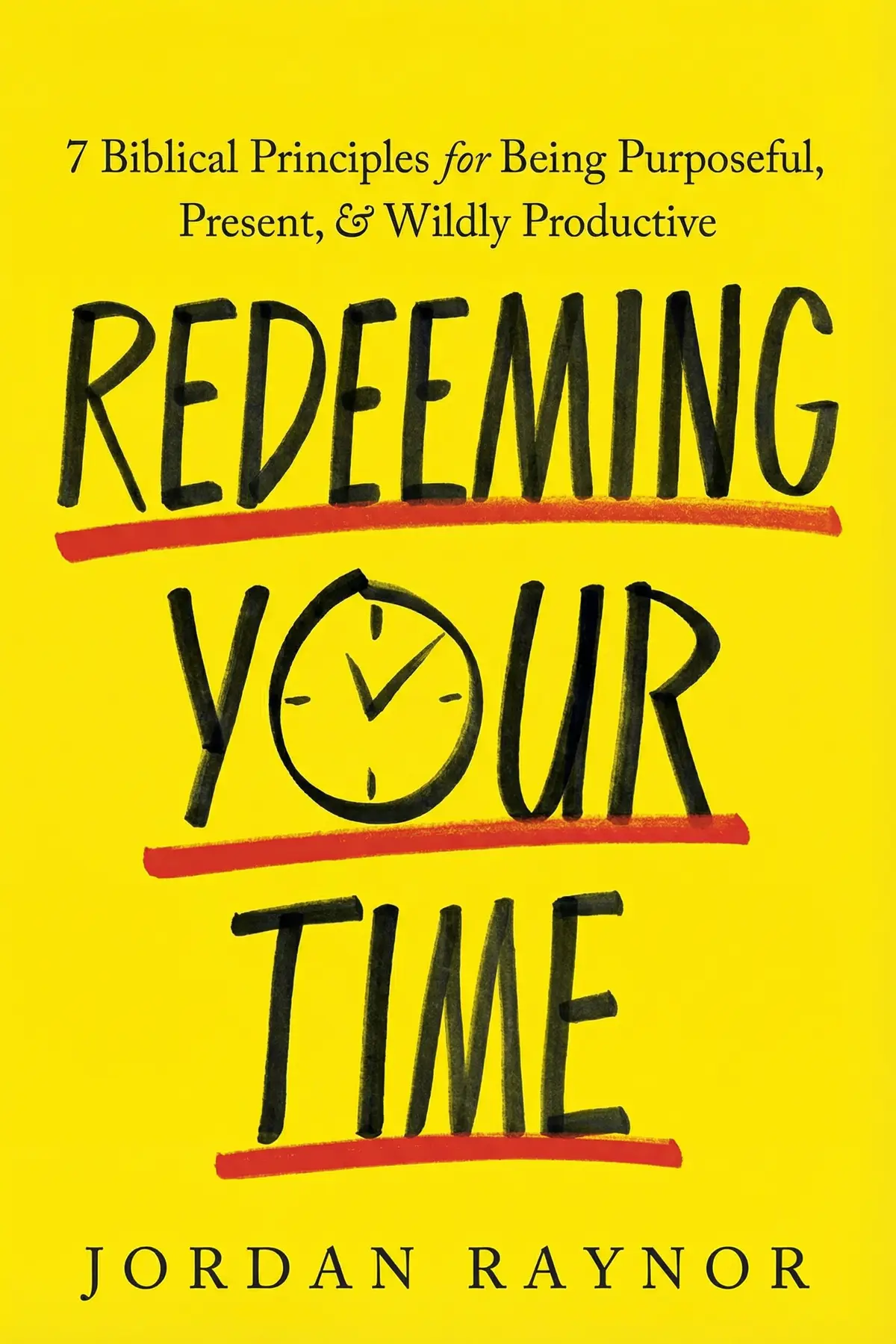
Table of Content
1. Introduction
1 min 00 sec
If your days feel like a race you keep losing, a new app or an earlier alarm rarely fixes it. In Redeeming Your Time, entrepreneur and faith-and-work writer Jordan Raynor argues that for Christians the fix starts in the opposite place: peace with God comes first, and good use of time grows from it. Raynor says he has read about 45 time-management books, and in his account each one promises calm only after you master its system.
From that reversal he builds a method on seven principles drawn from how Jesus spent his time in the Gospels, paired with 32 practices for modern life. The throughline is simple. When your worth is already settled, and God will finish what you leave undone, you are free to be both calm and ambitious. What follows is a set of habits to test this month, from a three-list system for promises to a weekly day that produces nothing at all.
2. Work from peace instead of working toward it
1 min 31 sec
Most systems promise calm once your list is under control. Raynor turns that order upside down, using a storm on the Sea of Galilee and a reformer who died feeling his work was undone.
3. Let the first hour set the day's priorities
1 min 32 sec
Jesus guarded one appointment above sleep, food and his own friends. Raynor makes it the habit that every other practice depends on, and he wrote a short prayer meant to make you calmer and more driven at once.
4. Keep your word by tracking every commitment
1 min 31 sec
A forgotten promise from a dinner conversation can follow you around for days. Raynor explains why, and offers three lists and five questions to get every commitment out of your head for good.
5. Make room for silence in a noisy week
1 min 37 sec
Martin Luther King Jr. moved cities to escape the noise. Raynor argues most of us need a smaller version of that move, and a former news junkie’s experiment shows what really happens when you quit the headlines.
6. Say yes only to what serves your mission
1 min 40 sec
A seventh grader’s note on a bathroom mirror led to four Olympic golds. Raynor pairs it with a five-story picture of priorities and a test for requests that sound like once-in-a-lifetime chances.
7. Focus on one task at a time
1 min 38 sec
C.S. Lewis turned out ten books in six years once one interruption left his life. Raynor’s account of focus starts with a claim about the incarnation and ends with a schedule you can try tomorrow.
8. Rest that makes your work better
1 min 42 sec
A business owner woke at three in the morning with the plan that multiplied her company’s growth. Raynor argues rest is part of the work, and his evidence ranges from sleep science to a restaurant closed on Sundays.
9. Stay busy without letting hurry in
1 min 24 sec
One of the busiest people in children’s television was famous for slowing everything down. Raynor separates a full day from a hurried one, and points to a moment when Jesus decided the day’s work could wait.
10. Conclusion
1 min 08 sec
The storm in Luke 8 is the image worth keeping. Raynor’s whole method hangs on the order of events in that boat: peace arrives first, while the work is still unfinished. That order is what lets the same person rest a full day each week and still set epic goals.
Not every reader will take every step. New Testament professor Brandon Crowe argued that the Gospels, as ancient biographies, lack the chronological detail to show fully how Jesus used his time, and that some of the advice fits certain seasons of life better than others. He still judged the book a solid addition to Christian writing on time, and Raynor himself expects readers to adopt the practices selectively.
A sensible place to begin is tomorrow morning. Give the first minutes to Scripture and pray Raynor’s productivity prayer in your own words. Then empty every open promise into one inbox list, and hand one gap in your day back to silence.
After that, the unfinished symphonies on your desk look different. Finishing them was never your job alone.
About this book
What is this book about?
Most time-management books promise calm once you master their system. Jordan Raynor, who says he has read about 45 of them, argues that for Christians the order runs the other way. Peace with God comes first, through grace, and good use of time grows out of that security. Everyone leaves work unfinished, and God can complete what we cannot, so believers are free to be both restful and ambitious. Raynor builds the book on seven principles drawn from the Gospel accounts of how Jesus spent his time, paired with 32 practices. They begin with daily time in Scripture and prayer. They move on to a single system for every commitment, deliberate silence and a clear ladder of priorities. They end with focused deep work, rhythms of rest and the removal of hurry. Readers get concrete tools alongside the theology: three lists for capturing promises, eight questions for deciding when to say yes, ninety-minute focus blocks, a weekly Sabbath routine and a time budget for the week. Stories of Tamika Catchings, C.S. Lewis, Fred Rogers and Martin Luther King Jr. show the principles at work.
Book Information
Who it's for
Christians swamped by work
Christian professionals and founders swamped by to-do lists who want a time system rooted in their faith.
Believers uneasy about rest
Believers who feel guilty when they rest, or restless when they stop, and want both calm and ambition.
Ministry leaders and managers
Ministry and team leaders looking for practical habits on focus, commitments and saying no.
About the Author
Jordan Raynor
Jordan Raynor writes, speaks and builds companies, and he is widely seen as a leading voice in the movement connecting faith and work. As CEO he ran Threshold 360, a tech startup, and later became its Executive Chairman, after founding several other ventures. He worked in the White House during the presidency of George W. Bush and was named a Google Fellow twice. His other books include The Creator in You and Master of One.
Ratings & Reviews
Ratings at a glance
What people think
Listeners find this guide both useful and profound, offering distinct strategies for better time management and productivity. Rooted in Biblical foundations and incorporating scripture throughout, it is considered an essential listen for Christians. Listeners value how the content encourages focusing on a single task while improving spiritual well-being, which leads to reduced stress and a deeper sense of peace.
Top reviews
Bua
Finally got around to reading this, and it’s easily the best thing I’ve read on productivity in years. Raynor doesn't just give you a list of hacks; he roots everything in the life of Jesus, which makes it feel so much more meaningful. I loved the idea that we don't need to be productive to earn God's love, but we want to be productive to steward His gifts. The section on 'Unipresence' really hit home for me because I’m always trying to be everywhere at once. The practical side is great too, though setting up the commitment tracking system took me a bit longer than I expected. It’s a dense read with a lot of moving parts, but the peace of mind you get from having a system that actually works is worth every minute spent.
Show moreCooper
Wow. Just wow. This isn’t just about getting more done; it’s about why we do what we do. Picked this up during a particularly burnt-out season, and the chapters on productive rest and the Sabbath were exactly what my soul needed. Jordan reminds us that the gospel frees us from the pressure to finish our to-do lists because God is ultimately in control. I’ve started implementing the 'deep work' blocks in my morning after my time in the Word, and the difference in my focus is night and day. It’s rare to find a book that offers both high-level spiritual insights and 'how-to' tutorials for your inbox. Truly a must-read for anyone who feels swamped by the demands of modern life.
Show moreEli
The chapter on 'eliminating all hurry' has stayed with me long after finishing the last page. Most of us live at such a frantic pace that we miss the opportunities God puts right in front of us. Raynor’s writing style is engaging and fresh, making complex theological ideas feel accessible and immediate. I loved the concept of 'resting with your hands' if you work with your mind—it’s changed how I view my hobbies and chores. While I don't agree with every single tiny habit suggested, the overarching framework is incredibly robust. It’s helped me prioritize my 'yeses' so I can say a firm 'no' to the things that don't matter. If you want more discipline but aren't sure where to start, get this book.
Show moreGiulia
This book completely transformed how I view my calendar. For years, I felt like my faith and my work were in two different boxes, but this bridged the gap perfectly. Raynor teaches us that managing our time is actually an act of worship. I was especially struck by the idea that Jesus was never in a hurry, yet he accomplished everything his Father sent him to do. The practical tips on avoiding distractions and time blocking have made me so much more present with my family in the evenings. I’m no longer scrolling through my phone while my kids are playing because I’ve learned how to 'dissent from the noise.' It’s a convicting, encouraging, and deeply practical guide for the modern believer.
Show moreHana
After hearing so much buzz about this, I finally dove in and I’m so glad I did. It’s basically 'Getting Things Done' meets the New Testament. Jordan Raynor has a gift for taking high-level productivity concepts and making them feel like a natural extension of our walk with Christ. The emphasis on 'Deep Work' and protecting your focus is so necessary right now. I did find the author's own level of discipline a bit intimidating at times—he’s clearly a high-achiever! But his epilogue about grace was the perfect way to wrap things up. It reminded me that even when I fail at my schedule, God’s grace is sufficient. It’s an essential manual for anyone trying to be a faithful steward of their time.
Show morePong
Picked this up on a whim and was immediately gripped by the author's transparency and insight. Frankly, it’s one of the few books that manages to be both a 'why-do' and a 'how-to' simultaneously. The 7 principles are easy to remember, but applying them takes real effort and heart-change. I’ve already seen a reduction in my daily stress levels since I started implementing the 'Commitment Tracking System' and carving out more time for solitude. It’s not a quick fix—Raynor is honest about that—but it’s a sustainable way to live. If you’re tired of feeling overwhelmed and want to align your productivity with the heart of God, you won't regret reading this. Five stars for sure.
Show moreSavannah
As someone who has struggled with the 'hustle culture' mentality, this book felt like a breath of fresh air. Jordan Raynor manages to strike a difficult balance between being incredibly practical and deeply theological. He pulls from secular authors like Cal Newport but filters those concepts through a biblical lens, emphasizing that rest is just as important as the work itself. I particularly appreciated the focus on silence and solitude, reminding us that even Jesus withdrew from the crowds to pray and think. My only slight gripe is that some of the tech recommendations feel a bit specific to a certain type of professional. If you aren't an 'office worker,' some of the OmniFocus talk might feel a little disconnected. Still, the core principles are universal and life-giving.
Show moreSakura
Ever wonder how Jesus would handle an overflowing inbox? That sounds like a cheesy premise, but Raynor handles it with such grace and intelligence that it totally works. He looks at the gospels and finds these beautiful rhythms of work and rest that we’ve mostly forgotten. I really appreciated the 'Commitment Tracking System' advice, even if I chose to use a different app than the one he suggested. The book is very motivating for those who want more discipline without the soul-crushing weight of legalism. Sometimes the tone gets a little repetitive regarding the seven principles, but the content is so valuable that I didn't mind much. It’s helped me reclaim my mornings for what actually matters most.
Show moreNim
To be fair, I went into this thinking it would be another generic time management book, but the emphasis on the gospel changed my perspective. The truth is that most productivity books leave me feeling guilty for not doing enough, whereas this one actually decreased my stress. Raynor explains that because our work is a means of glorifying God, we should pursue excellence without falling into the trap of perfectionism. I found the 'Dissent from the Kingdom of Noise' chapter especially challenging in our hyper-connected world. However, I’ll admit the sheer number of practices—35 of them!—felt a bit overwhelming at first. I had to remind myself that it’s a marathon, not a sprint. It’s a solid resource for any Christian looking to align their daily schedule with their eternal mission, even if the implementation is a bit daunting.
Show morePakinee
Not what I expected, as I thought it would be more about spiritual disciplines and less about complex app setups. Look, the theological foundations are excellent—Raynor is spot on about the gospel and work. But for a book about 'redeeming time,' it felt like it required a massive amount of time just to learn his specific system. Some of the practices felt a bit rigid or overly engineered for my lifestyle as a stay-at-home parent. That said, the sections on 'Unipresence' and prioritizing the Word were very convicting and helpful. I’d recommend it for the mindset shift alone, but maybe don't feel like you have to adopt every single software recommendation to get the benefits. A good read, just a bit dense on the technical side.
Show moreQuestions about this book
What is the main idea of Redeeming Your Time by Jordan Raynor?
Raynor argues that Christians should manage time from peace instead of chasing peace through productivity. Their worth as God’s children is already secure, and God will complete the work they leave unfinished. From that starting point he draws seven principles from how Jesus used his time in the Gospels, paired with 32 practices, so readers can be calm and ambitious at the same time.
What are the seven principles in Redeeming Your Time?
The principles are Start with the Word, meaning daily time in Scripture and prayer; Let Your Yes Be Yes, keeping only commitments you can honor; Dissent from the Kingdom of Noise, making room for silence; Prioritize Your Yeses; Accept Your Unipresence, focusing on one important thing at a time; Embrace Productive Rest; and Eliminate All Hurry, which welcomes busyness but removes rushing.
What is the Commitment Tracking System in Redeeming Your Time?
It is Raynor’s way of getting promises out of your head, built on a workflow like Getting Things Done. It uses three lists: an Inbox List for capturing everything, a Projects List for outcomes with several steps and an Actions List of next physical steps. Each item is defined with five questions, and the system stays reliable through daily inbox processing and a weekly review.
How does Jordan Raynor suggest deciding when to say yes?
Since Jesus neither always accepted nor always refused requests, Raynor offers eight questions. Among them: whether saying yes will do good or just make you look good, what a so-called great opportunity is actually an opportunity for, and whether you would accept a hundred similar requests. He also ties every yes back to a mission, which he defines simply as glorifying God.
Who should read Redeeming Your Time?
It suits Christians who feel swamped by work and want a time-management method that fits their faith instead of sitting apart from it. Professionals, founders and leaders get concrete tools such as ninety-minute deep-work blocks, batched message checking and a weekly time budget. Readers who feel guilty resting will find a case for eight hours of sleep and a weekly Sabbath.
Readers also enjoyed


A Force for Good: The Dalai Lama's Vision for Our World
Daniel Goleman
168 Hours: You Have More Time Than You Think
Laura Vanderkam


A New Earth: Awakening to Your Life’s Purpose
Eckhart Tolle


A Return to Love: Reflections on the Principles of a Course in Miracles
Marianne Williamson

AUDIO SUMMARY AVAILABLE
Listen to Redeeming Your Time in 15 minutes
Get the key ideas from Redeeming Your Time by Jordan Raynor, plus 5,000+ more nonfiction titles.
- 5,000+ titles
- Listen as much as you want
- 7-day free trial
- Cancel anytime









