
15 min 29 sec
Available in: English
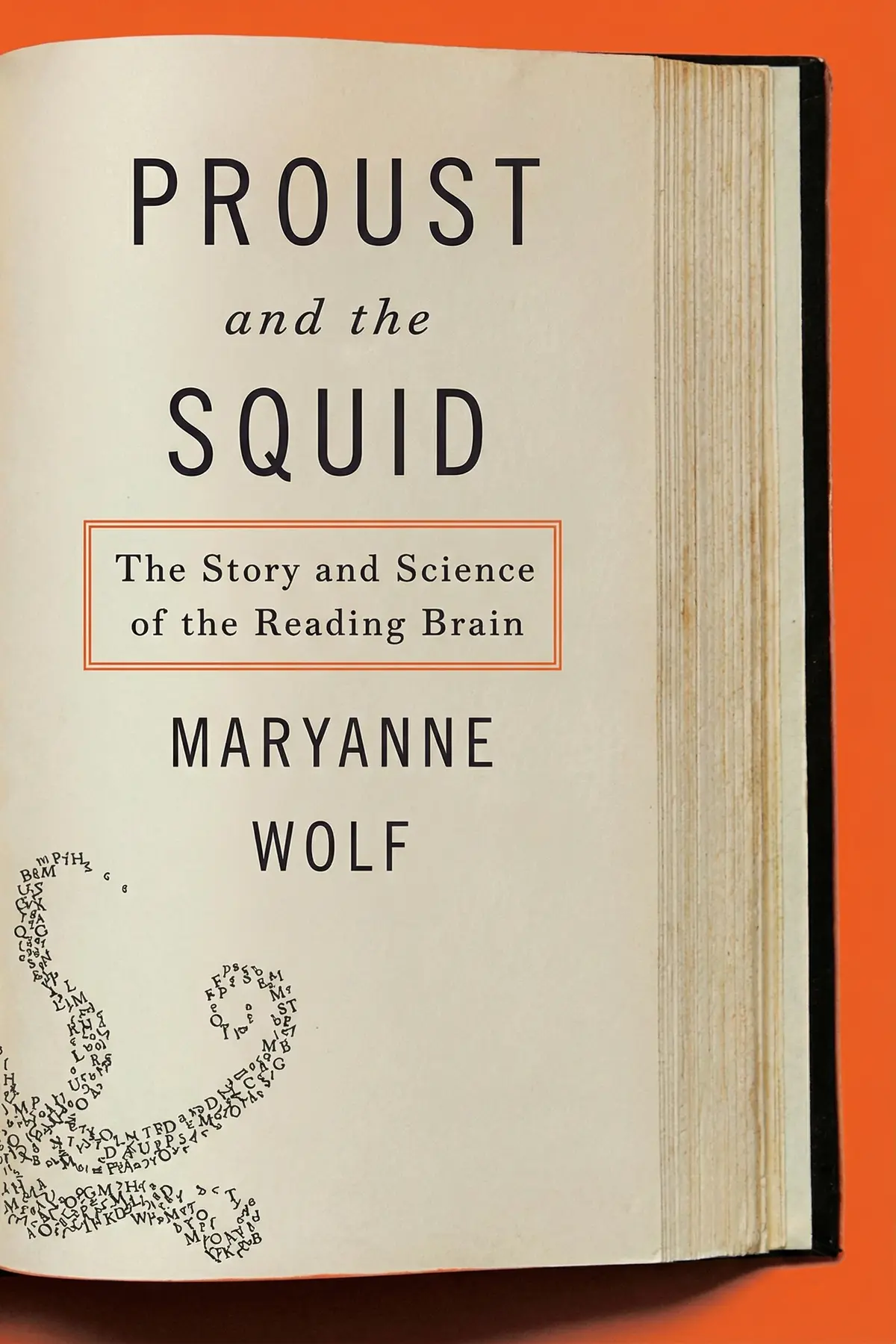
Reader, Come Home: The Reading Brain in a Digital World
Explains why long, focused reading now feels harder, what that loss costs in empathy, attention and children's futures, and how to rebuild deep reading without giving up digital tools.
Table of Content
1. Introduction
59 sec
If a long book now feels like hard work, neuroscientist Maryanne Wolf says the change is real, and it is happening inside your brain. In Reader, Come Home, Wolf, who has spent her career studying how people learn to read, explains that nobody is born a reader: each of us builds a reading circuit, and how we read keeps rebuilding it.
Screens are bending that circuit toward skimming, she argues, at a cost to attention, empathy and children’s futures. Her remedy is not to throw away the phone. It is to become fluent in both print and digital reading, the way a bilingual child speaks two languages, and to protect the slow time where deep thought happens.
Along the way come her own failed attempt to reread a favorite novel, the reason a bedtime story beats any app, the school year where struggling readers fall behind, and Aristotle’s view of what reading is finally for.
2. Understand the reading circuit your brain had to build
1 min 32 sec
Children learn to talk without lessons, yet reading demands years of effort. The reason reveals something hopeful and something unsettling about the reading brain you carry right now.
3. Deep reading makes you better at empathy
1 min 40 sec
Six words about a pair of baby shoes can make a stranger feel grief. What happens in your head during that moment, and what happens to people who stop doing it?
4. Rebuild your concentration with two weeks of slow reading
1 min 40 sec
A reading scientist sat down with her favorite novel and could not get through it. Her experiment shows how far focus can slip without anyone noticing, and what it took to bring it back.
5. Understand how screens hook your child's brain
1 min 46 sec
Hopping from app to video to website feels harmless, even fun. For a brain that is still being built, Wolf describes a loop of stress and reward that is hard to escape.
6. A bedtime story beats any reading app
1 min 40 sec
An app can read a story aloud perfectly, with voices and sound effects. Wolf explains what it still cannot give a child, and why it matters years before school begins.
7. Spot the fourth-grade wall before a child hits it
1 min 49 sec
Prison planners in some states look at how well young children read. Wolf explains why one school year carries so much weight, and what happened when her own son reached it.
8. Raise a child fluent in print and screens
1 min 40 sec
Banning devices sounds tempting, but Wolf thinks it would leave children unprepared. She proposes a different model, borrowed from how some kids grow up speaking two languages at once.
9. Make room for the third life of reading
1 min 34 sec
Aristotle described three kinds of life in a good society, and Wolf finds all three in every reader. The third one turns information into wisdom, and it is the first to disappear.
10. Conclusion
1 min 09 sec
The reader Wolf calls home has not given up the phone. That reader’s brain still knows how to slow down: to build a whole story from six words, to pass over into another life and come back larger, to stay with a hard sentence until it opens.
Because that ability is built and not inherited, it can fade, and it can return. Wolf’s two weeks with Magister Ludi are her proof from her own life. The same logic runs from a toddler on a parent’s lap, to a fourth-grader meeting harder books, to an adult buried in email.
What to do follows from it. Read aloud to young children, often and repetitively, and put books ahead of screens in the early years. When you download an app for a child, play it alongside them, which is the quickest way to judge whether it deserves their time. For yourself, protect a block of empty time and spend part of it with a demanding book, accepting that the first days will feel slow.
Screens will only get better at catching attention. Deep reading survives in the hours we decide to keep for it.
About this book
What is this book about?
Many people notice that a demanding book now feels like hard work, and that their attention breaks apart after a few minutes. Maryanne Wolf, a neuroscientist who studies how the brain learns to read, argues that this is a real change in the brain. Reading is a cultural invention, not an instinct. Every reader builds a dedicated circuit, and the way we read keeps reshaping it. Wolf traces what fragmented, screen-driven reading does to that circuit: weaker deep reading, less practice at empathy, and children whose developing brains get hooked on constant novelty. She draws on her own failed attempt to reread a favorite novel, on her son's struggle with dyslexia in fourth grade, and on studies of empathy, screen time and literacy. Her answer is not a retreat from technology. She makes the case for a biliterate brain, fluent in print and digital media alike, built through bedtime reading, books first in the early school years, coding and creative digital work. For adults, she turns to Aristotle's idea of a contemplative life and to the simple discipline of keeping time free to think.
Book Information
Who it's for
Professionals losing focus
Professionals who notice they can no longer finish a demanding book or stay with one task.
Parents weighing screen time
Parents of young children deciding how much screen time and bedtime reading to allow.
Hoping others think deeply
Teachers and team leads who want people to think deeply in a skimming culture.
About the Author
Maryanne Wolf
Maryanne Wolf earned her doctorate at Harvard University, where she began researching the neurological basis of reading, language and dyslexia. She has taught and led research at Tufts University, including its Center for Reading and Language Research, and at UCLA, where she has directed the Center for Dyslexia, Diverse Learners, and Social Justice. She has received teaching and professional awards from the American Psychological Association and the Massachusetts Psychological Association, and she is a permanent member of the Pontifical Academy of Sciences. She also wrote Proust and the Squid.
Ratings & Reviews
Ratings at a glance
What people think
Listeners consider this book an exceptional investigation into the reading brain, as one listener points out how it links academic research to daily life. Additionally, the text is lauded for its approachability, specifically as essential reading for parents, and listeners enjoy its deeply engaging material. On the other hand, perspectives on the quality of writing are divided, with some finding it easy to follow while others differ in their assessment.
Top reviews
Chiw
This book is a clarion call for the digital age, urging us to protect the very cognitive processes that make us human. Maryanne Wolf explores how the 'reading brain' is being physically reshaped by our constant interaction with screens, often at the expense of critical thinking and empathy. I found her concept of the 'biliterate brain' incredibly hopeful rather than merely alarmist. To be fair, she doesn't suggest we throw away our Kindles, but she does emphasize the necessity of preserving deep, slow reading. The prose is beautiful, written as a series of letters that feel deeply personal and urgent. It’s a rare treat to find a book that bridges complex neuroscience with such a passionate plea for our cultural soul. If you’ve noticed your own attention span fragmenting lately, this is the mirror you need to look into.
Show moreCha
Maryanne Wolf has a way of making complex neuroscience feel like an intimate conversation over coffee with a brilliant mentor. She dives into the mechanics of deep reading—that interior space where we draw analogies and infer meaning—and explains why it’s under threat from our 'eye-byte' culture. I loved her defense of the physical book as a medium that encourages slower, more reflective cognitive capacities. Truth is, we are all becoming skimmers, rushing through content to find the 'tl;dr' version without ever truly digesting what we’ve consumed. This isn't just about literature; it’s about our ability to sustain a functioning democracy through critical thought. The book is dense, yes, but that’s the point. It requires the very attention it's trying to save. I felt like my brain was being re-stretched in the best possible way.
Show moreWin
Ever wonder why you can’t seem to finish a novel anymore despite having more access to books than ever before? Wolf provides the answer by explaining how our 'atrophied' attention spans are the result of a brain that has been trained to seek immediate dopamine hits from digital stimuli. I was moved by her description of the 'attentive ghost'—that feeling of being completely lost in a book—and how many of us have lost that magic. This book isn't just a dry science text; it’s a passionate, emotional plea to reclaim our focus. She suggests we become 'bilingual' in our literacy, moving between the speed of the digital world and the depth of the print world. It’s an empowering message that gives you the tools to fight back against the 'content malabsorption' we all suffer from today.
Show moreVimolwan
After hearing so much about the death of the book, this was exactly the kind of deep-dive I needed. Wolf manages to be both a scientist and a poet, weaving together data about working memory and attention spans with a love for the classics. I loved her idea that reading is a bridge to other worlds, and that by skimming, we are effectively burning that bridge down. To be fair, it is a demanding read that requires you to practice the very 'deep reading' she advocates for. It isn't a quick 'how-to' guide, but rather a philosophical and neurological investigation into how we think. The letter format made me feel like I was part of a special community of readers committed to saving a beautiful human achievement. It’s a life-changing book that I’ve already started recommending to all my friends.
Show moreAraya
As a parent of two toddlers, I found the chapter on the formation of the young reading brain both terrifying and essential. Wolf explains how children now encounter digital stimuli before they’ve even mastered the basics of print, which fundamentally alters how they build knowledge reservoirs. In my experience, it’s hard to balance tech and books, but her 'biliterate' approach offers a realistic middle ground for modern families. The book does get a bit repetitive in the middle sections, and she can be somewhat dismissive of the benefits of e-readers. However, the underlying science regarding how we process information on a screen versus a physical page is undeniable. It made me rethink my own habit of skimming articles instead of sitting down with a proper book. It’s a thought-provoking read that will stick with me for a long time.
Show moreWoravit
Finally got around to this after hearing it recommended in several education circles, and it definitely lived up to the hype. Wolf explores the unsettling reality of how our digital immersion might be eroding our capacity for personal reflection and imagination. I especially appreciated the distinction she makes between 'checking' facts and actually building a foundation of internal knowledge. One of my favorite parts was her discussion on how reading fiction builds empathy by forcing us to inhabit characters' lives. My only gripe is that the sentence structure is occasionally so verbose that it feels like she’s trying to prove she can still write like Proust. It requires a lot of focus, which I suppose is her intention! It’s a brilliant exploration of the reading mind that every teacher and parent should probably pick up.
Show moreSam
The research presented here is vital for anyone worried about the impact of social media on our collective intelligence. Wolf does a great job of connecting her laboratory findings to lived experience, making the science feel relevant and urgent. I found the sections on how the brain builds 'circuits' for reading particularly enlightening, as it reminds us that literacy is a fragile, acquired skill. While the prose can be a bit flowery and 'lofty' at times, the core message about the loss of critical thinking is too important to ignore. We are moving toward a world where we consume information in 'eye-bytes,' and Wolf warns us of the societal cost of that transition. It’s a bit of a slog in parts, but the 'treasure chest' of insights makes it worth the effort. Definitely a must-read for the digital age.
Show moreAndrei
Truth is, I have mixed feelings about this one. On one hand, Wolf’s research into the 'plasticity' of the brain and how it adapts to different mediums is absolutely fascinating and well-researched. On the other hand, the constant hand-wringing about 'the youth' feels a bit like an old-fashioned 'get off my lawn' rant dressed up in scientific garb. Personally, I don't find reading on a Kindle to be any less immersive than a paperback, yet she treats digital formats like the death of deep thought. To be fair, she admits she struggled to re-read a favorite complex novel because of her own screen habits, which was a refreshing moment of honesty. It’s an important topic, but the elitism regarding which books are 'worthy' of deep reading felt unnecessary. A solid read, but take the alarmism with a grain of salt.
Show moreAey
Look, I wanted to like this, but Wolf never uses 15 words where she can use 60. The writing is incredibly dense and, frankly, feels like a moralizing slog that looks down on anyone who enjoys a quick digital read. She spends so much time lamenting that young people aren't reading Proust, but people have been avoiding Moby Dick since the 1800s! It’s not just a 'Twitter brain' problem; it's a style preference. Her 'expert reader' tone feels elitist and exclusionary to the average person who just wants to enjoy a story. While her points about declining empathy are interesting, they get buried under piles of unnecessarily long sentences and academic jargon. I actually think the core message about digital distraction is vital, but the delivery here is so off-putting that I struggled to finish it. It would have worked much better as a concise long-form article.
Show moreVera
Not what I expected, and not in a good way. The author’s tone is incredibly self-righteous, constantly addressing the reader as part of some 'expert' elite that is supposedly superior to the 'masses' reading on their phones. She claims that people are becoming stupider because they don't want to read 150-word sentences by Melville, but that's a massive overgeneralization. The idea that empathy is declining solely because of digital reading seems like a huge stretch without enough scientific data to back it up here. Frankly, the writing in this book is so dry and unnecessarily long-winded that it actually makes you want to go back to Twitter for some brevity. It felt like a 200-page lecture on why things were better in the 'old days.' I didn't find the solutions helpful, and the elitism was just too much to handle.
Show moreQuestions about this book
What is the main idea of Reader, Come Home?
Maryanne Wolf argues that reading is a learned skill, built as a dedicated circuit in the brain, and that heavy screen use is reshaping that circuit toward skimming. Deep reading, which supports imagination, empathy and reflection, weakens with disuse. Her solution is not to reject technology but to become fluent in both print and digital media and to protect time for slow, contemplative thought.
How does digital reading affect the brain according to Maryanne Wolf?
Wolf says we read in short bursts and jump between topics, so attention is divided into ever shorter intervals. Because the reading circuit is shaped by practice, this habit erodes deep reading. She tested it on herself: she could not finish rereading Hermann Hesse’s Magister Ludi at first, and only after two weeks of steady effort did her old fluency return.
Why does Wolf recommend reading aloud to children?
Sitting on a parent’s lap links reading with comfort, attention, memory and language, and a shared book teaches shared attention. Hearing the same story repeatedly builds vocabulary that helps when children start reading around age five. Wolf argues an app cannot replace the parent’s voice, touch and guidance, and she says being read to is the best predictor of becoming a skilled reader.
What does Wolf mean by a biliterate brain?
Like a bilingual child fluent in two languages, a biliterate child is fluent in print and digital media. Wolf wants physical books and handwriting to lead in the first school years, because they build sustained attention. Alongside them, children should learn coding, electronic music or graphic art, which train cause-and-effect thinking and turn them from consumers into makers.
How can I apply Reader, Come Home in daily life?
Pick a demanding book you once loved and read it at a fixed time each day, expecting the first sessions to feel slow. Keep open, unscheduled time in your calendar for reflection, as Warren Buffett advised Bill Gates. With children, read aloud often, favor print early, and play any new app with them before deciding whether it deserves their time.
Readers also enjoyed








AUDIO SUMMARY AVAILABLE
Listen to Reader, Come Home in 15 minutes
Get the key ideas from Reader, Come Home by Maryanne Wolf, plus 5,000+ more nonfiction titles.
- 5,000+ titles
- Listen as much as you want
- 7-day free trial
- Cancel anytime









