
15 min 13 sec
Available in: English
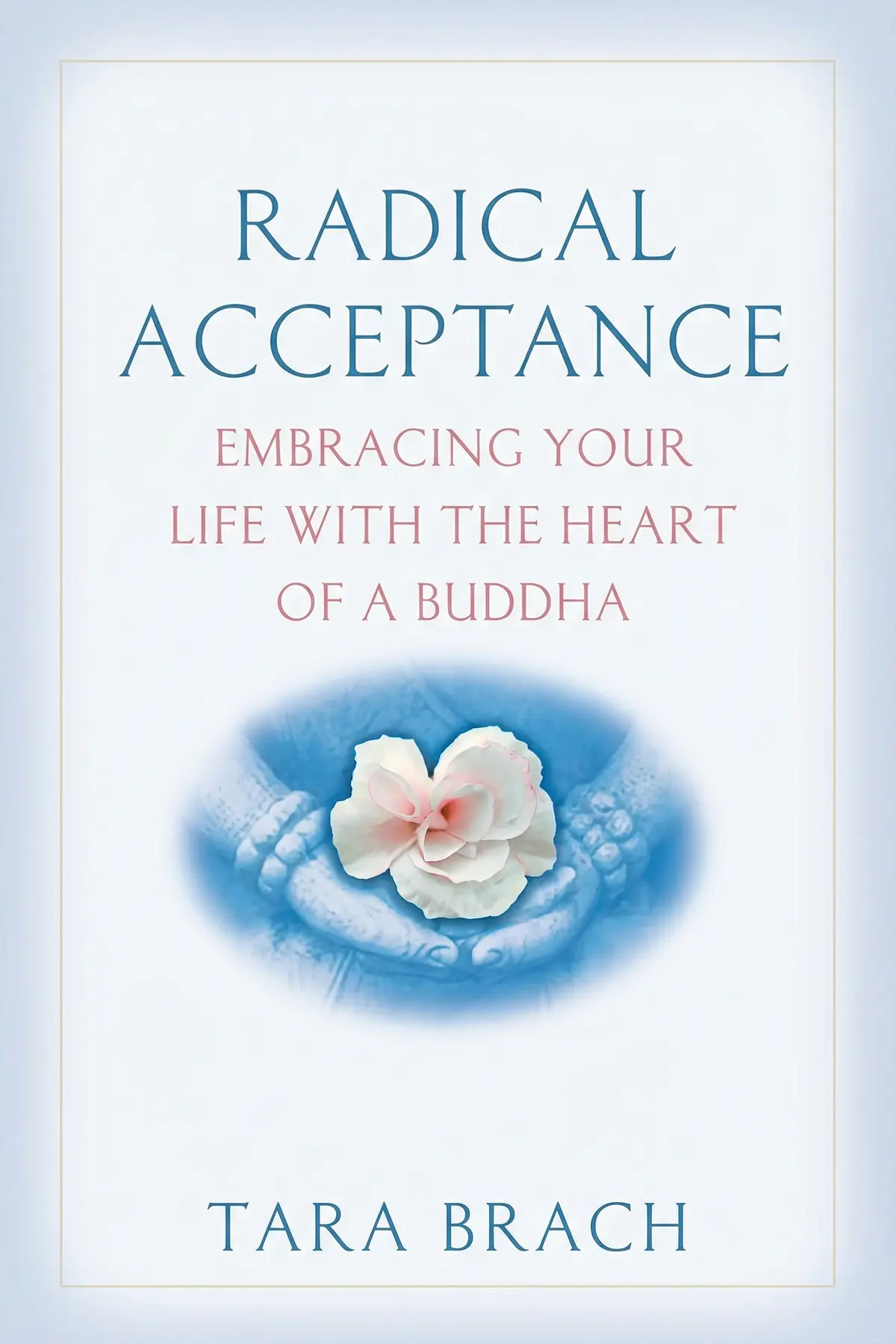
Radical Compassion: Learning to Love Yourself and Your World with the Practice of RAIN
By Tara Brach
Shows how a four-step meditation called RAIN helps you stop fighting anger, shame, fear and craving, find what lies beneath them, and extend the same kindness to the people you resent or misjudge.
Table of Content
1. Introduction
1 min 02 sec
When stress takes over, most people fight the feeling or run from it, and both moves tend to make it stronger. In Radical Compassion, psychologist and meditation teacher Tara Brach offers a third option: a four-step practice called RAIN that takes a few minutes and turns a reaction into a choice. The steps are Recognize, Allow, Investigate and Nurture, and Brach applies them to anger, a harsh inner critic, shame, endless wanting and old grudges.
Her case rests on one idea. Pain loosens its grip when you meet it with attention and kindness, and that same kindness, turned outward, lets you see other people whole. Along the way come an executive who snapped at his family, a laid-off father carrying sixteen months of shame and a Nobel laureate who caught his own bias on a bumpy flight. Each story leaves a small step to try the next time a hard feeling arrives.
2. Make room to breathe in four short steps
1 min 45 sec
On a bad day, every turn seems to show only more problems. Brach describes a few-minute practice that clears a little space, and it starts by asking you to do something most stressed people resist.
3. Invite your anger in for tea
1 min 46 sec
An ancient teacher was followed everywhere by a demon of hatred and greed, and he never once tried to chase it away. A short-tempered executive discovered why that strange courtesy works.
4. Find the gold under your hard shell
1 min 44 sec
Monks moving a cracked clay statue found something they never expected inside it. A heartbroken student found something similar in herself, and it told her exactly what kind of comfort she needed.
5. Question the inner critic and outgrow shame
2 min 04 sec
The harshest judge most people face lives inside their own head, and the brain is built to keep it talking. Brach offers one simple question that often exposes the critic, and a way to meet shame afterward.
6. Trade endless wanting for what you really need
1 min 48 sec
A chief executive with everything he had worked for still could not enjoy a single day of it. Brach traces that restlessness to a deeper hunger that money and gadgets were never going to feed.
7. See the whole person behind a grudge
1 min 54 sec
A son could not forgive his father even at his deathbed, and a famous peacemaker caught himself doubting two pilots. Both were caught in the same mental shortcut, and it can be unlearned.
8. Help someone grow by naming their best qualities
1 min 57 sec
When someone in one village behaves badly, the whole community gathers around them, and what they say is not what you would expect. Worried parents tried the same approach with a son who seemed stuck.
9. Conclusion
1 min 13 sec
The book closes on a memory from a retreat with Zen master Thich Nhat Hanh. He asked each student to embrace a partner, then reminded the pairs that both of them would die. Brach recalls it fondly, as a reminder that every moment is precious. That embrace holds the whole argument: stay present with whatever is here, the rage, the shame, the craving, the parent you resent, long enough for kindness to replace reflex.
Between longer sessions, Brach offers small Remembrance practices to break the trance. When you feel rushed, stop and take three to five deep breaths, letting the body loosen with each one. When pain or worry arrives, turn toward it and whisper yes. And before you need them, make a mental list of your resource anchors, the people, places and things that make you feel strong, so they are ready when RAIN calls for nurture.
None of this requires fixing your life first. Notice the trance, let the feeling stay, look underneath and answer with care. Do it often enough and the clay begins to crack.
About this book
What is this book about?
Most of us meet painful feelings in one of two ways: we fight them or we run. Anger becomes blame, shame turns into hiding, and worry turns into rushing. Clinical psychologist and meditation teacher Tara Brach argues that both reflexes keep us stuck in what she calls the trance, a state of autopilot in which life feels like one problem after another. Her alternative is RAIN, a short practice built on four steps: Recognize, Allow, Investigate and Nurture. The first three came from Buddhist teacher Michele McDonald, and Brach added the fourth to bring in self-compassion. She shows the practice at work on a technology executive's temper, a student's heartbreak, a jobless man's shame and a binge eater's cravings, and then turns it outward, to grudges, family conflict and unconscious bias. Readers get a method they can use in a few minutes, practices for questioning the inner critic and spotting their real desires, and a way of seeing the basic goodness in people they love or struggle with.
Book Information
Who it's for
Stressed professionals
Professionals whose stress spills over as irritability at home or anxiety before meetings.
Struggling with inner pain
People stuck with a harsh inner critic, lingering shame or cravings they cannot explain.
Holding a grudge
Anyone holding a grudge against a parent, partner or colleague who wants a gentler way to see them.
About the Author
Tara Brach
Tara Brach is an American clinical psychologist and a teacher of Buddhist meditation who blends Western psychology with Eastern practice, with a focus on emotional healing. She founded the Insight Meditation Community of Washington, D.C., where she is a senior teacher, and has taught for more than four decades, mainly vipassana, or insight meditation. With Jack Kornfield she leads the Mindfulness Meditation Teacher Certification Program, and she has worked to bring meditation into schools, prisons and underserved communities. Her other books include Radical Acceptance and True Refuge.
Ratings & Reviews
Ratings at a glance

What people think
Listeners find that this guide encourages deeper compassion for daily life and acts as an essential element of their spiritual path. They also value the hands-on style, with one listener observing that the process is divided into four steps. The writing is also commended for its accessibility, with one listener emphasizing the straightforward explanations of various tools.
Top reviews
Jan
Picked this up during a particularly rough patch and it genuinely felt like a lifeline for my spiritual journey. Brach’s approach to mindfulness isn't just about being nice to yourself; it’s a rigorous, practical framework for facing the parts of your life that feel most unlovable. The way she breaks down the four steps of RAIN—Recognize, Allow, Investigate, and Nurture—makes meditation feel less like an abstract concept and more like a tool I can use while stuck in traffic. To be fair, some sections delve into more spiritual territory than I’m used to, but the core message is universal. Her stories about the "U-turn" and coming back to yourself resonated deeply with me. It’s the kind of book you don't just read once and shelve; you keep it on your nightstand to revisit when you’re feeling harried by your own to-do list or internal critics. This is truly fundamental for anyone seeking a more compassionate way of living.
Show morePriya
The RAIN method is a total game changer for my daily mental health routine. I’ve read a lot of self-help, but Brach’s ability to explain the "Nurture" step is what really sets this book apart from the rest of the pack. She teaches you how to give yourself the same grace you would offer a dear friend, which sounds simple but is incredibly difficult to execute in practice. Truth is, I used to get stuck in a trance of unworthiness, constantly judging my own productivity and failings. By using these four clear steps, I’ve learned to pause for presence and turn toward love instead of reacting out of habit. The writing is warm and accessible, making it an easy read even when the subject matter gets heavy. If you are looking for a practical guide to living with more heart and less internal judgment, this is absolutely the book for you. It's life-changing.
Show moreLeila
Finally got around to reading this after a friend recommended it for my anxiety, and I'm so glad I did. The structure is perfect; it’s broken down into four steps that are easy to remember when you're actually in the middle of a stressful situation. I love how Brach connects individual suffering to larger cultural issues like racism and trauma, showing that our pain doesn't exist in a vacuum. The "Investigate" section really helped me pinpoint where I hold tension in my body when I'm feeling overwhelmed. In my experience, most mindfulness books are either too academic or too vague, but this one hits the sweet spot of being profoundly spiritual yet remarkably practical. It has truly helped me cultivate a more living, breathing presence in my everyday life. This is fundamental reading for anyone on a path toward emotional freedom and genuine self-love. I cannot recommend her tools highly enough for modern life.
Show moreSai
Brach's voice really carries through the prose, and as someone who has also listened to her meditations, I can say her warmth is palpable on every page. This book teaches a greater compassion for living that feels both essential and achievable for the average person. I was particularly struck by the "4 Remembrances" and how they provide a quick way to center yourself when you're feeling harried. The stories she shares—ranging from funny anecdotes to deep traumas—illustrate the RAIN method in a way that makes it feel applicable to any situation. Look, it’s a fundamental text for anyone interested in Buddhist-inspired mindfulness, even if you aren't a spiritual person. By the time I finished, I felt I had a much clearer understanding of how to bridge the gap between my internal world and my external relationships. It’s a gift of a book that I’ll be recommending to my friends alike. Truly beautiful work.
Show moreNiphon
After hearing Brach’s soothing voice on her podcast for years, I was eager to see how her philosophy translated to the page. The book offers a very clear roadmap for anyone looking to foster a deeper sense of empathy for themselves and others. I particularly appreciated the readability and the way she simplifies complex emotional landscapes into the actionable RAIN acronym. Look, there is some repetition here, and if you’ve already mastered mindfulness, you might find some of it a bit basic. However, the "Investigate" step was a breakthrough for me because it moves beyond just noticing a feeling to actually understanding the somatic roots of pain. While I found the neuroscience explanations a bit thin on detail, the practical exercises for everyday kindness more than made up for it. It’s a solid resource for anyone starting a serious healing journey, though it requires a bit of patience for the redundant parts.
Show moreTod
As someone struggling with chronic self-criticism, I found the reflections in this book to be incredibly grounding and helpful. Tara Brach writes with a level of warmth that makes you feel seen, even through the printed word. The concept of the "U-turn"—shifting attention from an external obsession back to your internal state—was a major lightbulb moment for me this year. Not gonna lie, the book does get repetitive at times, and I felt like the "Allow" step could have been explained with more depth early on. Sometimes it feels like she assumes we already know how to sit with intense discomfort, which isn't always the case for beginners. Still, the "4 Remembrances" are now taped to my fridge as a daily reminder to rest in awareness. It’s a beautiful, if occasionally verbose, contribution to the field of mindful self-compassion that provides a much-needed spiritual anchor.
Show moreUbolwan
While the 'earth goddess' imagery and semi-spiritual metaphors didn't always resonate with my logical brain, the overall impact of this book has been undeniably positive. Tara Brach has a gift for making mindfulness feel accessible to people who are usually too "in their heads" to meditate properly. The way she describes living "above the line" versus being caught in a trance helped me realize how often I run on autopilot. I did find the neuroscience a bit simplistic, but maybe that's the point—to keep it readable for a general audience. The four steps of RAIN provide a solid anchor for those moments when life feels like it's spinning out of control. Personally, I found the chapters on extending compassion to others particularly moving, especially the parts about seeing the roots of another person's pain. It’s a gentle, wise guide for heart-centered living that encourages you to stay present even when it's hard.
Show moreBam
This isn't just a guide on meditation; it’s a manual for emotional resilience in an increasingly chaotic world. I appreciated how Brach breaks down her method into four distinct steps: Recognize, Allow, Investigate, and Nurture. It’s a clear, practical approach that helps you move through difficult emotions rather than just suppressing them or getting lost in the "trance" of negativity. Frankly, it’s one of the most readable books on the subject I’ve encountered lately, though it does repeat its main points quite frequently. Some readers might find the lack of complex psychological terminology a drawback, but for me, the simplicity was its greatest strength. It’s allowed me to develop a much more nurturing relationship with myself. If you’re looking for a spiritual journey that remains grounded in everyday reality, give this one a go. It’s a solid four-star read that offers genuine tools for growth and self-acceptance.
Show moreBella
To be fair, I expected something a bit more scientifically rigorous given the author's background as a psychologist. Instead, I found a book that felt like it was trying to stretch a single, albeit useful, meditation technique into an entire 200-page volume. The RAIN acronym is fantastic—don't get me wrong—but after the fifth chapter of seeing it applied to almost identical scenarios, the redundancy started to set in. Frankly, the explanations of brain science felt dumbed down and heavily borrowed from practitioners like Dan Siegel without adding much new perspective. I also struggled with some of the "Mother of Creation" imagery, which felt a bit too "woo-woo" for my personal taste. If you want a deep dive into the mechanics of trauma and compassion, you might be disappointed by how much this book glosses over the complexities. It’s better suited as an introductory meditation manual for those who don't mind a very slow pace.
Show moreSumalee
Is it a blog post or a book? Honestly, I felt like the entire message of "Radical Compassion" could have been summarized in a long-form article rather than padded out into a full-length manuscript. The repetition of the RAIN acronym on nearly every page felt like a slog after a while, making the reading experience feel more like a repetitive meditation than an educational one. To be fair, the core concept is helpful for grounding through discomfort, but I was hoping for more "radical" insights into psychology. It felt like Brach was just capitalising on her existing practice without bringing anything truly fresh to the table. Some of the concepts, like the "earth goddess" visualizations, were a bit alienating for a secular reader like me. It’s not a bad book, but it certainly isn't the transformative masterpiece I was expecting based on the hype. It felt like a very long explanation of something quite simple.
Show moreQuestions about this book
What is the RAIN meditation in Radical Compassion?
The letters in RAIN refer to Recognize, Allow, Investigate and Nurture. You notice you are caught in a stressful trance, let the feeling be there without judgment, look inward to find what is driving it and what you need, then offer yourself a message of support. Buddhist teacher Michele McDonald created the first three steps in the 1980s, and Tara Brach added Nurture to bring in self-compassion.
What is the main idea of Radical Compassion by Tara Brach?
Brach argues that fighting or avoiding painful feelings keeps them strong, while meeting them with attention and kindness lets them ease. She applies RAIN to anger, negative self-beliefs, shame, fear and craving, then turns it outward to forgiveness, mirroring the basic goodness in people we love, and seeing past stereotypes about people who seem different from us.
How does Radical Compassion help with shame and self-criticism?
Brach suggests recognizing a harsh self-judgment as a thought, feeling its effect in the body, then asking whether it is really true; she finds such beliefs are usually exaggerated or invented. For shame, she leans on Nurture. Sean, unemployed sixteen months after the 2008 crisis, forgave himself by dwelling on the respect he felt in his support group.
How can I practice RAIN in daily life?
Use it when you catch yourself rushing, ruminating or acting compulsively. Pause, name the feeling, take a breath and let it stay. Ask what you fear or need, then say something kind to yourself. Brach also suggests short Remembrance practices, such as taking three to five deep breaths when rushed, and keeping a mental list of resource anchors to draw on for support.
Who should read Radical Compassion?
It suits people dealing with stress, anger, anxiety, shame or compulsive habits who want a short practice rather than theory. It also helps anyone stuck in a grudge with family, parents worried about a child who seems stalled, and readers who want to examine their own unconscious bias, as Desmond Tutu did after doubting two pilots on a turbulent flight.


Readers also enjoyed

ADHD an A-Z: Figuring It Out Step by Step
Leanne Maskell






Alcoholics Anonymous
Alcoholics Anonymous World Services

A New Earth: Awakening to Your Life’s Purpose
Eckhart Tolle

A Liberated Mind: How to Pivot Toward What Matters
Steven C. Hayes
AUDIO SUMMARY AVAILABLE
Listen to Radical Compassion in 15 minutes
Get the key ideas from Radical Compassion by Tara Brach, plus 5,000+ more nonfiction titles.
- 5,000+ titles
- Listen as much as you want
- 7-day free trial
- Cancel anytime









