
14 min 59 sec
Available in: English
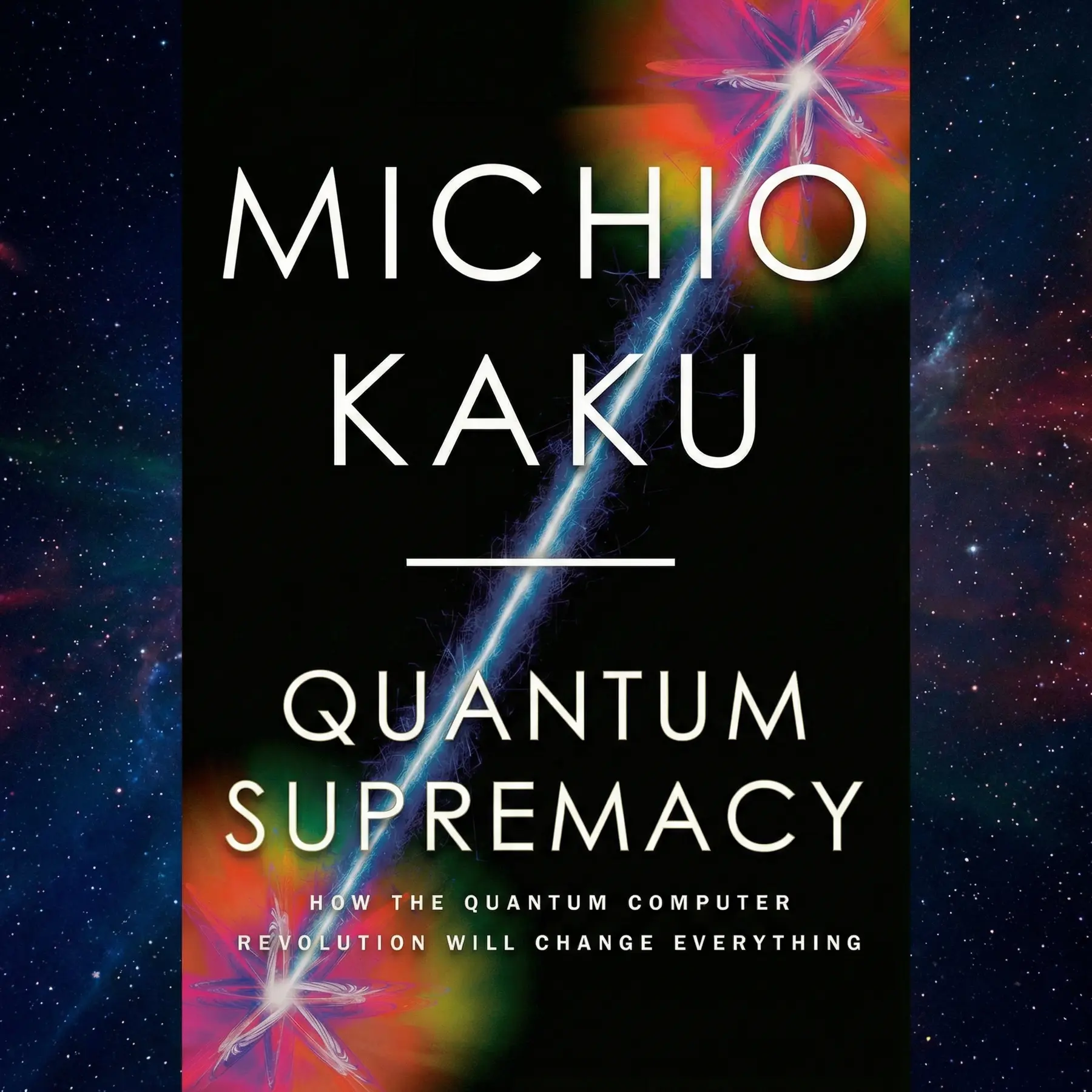
Quantum Supremacy: How the Quantum Computer Revolution Will Change Everything
By Michio Kaku
Michio Kaku explains how quantum computers work and why they have already outpaced supercomputers at narrow tasks. He argues that simulating nature with them could transform food, medicine, climate forecasting and fusion energy.
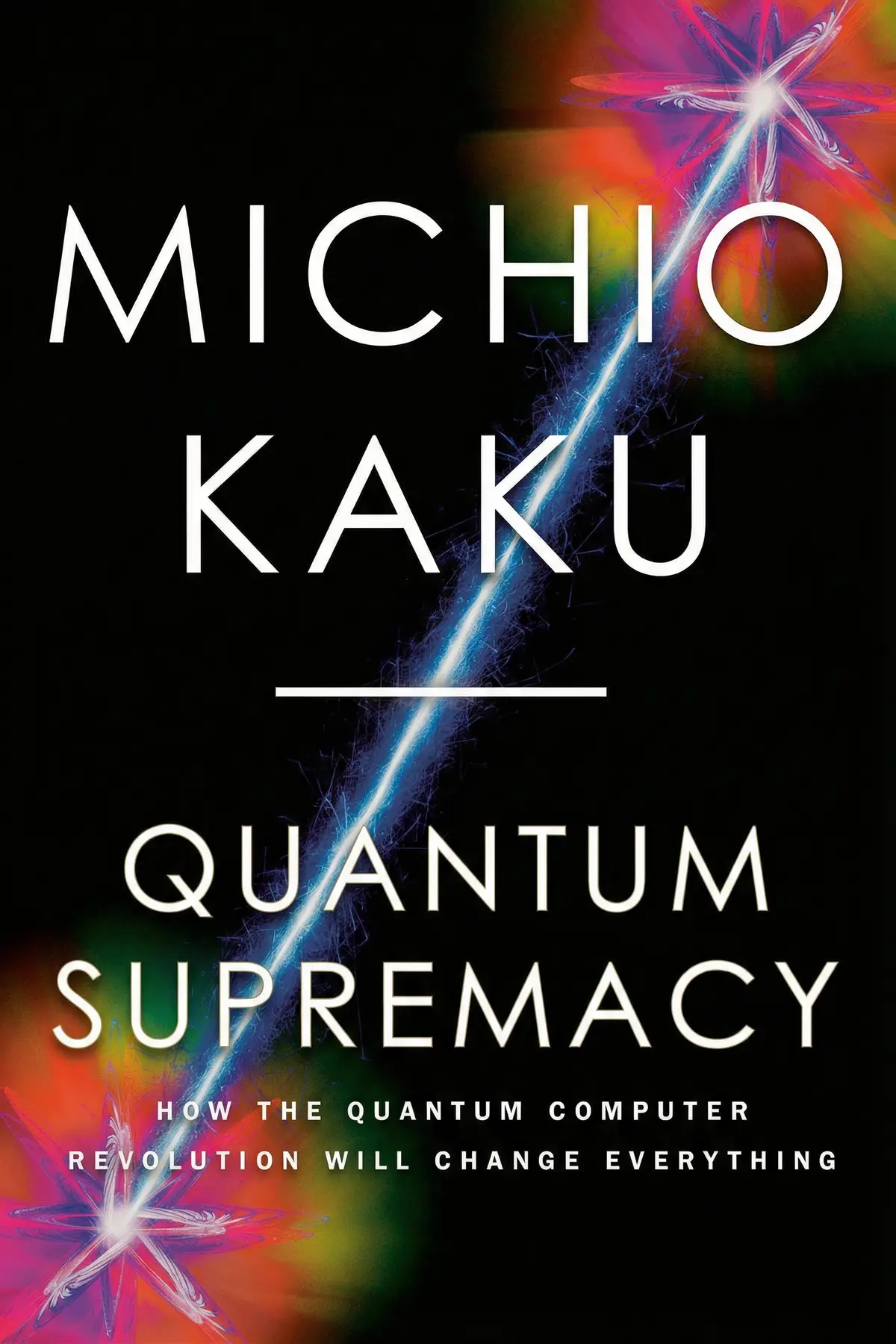
Table of Content
1. Introduction
1 min 06 sec
If quantum physics sounds like comic-book material, Michio Kaku has news: machines built on it already work. In Quantum Supremacy, the theoretical physicist reports that Google’s Sycamore computer solved a math problem in 200 seconds in 2019. The fastest supercomputer, he says, would have needed 10,000 years to finish the same task.
Kaku argues that ordinary silicon computing is running out of room, and that quantum machines matter most because they can simulate nature itself. Today we hunt for new fertilizers, medicines and energy sources largely by trial and error. A computer that weighs every possibility at once could replace that guessing with calculation.
Along the way comes a short history that starts with a bronze gadget on an ancient shipwreck and ends with qubits chilled to absolute zero. Then come the problems Kaku expects these machines to tackle: hunger, cancer, climate and the sun. Afterward, the next headline about qubit counts will make sense, and so will the reason it matters.
2. See why quantum machines already beat supercomputers
1 min 57 sec
In a few short years, the number that measures these machines jumped more than eightfold. Yet machines able to tackle real-world problems are still many years off. Both statements are true, and the gap between them explains the race.
3. Judge quantum news with three simple words
1 min 57 sec
A quantum computer draws its speed from two strange effects. A third effect explains why you cannot buy one, and an ordinary green leaf may hold the clue to fixing it.
4. Trace the long road from bronze gears to qubits
2 min 34 sec
Researchers recovered a strange hunk of bronze from a first-century shipwreck, and it puzzled them for decades. When scans finally revealed what it was, it turned out to share a goal with today’s quantum labs.
5. A cleaner second green revolution for food
2 min 04 sec
One chemist’s invention fed billions of people, and his other inventions killed millions. The method that fed the world is still in use, and Kaku believes quantum machines could finally replace it.
6. See how simulation could help beat our hardest diseases
2 min 00 sec
Half a century after a president declared war on cancer, the disease is still winning. Kaku traces the stalemate to an uncomfortable fact about where many of our worst illnesses really come from.
7. Better forecasts for a warming planet and a restless sun
2 min 04 sec
A storm that once set telegraph wires on fire could today knock out power grids around the world. Nobody can predict the next one yet, and the reason also explains why fusion power keeps slipping out of reach.
8. Conclusion
1 min 17 sec
Underneath the qubits, Kaku’s book is a story about guessing. For most of history, people found fertilizers, medicines and energy sources by trying things and keeping what worked. Sometimes the price was terrible, as Haber’s double legacy shows. Two thousand years ago, the Antikythera mechanism pointed to another way: build a model of the world and let it make predictions. Quantum computers, which explore every path at once as Feynman described, are the boldest version of that idea, and in narrow contests they have already beaten the best supercomputers.
The obstacle is real. Coherence breaks at the slightest disturbance, so the machines have to live near absolute zero, and practical uses are years away. That makes it worth watching the right signals. Qubit counts climbed from 53 to 433 in a few years. Any progress on keeping coherence at normal temperatures would matter even more. And when a problem in your own field is stuck because testing every option costs too much, it belongs on the list Kaku hopes these machines will take on.
Outside your window, a green leaf has been doing it all along: holding quantum states steady in warm sunlight. The race is to learn how.
About this book
What is this book about?
Quantum physics usually turns up as a punchline about parallel universes or Schrödinger's cat. Michio Kaku argues that it now deserves serious attention, because computers built on it already exist. In 2019, he reports, Google's Sycamore solved a problem in 200 seconds that a top supercomputer would have needed 10,000 years to finish. Within a few years, rival machines went from 53 qubits to 433. Kaku explains the two effects behind that speed, superposition and entanglement. He also explains the obstacle that still keeps these machines close to absolute zero, coherence. He traces the ideas back through Babbage and Lovelace, Planck, Schrödinger, Turing, Feynman and Everett, starting with a two-thousand-year-old bronze device that simulated the heavens. His larger claim is about method. Humanity found fertilizer, antibiotics and vaccines largely by trial and error. A machine that weighs every possibility at once could simulate nature directly. Kaku looks at what that could mean for a second green revolution, for diseases like cancer and Alzheimer's, for weather and solar storm forecasts, and for fusion power.
Book Information
Who it's for
Professionals curious about quantum
Curious professionals who keep seeing quantum computing headlines and want to understand what is real.
Founders and backers
Founders and investors in health, energy or climate who want a sense of which problems simulation could open up.
Students weighing career paths
Students wondering whether physics and computing careers are worth a closer look.
About the Author
Michio Kaku
Michio Kaku is a professor of theoretical physics at City College of New York and the City University of New York Graduate Center, and a co-founder of string field theory. Four of his books, among them Physics of the Impossible and The God Equation, became New York Times best sellers. He has hosted television specials for the BBC, Discovery Channel, History Channel and Science Channel. In 2021 he received the Sir Arthur Clarke Lifetime Achievement Award for linking science with science fiction.
Ratings & Reviews
Ratings at a glance
What people think
Listeners find this work highly educational and a pleasure to consume, featuring clear prose that remains accessible to non-experts. They value the stimulating perspectives shared, with one listener mentioning that it provides real-world benefits of quantum computing. The text earns praise for its level of discourse, with one review emphasizing its depthy subject matter.
Top reviews
Pear
Michio Kaku has a rare gift for making the most intimidating subjects feel like a neighborhood chat. He takes the dense world of subatomic particles and translates it into a narrative about human progress. I was particularly moved by his mention of Stephen Hawking, suggesting that quantum computers might one day return the favor by curing the very diseases that plague us. To be fair, some parts felt a bit like science fiction, but that’s exactly why it’s so thought-provoking for a casual reader. It’s not just a book about hardware; it’s a blueprint for a future that feels within our grasp. If you’re looking for a heavy technical manual, you might be disappointed, but for everyone else, it’s a must-read.
Show moreSamira
Picked this up after hearing Kaku on a podcast, and I was immediately hooked by his vision for the future. He has this way of explaining how quantum computers and AI will eventually work in tandem to revolutionize everything from batteries to medicine. Personally, I found the section on the 'death of the digital age' to be the most compelling part of the entire narrative. It’s not just about speed; it’s about a fundamental shift in how we process the universe's most complex data. Some of the later chapters felt like they were retreading the same ground, but the core message is incredibly powerful. For anyone who thinks quantum physics is just for academics, this book proves it’s actually for everyone.
Show moreFrida
As someone who struggles with standard physics textbooks, this was a breath of fresh air. Kaku’s writing style is remarkably accessible, making it easy for a casual reader like me to follow along with such a heavy subject. He uses creative analogies to explain why a quantum computer can analyze multiple paths simultaneously instead of one by one. I particularly enjoyed the insights into the history of the transistor and how we are finally hitting a physical wall with silicon. My only real gripe is that it feels very focused on American research, almost ignoring the global nature of these scientific breakthroughs. Still, it’s a very informative book that left me feeling much more knowledgeable about the next big tech revolution.
Show morePakinee
Kaku’s infectious enthusiasm is the driving force here, turning a complex topic into a total page-turner. He manages to make the move from binary bits to the bizarre world of qubits feel like a natural evolution rather than a scary leap into the unknown. I was especially impressed by the depth of his research into how these machines will impact the search for dark matter, dark energy, and the very origins of our universe. It’s rare to find a physicist who can write with such emotional weight about things like fusion energy and genetic medicine without losing the reader in the math. While the book is certainly speculative, it grounded those possibilities in real-world benefits that felt both tangible and profoundly exciting. Honestly, this is easily one of the most informative and enjoyable science books I've picked up this year.
Show moreSumalee
Ever wonder how we're actually going to solve climate change or cure Alzheimer’s? Kaku argues that we are currently using the equivalent of an abacus to try and solve problems that require the power of nature itself. The truth is, our current digital computers are simply too slow to model the complex folding of proteins or the behavior of atoms. This book provides a deeply thought-provoking look at how quantum supremacy could provide the answers we’ve been searching for. I appreciated the way he broke down the transition from bits to qubits without getting bogged down in too many equations. It’s an optimistic read, perhaps overly so, but it definitely sparks a sense of wonder about the coming decades.
Show moreKek
Finally got around to finishing this, and the chapter on protein folding alone was worth the price of admission. It’s fascinating to see how Kaku connects the dots between raw computing power and the literal survival of our species. He makes a strong case that we are entering a new era where we can finally speak the language of nature on its own terms. Some of the criticisms regarding his 'magic' terminology are fair, but I think people are missing the point of popular science writing. He’s trying to build excitement for a field that is usually buried in jargon. The book is easy to understand and provides a clear roadmap of what to expect from the next generation of supercomputers.
Show moreChai
While I admire the ambition, this felt more like a laundry list of global problems than a deep dive into physics. Kaku spends an enormous amount of time explaining why we need solutions for things like Parkinson's and global warming. We already know these are problems, but the book often relies on the word 'might' to bridge the gap between today and a quantum future. It gets a bit repetitive after the fourth or fifth chapter when the formula becomes predictable. I found the history of classical computing at the start to be well-written, though it covered very familiar ground. It's a decent overview for beginners, but I left wanting more logic and less 'magic'.
Show moreClaire
The first half of the book provides a solid history of computing that most tech fans will already know. In my experience, Kaku is great at the 'big picture' stuff, but he tends to gloss over the messy technical details that make quantum computing so difficult to achieve. He talks about 'quantum magic' as if the engineering hurdles are already solved, which can feel a bit misleading if you're following the actual industry news. The chapters become quite repetitive toward the end, as every single human problem is suddenly 'solvable' by this new technology. It’s definitely a fun and imaginative read, but you have to take the constant optimism with a grain of salt. It’s better as an inspirational piece than a technical guide.
Show moreTun
Look, I wanted to understand qubits, but instead I got 300 pages of 'quantum magic' and hand-waving. Kaku is undeniably a brilliant communicator, yet he seems to have traded scientific rigor for pure speculation in this latest outing. Every time I thought he was about to explain the actual mechanics of entanglement, he veered off into how we might reverse aging. It’s frustrating for a reader who wants to peek under the hood of the technology rather than just hear about its potential PR benefits. The book feels slightly dangerous because it overpromises solutions to complex issues through a purely technological lens. I can't help but agree with the skeptics who find this level of optimism a bit misleading and repetitive.
Show moreKaen
Frankly, the title is a bit misleading if you're looking for a technical manual on how these machines are built. Kaku focuses almost entirely on the 'what' and the 'why' rather than the 'how,' which might leave some science geeks feeling unsatisfied. He uses a lot of 'mays' and 'mights' when discussing the future, making the whole thing feel more like a collection of essays on hope than a rigorous scientific text. It was also a bit off-putting how America-centric the narrative was. Ultimately, it lacks the depth needed to truly explain the 'supremacy' part of the title.
Show moreQuestions about this book
What is Quantum Supremacy by Michio Kaku about?
Kaku explains how quantum computers work, how they grew out of centuries of physics and computing, and what they could change. His central argument is that digital silicon computing is reaching its limits, while quantum machines can simulate nature by exploring every possible path at once. He believes that could replace trial and error in fertilizer chemistry, cancer research, climate and solar storm forecasting, and fusion energy.
What does quantum supremacy mean?
Quantum supremacy is the point at which a quantum computer outperforms a digital computer at a specific task. Kaku says it has already been reached. In 2019, Google’s 53-qubit Sycamore solved a problem in 200 seconds that he says would have taken the fastest supercomputer 10,000 years. Later machines from China and IBM went further, with IBM’s Osprey reaching 433 qubits.
Why are quantum computers so hard to build?
The main challenge, Kaku explains, is coherence. Quantum effects such as superposition and entanglement only hold while the system is completely stable, and atoms are fragile, so the smallest disturbance disrupts them. Current machines must therefore be kept at absolute zero temperatures. Scientists are studying photosynthesis, where nature keeps coherence at ordinary temperatures, hoping to recreate that trick in a computer.
How could quantum computers help medicine and the climate?
Kaku argues that diseases like cancer and Alzheimer’s involve so many interacting factors that trial and error may never solve them, and quantum simulation might. For the climate, he expects quantum machines to produce faster and more accurate weather forecasts. They could also help predict dangerous solar flares and speed up fusion energy by simulating options before costly experiments are run.
Who should read Quantum Supremacy?
It suits readers who have heard quantum terms such as Schrödinger’s cat and parallel universes and want to know what they mean in practice. Professionals in health, energy and climate get a picture of which stubborn problems simulation could open up. Students get a short history of computing running from the Antikythera mechanism through Turing and Feynman to the qubit race.
Readers also enjoyed



A Life Decoded: My Genome: My Life
J. Craig Venter

21 Lessons for the 21st Century
Yuval Noah Harari

A Planet of Viruses
Carl Zimmer


A Short History of Nearly Everything
Bill Bryson


A Thousand Brains: A New Theory of Intelligence
Jeff Hawkins
AI 2041: Ten Visions for Our Future
Kai-Fu Lee
AUDIO SUMMARY AVAILABLE
Listen to Quantum Supremacy in 15 minutes
Get the key ideas from Quantum Supremacy by Michio Kaku, plus 5,000+ more nonfiction titles.
- 5,000+ titles
- Listen as much as you want
- 7-day free trial
- Cancel anytime









