

A Promised Land
Barack Obama
 English
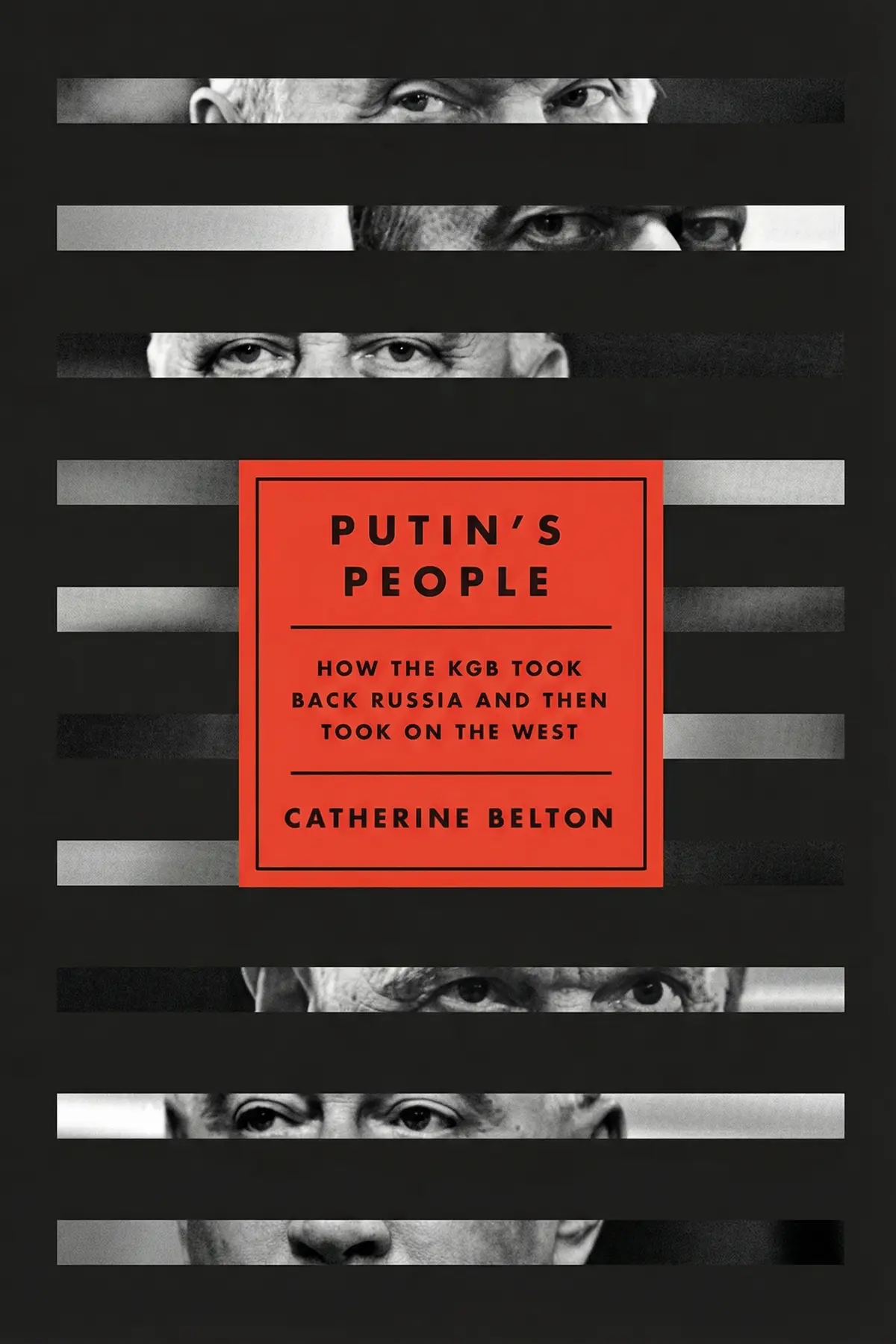
Catherine Belton traces how veterans of the Soviet secret police groomed Vladimir Putin, used him to seize Russia's media, oil and banks, and then spent that wealth buying influence in Ukraine, London, Europe and Washington.
58 sec
If the news from Russia looks like a blur of oligarchs, show trials and sudden wars, one thread ties it together. In Putin’s People, former Financial Times Moscow correspondent Catherine Belton argues that Vladimir Putin was never the accidental president he is often called. Former KGB men, veterans of the Soviet secret police, had watched and tested him since his days in the Leningrad city government, and they pushed him upward because he obeyed and looked strong on camera.
Belton’s case is that this network first took Russia’s wealth back from the tycoons of the 1990s, then turned that wealth against the West. Follow it from a sleepy KGB post in East Germany to a London soccer club and a Moscow parliament applauding an American election, and Russia’s moves stop looking random. They start to read as one plan, carried out by the same circle of people.
1 min 35 sec
A young officer in a forgotten East German city carried a pass into the buildings of another country’s secret police. What he learned there, while a regime crumbled around him, shaped everything he did later.
1 min 52 sec
In the 1990s, young tycoons grabbed Russia’s riches for almost nothing and the old secret police seemed finished. In one hungry city, though, food money vanished and a port changed hands.
1 min 32 sec
In under three years, an unknown official went from a property office to running the country. Then bombs tore through apartment buildings, and a man nobody recognized suddenly became the person everyone trusted.
2 min 07 sec
Russia’s richest man climbed rocks without ropes and challenged the president to his face. His fall followed a script already tested on a television channel and another oil giant, and it changed who owned Russia’s oil.
1 min 36 sec
Nine hundred people at a Moscow musical became hostages, and the rescue killed more than a hundred of them. Yet the president’s ratings rose afterward, and an insider’s account suggests why that was no surprise.
2 min 04 sec
An insurance company sold cheap, a gas middleman in Ukraine and a famous London soccer club look like unrelated stories. Belton connects them through one bank and one purpose.
2 min 10 sec
Soldiers without insignia, biker gangs, Orthodox charities and a casino in Atlantic City all appear in the same story. Belton shows how they served a single aim, and why it never needed a puppet in power.
1 min 08 sec
Belton’s story is one long operation. An officer who learned in Dresden how to keep a network alive through a regime’s collapse later helped that network do the same for Russia. It lost ground to the oligarchs, rebuilt itself through a city slush fund, then through television, oil and banks, and finally aimed the proceeds at Kyiv, London and Washington. The tools barely changed: front companies, staged legal cases and fear turned into loyalty.
That makes the book a way to read events as they happen. When a powerful critic suddenly faces a tax case, ask which asset is changing hands. When a crisis turns an unknown official into a hero, ask who shaped the response. When foreign money arrives with a famous purchase, a soccer club or a charity, ask what it is meant to make normal.
The Russian parliament burst into applause when Trump won. In Belton’s telling, the habits behind that cheer were formed decades earlier, among six KGB officers in a forgotten East German city.
Vladimir Putin is often called Russia's accidental president, a gray official who rose by chance. Catherine Belton, a former Moscow correspondent for the Financial Times, argues the opposite. Former KGB officers had watched and tested him for years, and they pushed him upward because he obeyed orders and looked strong on television. Belton follows that network from Putin's posting in Dresden, through a St. Petersburg slush fund meant for food imports, to the apartment bombings and theater siege that made him look indispensable. She then shows how the same men took back what Yeltsin's privatizations had given the oligarchs: the independent television channel ORT, the oil companies Lukoil and Yukos, and a bank that became the Kremlin's private treasury. The second half turns outward. Gas deals bent Ukraine's politics, Russian money and a soccer club purchase made London welcoming, NGOs and slush funds backed extreme parties across Europe, and Russian businessmen cultivated Donald Trump for decades. Readers get one connected explanation for headlines that otherwise look random, and a set of questions to ask the next time power and money move together.
Readers who follow world news and want one clear explanation of how Putin's Russia works.
Professionals in finance, law or property who meet Russian money and want to understand where it comes from.
Students of politics curious how a security service can capture a state.
Catherine Belton is a British journalist based in London. She was Moscow correspondent for the Financial Times from 2007 to 2013 and later its legal correspondent, and she has written about Russia for the Moscow Times and BusinessWeek and worked as an investigative correspondent at Reuters. Putin's People, published in 2020, was named a book of the year by The Economist and the Financial Times. In 2023 she was made an MBE for services to journalism.
Listeners find the work extensively researched and well crafted, with one individual highlighting how it cuts through fear and paranoia. The author’s prose also receives favorable mentions. However, listeners differ on the book's overall readability; some find it quite manageable, while others claim it is a difficult read. There are similarly mixed reviews concerning the character studies, as one listener enjoys the high number of influential figures while another finds the cast daunting. Finally, listeners provide varied perspectives on the book’s objectivity, with one describing it as an extremely biased piece of journalism.
Catherine Belton has managed the impossible by mapping out the labyrinthine web of 'KGB capitalism' that defines modern Russia. This isn't just a biography; it is a forensic deep-dive into how the collapse of the Soviet Union was actually a regrouping phase for the security services. Her research is staggering. She tracks how billions were funneled out of the country to create a shadow economy that eventually bought off Western politicians and institutions. To be fair, the level of detail is intense, and you might find yourself needing a notepad to keep the different oligarchs straight. However, the payoff is a frighteningly cohesive picture of a regime that uses wealth as a weapon of war rather than a tool for domestic prosperity. It is a chilling, essential read.
Show moreWow, this reads like a high-stakes espionage thriller, except the body count and the laundered billions are chillingly real. I found myself checking my front door locks while reading about the various 'accidents' that befell those who crossed the inner circle. Belton cuts through the fear and paranoia to show how the FSB took over the judicial system and used the law as a blunt instrument to crush dissent. The writing is sharp and evocative, never letting the reader forget the human cost of this 'KGB capitalism'. It is a bleak look at the 21st century, but ignoring these facts won't make them go away. If you want to know how global politics actually works behind the curtain, you need to read this book immediately.
Show moreThe section on the London Stock Exchange and the infiltration of 'dirty money' into our own banking systems was a total eye-opener for me. We often think of Russia as a separate, isolated entity, but Belton proves that their tentacles are deeply embedded in the heart of Western capitalism. The way Russian 'black cash' has been used to fund everything from Brexit campaigns to real estate deals is nothing short of scandalous. Personally, I think this should be required reading for every politician in the West. It exposes a level of corruption that we have ignored for far too long simply because it was profitable. The detail is meticulous, the tone is urgent, and the evidence is, frankly, overwhelming. It’s easily the best book on the subject I’ve ever found.
Show moreAfter hearing so much buzz about this title, I finally dove in and was stunned by the depth of the primary source interviews Belton secured. Getting people like Sergei Pugachev to go on the record provides a level of insight that most journalists can only dream of. The book exposes the 'feudal system' that Putin created, where everyone’s wealth is entirely dependent on their loyalty to the Tsar. It’s a fascinating, if depressing, look at how power is maintained through a mixture of state-sponsored terror and economic coercion. The narrative moves at a good clip once you get past the initial setup. I appreciate how she doesn't just focus on the headlines but goes into the mechanics of how the FSB actually operates on the ground.
Show moreThis book is a necessary wake-up call for those who believe the fall of the USSR ended the era of 'active measures.' Putin’s People demonstrates that the Cold War never truly ended; it just moved into the boardroom. Belton’s writing is exceptionally well-researched, and she manages to connect the dots between the 1980s Stasi operations and the 2016 US election interference with remarkable clarity. Got to say, the implications for the future are pretty bleak if we don't start paying attention to where the money is coming from. While some might find the detail exhaustive, I found it necessary to prove such a massive series of allegations. It is a brilliant, unsettling achievement in investigative reporting that everyone should read.
Show morePicked this up after the news cycles became too confusing to follow without deeper context. Belton’s background as a Financial Times correspondent shines through here, especially when she dissects the complex money-laundering schemes used to project Russian influence abroad. The chapters detailing Putin’s early years in St. Petersburg were particularly illuminating for me. It shows a man who was less of a mastermind and more of a lucky beneficiary of a system that needed a malleable face for the KGB’s return to power. Look, the book is quite long and the middle sections can feel a bit repetitive with the endless parade of billionaires. Still, it provides a vital framework for understanding how the West's own greed made us complicit in the rise of this new autocracy.
Show moreEver wonder how a mid-level officer in Dresden transformed into the ultimate arbiter of Russian power? This book provides as close to an answer as we are likely to get. The narrative flow is impressive despite the massive amount of financial data included. I was particularly struck by the description of the 'Non-Participation Pact'—the idea that the Russian public traded their political voice for a modicum of stability. It’s a tragic trade-off. My only real gripe is that the book can be a struggle to finish due to the sheer density of names and shell companies. At times, the characters bleed into one another, making it hard to track the specific motivations of each player. However, as a historical document of our current era, it is undeniably important.
Show moreFrankly, it's terrifying to see how the KGB playbook from the Cold War has been modernized for the era of global markets. Belton shows that the goal wasn't just to make Putin's friends rich, but to use that wealth to destabilize the very foundations of democracy. The book builds a compelling case, though I wish there was a bit more focus on the internal Russian experience rather than just the elite power struggles. The sentence structures are sometimes long and complex, reflecting the complicated nature of the subject matter. It isn't an easy beach read. However, for those willing to put in the effort, it provides a masterclass in investigative journalism. It’s a solid 4-star effort that deserves all the praise it has received for its bravery.
Show moreWhile I can't fault the sheer volume of research, the narrative often feels like it's hunting for a specific conclusion rather than letting the facts speak for themselves. The truth is that Belton starts with the assumption that every move by the Kremlin is part of a grand, nefarious conspiracy. This leads to a bit of confirmation bias. I wanted more analysis of how the West failed Russia in the 1990s, essentially pushing them toward this path. Instead, the book often feels like a 'Putin = bad' manifesto. Granted, he isn't a hero, but the geopolitical reality is more nuanced than a simple black-and-white morality play. It's a dense, informative book for sure, but be prepared for a very specific, Western-centric ideological lens that overlooks our own responsibility in this mess.
Show moreNot what I expected at all, as the text frequently drowns in a sea of names and financial minutiae that makes it a struggle to finish. I was hoping for a deep psychological character study of Putin himself, but he remains an enigma throughout most of the book. Instead, we get endless pages about offshore accounts and obscure banking transactions. To be honest, I found it incredibly daunting to keep track of the twenty-plus 'people' mentioned in the introduction. The writing style is competent, but the pacing is glacial. Unless you are a hardcore student of international finance or Russian history, this might feel more like homework than an engaging read. It’s a very biased piece of journalism that lacks the balanced perspective I was looking for.
Show moreBelton argues that Vladimir Putin rose to power with the backing of former KGB officers who had watched him for years. Once in office, he helped that network take back Russia’s media, oil and banks from the oligarchs who had grown rich in the 1990s. The book then follows how that captured wealth was used abroad, in Ukraine, London, European politics and the United States.
Belton says no. She describes former KGB generals pushing him forward because he was cooperative, followed orders and looked strong on television. His rapid climb ran from the Kremlin’s foreign property department to the FSB and then to prime minister in 1999. The apartment bombings that September, blamed on Chechen fighters, turned him into a public figure, and Yeltsin soon handed him the presidency.
Khodorkovsky, then Russia’s richest man, funded Putin’s opponents and refused Putin’s order to stop. His security chief and deputy were arrested, FSB commandos raided Yukos sites, and he was jailed and sentenced to eight years for tax fraud after a rushed trial. The state broke up Yukos, and the private share of Russian oil output fell from 80 percent to 45 percent.
Belton writes that Abramovich, an oligarch loyal to Putin, bought Chelsea at Putin’s request. The idea was that soccer, Britain’s national sport, would make British people more accepting of a Russian presence. It was part of a wider flow of Russian money into London, helped by listing rules looser than New York’s.
The book offers a way to read events. When a prominent critic suddenly faces a tax or embezzlement case, Belton’s account suggests asking which asset is changing hands. When a crisis makes a leader look heroic, ask who shaped the response. When foreign money arrives through a famous purchase or a charity, ask what it is meant to make acceptable.
Barack Obama

Masaji Ishikawa

John Rawls



Miles Taylor



Tracy Rosenthal

Jessica Valenti
AUDIO SUMMARY AVAILABLE
Get the key ideas from Putin’s People by Catherine Belton, plus 5,000+ more nonfiction titles.









