

14 min 27 sec
Available in: English
Psyched Up: How the Science of Mental Preparation Can Help You Succeed
Shows what to do in the minutes before an interview, pitch or race, using research on relabeling nerves, rituals, pep talks, music and rivalry, and weighs the risks of performance drugs.
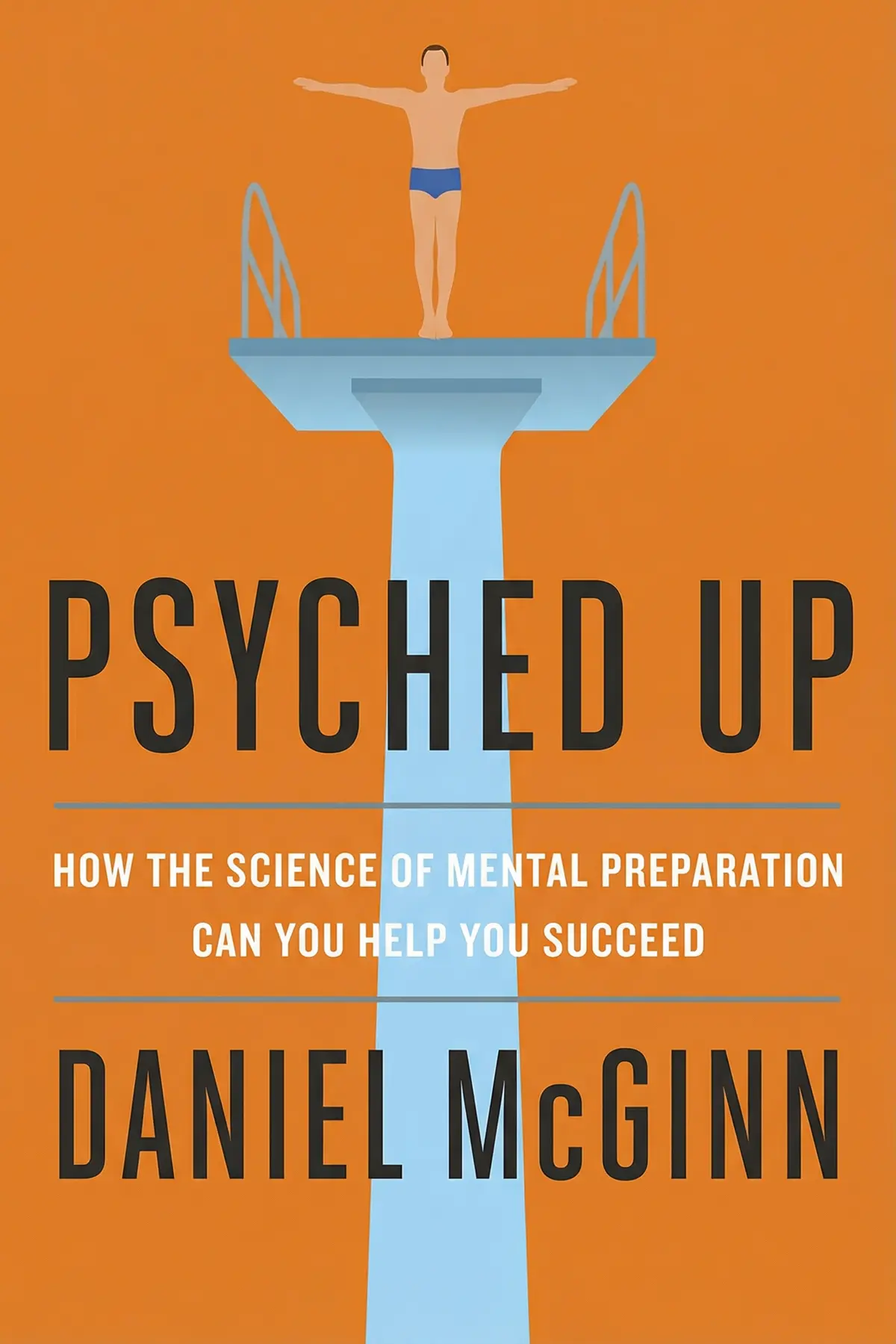
Table of Content
1. Introduction
58 sec
Nerves before an interview or a big talk feel like a sign that you are about to fail. Yet one study found that saying three words out loud, I’m so excited, helped people perform better than trying to calm down. In Psyched Up, journalist and Harvard Business Review editor Daniel McGinn gathers the research behind moments like that.
His subject is the short window before you perform: the minutes in the wings, in the hallway, in the locker room. His case is that what you do in that window, with your words, your habits, your music and even your rivals, shapes how well you do once it starts.
The tools are small and mostly free, drawn from sports psychology, business schools and the labs of people who study pressure. By the end, the next presentation or match comes with a short routine you can actually run, and a clearer view of which shortcuts are worth their price.
2. Call your nerves excitement and perform better
1 min 52 sec
A famous singer once needed fans to climb onstage and calm her down. A researcher who began studying the problem at a student audition found a fix that takes seconds and goes against what most of us try.
3. Build a small ritual that steadies your hands
1 min 51 sec
Golfers sank far more putts after hearing one small story about their clubs, and teams that stomped and clapped beat teams that sat quietly. Both results point to something most of us overlook before a big moment.
4. Open on autopilot so the pressure fades
1 min 41 sec
The first minute of a talk is when most speakers wobble. One start-up chief executive found a way to make that minute almost thoughtless, and a Nobel-winning psychologist’s model explains why it works.
5. Give pep talks that lift a team
1 min 34 sec
Most pre-game speeches talk about winning. A famous movie coach talked about something else, and research on mindset and on soccer teams suggests he chose well, though the right words still depend on the match.
6. Pick the right song for every part of a workout
1 min 40 sec
Sprinters with identical times lined up, and one minute of a famous rock song decided who crossed first. The expert who advises sports brands explains what such a track does to the body.
7. Let a rival push you further
1 min 45 sec
Cyclists in 1897 rode noticeably faster when someone was beside them, and a struggling phone company found fresh energy by picking public fights. The surprise is who makes the best opponent.
8. Weigh the real cost of performance pills
1 min 50 sec
A heart drug from the 1960s rescued one magazine editor’s career, and a sleep medicine has become popular with high achievers. McGinn looks at what these pills offer and what they take in return.
9. Conclusion
1 min 16 sec
The idea underneath Psyched Up is that a performance starts before the curtain rises. The racing heart Carly Simon felt in 1981 is the same signal Alison Brooks’s excited singers turned to their advantage. What changed was the story they told about it and the routine wrapped around it. McGinn’s research suggests the minutes before a big moment are not dead time to sit through. They are a stretch you can design.
Most of what he gathers costs nothing. Before your next interview or presentation, name your nerves as excitement out loud and take a minute to breathe and center. Run the same short routine every time, and if you lead a group, give it a shared one. Rehearse your opening until it runs without thought, and keep one song that gets you moving. When you prepare others, praise their effort, and choose facts or fire to suit the contest.
McGinn also suggests borrowing an object from someone who has already done what you are attempting. As an admirer of Malcolm Gladwell, he managed to get hold of a keyboard Gladwell had written on. Whether the help lives in the keys or in the belief, the lesson holds: what you bring into the room starts working before you say a word.
About this book
What is this book about?
Job interviews, presentations, auditions and races share one hard moment: the wait just before you begin. Most people spend it trying to calm down and feeling worse. Journalist Daniel McGinn argues that this stretch of time can be used instead of endured, and that research shows how. McGinn gathers findings from sports psychology, business schools and university labs. A researcher who started out in an a cappella audition shows why saying you are excited beats trying to relax. A Harvard study of 221 people on a scavenger hunt shows what a shared ritual does for a team. A 19th-century study of bicycle races and a modern chief executive's public feud show how rivals push people to go faster. Along the way come a famous basketball film, a rock anthem tested on sprinters, and golfers who putted better with clubs they believed belonged to professionals. Readers get a short, practical routine for high-pressure moments, advice for coaching others before they perform, and an honest look at the drugs some professionals now take to steady their nerves or sharpen their focus.
Book Information
Who it's for
Professionals who freeze up
Professionals who dread presentations, interviews or pitches and freeze in the first minute.
Managers and coaches
Managers, coaches and team leads who give pep talks and want them to land.
Students and weekend athletes
Amateur athletes and students looking for simple, research-based routines before a race, exam or audition.
About the Author
Daniel McGinn
Daniel McGinn is a journalist and author and an editor at the Harvard Business Review. His articles have appeared in Newsweek, Wired and the Boston Globe magazine. In Psyched Up he brings a reporter's eye to the research on how people prepare their minds before a performance.
Ratings & Reviews
Ratings at a glance
What people think
Listeners find the material deeply insightful, with one listener noting the skillful synthesis of a vast amount of knowledge. The writing is also straightforward and full of useful tips, with one listener emphasizing its collection of non-gimmicky strategies for life improvement. Additionally, listeners value the competitive edge it provides, as one mentions how it aids performance in pressure situations. They are also moved by the book's encouraging nature, with one listener pointing out that everyday people, including nonathletes, can appreciate and emulate its teachings.
Top reviews
Savannah
Daniel McGinn has delivered a masterclass in synthesizing complex psychological research into something actually usable for the average person. Most books in this space focus purely on the elite—professional athletes or CEOs—but this feels like it's meant for the rest of us too. I was particularly fascinated by the section on the Fenway Park DJ; it’s a job I never thought about, yet the pressure is immense. The strategies are non-gimmicky and grounded in real-world application, making it easy to see how a teacher or a middle manager could benefit from a pre-performance ritual. Frankly, it’s refreshing to find a book that doesn't just yell "hustle harder" but instead gives you a toolkit for pressure situations. This is an essential read for anyone looking to stay cool when the stakes are high.
Show moreOscar
Wow, I finally feel like I have a toolkit for my anxiety that doesn't feel like a series of empty clichés. This book is exceptionally well-written and synthesizes a vast amount of psychological knowledge into something digestible. I’m not an athlete, but I found myself relating to the pressure felt by the musicians and surgeons profiled in these chapters. It’s inspirational because it shows that mental preparation is a skill you can actually practice, rather than just a personality trait you're born with. The strategies are non-gimmicky, focusing on things like music and rituals that have actual measurable effects on the brain. If you’ve ever felt like you choked during a big moment, this book is going to be your new best friend.
Show morePrae
The chapter on pharmaceutical cognitive enhancers was the highlight of this book for me, even if it felt a bit out of place compared to the earlier chapters. McGinn takes a balanced look at beta-blockers and nootropics like modafinil, exploring how people use chemistry to handle performance anxiety. To be fair, he doesn't fully endorse them, but the "experiment" he does with a nurse was quite revealing about current societal attitudes toward edge-seeking. The rest of the book follows a more traditional path, looking at sports psychology and how we can translate those locker-room pep talks into boardroom success. It is meticulously researched and accessible, though it occasionally gets bogged down in narrative at the expense of deeper data. Overall, it’s a very solid survey of a nascent field.
Show moreSuthinee
As someone who spends a lot of time giving presentations, I found the "pre-performance ritual" section incredibly relevant. McGinn has a knack for taking high-level sports psychology and making it feel approachable for the average professional. The book reads very much like a "Power of Habit" for performance, blending storytelling with actionable advice that isn't just common sense. I loved the mention of the Julliard course where they simulate worst-case scenarios to help performers recover faster during actual recitals. It makes you realize that being "psyched up" isn't just about high energy; it's about being prepared for things to go wrong. There are some minor criticisms about the depth of the research, but it’s a great introduction to the world of mental preparation.
Show moreElias
After hearing about the Julliard case studies, I knew I had to give this a read to help with my own stage fright. McGinn explores how exposure to extreme events during practice can help you keep your cool when it really counts. Personally, I found the "reappraisal technique" to be the most valuable part of the whole book because it's so easy to implement. The author’s look at the "Mitch & Murray" style pep talks was also a fun trip through pop culture, though the science behind them is apparently a bit shaky. Some of the older studies mentioned, like the power stance research, are acknowledged as being potentially spurious, which I appreciated. It's an honest look at what works and what might just be a placebo.
Show moreEthan
Ever wonder what goes through a surgeon’s head right before they make the first cut? This book dives deep into that high-stakes mental prep, offering seven specific strategies ranging from reappraisal techniques to the power of a good playlist. In my experience, the most interesting parts were about harnessing rivalry and even anger, though some of that felt a bit aggressive for my taste. While it’s definitely an easy read, I struggled with the section on the "psyche-up pill" and the ethics of using performance-enhancing drugs for work. It’s a practical guide for amateurs, but it doesn’t quite reach the heights of something like "The Power of Habit." Still, if you have a big presentation coming up, there are definitely a few nuggets worth highlighting.
Show moreManee
Picked this up because I’m a chronic over-thinker and I needed a way to manage my nerves before big meetings. I appreciate that the author doesn't rely on fluff; he provides a clear framework of seven strategies that anyone can try immediately. The idea of "reappraisal"—turning anxiety into excitement—is something I’ve started using with decent results. That said, I found some of the advice about bad-mouthing opponents and leaning into anger a bit off-putting and counterproductive. It feels like the book tries to bridge the gap between "win at all costs" and "be your best self," and it doesn't always succeed. It’s a good, practical book for the shelf, but maybe not the definitive guide I was hoping for.
Show moreOwen
Look, if you’re already a self-improvement junkie, this book might feel a little bit like a refresher course rather than a revelation. Most of the seven strategies, like positive affirmations and using a playlist, are things you’ve likely encountered in other "peak performance" blogs or podcasts. However, the way McGinn packages them together makes for a very easy-to-read and practical guide for the amateur. I think the chapter on rivalry was the most unique, even if the research suggests that "getting mad" isn't always the best for winning. To be fair, the book is much more of a literature review than an original scientific study, but it's a high-quality one. It’s a decent choice for a weekend read if you want to sharpen your mental game.
Show moreAmara
I really wanted to like this more, but it felt like a retread of every other performance book I've picked up this year. To be fair, McGinn writes well and the anecdotes about athletes are engaging, but the actual takeaways felt a bit thin for someone already familiar with the genre. He covers things like music playlists and pep talks, which are fine, but they aren't exactly groundbreaking "life-changing" revelations as the cover blurb might suggest. I think I was looking for deeper psychological data rather than just a collection of interesting stories. If you are new to the world of mental preparation, this might be a solid four-star read for you. However, for the veterans of self-improvement, it’s mostly stuff you’ve heard before in different words.
Show moreTar
Not what I expected given the hype surrounding this title on social media. While the writing is fluid and the case studies are interesting, the moral compass of the advice is all over the place. One minute we're talking about positive affirmations and the next the author is discussing how to use rivalry and "getting mad" to crush an opponent. Then there’s the whole section on performance drugs, which frankly felt like it undermined the mental strategies discussed earlier in the text. I didn't feel like I gained more knowledge on how to prepare better for my specific work situations. It’s worth a skim if you can find it at the library, but I wouldn't go out of my way to own it.
Show moreQuestions about this book
What is the main idea of Psyched Up by Daniel McGinn?
McGinn argues that how you use the time just before a performance shapes how well you perform. Drawing on sports psychology and academic studies, he shows that relabeling nerves as excitement, keeping consistent rituals, rehearsing an automatic opening, giving the right pep talk, choosing motivating music and competing against rivals can all improve results. He also examines performance drugs and their side effects.
How do you turn anxiety into excitement before a performance?
Researcher Alison Brooks found that people who said out loud that they were excited before performing did better than those who said they were nervous or tried to stay calm. Her explanation is that anxiety and excitement feel physically similar, so switching between them is easy, while moving from anxiety to calm is hard. McGinn pairs this with Robert Nideffer’s centering exercise of deep breathing and releasing muscle tension.
What makes a good pep talk according to Psyched Up?
McGinn points to the coach’s speech in the film Hoosiers, which focuses on effort and practiced basics rather than winning. Psychologist Carol Dweck argues this kind of message builds a growth mindset. Tiffanye Vargas’s research adds that facts work best against a new opponent or after a narrow loss, while emotional language works best for underdogs and championship games.
Does music really improve performance?
McGinn cites a 1995 study in which sprinters with identical times raced in pairs, and those who heard Eye of the Tiger for a minute beforehand won. The music raised their heart rates, tensed their muscles and lowered their anxiety. Expert Costas Karageorghis says rhythm and melody make a song motivating and suggests a separate playlist for each phase of a workout.
Who should read Psyched Up?
It suits anyone who has to perform under pressure: people facing presentations, interviews or pitches, leaders who prepare teams for big moments, and athletes or students before races and exams. Its tools are short and mostly free, from a one-sentence relabel of nerves to a team ritual, and it gives a balanced look at drugs some professionals use for anxiety and focus.
Readers also enjoyed


59 Seconds: Change Your Life in Under a Minute
Richard Wiseman



60 Seconds & You’re Hired!
Robin Ryan



A Liberated Mind: How to Pivot Toward What Matters
Steven C. Hayes

AUDIO SUMMARY AVAILABLE
Listen to Psyched Up in 15 minutes
Get the key ideas from Psyched Up by Daniel McGinn, plus 5,000+ more nonfiction titles.
- 5,000+ titles
- Listen as much as you want
- 7-day free trial
- Cancel anytime









