

14 min 47 sec
Available in: English
Psych: The Story of the Human Mind
By Paul Bloom
A guided tour of what psychology has learned about the mind, from what babies know at birth to why we overrate ourselves, misjudge others and find happiness mainly through relationships.
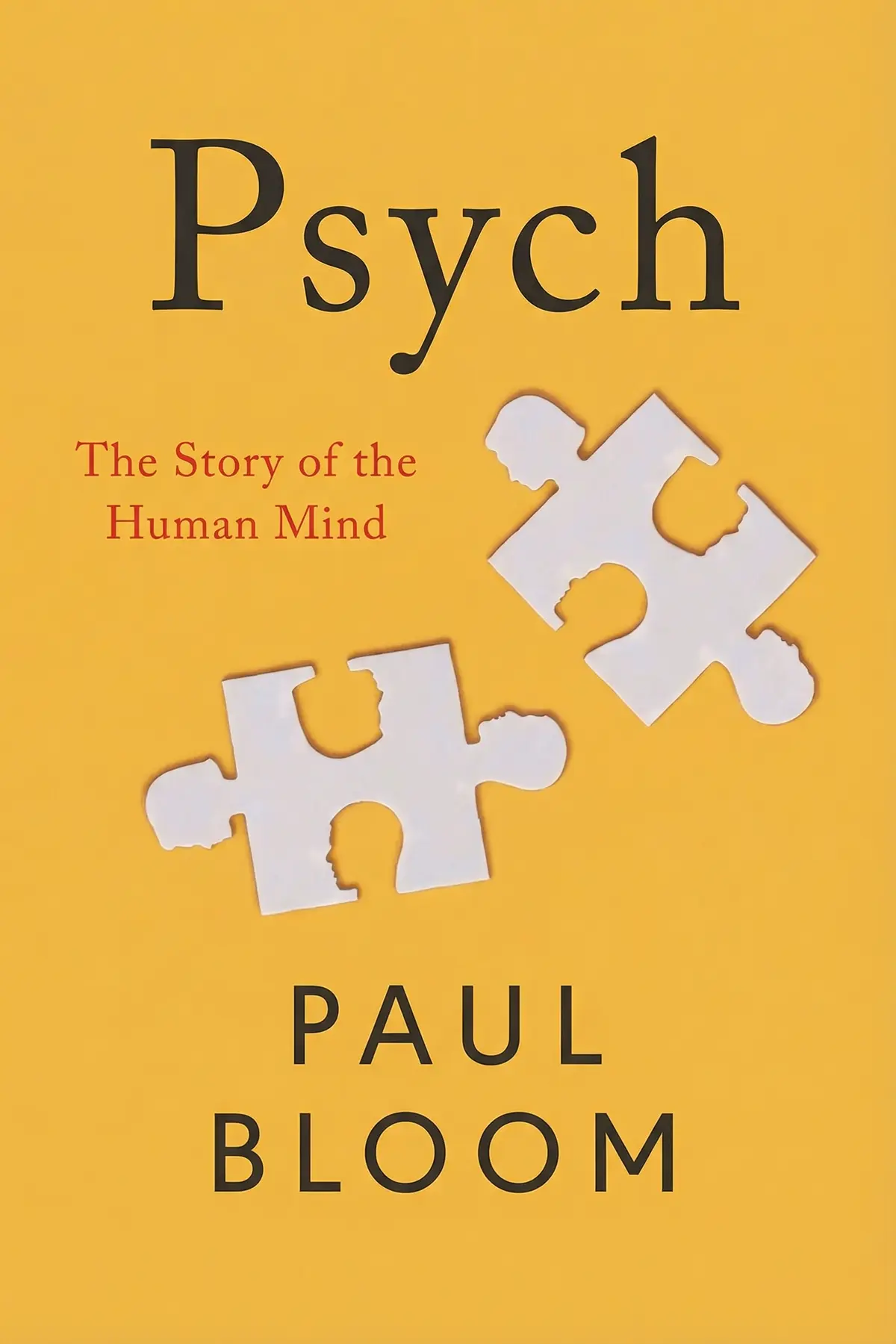
Table of Content
1. Introduction
1 min 05 sec
Most of us explain other people’s behavior, and our own, with guesses we never test. In Psych, Yale and University of Toronto psychologist Paul Bloom swaps those guesses for evidence, including a humbling result: in one study of 661 people, most believed they were less biased than average. Bloom grew the book out of his popular Yale course, Introduction to Psychology, and it moves from the brain to babies, then to motives, prejudice and finally happiness.
His thread is that brain science maps the parts, while psychology explains how the mind actually runs. That mind is a strange one. It arrives partly prewired. It is pushed by tangled motives and feelings, it flatters itself while misjudging others, and it does best when it invests in other people. Along the way you get a few tested habits: pricing what you value, checking the situation before blaming the person, and putting relationships first.
2. Ask the mechanic, not only the physicist
1 min 50 sec
Scientists can now point to the brain region behind speech, movement or emotion. Yet those detailed maps leave one question untouched, and it is the question that turned psychology into its own science.
3. Settle nature versus nurture with a phone
1 min 35 sec
One textbook says arguing over genes versus upbringing is like asking whether a rectangle’s length or width matters more. Bloom agrees, up to a point, and the place he stops is where the interesting science begins.
4. Read a baby's stare as evidence
1 min 29 sec
Infants cannot fill in a survey or explain what they think. Researchers found another way to ask, and the answers suggest babies know more than Piaget assumed, and that toddlers may be running experiments on you.
5. Price a live beetle to expose your motives
1 min 41 sec
In 1937 people were asked to name their price for losing a toe or eating a beetle. Their answers sank a popular theory of human motivation and showed why our reasons are rarely as simple as they seem.
6. Expect feeling behind even the calmest choices
1 min 31 sec
Popular stories admire the mind that runs on pure logic, from Mr. Spock to the android Data. Bloom borrows a sharp argument from Steven Pinker to show why such a mind could never get out of bed.
7. Catch the bias that flatters you most
1 min 31 sec
Ask people whether they are more biased than average and almost no one says yes. A 1959 experiment with a boring task and a single dollar shows how far the mind will go to protect its good opinion of itself.
8. Judge the situation before the person
1 min 19 sec
A coworker snaps at you and you decide they are rude. Psychologists have a name for that instant verdict, and Bloom argues the cure is not trying harder to be fair but changing how decisions get made.
9. Build a happy life around other people
1 min 34 sec
A decade of data from 1.5 million people points to one ingredient above income, health and sleep. Bloom also explains why chasing the thing most of us chase can backfire, and what tends to work better.
10. Conclusion
1 min 12 sec
Bloom’s mechanic is the image worth keeping. Living well with a mind takes knowing how the parts behave together and where they tend to fail. The failure his book keeps returning to is that the mind is a poor witness to itself. It feels self-made, though it arrived with some expectations already installed. It feels reasonable, though feeling steers what it wants. It feels fair while it flatters itself and blames others.
A good mechanic does not trust the dashboard alone, and neither should you. When you feel sure you are less biased than the people around you, remember that most of 661 people in one study felt exactly the same. When someone lets you down, ask about their week before you rule on their character, and when the decision matters, build fairness into the process instead of relying on goodwill. When you plan your time, give the first claim to the people you can lean on, since the largest study Bloom describes found them at the heart of a good life.
The mind cannot see itself clearly from the inside, and psychology gives it a second pair of eyes.
About this book
What is this book about?
Most of us explain our own behavior, and everyone else's, with guesses we never test. Paul Bloom, a psychologist at Yale and the University of Toronto, expanded his popular Yale introductory course into a book that replaces those guesses with what the science of the mind has actually found. Bloom starts by separating psychology from neuroscience: one maps the brain's parts, the other explains how thought and behavior work. He places every theory on a range between Sigmund Freud's unconscious forces and B. F. Skinner's rewards and punishments. From there he takes up the field's big questions. How much of the mind is present at birth? Why would people demand $400,000 to eat a live beetle? Why do almost all of us think we are less biased than average, and why do we blame people's character for what their circumstances caused? The book ends with happiness, drawing on a study of 1.5 million people in 166 countries. Readers come away with a clear map of the major theories and a handful of habits for judging themselves and others more accurately.
Book Information
Who it's for
Professionals curious about psychology
Curious professionals who want a clear map of psychology's big ideas without taking a course.
Managers and team leads
Managers and team leads who want to spot bias in how they judge and hire people.
Rethinking the good life
Parents, students and anyone rethinking what actually makes a life feel good.
About the Author
Paul Bloom
Born in Montreal, Quebec, Paul Bloom is an emeritus professor at Yale University, where he held a chair in psychology and cognitive science, and he also serves as a psychology professor at Toronto's university. He has published more than a hundred scientific articles, in journals including Science and Nature, and has written for the New York Times, the New Yorker, the Atlantic Monthly and Slate. His other books include Just Babies, How Pleasure Works, Descartes' Baby, Against Empathy and The Sweet Spot.
Ratings & Reviews
Ratings at a glance

What people think
Listeners find this book serves as a solid introduction to modern psychology and appreciate the comprehensive overview it provides of the field. Additionally, the text is praised for its humor and clarity. However, listeners are divided on the actual ease of reading.
Top reviews
Ray
Picked this up after hearing Paul Bloom on a podcast and it lived up to the hype! Psych provides an incredibly comprehensive look at the field without ever feeling dry or overly stuffy. I especially loved the deep dive into language acquisition in children, even if it got a bit technical for a moment. Most chapters work perfectly as standalone essays, which makes it easy to digest in small chunks between my busy work shifts. Look, if you want a masterclass in how the human mind functions, this is the book you need to buy right now. Plus, any author who manages to reference The Wire while explaining social psychology is an instant winner in my book.
Show moreTee
Wow, this is easily the most coherent and readable guide to modern psychology I have encountered in years of casual reading. Bloom balances the history of the mind with cutting-edge research, ensuring the reader never feels like they are stuck in the past. Not gonna lie, I was worried it would be too dense, but the author’s sense of humor keeps the momentum going through the harder chapters. The section discussing whether everyone is a little bit racist was handled with incredible nuance and academic rigor. It’s rare to find a book that feels both like a legitimate education and a fun evening activity. Highly recommended for the curious soul who wants to learn some real shit.
Show moreJin
Ever wonder why children learn languages so much faster than adults, or what actually causes us to feel empathy for strangers? Paul Bloom tackles these questions and a hundred others with a style that is both authoritative and remarkably easy to digest. Frankly, I think this should be required reading for anyone who wants to stop being annoyed by the 'dumb' things people do and start understanding them instead. He integrates philosophy and science so seamlessly that you don't even realize you’re learning until you’ve finished fifty pages. The book is massive, yes, but the wit and intelligence on every page make it a very quick and rewarding read for any average reader.
Show moreNiramai
In my experience, most introductory science books are either too simple to be useful or so complex that they’re basically unreadable. Psych hits that elusive sweet spot, providing a deep dive into the human mind while remaining incredibly entertaining and sharp throughout. I loved how the author included his own voice and opinions, especially when discussing the more controversial parts of psychological history. Every chapter can stand alone, which allowed me to jump around to the topics I was most excited about, like social interaction and development. This is a brilliant compendium of knowledge that I’ll be keeping on my shelf for a long time to come. It truly feels like a dream college course.
Show moreFatou
As someone who hasn’t stepped into a psychology classroom in over a decade, this was the perfect refresher course for my aging brain. Bloom walks the reader through the foundational work of Freud and Skinner before pivoting into modern debates that are currently shaping the industry. He has a way of being sensitive to complex human issues without ever becoming too sappy or sentimental in his writing style. My only real gripe is that some of the philosophical arguments felt a bit more abstract than the tangible neuroscience I usually prefer. Regardless, it’s a witty and deeply informed overview that makes me wish I had him as my professor back in university. It’s definitely a solid investment for the curious.
Show moreAkosua
Finally got around to reading this one and I'm genuinely impressed by the sheer breadth of topics Bloom manages to cover. The book functions like a high-level syllabus expanded into a series of engaging, witty conversations about why we do the weird things we do. It’s definitely more of an introductory text, so if you’ve already read ten books on behavioral economics, you might find some of this familiar. That said, his voice is so distinct and humorous that I didn't mind revisiting the basics one more time. It’s an accessible gateway for anyone curious about the 'why' behind human nature without needing a PhD to understand the sentences. A very well-written and competent guide.
Show moreTakeshi
After hearing so much buzz about this title, I was glad to find that it serves as a fantastic entry point for the uninitiated. Bloom is a fine writer who knows how to explain hotly contested theories without showing too much bias toward one side. You get a little bit of everything: from the early days of psychoanalysis to modern questions about how we learn to speak and interact. It’s quite a long journey, and there were times when I wished he would reach a conclusion a bit faster instead of lingering on random facts. However, the insights I gained into my own daily behavior made the longer chapters worth the extra effort. Definitely worth a spot on your shelf.
Show moreUbolrat
The chapter on Freud and Skinner alone made this worth the purchase for me, as it cleared up so many misconceptions I had. Bloom manages to be a great teacher by taking these massive, often boring topics and making them feel relevant to our modern lives. To be fair, there are moments where it feels like he’s following a strict syllabus, which can stifle the creative flow of the narrative. But the overall quality of the information is so high that it’s easy to overlook a few dry patches in the middle. It’s a solid, comprehensive guide that doesn't talk down to its audience, which is something I always appreciate in non-fiction books.
Show moreBird
Not what I expected after following Bloom’s work online for quite a while now. The book is essentially his college course transcribed into a massive volume, which sounds great on paper but feels a bit disconnected in practice. I think I prefer his podcast appearances because the abstract theories he discusses here feel much more tangible when he’s speaking out loud. There were definitely moments of brilliance—particularly the parts about children's development—but the pacing was just a little too uneven for my taste. It’s a decent enough overview for a complete novice, yet it might feel a bit repetitive for anyone with a basic background in the subject. It’s fine, just not groundbreaking.
Show moreOak
I really wanted to like this, but it felt like I was back in a crowded lecture hall staring at a PowerPoint presentation. The truth is, Bloom tries to pack way too much into these pages, making it feel more like an expensive college textbook than an engaging read for the casual fan. While there are definitely some interesting tidbits about human behavior, they often get lost in endless paragraphs of academic rambling. If you aren't an expert looking to build on specific technical knowledge, you might find yourself zoning out after twenty pages. To be fair, he’s a smart guy, but this isn't exactly 'beach reading' material. It just felt too long and lacked a clear conclusion for many of the arguments presented.
Show moreQuestions about this book
What is Psych by Paul Bloom about?
Psych is Paul Bloom’s tour of what psychology has learned about the human mind, expanded from his Yale introductory course. He separates psychology from neuroscience, sets Freud and Skinner at the two ends of psychological theory, and then works through big questions: what babies know at birth, what motivates us, why we are biased toward ourselves and against others, and what research says about happiness.
What is the difference between psychology and neuroscience according to Bloom?
Bloom compares them to a physicist and a mechanic looking at a car. Neuroscience, like physics, explains what the brain is made of and which regions control abilities such as speech or movement. Psychology, like a mechanic, studies how the parts work together to produce thought and behavior. Neuroscience also leaves open what philosopher David Chalmers called the hard problem of consciousness.
What does Psych say about cognitive bias?
Bloom shows that most people rate themselves above average at almost everything, even at being unbiased: in one study of 661 people, only one admitted being more biased than average. He also explains cognitive dissonance through a 1959 experiment where people paid $1 to lie convinced themselves a boring task was fun, and the fundamental attribution error, our habit of blaming character instead of circumstances.
What does Paul Bloom say is the key to happiness?
Bloom points to a study of 1.5 million people in 166 countries over a decade, which found solid relationships to be the strongest trait shared by happy people. He notes that such data cannot prove cause and effect, but other studies show volunteering and giving make people feel good. Pursuing money tends to backfire, while seeking connection with others has shown good results.
How can I apply the ideas in Psych?
Price the tasks you avoid to see what really drives you, as Thorndike’s study did. Treat strong certainty that you are fair as a reason to check yourself. Before blaming a colleague’s character, consider their circumstances, and for important decisions like hiring, hide information such as race and gender from the people deciding. Finally, protect time for the relationships you rely on.
Readers also enjoyed

Acting with Power: Why We Are More Powerful Than We Believe
Deborah Gruenfeld

Age of Propaganda: The Everyday Use and Abuse of Persuasion
Anthony Pratkanis




59 Seconds: Change Your Life in Under a Minute
Richard Wiseman



AUDIO SUMMARY AVAILABLE
Listen to Psych in 15 minutes
Get the key ideas from Psych by Paul Bloom, plus 5,000+ more nonfiction titles.
- 5,000+ titles
- Listen as much as you want
- 7-day free trial
- Cancel anytime









