
13 min 54 sec
Available in: English
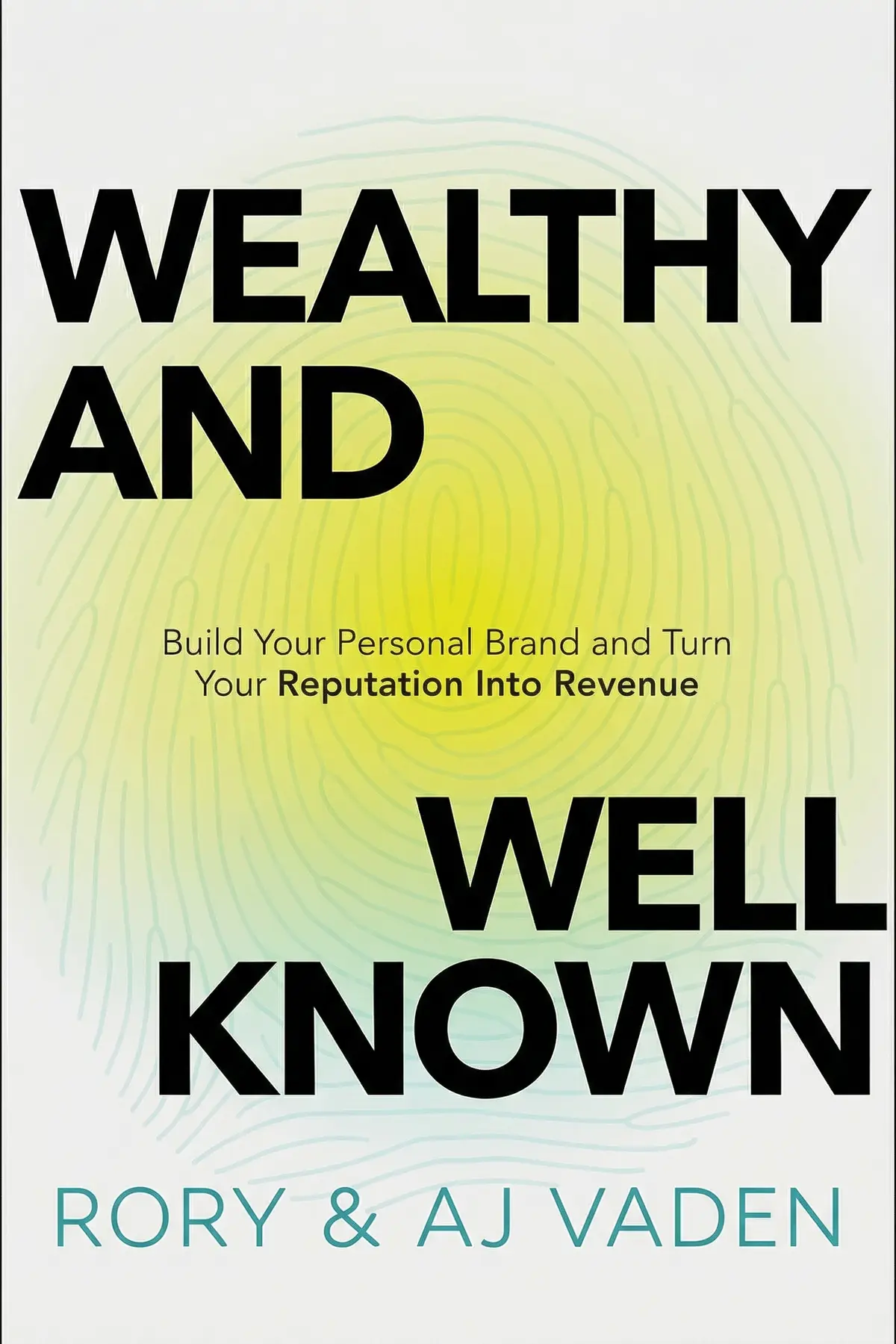
Procrastinate on Purpose: 5 Permissions to Multiply Your Time
By Rory Vaden
Shows how to get more hours out of a crowded week. Before any task, decide whether to drop it, automate it, hand it off or delay it, then give whatever is left your full attention.
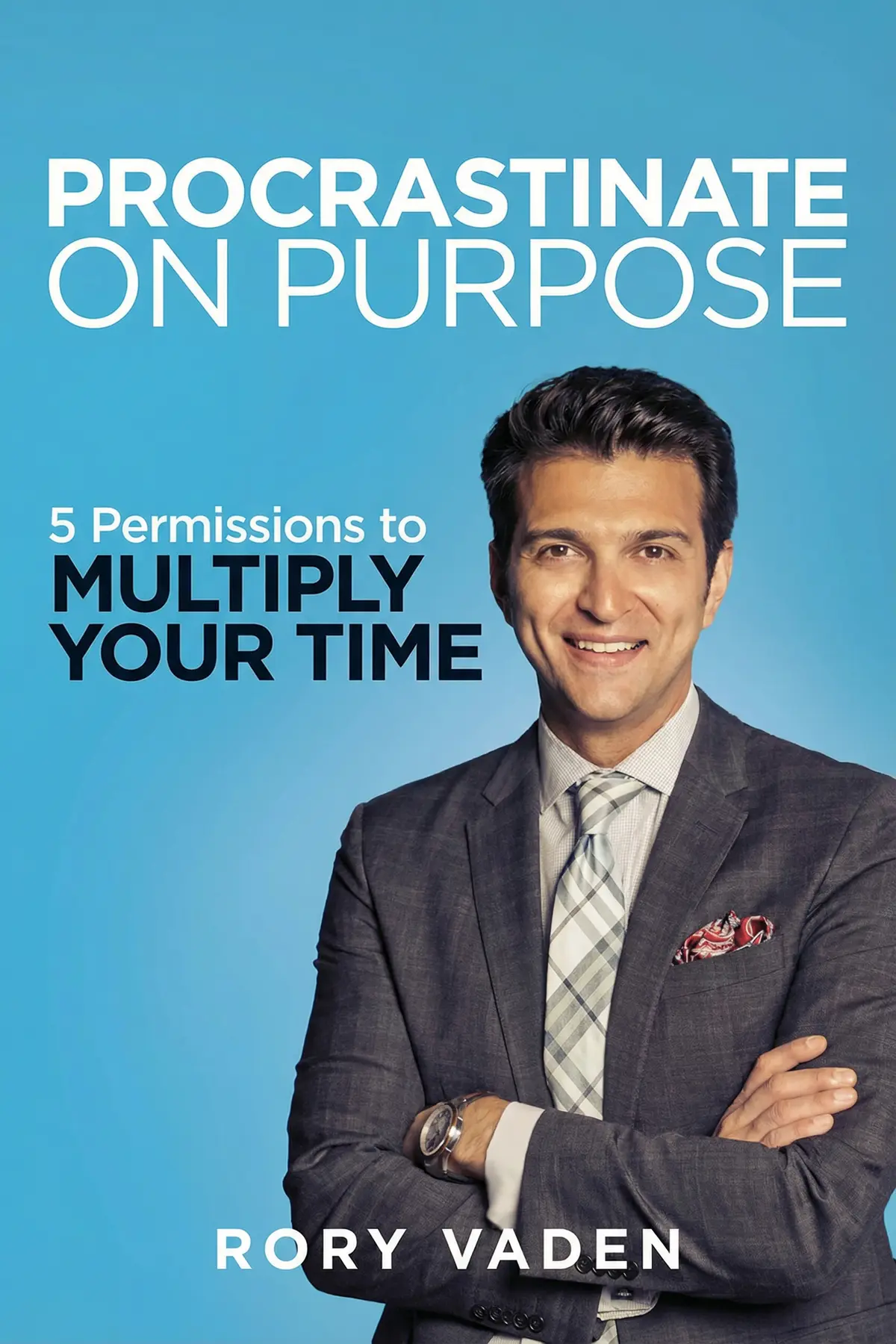
Table of Content
1. Introduction
1 min 09 sec
If your calendar is full and your most important work still slips, Rory Vaden suggests an unexpected place to look for more hours. In Procrastinate on Purpose, the entrepreneur and consultant reports that the highly productive people he studied, whom he calls multipliers, never complain about being busy, and that they gain time mainly by removing work. His method is five permissions applied in order. Before starting any task, ask whether you can eliminate it, automate it, delegate it or wait on it. Only what survives all four earns your full concentration.
That sequence carries the whole argument. Time grows when you first decide what not to do yourself, and when to do the rest, before you worry about how hard to work. Along the way you meet a $5 coffee that really costs $35, a training rule that turns five daily minutes into 1,100 saved minutes a year, and a fisherman who knows the hour when fish bite. What you get is a filter to hold up to tomorrow’s to-do list, one task at a time.
2. Stop wearing busyness like a badge
1 min 36 sec
One multiplier Vaden asked said she had plenty to do but saw complaining as wasted mental energy, and multipliers like her seemed calmer for accepting full schedules. Her reason shows where the first hour of a full week is really lost.
3. Cut tasks before you add new ones
1 min 39 sec
The usual way to get better results is to add something: a new system, a smarter morning routine. Multipliers do something else first, and two everyday habits show how much time it can return.
4. Treat your hours the way investors treat money
1 min 42 sec
Two people look at the same $5 coffee and see two very different prices. The gap between them explains why many businesses keep paying, every single day, for work a machine could do.
5. Win back hours each year by training someone once
1 min 46 sec
Explaining a task often feels slower than doing it yourself, and on day one it is. A simple rule from business schools shows what happens when you run the numbers over a full year.
6. Wait for the right moment and skip the rework
1 min 37 sec
A fisherman can stand at the same lake for hours and catch nothing, or arrive later and fill his line. The book’s title comes from that difference, and it only looks like laziness.
7. Give one priority your whole attention
1 min 36 sec
A farmer at harvest cannot afford a distracted day, and most office workers cannot either, though they rarely act like it. One planning habit separates multipliers from almost everyone else.
8. Show your company what lost hours really cost
1 min 41 sec
Firms track every dollar with budgets and statements, yet almost none track where their people’s hours go. Vaden puts a price on that blind spot, per employee, and suggests who should move first.
9. Conclusion
1 min 08 sec
Vaden’s book changes what the busy feeling means. A day cannot be made longer, but the hours in it can be multiplied, and that happens through decisions made before any work begins. The woman who refused to complain, the owner who should have waited to pack the order and the farmer bent over one harvest all share a habit. Each chose what deserved their hours and let the rest go, wait or pass to someone else.
Vaden carries the idea to the longest timeline of all, your life. Exercising and eating well today make future health problems less likely. So spending some minutes and dollars on cooking real food each evening, and keeping your gym visits, is in his framing an investment that can add years.
The daily version fits on one line. When a task lands, hold it up to the permissions in order: drop it, automate it, hand it off, wait on it, or give it your whole mind. And when someone asks how you are, skip the speech about how busy you are. You chose these commitments, and choosing again is where the extra time comes from.
About this book
What is this book about?
Many professionals treat busyness as proof of their worth and still end each week behind. Rory Vaden argues that working faster or adding clever routines will not fix this. More time comes from deciding what deserves your hours in the first place. Vaden studied highly productive people he calls multipliers and turned their habits into five permissions applied in order. First eliminate what does not matter. Automate what repeats, and delegate what someone else can do. Wait on what may still change. Only then give your whole attention to the one priority left. His examples are easy to remember: a $5 coffee that really costs $35, a 30x training rule that saves more than a thousand minutes a year, a business owner who packs an order too early, and a farmer focused on her harvest. The book also turns to organizations. Survey data from Vaden's consultancy shows how much paid time disappears into activities that do not matter. Readers come away with a short filter to run on any task, plus a way to stop complaining about their workload and start taking charge of it.
Book Information
Who it's for
Workers always catching up
Professionals who feel permanently behind and want a clear rule for what to drop.
Hands-on owners and managers
Founders and managers who keep doing tasks they could automate or hand off.
Supervisors wary of busywork
Team leads who suspect meetings and busywork are eating their team's week.
About the Author
Rory Vaden
Rory Vaden is an author, entrepreneur and speaker who studies the psychology of influence, which he describes as getting yourself and others to act. He cofounded Brand Builders Group and Southwestern Consulting, a firm that helps clients grow their businesses and improve customer experience. He also wrote Take the Stairs. His ideas have appeared in the Wall Street Journal, Forbes and CNN, and he has spoken for organizations including Google and the Million Dollar Round Table.
Ratings & Reviews
Ratings at a glance
What people think
Listeners find this guide to be a superb introduction that is simple to grasp and worth their time. They value its actionable strategy for organizing schedules, with one listener noting how it helps generate extra time for important tasks. Listeners consider it deep and insightful, with one calling it a novel and potent framework, and life-altering, as it helps them get more done with less anxiety. The book is praised for its accessibility, with one listener pointing out the author’s talent for explaining the methodology in plain language.
Top reviews
Logan
The chapter on the cost of 'too early' changed my entire perspective on how I handle project management. Vaden introduces the idea of 'multiplying' your time by investing it today in things that give you more time tomorrow. It’s a brilliant, fresh take that moves beyond the old-school juggling act of prioritizing a never-ending to-do list. In my experience, most business books are fluff, but this one provides a clear methodology for identifying which tasks deserve your immediate concentration. By embracing the permission to procrastinate on the non-essentials, I’ve managed to carve out more hours for my family and health. This is truly a thought-provoking read that challenges the Darwinian 'hustle' culture by advocating for intentional patience. I highly recommend it for any entrepreneur who feels spread as thin as butter over too much bread.
Show moreRay
Wow. This is essentially the 'Rich Dad, Poor Dad' of time management because it teaches you how to make your minutes work for you instead of you working for them. Vaden explains that time isn't just something to be managed; it's an asset to be invested in systems that produce long-term results. I loved the farmer’s focus analogy about doubling down during harvest time to ensure freedom later on. It’s a very clear methodology that even a busy parent like myself can implement to find more margin for what matters. The concept of 'permission to ignore' was particularly liberating for my mental health and general stress levels. Some might find the tone a bit aggressive, but I found it motivating and exactly what I needed to hear to stop making excuses. It’s one of those rare books that actually changes the way you look at your calendar every single morning.
Show moreJack
After hearing so much about the 'Multiplier' mindset, I decided to see if the hype was actually justified for a mid-level manager like myself. Rory Vaden writes in a very conversational, easy-to-digest style that makes complex ideas about automation and delegation feel approachable. I’ve already started applying the 'Wait' principle to certain non-urgent requests, and it’s amazing how many things solve themselves when you don't jump in immediately. I did notice the religious overtones mentioned by other reviewers, but they weren't so over-the-top that they distracted from the tactical advice. My only real gripe is that the book feels a bit like a lead-generation tool for his consulting business. Regardless, the practical approach to eliminating mundane tasks is worth the read for anyone feeling overwhelmed by their inbox. It’s a solid 5-star book that delivers a lot of value in a relatively short amount of time.
Show moreApichat
Direct and incredibly effective. Vaden cuts through the noise of traditional productivity advice to show you how the world's most successful 'movers and shakers' actually operate. I’ve read a lot of self-help, but the Focus Funnel is one of the most practical tools I’ve ever come across for daily decision-making. Not gonna lie, I was skeptical about the title, but the logic behind strategic delay is sound and has already helped me avoid several costly mistakes. The writing is engaging, even if it feels a little bit like a high-energy sales presentation at times. I appreciated the specific examples of high-value activities like date nights and health, reminding us that time management is ultimately about quality of life. This book helped me realize that being busy is a choice, and there are better ways to spend my energy. A must-read for anyone looking to achieve more with less friction.
Show moreKanokwan
Ever wonder why some people seem to have more hours in the day than everyone else? Vaden’s approach isn't about working faster, but about shifting your perspective on significance versus urgency. The 'Focus Funnel' is a total game-changer for anyone drowning in a sea of endless tasks that don't actually move the needle. Truth is, I used to think procrastination was a sin, but now I see it as a strategic tool for automation and delegation. This isn't just about managing a calendar; it's about building a legacy through 'multiplying' your time. While the author does mention his consulting firm a few times, the core message about creating margin in a busy life is too valuable to ignore. If you’re tired of the hamster wheel of productivity, this book provides a fresh, powerful paradigm that actually works.
Show moreNing
Picked this up after feeling like I was constantly red-lining my capacity without actually achieving my big goals. Rory Vaden breaks down complex time management strategies into simple, actionable steps that anyone can follow regardless of their job title. I particularly enjoyed the section on the '5 Permissions,' which gave me the mental space to finally stop doing tasks that were just cluttering my schedule. To be fair, some of the concepts do feel a bit similar to things you'd find in 'Essentialism,' but the way he explains the methodology is much more accessible for a general audience. It’s a very practical guide that helps you identify what to automate so you can focus on high-value activities like training or deep work. I would have liked a bit less self-promotion throughout the chapters, but the advice is solid enough to overlook the sales pitch.
Show moreLuckana
Finally got around to reading this, and I’m glad I did because it offers a very different way of looking at my weekly 168 hours. Instead of the typical '101 ways to manage time' listicles, Vaden focuses on the emotional permission we need to let go of certain obligations. The distinction between urgency and significance is something I’ll be thinking about for a long time as I reorganize my workflow. Some parts are definitely a bit 'salesy,' but the core strategy of investing time to create more time is a powerful concept that justifies the price of admission. It’s a quick, punchy read that doesn’t get bogged down in too much academic jargon or unnecessary complexity. While it borrows some DNA from 'The One Thing,' the focus on 'procrastinating on purpose' adds a unique flavor that is very relatable. Definitely a solid addition to any professional’s bookshelf.
Show morePhimwan
Not what I expected based on the catchy title and the buzz surrounding the author’s previous work. Frankly, I felt like I was reading a 250-page brochure for Southwestern Consulting rather than a unique piece of literature. Most of the ideas—eliminating, automating, and delegating—have been covered much better by authors like Ari Meisel or Greg McKeown. Vaden just gives them new labels and wraps them in a lot of repetitive anecdotes that seem designed to stroke his own ego. Also, the religious undertones were a bit surprising and should probably have been mentioned in the marketing materials for transparency. It’s not that the advice is bad, but it’s just very basic 'productivity 101' disguised as a revolutionary new system. If you've read more than two books on time management, you likely won't find anything life-changing here.
Show moreKiattisak
As someone who works in a creative field rather than sales, I found some of the advice a bit difficult to translate to my daily routine. The book is heavily geared toward business owners and high-level executives, often assuming you have a team you can easily delegate tasks to. Look, the 'Focus Funnel' is a useful visual aid, and the writing is generally clear and easy to understand for a quick read. However, the constant references to his other book 'Take the Stairs' and his coaching services got a little tiresome after the third chapter. There’s also a noticeable Christian perspective that occasionally pops up, which might not be what every reader is looking for in a productivity guide. It’s a decent primer with some practical tips, but it didn't quite deliver the 'breakthrough' I was hoping for based on the reviews.
Show moreTawee
This book felt like a massive waste of my time, which is quite ironic considering it's supposed to be a guide on time management. The author repeats himself constantly, often using the same exact phrases and paragraphs across different chapters to pad out the length. It frankly felt like a project he threw together in a weekend just to have another product to sell at his seminars. The tone is incredibly elitist, suggesting that anyone who doesn't follow this specific Darwinian business ethos is simply not working hard enough. I didn't find anything 'fresh' or 'powerful' about these recycled ideas that have been circulating in better books for decades. To be fair, the title is clever, but that's where the innovation ends and the boring sales pitch begins. Save your money and just watch a ten-minute YouTube summary instead of slogging through this repetitive jibber-jabber.
Show moreQuestions about this book
What is the main idea of Procrastinate on Purpose?
Rory Vaden argues that the most productive people, whom he calls multipliers, create time instead of just managing it. Before doing any task, they work through five permissions in order: eliminate it, automate it, delegate it, wait until the best moment to do it, and only then give it full concentration. They also own their commitments instead of complaining about being busy.
What does procrastinating on purpose mean?
It does not mean putting off something you should do because you do not feel like it. Vaden means patiently waiting until the best moment to act. His example is a business owner who packs an order two weeks early, then has to redo it when the customer changes or cancels. Waiting until the day before delivery would have saved her the rework.
What is the 30x rule for delegating?
The 30x rule, which Vaden attributes to business school experts, says to spend thirty minutes training someone for every minute a task takes you. A five-minute daily task needs 150 minutes of training. Over 250 working days, though, the task adds up to 1,250 minutes, so delegating it saves about 1,100 minutes in the first year.
Why does Vaden say a $5 coffee costs $35?
Vaden uses the coffee to explain an investment mindset. If you invested the $5 at a moderate 8 percent, it would grow to $30 over 30 years, so the real cost is the $5 plus the $30 you gave up. He applies the same thinking to time. Investing money in automation today saves hours you would otherwise lose to repetitive work.
How can I apply Procrastinate on Purpose at work?
Start by questioning meetings. Skip an invitation if you do not need its information and will not be asked to decide anything. Automate one repetitive task, such as a standard email, and use the 30x rule to hand off another. Write a plan for the week, since 85 percent of multipliers in Vaden’s research do, and give each work block a single priority.

Readers also enjoyed



AUDIO SUMMARY AVAILABLE
Listen to Procrastinate on Purpose in 15 minutes
Get the key ideas from Procrastinate on Purpose by Rory Vaden, plus 5,000+ more nonfiction titles.
- 5,000+ titles
- Listen as much as you want
- 7-day free trial
- Cancel anytime









