

15 min 18 sec
Available in: English
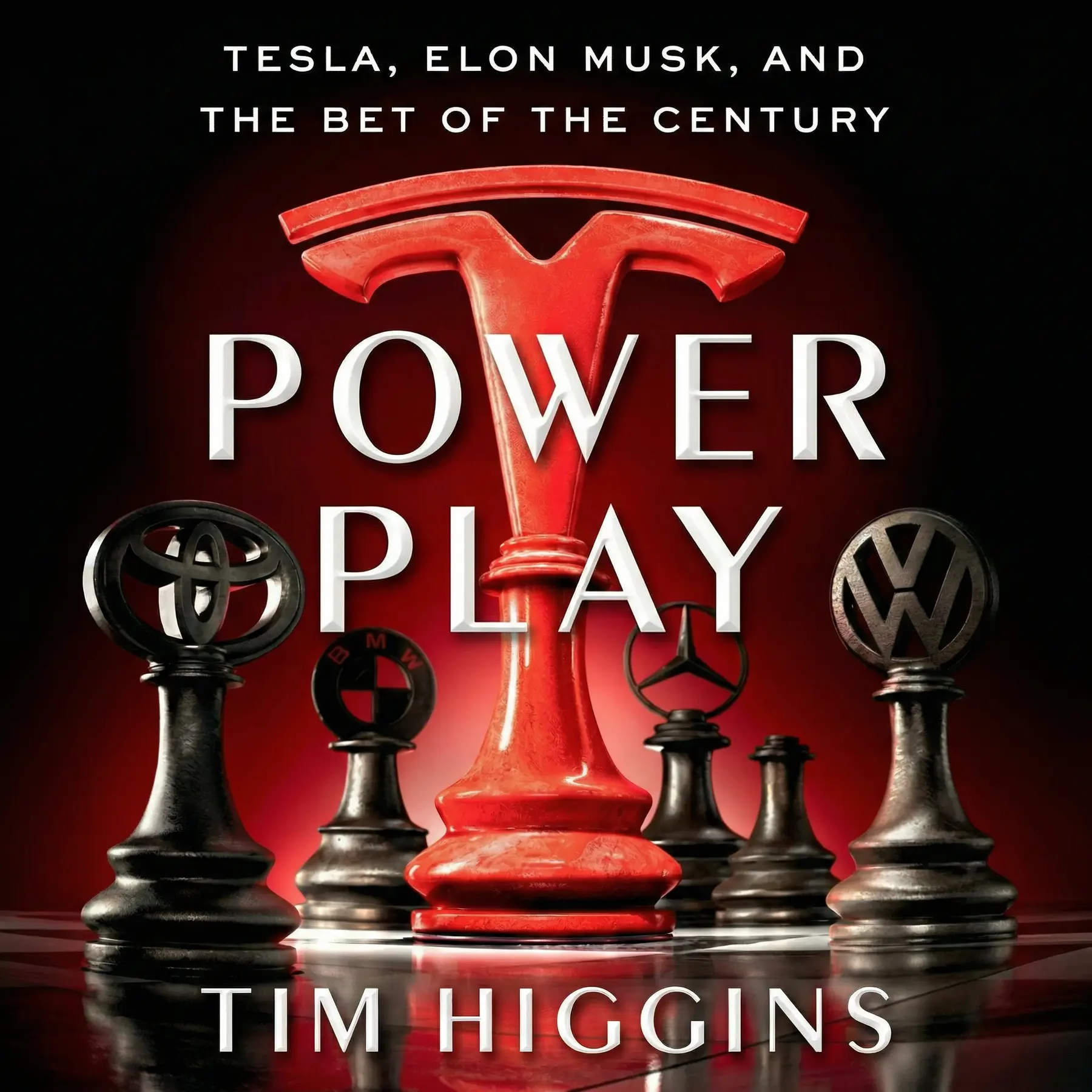
Power Play: Tesla, Elon Musk, and the Bet of the Century
By Tim Higgins
Tim Higgins shows how Tesla went from a two-engineer idea to the world's most valuable carmaker. Elon Musk's personal money and salesmanship kept it alive, and his control, haste and temper made the ride costly.
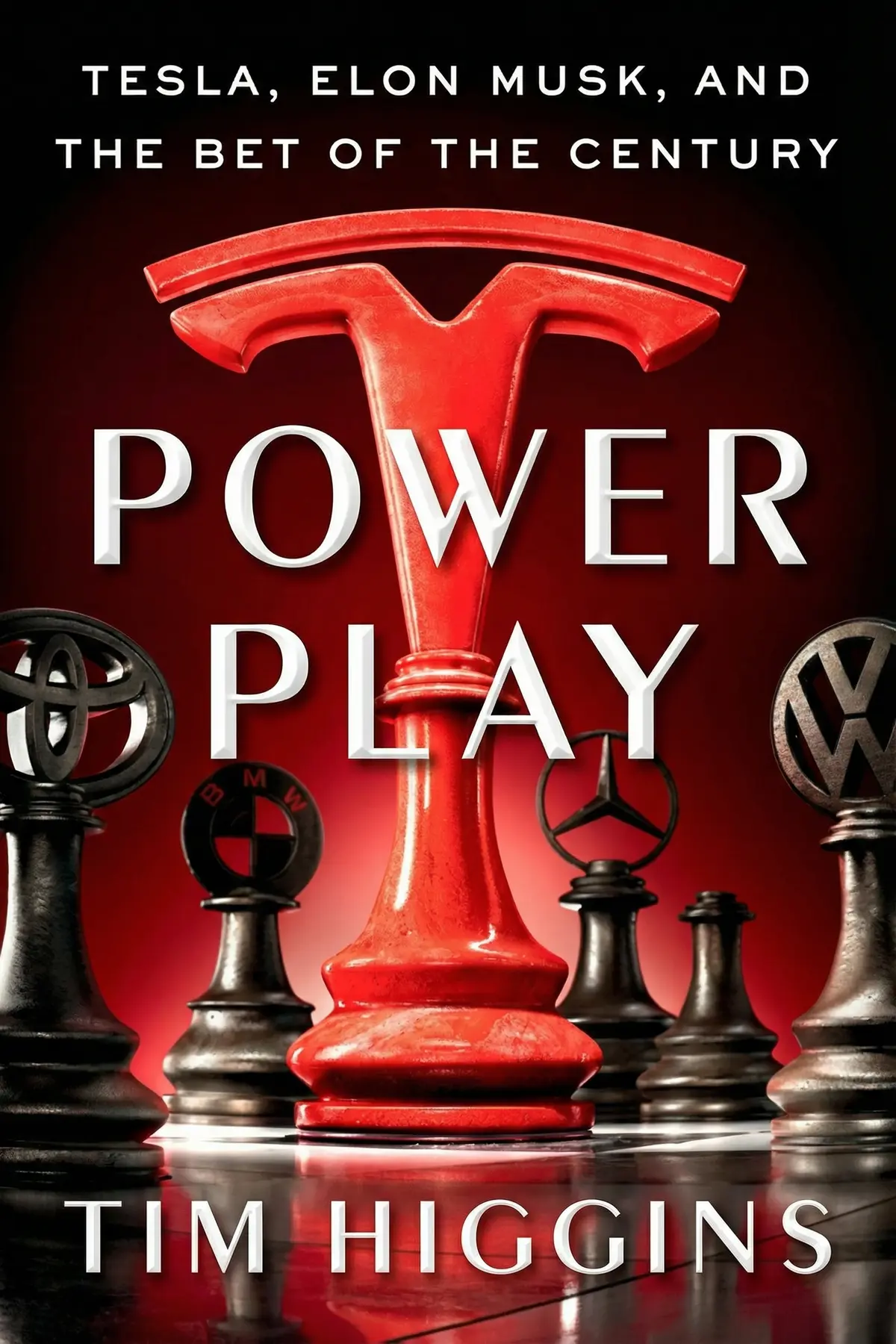
Table of Content
1. Introduction
1 min 01 sec
If you have watched a start-up promise to remake an industry and wondered how anyone survives the cost of trying, Tesla is the case to study. For more than a century, the giants of the car business failed to build electric cars people wanted, and a small group of Silicon Valley engineers cracked the problem partly by borrowing the batteries that run laptops. In Power Play, Wall Street Journal reporter Tim Higgins tells how that idea grew into the most valuable automaker in the world.
The story turns on one man’s wager. Elon Musk put nearly everything behind a sports car he did not invent. He kept the company alive with his own money and his salesmanship, and he took control of it along the way. The same drive that rescued Tesla also produced rushed testing, chaos on the factory floor and public outbursts. Follow the money and the decisions, and you will see what a high-risk founder bet really demands, and who pays for it.
2. Pair a bold vision with money that believes
2 min 15 sec
Two engineers had a dream car and a neat spreadsheet. The investor who funded almost all of it doubted their math, and that gap between doubt and commitment shaped everything that came after.
3. A working prototype opens investors' wallets
2 min 15 sec
Tesla was over budget before its first car existed, and bankruptcy came close in 2008. What kept the doors open was a mix of personal risk and one very persuasive object.
4. Learn how funding a company can mean taking it over
2 min 16 sec
A weekend test drive ended with a founder holding his head in his hands. Over the next two years, the investor behind that phone call turned money into control, and control into a very public temper.
5. Rushed checks send the bill to someone else
1 min 55 sec
German carmakers test a new model for two full winters. Tesla had six months and a public deadline. The gap between those two schedules showed up later, in recalls and in workers’ injuries.
6. Learn how an outsider breaks into a closed industry
2 min 09 sec
No new carmaker had lasted in the American market for nearly a century. Tesla’s first real foothold came from a buyer the old giants had overlooked, and that foothold paid for a much bigger push.
7. Turn each success into fuel for the next bet
2 min 05 sec
A ribbon-cutting in a cold field near Shanghai marked a turn few would have predicted a decade earlier. The money behind it came from an unexpected partner with goals of its own.
8. Conclusion
1 min 22 sec
Power Play ends up as a story about what a bet really costs. Tesla began as two engineers’ wish for an electric car as thrilling as a Porsche. It survived because one investor kept raising his stake. First came $6.35 million, then personal loans when bankruptcy came close in 2008. Musk could also sell investors and the public on a bigger vision, with a working prototype helping him win new backers. The same conviction pushed out a founder, cut testing from 6 million miles to one and left injury rates above the industry average. It also spilled into public attacks.
Higgins shows both sides of Musk together: the rescuer and the source of the chaos. Tesla needed the first and paid for the second.
If you are building something, watch who is paying, because control tends to follow the money. Put something real in front of backers, the way a working Roadster opened wallets that a plan alone could not. And track where your shortcuts send their costs, since rushed checks return as recalls and injuries.
A century of carmakers failed at electric cars. A small company succeeded by betting everything more than once, and the man who placed the bet was far from the only one who paid for it.
About this book
What is this book about?
For more than a century, the biggest carmakers failed to build electric cars that people actually wanted. Then two Silicon Valley engineers, Martin Eberhard and Marc Tarpenning, founded Tesla Motors to build an electric sports car as fast and stylish as the best gasoline models. They found the money in a young investor named Elon Musk. Wall Street Journal reporter Tim Higgins follows the bet that followed. Tesla powered its first car with laptop batteries, went far over budget, nearly went bankrupt in 2008 and survived mainly because Musk poured in his own money and raised more from others. Along the way Musk pushed out a founder, took the CEO job, rushed testing and production, and clashed with staff and the public. Readers get a clear account of how a start-up broke into one of the most closed industries in the world. It runs from the Roadster to the Model S, the Model 3 and a factory in Shanghai built with Chinese loans. It also shows what that kind of founder bet demands, and who ends up paying for it.
Book Information
Who it's for
Founders and operators
Founders and operators who want to see what a high-risk, founder-funded bet really demands.
Working with visionary leaders
Professionals who work for or with intense, visionary leaders and want to understand the tradeoffs.
Curious about car startups
Readers curious how a Silicon Valley start-up broke into the car industry and beat its giants.
About the Author
Tim Higgins
Tim Higgins is a Wall Street Journal reporter who covers technology and car companies, Apple and Tesla among them. He appears on CNBC as a contributor and co-hosts the Journal's weekly interview podcast Bold Names. He is also the author of iWar, a book about Apple. Higgins graduated from the Missouri School of Journalism, holds an MBA from Michigan State University and lives in San Francisco.
Ratings & Reviews
Ratings at a glance
What people think
Listeners find the book engaging and well-written, with one mentioning it has the feel of a thriller. The quality of the information is also praised, with one listener spotlighting its thorough overview of Tesla's history. Furthermore, listeners appreciate how detailed, intelligent, and accurate the work is.
Top reviews
Thida
Picked this up on a whim and was immediately sucked into the high-stakes world of early Tesla. Higgins writes with a propulsive energy that makes a book about manufacturing logistics feel like a political thriller. I was particularly struck by the granular detail regarding the 'production hell' years and the sheer number of times the company almost folded. While Musk has famously called parts of this nonsense, the sheer volume of insider interviews makes the narrative feel grounded and credible. It’s a fascinating look at how sheer willpower can occasionally overcome total chaos. Some of the technical jargon gets a bit thick in the middle, but it never slows down the momentum for long. For anyone interested in the intersection of Silicon Valley ego and heavy industry, this is essential reading.
Show moreSombat
Tesla’s journey is nothing short of a miracle when you see the internal mess described in these pages. I’ve read the Isaacson and Vance books, but Higgins offers a perspective that feels uniquely focused on the company’s structural evolution rather than just the cult of personality. The level of detail regarding the early funding rounds and the pivot to the Model S is masterfully handled. Not gonna lie, the way Musk treats some of his most loyal employees is genuinely difficult to read at times. Yet, the book acknowledges that without that relentless, almost pathological drive, the electric car revolution might have stalled out entirely. It’s an intelligent, well-researched piece of journalism that reads like a suspense novel. This is easily one of the best business books I’ve picked up in the last five years.
Show moreWittaya
Wow, what a rollercoaster of a read. I wasn't expecting a book about a car company to be this gripping, but Higgins manages to maintain a 'thriller' vibe from start to finish. The information quality is top-notch, clearly benefiting from hundreds of conversations with people who were actually in the room. Frankly, it’s refreshing to read an unauthorized account that isn’t afraid to highlight the mistakes and the near-misses. The description of the 'Bet of the Century' really captures the insane risk-taking that defined the company’s culture. I felt for the staff who were constantly pushed to meet impossible deadlines by a leader who refused to hear the word 'no.' This is a comprehensive, intelligent history that doesn't pull any punches. If you want to understand how Tesla actually survived its own birth, look no further.
Show moreNing
Higgins manages to turn corporate history into a page-turner that I simply couldn't put down. The level of intelligence and research that went into this volume is evident on every single page. From the early days of the Roadster to the global phenomenon they are now, the trajectory is presented with amazing clarity. Look, Musk is clearly a polarizing figure, and this book explores his 'Boss from Hell' reputation with brutal honesty. But it also gives credit where it's due for the sheer audacity of the vision. The writing style is punchy and accessible, making it feel less like a dry business text and more like a high-stakes drama. I finished it in two sittings and immediately recommended it to my colleagues. Truly an excellent account of a company that changed the world.
Show moreClara
After hearing the rumors about Musk’s reaction to this book, I had to see what the fuss was about for myself. Truth be told, it paints a far more nuanced picture of Tesla than I expected, neither fully lionizing nor completely demonizing its leader. The author does an incredible job of tracking the revolving door of executives who helped build the foundation before inevitably burning out. You really get a sense of the 'Boss from Hell' atmosphere that pervades the factory floor during the most desperate times. My only gripe is that certain private conversations feel a bit too reconstructed to be perfectly accurate. Still, it’s a compelling account that fills in many gaps left by more 'official' biographies. It’s definitely more than just a gossip rag; it’s a deep dive into corporate survival.
Show morePrae
As someone who follows tech closely, I found this to be a vital companion to the other Musk biographies out there. Higgins provides a gritty, unvarnished look at the internal friction that defined Tesla's first decade. The comparison to the Theranos saga in some of the early chapters is unavoidable, though obviously, Tesla actually produced a working product. You see the 'fake it till you make it' mentality pushed to its absolute breaking point. Personally, I appreciated the focus on the engineers and unsung heroes who often get overshadowed by the CEO’s Twitter antics. The writing is sharp and the pacing is excellent, even when dealing with complex battery chemistry or financial maneuvers. It’s a bit one-sided toward the detractors in the later chapters, but the overall historical value is undeniable. A very solid four-star effort.
Show moreSakura
The chapter on the Model 3 production ramp-up was absolutely eye-opening for me. I’ve always known Tesla had struggles, but seeing the day-to-day chaos laid bare makes their success seem even more improbable. Higgins does a great job of humanizing the cast of characters, even if the high turnover makes it hard to keep track of everyone. To be fair, the book can feel a bit repetitive when describing the cycle of overpromising and underdelivering. However, the author’s ability to synthesize complex corporate strategy into a readable narrative is impressive. It’s an engaging deep dive that provides a much-needed counterweight to the more polished stories we usually get from the company’s PR department. I highly recommend it to anyone who enjoys a good underdog story with a complicated protagonist.
Show moreNum
Finally got around to reading the 'other' Musk book after finishing the Isaacson biography last month. While Isaacson had more access, Higgins seems to have more freedom to explore the darker corners of the Tesla story. The truth is probably somewhere in the middle, but this version is certainly more 'thriller-like' in its execution. I appreciated the deep dive into the technical challenges of the Fremont factory and the sheer exhaustion of the workforce. It’s a well-written, engaging piece of work that doesn’t shy away from the uglier aspects of the 'power play' for control. Even with the minor criticisms regarding the sourcing of private conversations, the book is a valuable addition to the tech history canon. It’s a fast-paced, detailed look at a company that shouldn't exist but somehow does.
Show moreFrida
Ever wonder how much of this is actually verified? I enjoyed the book as a piece of storytelling, but I couldn't help but feel a bit skeptical given how much Musk has publicly slammed it. The 'nonsense' disclaimer at the end definitely cast a shadow over some of the more dramatic private scenes Higgins describes. In my experience, when a journalist puts specific dialogue in quotes from a meeting they weren't in, you have to take it with a grain of salt. That said, the broad strokes of Tesla's history are well-documented here and provide a lot of context for their current market dominance. It’s an easy, fast read that occasionally feels a bit too much like a collection of disgruntled employee grievances. It's a decent 3-star read for the background info, but stay skeptical.
Show moreNang
Look, I wanted to like this, but I can't ignore the controversies surrounding the accuracy of the reporting. There are too many instances where it feels like Higgins is taking extreme literary license with the inner thoughts of the people involved. It reminded me a lot of 'Bad Blood' by John Carreyrou, but without the same level of verifiable evidence to back up the more scandalous claims. Calling it 'nonsense' might be an exaggeration by Musk, but the bias against him is palpable throughout the narrative. It’s a shame because the early history of the company is genuinely interesting. However, the constant focus on the negative and the reliance on anonymous detractors makes it hard to trust the book as a definitive history. I’d suggest sticking to the Ashlee Vance biography if you want something that feels more balanced.
Show moreQuestions about this book
What is Power Play by Tim Higgins about?
It follows Tesla from the company’s start, founded by Martin Eberhard and Marc Tarpenning in 2003, up to 2020, when it became the most valuable carmaker in the world. Higgins shows how Elon Musk funded most of the first investment, saved the company with personal loans in 2008, took over as CEO and pushed it through the Roadster, Model S, Model 3 and a factory in Shanghai.
How did Elon Musk take control of Tesla?
Musk provided $6.35 million of the first $6.5 million and became chairman. As he raised more money, he began managing engineering, design and marketing in detail. Higgins says he relied on hardball tactics in the boardroom to force Eberhard out of the CEO role, and by 2008 he had taken the job himself. Eberhard responded with a lawsuit.
Why did Tesla struggle with quality and production?
Higgins describes Musk keeping the line running while problems were fixed, unlike Toyota’s practice of stopping it. To meet a public deadline for the Model S, testing was cut to one million miles in six months, compared with 6 million over two winters at German carmakers. Faults appeared after production began, leading to recalls, and injury rates in 2015 ran above the industry average.
Who should read Power Play?
It suits founders and operators thinking about risky, capital-hungry ventures, people working with demanding visionary leaders, and anyone curious how a start-up survived the car industry. It is a reported business story rather than a how-to guide, so its value lies in the decisions it shows, from the laptop battery choice to the Chinese bank loan.
What lessons from Power Play can I apply to my own work?
The book suggests watching who funds a project, since control tends to follow money. A working prototype persuaded Musk and later other investors in a way plans did not. And skipping testing to hit a deadline moved costs onto customers and workers. Finally, Tesla’s first foothold came from a buyer the big carmakers had overlooked.
Readers also enjoyed


7 Powers: The Foundations of Business Strategy
Hamilton Helmer



Alibaba: The House That Jack Ma Built
Duncan Clark

Bad Blood: Secrets and Lies in a Silicon Valley Startup
John Carreyrou
AUDIO SUMMARY AVAILABLE
Listen to Power Play in 15 minutes
Get the key ideas from Power Play by Tim Higgins, plus 5,000+ more nonfiction titles.
- 5,000+ titles
- Listen as much as you want
- 7-day free trial
- Cancel anytime









