
14 min 28 sec
Available in: English
POP!: Create the Perfect Pitch, Title and Tagline for Anything
By Sam Horn
Shows how to turn any product, idea or talk into a short, fresh phrase people remember, by collecting precise core words and then playing with spelling, sound, famous names, humor, surprise and stories.
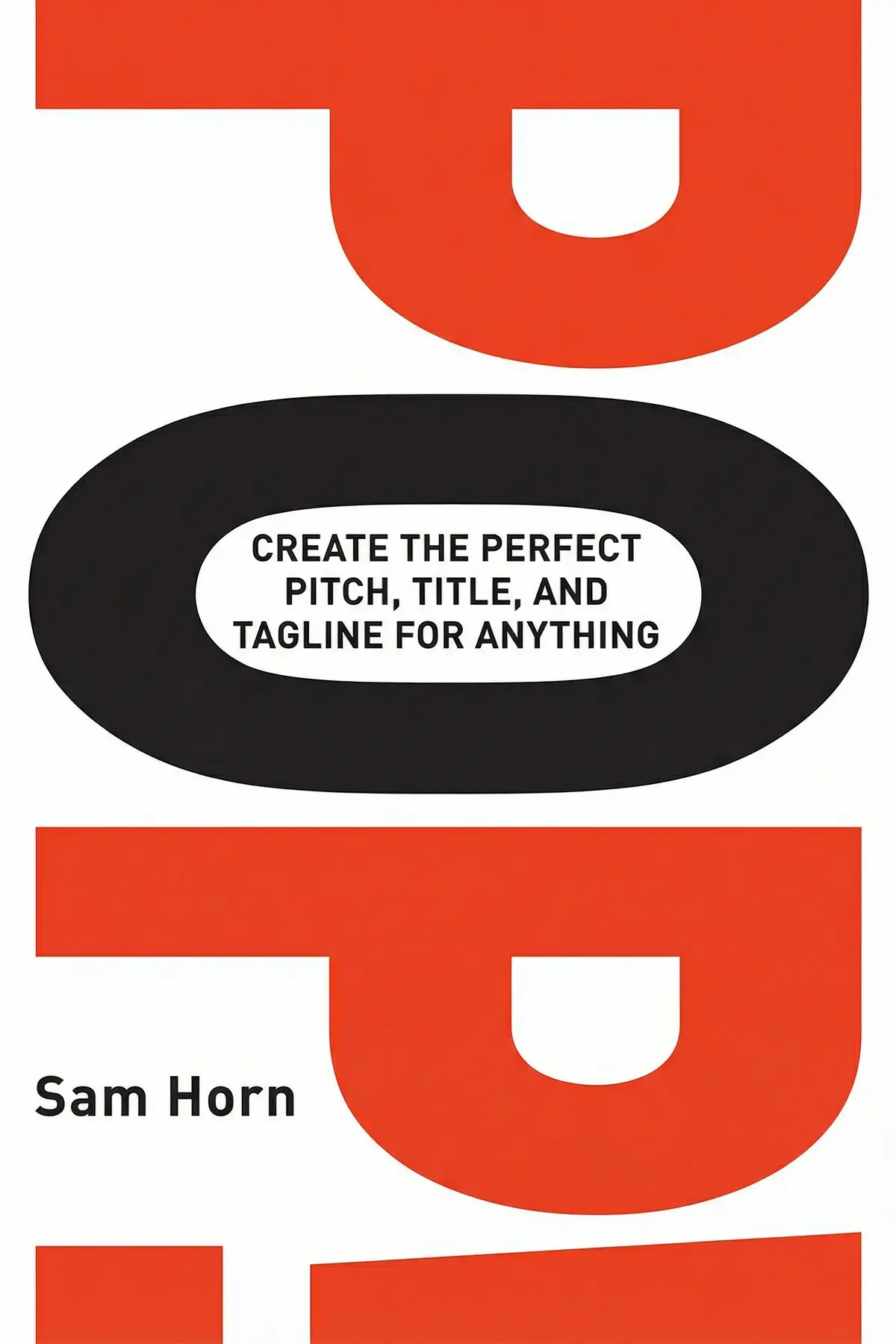
Table of Content
1. Introduction
1 min 01 sec
Most messages fail in the first second, because they sound like everything else fighting for the same glance. In POP!, Sam Horn, founder of The Intrigue Agency and longtime director of the Maui Writers Conference, argues that a pitch, title or tagline sticks when it passes three tests: it is Purposeful, Original and Pithy. Her evidence starts simply. The slogans people still recite from the last century, such as Nike’s Just do it, each run shorter than seven words.
Horn’s larger claim is that catchy phrases are not a gift reserved for copywriters. They come from a method: collect the exact words that describe your offer, then play with them on purpose, through spelling, sound, famous names, jokes, surprises, pictures and stories. Follow that method and a product, a talk or a team project can earn a short name people repeat to each other, along with a clear way to judge which drafts deserve to survive.
2. Three tests a message must pass to stick
1 min 30 sec
The slogans people still recite decades later share a few traits that most pitches miss. One of them comes from a limit inside the human mind, and it explains why so many careful messages vanish within seconds.
3. Build your core words before writing anything
1 min 16 sec
Before any clever phrase comes a step most people rush past. Horn says it can take up to two hours, and every technique she teaches depends on doing it first.
4. Coin a name the press will repeat for free
1 min 26 sec
Hair salons seem to know a trick most marketers forget. It turns ordinary vocabulary into a name you can own, and it can bring journalists to your door without any budget.
5. Give your phrase a rhythm people keep humming
1 min 33 sec
People can still sing old jingles yet forget yesterday’s slides. Horn’s explanation comes from songwriting, and you can test it on your own draft by doing nothing more than reading it aloud.
6. Borrow a famous name to explain yourself fast
1 min 37 sec
A mother writing about parenting found her perfect two-word title by thinking about a world-famous spiritual leader. The method behind her find works for almost any product, talk or idea.
7. Make people smile and still stay on message
1 min 31 sec
Overused sayings can sink a pitch, yet one business writer turned a tired phrase into a powerful headline. The difference lies in a small, repeatable edit that anyone can learn to make.
8. Surprise your audience to earn a second look
1 min 26 sec
A television show invented a holiday in 2004 and kept people talking about it for months. That method, and a novelist’s remark about a cat, show what makes an audience look twice.
9. Turn your own life into pictures and stories
1 min 59 sec
An executive’s flying lessons helped curb micromanaging in his company, and a cookie counter handed one author her book title. Both point to material you already carry around with you.
10. Conclusion
1 min 09 sec
Horn’s book ends up treating memorable language as a craft anyone can practice, with clear raw materials and repeatable moves. The flashes of wit behind Dalai Mama, Chrismukkah or a twisted cliché about patents look like luck from the outside. In her telling, they come from someone who knew their core words cold and then played with them until something clicked, checking every result against purpose, originality and pith.
That changes what to do when a pitch falls flat. Instead of waiting for inspiration, go back to the big W’s and sharpen what you are actually offering and to whom. Then push your best core words through one of the games: the alphabet, a rhyme, a famous name, a reversed cliché, a story from your hobbies or setbacks. Keep the result under seven words if you can, and read it aloud before you trust it. Stay curious about whatever your audience is watching and laughing at, since that is the material they will recognize instantly.
Rebecca Morgan never needed a pushy salesperson to buy those cookies. A well-built message does what that cookie counter did: people walk toward it on their own.
About this book
What is this book about?
Every day, people are bombarded with ads and pitches, and most of them never register. Sam Horn argues that the few that get through share three qualities: they are purposeful, original and pithy, which gives the book its name. A pitch, product name or talk title that misses any one of them gets lost in the noise. Horn's approach is practical. She starts by having readers answer a set of questions about what they offer, to whom and why, which produces a bank of core words. Then she shows how to play with those words: bending spelling, running syllables through the alphabet, using alliteration and rhythm, borrowing famous names and movie lines, twisting clichés, flipping expectations and building metaphors from your own hobbies, achievements and setbacks. Her examples include Dalai Mama, Chrismukkah, Gorilla Glue's 800-pound gorilla and a book title inspired by a cookie counter at a mall. Readers get a repeatable method for naming and pitching almost anything, and a clear test for deciding which drafts to keep and which to throw away.
Book Information
Who it's for
Wanting a memorable pitch
Founders and marketers who need a product name, tagline or pitch that people remember after one hearing.
Speakers, writers and consultants
Speakers, writers and consultants looking for a title that makes their talk or book stand out.
Team leads
Team leads who want a phrase or story that turns a message into shared shorthand.
About the Author
Sam Horn
Sam Horn founded The Intrigue Agency, the Force For Good Project and the Tongue Fu! Training Institute. She has written ten books, published in seventeen languages, among them Got Your Attention?, a Washington Post bestseller. She has given three TEDx talks, addressed audiences at Intel, Accenture and Oracle among others, and for seventeen years served as executive director of the Maui Writers Conference. The Force For Good Project began with her 2025 TED Town Hall talk.
Ratings & Reviews
Ratings at a glance
What people think
Listeners find this work remarkably useful and accessible, featuring actionable tips and excellent examples throughout. The writing is high-quality and packed with clever concepts, making it an engaging experience. Additionally, listeners value the basic principles and inventive methods, with one listener remarking that it's filled with recipes to inspire imagination.
Top reviews
Kom
As someone who struggles with marketing, I found this book to be a total game-changer for my creative process. Sam Horn provides these incredible 'recipes' for your imagination that turn the daunting task of branding into a structured, fun exercise. Frankly, the way she explains how to capture an audience's interest through being purposeful and pithy is just brilliant. While some might find the examples a bit dated, the core philosophy remains incredibly relevant for anyone trying to stand out in a crowded market. I feel much more confident about my ability to craft a message that actually matters now. This is a must-have for entrepreneurs.
Show moreGor
Wow, Sam Horn really knows how to make a message stick. I loved how the book isn't just theory; it's filled with amazing examples and actionable steps that you can apply immediately to your business. The focus on identifying common challenges and expressing the core of the problem is a lesson every entrepreneur needs to learn. In my experience, most business books are dry, but this one is entertaining and creatively written from start to finish. It’s essentially a masterclass in making people laugh and think at the same time. Truly a marvelous resource for anyone looking to make their work more impactful.
Show moreKanokwan
After hearing about Sam Horn’s reputation as a communication expert, I had high hopes for this book. It did not disappoint. The way she illustrates her techniques through her own writing style is masterful and makes the advice feel very authentic. Truth is, we all have a responsibility to craft messages that keep our target audience interested, and this book gives you the tools to do exactly that. It’s a marvelous collection of insights that are just as applicable today as they were when first published in 2006. Every page feels like a recipe to inspire more imagination and creativity in your work.
Show moreWatcharee
Finally got around to finishing this, and I have to say the brainstorming exercises are top-notch. Sam Horn has a very specific style that is both engaging and high-energy, making the pages fly by quite quickly. Truth is, her love for puns can be a bit overwhelming if you aren't a fan of wordplay, but you can’t deny they make the titles memorable. It’s a great toolkit for developing product names and taglines that have that elusive 'pop' factor. Even though it was written years ago, the techniques for creating catchy captions are still quite useful for modern social media platforms.
Show moreMax
The chapter on coining your own terms for your topic was worth the price of the book alone. I’ve always struggled to differentiate my service, but Horn’s approach to being 'original' really opened my eyes. Not gonna lie, I was skeptical at first because the tone is very enthusiastic, almost to a fault. But once you dive into the specific exercises for developing taglines, you realize there is a method to the madness. It’s a very practical guide for anyone looking to expand their reach without spending a fortune on a consultant. Highly recommended for small business owners and freelancers alike.
Show moreLiam
Ever wonder why some brands just seem to have that 'it' factor while others fade into the background? This book breaks down that mystery into simple, easy-to-digest concepts that anyone can master. I particularly enjoyed the section on how to best present your offer to an audience so that it makes a lasting difference. Personally, I found the formulaic approach helpful because it gave me a place to start when I was staring at a blank page. It’s a quick read but one that I plan to revisit whenever I feel stuck in a creative rut or need fresh inspiration.
Show moreMaya
Picked this up on a whim and was pleasantly surprised by how much practical value is packed into these pages. Sam Horn makes the process of coming up with catchy captions and product names sound almost too easy. I’ve struggled for years to find a balance between being funny and being philosophical in my messaging, but this book shows you the way. The simple concepts are backed by amazing examples that illustrate exactly how to make your brand 'pop' with interest. It’s a well-written, creative approach to communication that I think every professional should have in their library for constant reference.
Show moreNim
To be fair, the Be-Purposeful-Original-Pithy framework feels a bit formulaic when you get into the later chapters. It’s an excellent resource for new grads or folks just breaking into the industry who need a clear roadmap for their messaging. However, some of the play-on-words titles suggested were a little too cheesy for my personal taste. If you can look past the slight gimmicky nature of the presentation, there are some genuinely good insights here. It’s a solid starting point for brainstorming, though it might lack the deep substance that seasoned marketing veterans are looking for in a professional text.
Show morePaisley
Not what I expected, but I can see why it’s so popular for those starting out in their careers. The writing is incredibly engaging, and Sam Horn’s enthusiasm for her subject is infectious, even if the puns are a bit much at times. It’s a bit slight on the technical side of marketing, focusing more on the creative and 'pithy' aspects of communication. I think the book serves as a great collection of brainstorming prompts rather than a deep dive into strategy. Still, it’s a fun read that will help you think more about how your audience perceives your message in the long run.
Show moreZanya
Look, I found the puns almost unbearable after the third chapter, and the whole thing felt way too cheesy for me. To be honest, I felt like I was reading a collection of 'dad jokes' disguised as professional branding advice. It might work for some people, but it was just way too gimmicky and lacked the substance I was looking for. I couldn't get past the feeling that it was written for a very specific, perhaps younger, audience. For me, it was more of a struggle to finish than a source of inspiration. Definitely not something I'll be keeping on my shelf for long.
Show moreQuestions about this book
What does POP stand for in Sam Horn's book?
POP stands for Purposeful, Original and Pithy. Horn argues a message must state at once what you offer and why it helps the audience, sound different from competitors, and be short enough to grasp in a second. She notes that short-term memory holds only about seven bits of information, and that the twentieth century’s best slogans, such as Diamonds are forever and Just do it, all run under seven words.
What are core words in POP!?
The essence of your product or idea is captured by a handful of key descriptive phrases, which are known as core words. Horn has readers find them by answering the big W’s: what you offer, who it is for, what you want to achieve, what value the customer gets and who your competitors are. The exercise takes ten minutes to two hours, and every later technique, from wordplay to stories, builds on this bank of words.
How do you make a tagline memorable according to Sam Horn?
Horn suggests playing with your core words systematically. Bend spelling into puns, swap first syllables through the alphabet, as in Zenpreneur, and use alliteration, rhyme and a steady beat. Link your idea to a famous figure, as Amy Rosenthal did with Dalai Mama, twist a cliché, contradict an expectation or blend two words, like Chrismukkah. Then read the result aloud and keep it under seven words.
Who should read POP!?
It suits anyone who must name, title or pitch something and wants people to remember it: founders naming products, marketers writing taglines, speakers and authors choosing titles, and managers looking for a phrase that captures how a team should work, like the executive whose flying lessons became the company shorthand let them fly the plane.
Readers also enjoyed









AUDIO SUMMARY AVAILABLE
Listen to POP! in 15 minutes
Get the key ideas from POP! by Sam Horn, plus 5,000+ more nonfiction titles.
- 5,000+ titles
- Listen as much as you want
- 7-day free trial
- Cancel anytime









