
14 min 57 sec
Available in: English
Got Your Attention?: How to Create Intrigue and Connect with Anyone
By Sam Horn
Sam Horn shows how to hold impatient listeners in the first seconds of a pitch, interview or talk by sparking curiosity, showing the problem, answering objections and paying close attention in return.
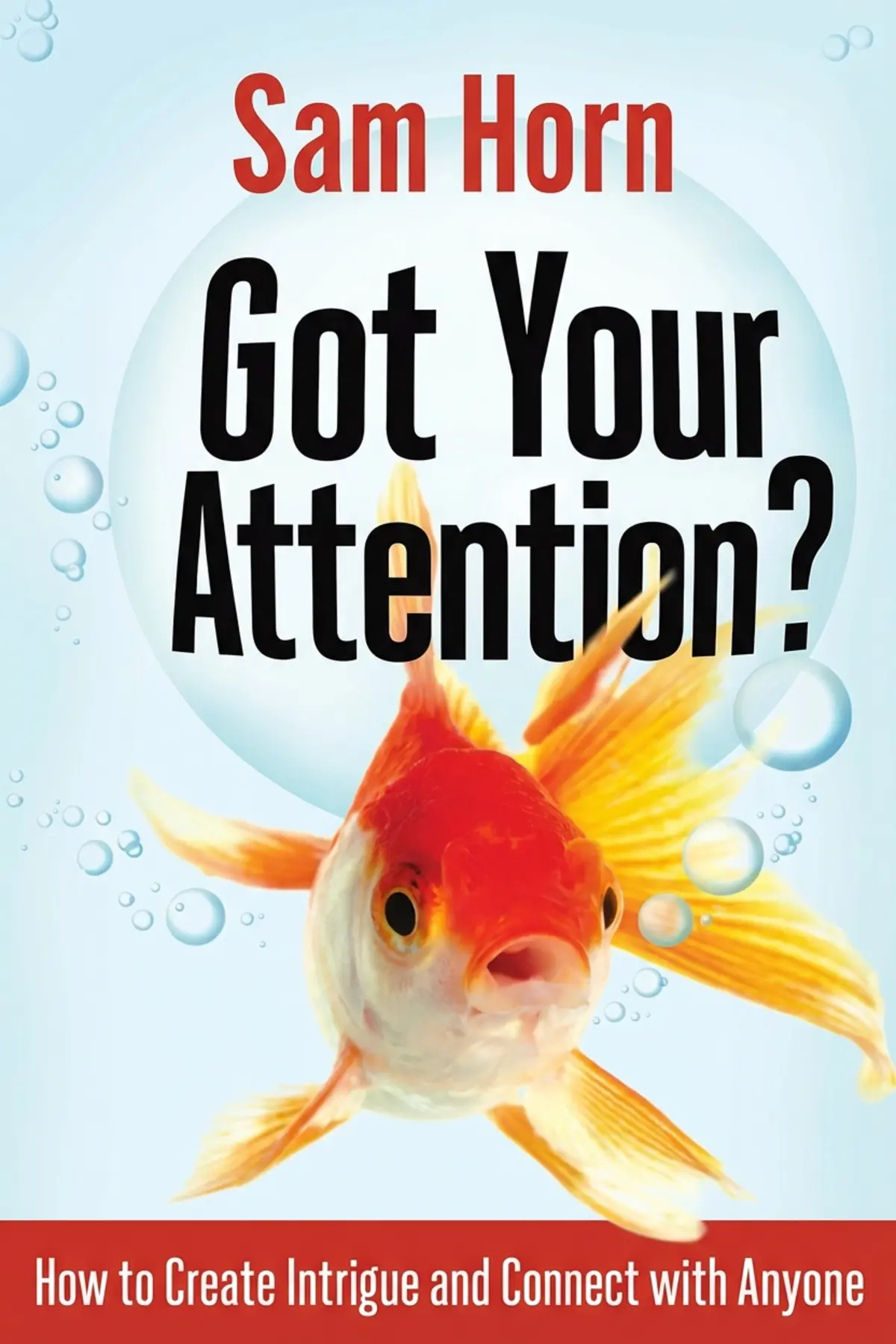
Table of Content
1. Introduction
54 sec
Most people have judged you before your second sentence, deciding what kind of person you are and whether you can help them, and if nothing catches them they drift to whatever comes next. In Got Your Attention?, Sam Horn, founder of The Intrigue Agency, argues that the cure is not volume. It is making your first words about the listener: their curiosity, their problem, their doubts, their world.
That single principle runs through every tool in the book. There are three quick facts that open a talk, a pitch that begins with a car seat dragged to the front of a room, and a 13-year-old who won over a conference audience in seconds. Each works by giving attention before asking for it. Learn them, and a job interview, an investor meeting or a team presentation turns from a fight for the room into a conversation people want to stay in.
2. Spark curiosity before your listeners decide about you
1 min 45 sec
Audiences make up their minds about you almost the moment you begin. Horn offers a pair of short opening lines that give them something to hold onto before they mentally move on to the next speaker.
3. Open with the problem your listener already feels
1 min 33 sec
One inventor said nothing at all when she walked in to meet investors. Before she had finished her first sentence, someone in the room was already asking to buy. What she did instead of explaining is easy to borrow.
4. Answer the no before anyone says it
1 min 42 sec
A teenager faced a room of experts who had every reason to dismiss her, and a bookstore owner had turned down the same request again and again. Both rooms changed their minds for the same reason.
5. Stand out with the strength nobody expects
1 min 34 sec
When every other candidate is just as bright and just as well qualified, listing your strengths makes you blend in. Horn explains which kind of fact actually gets a busy decision maker to remember you.
6. Use their words, then really listen
1 min 40 sec
A single sentence from a famous founder changed how a group of young job seekers presented themselves. A labor finding about why people quit shows the other half of earning someone’s attention.
7. Keep your examples as current as your audience
1 min 29 sec
A celebrated advertising figure lost a room of young entrepreneurs within minutes, and his material was not the problem. Horn’s diagnosis applies to any speech, slide deck or book you prepare.
8. Make your topic personal and bring a fix
1 min 34 sec
One speaker turned a sobering statistic into something an entire audience felt. Another lost a crowd that agreed with every word he said. The difference between them comes down to two small choices.
9. One real person moves people more than statistics do
1 min 32 sec
A sailor’s lost dog drew more generosity than many large tragedies ever do. Horn explains the quirk of human feeling behind it, and the mistake that makes many decision makers dismiss stories altogether.
10. Conclusion
1 min 14 sec
Horn diagnoses an impatience epidemic: people struggle to focus, so simply being noticed takes skill. Her answer runs the opposite way from shouting. Every tool here, from the car seat to the soccer father’s offer, works because the speaker paid close attention to the listener first, to what they wondered about, what bothered them, what made them doubt and which words and references they lived with. Attention, in her account, is earned by giving it. A good hook buys you a few seconds, and the quality of your attention decides whether people stay.
She adds one physical habit to the method. Before you speak, take what she calls a power posture: head and chin up, eyes forward, feet planted shoulder-width apart, and hands held in the middle, a foot from each other, as though around a basketball.
Then try the rest this week. Write down the objection you most fear and make it your opening line. Replace one old example with a recent one, and tell one true story in under a minute.
The 13-year-old at that conference needed only a few seconds, because she spoke the room’s doubt before the room could.
About this book
What is this book about?
Most people form a view of you almost as soon as you start speaking, and if nothing catches their interest they move on. That makes job interviews, investor meetings and presentations hard to win, however good your idea is. Sam Horn argues that the answer has nothing to do with speaking louder or selling harder. Her approach turns each part of an encounter toward the listener. Short Did You Know facts spark curiosity, and an Imagine That line helps people picture the result. A question that shows the problem lets them feel the need. Naming their likely objection before they voice it removes the reason to refuse. She adds advice on leading with an unusual strength, borrowing the decision maker's own language, listening without distraction, choosing current references and telling one brief, true story. The examples are vivid and specific: an inventor who carried a car seat into a pitch, a 13-year-old who won over a conference in seconds, and a tanker captain whose lost dog drew $250,000 in donations. Readers get a set of small, repeatable moves for the next time they need someone important to stop and listen.
Book Information
Who it's for
Job hunters and graduates
Job seekers and graduates who struggle to stand out among equally qualified candidates.
Pitching to investors
Founders and inventors pitching investors who decide within the first minute.
Presenting to bored audiences
Managers and presenters whose talks meet polite nods and wandering eyes.
About the Author
Sam Horn
Sam Horn founded The Intrigue Agency, the Force For Good Project and the Tongue Fu! Training Institute. Her ten books have appeared in seventeen languages, and Got Your Attention? became a Washington Post bestseller. She has given three TEDx talks, spoken for organizations including Intel, Accenture and Oracle, and spent seventeen years as executive director of the Maui Writers Conference.
Ratings & Reviews
Ratings at a glance

What people think
Listeners find this work packed with actionable tips and fresh perspectives on communicating effectively, describing it as both accessible and engaging. They value the straightforward presentation and regard it as an essential tool, with one listener even stating that it is worth its weight in gold.
Top reviews
Waree
Picked this up because I’m tired of being ignored in Zoom meetings. Sam Horn really gets into the nitty-gritty of why we lose people within seconds. The "INTRIGUE" framework sounds like a gimmick at first, but once you start applying the "Interacting" instead of just "Informing" part, the shift is palpable. It’s like a modern-day Carnegie for the digital age, cutting through the noise of our goldfish-sized attention spans. Some might find the tone a bit "hustle-culture," but if you need results in a high-stakes environment, this is gold. The writing style is conversational and snappy, making it easy to digest a chapter or two during a quick coffee break.
Show moreEleanor
Wow, this was exactly what I needed to revamp my marketing presentations. Horn manages to turn simple communication truths into a sophisticated strategy that doesn't just rely on being the loudest person in the room. I particularly enjoyed the "E" in her acronym—sharing real-life examples rather than just droning on with dry data. It’s rare to find a business book that feels this entertaining while still being worth its weight in gold for professional development. If you want to connect with people quickly and keep their favorable attention, you need to have a highlighter ready for this one. It's a game-changer for networking.
Show moreManika
After hearing Sam Horn speak on a podcast, I knew I had to pick up "Got Your Attention?" and it did not disappoint. The focus on being actionable and useful is what sets this apart from the typical fluff you find in the self-help section of the bookstore. I’ve already started using the "Next New Thing" concept in my weekly team meetings, and the engagement levels have noticeably spiked. Not gonna lie, I was skeptical about the goldfish analogy, but her strategies for overcoming chronic distraction are genuinely effective. This is an essential read for anyone looking to sharpen their professional edge and stand out in a crowded market.
Show morePrasarn
Ever wonder why some people walk into a room and everyone just naturally listens? This book breaks down that magnetism into actionable steps, focusing heavily on being time-efficient and using "Power Words." I appreciate how Horn stresses the importance of giving attention before you expect to receive any in return. It’s a refreshing take in a world where everyone is just shouting to be heard over one another. My only gripe is that there are perhaps a few too many mnemonics to keep track of by the end. Still, it's an indispensable resource for anyone in sales or public speaking who needs to hook an audience quickly.
Show moreNan
As someone who works in fundraising, the advice about asking for advice to get money really hit home for me. Sam Horn provides a very user-friendly handbook that feels like a necessary update for the way we communicate in 2024. The chapters are punchy and short, which is perfect because my own attention span is definitely suffering lately. I loved the section on making things repeatable; if they can't repeat your message, they didn't actually hear it. A few links mentioned in the text for worksheets were hard to track down online, which was frustrating, but the core content is solid and offers unique insights I haven't seen elsewhere.
Show moreYuki
Finally got around to reading this after seeing it recommended by a few colleagues in my networking group. It’s a useful little handbook for anyone who needs to make an impact quickly, whether that’s in a job interview or a pitch. The idea of "miracles in our midst" was a surprisingly poetic touch for a book that is otherwise very focused on career-oriented communication. Truth is, we all need to be better listeners, and Horn’s call to "give attention first" is a lesson that transcends just business. The advice is practical and easy to implement, though some of the "power words" felt a bit dated for my personal taste.
Show moreSupaporn
This book is a masterclass in modern communication that takes the foundation laid by Dale Carnegie and builds something far more relevant for today's impatient strivers. The short, punchy chapters are great for busy professionals who only have a few minutes to spare between tasks. I found the actionable items at the end of each section to be the most valuable part of the experience. My only real complaint—and it’s a minor one—is that the author points you to her website for printouts that aren't easily accessible. Despite that, the insights on how to win trust quickly through interactive communication make it a resource I’ll return to often.
Show moreNarong
The chapter on being time-efficient was probably the highlight for me, as it’s something we all struggle with in a world of constant pings and notifications. However, I’ve got to say that the sheer number of mnemonic devices started to feel like overkill by the halfway mark. While I respect Horn's expertise as a communicator, the book often feels like it's trying too hard to be "clever" with its formatting. I struggled to keep my interest through the latter half because the "INTRIGUE" method started to feel a bit repetitive. It's a decent 3.5-star read for business folks, but I’m rounding down because it didn't quite keep its promise of keeping my attention.
Show moreTim
Not what I expected based on the glowing reviews I had seen elsewhere. While the insights on how to hook an audience are definitely unique, the author's ego frequently gets in the way of the message. It feels like every other page is a reference to her previous books or her status as an "Intrigue Expert." If you can look past the self-promotion, there is a lot of wisdom here regarding how to craft an intro that actually works. It's a very business-centric read, so don't expect much in the way of casual social advice for your personal life. It's okay, but not exactly a masterpiece.
Show moreThitima
To be fair, I think I just realized that these types of self-improvement books aren't for me. I found the author’s voice a bit overwhelming, and the constant use of acronyms felt more like a marketing seminar than a helpful guide. It’s very business-focused, so if you aren't looking to "climb the ladder" or "close the deal," a lot of this will feel irrelevant to your daily life. I tried to push through, but I couldn't get past the feeling that the advice was a bit superficial and ego-driven. It’s a quick read with short chapters, but not one I’d recommend to friends outside of a corporate setting.
Show moreQuestions about this book
What is the main idea of Got Your Attention? by Sam Horn?
Horn argues that impatient listeners judge you almost immediately, so you win their attention by turning your opening toward them. That means sparking curiosity with surprising facts, showing the problem you solve, answering their likely objection before they voice it, using their language, choosing current examples and proving your point with one real person’s story. Underneath every tool is one rule: give people quality attention, and they return it.
What are Did You Know questions in Got Your Attention?
They are three one-sentence facts your audience does not know but wants to, offered at the start of a conversation or talk. They can cover the problem you tackle, why your work matters, a big change in your field or an unmet need. Horn pairs them with an Imagine That line, which asks listeners to picture the result you offer, such as finding 40 percent more job openings.
How do you handle someone who has already decided to say no?
Horn advises asking yourself in advance why the person would refuse and opening with an answer to that reason, as 13-year-old Cassandra Lin did when she named her audience’s doubt about her age. If the no has already been said, bring new evidence that serves their interests. A soccer father won a bookstore sponsorship by offering a signing event and social media publicity for the store.
Who should read Got Your Attention?
It suits anyone who must win a busy person’s interest quickly: job seekers facing strong competition, founders pitching investors, salespeople, and managers or speakers whose presentations lose the room. Its tools are short and concrete, from a single opening question that shows a problem to a 60-second true story and a steady, grounded posture before you begin speaking.
How can I apply Got Your Attention? at work?
Start with your next pitch or meeting. Write three surprising facts and one line that helps listeners picture the result. Open by answering the objection you expect. Rewrite your resume around problems you solved, as Elon Musk advised Horn’s son. Listen without interrupting or looking away, swap outdated examples for recent ones, and close with one brief, true story about a real person.
Readers also enjoyed







AUDIO SUMMARY AVAILABLE
Listen to Got Your Attention? in 15 minutes
Get the key ideas from Got Your Attention? by Sam Horn, plus 5,000+ more nonfiction titles.
- 5,000+ titles
- Listen as much as you want
- 7-day free trial
- Cancel anytime









