

14 min 04 sec
Available in: English
Pleasure Activism: The Politics of Feeling Good
Shows how pleasure, understood as feeling whole and satisfied, can help you heal from trauma and oppression, make clearer decisions by listening to your body, and build the empathy and honesty that communities need.
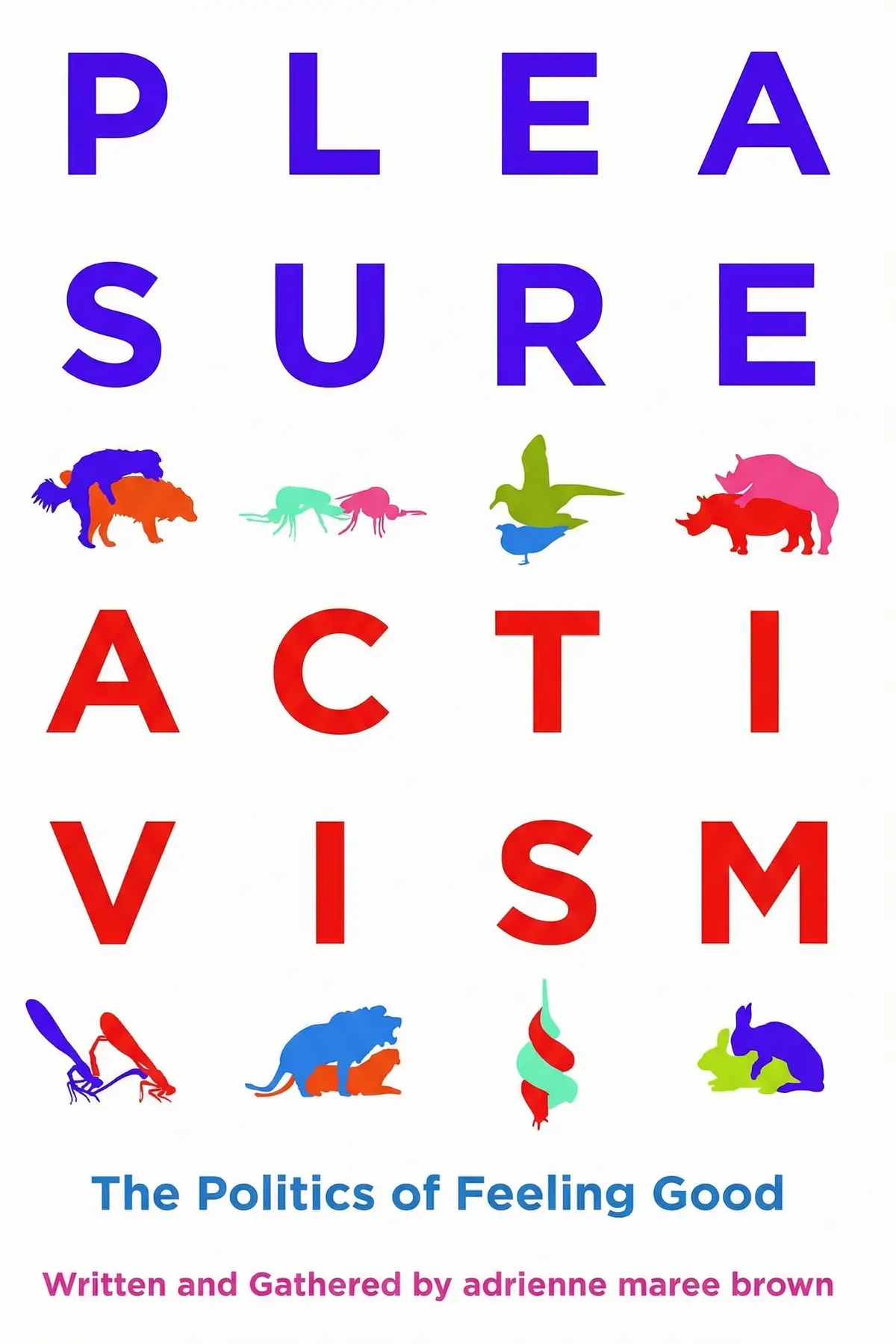
Table of Content
1. Introduction
1 min 11 sec
If feeling good has always seemed like something you must earn, or something to hide, adrienne maree brown argues the opposite: pleasure can be a form of freedom. In Pleasure Activism, the writer, activist and facilitator describes her subject as reclaiming a whole, happy and satisfied self from the harm that oppression and supremacy do. That claim carries extra weight, she says, for women, femmes, LGBTQ+ people and anyone raised to want less.
Her case is that pleasure practiced with moderation and honesty brings you back into your body, shows you what you truly want, and grows into the empathy that changes communities. The evidence is human and close: a woman reclaiming joy during late-stage cancer, a burlesque artist releasing old trauma, and a science fiction writer’s vision of truthful societies. What it offers is a body-based test for decisions, a warning sign for when pleasure becomes escape, and a reason to treat your own satisfaction as serious work.
2. Claim pleasure as wholeness, even when life hurts
2 min 08 sec
Most people hear the word pleasure and think of overindulgence. A woman facing late-stage cancer found a very different meaning in it, and it began with something as ordinary as inviting friends over.
3. Find the erotic far beyond the bedroom
2 min 03 sec
A college essay changed how one young woman saw her own body. Years later, a performer on a burlesque stage felt something inside her give way, and it had little to do with sex.
4. Let your deep yes steer your decisions
1 min 57 sec
Years of holding back desire train you to accept less in every part of life, including work. Brown describes a signal in the body that can tell you which offers and people deserve your time.
5. Spot the moment pleasure turns into numbing
1 min 45 sec
Brown writes openly about weed, ecstasy and mushrooms, and about a family history that makes her cautious. Her rule for when to stop applies to far more than drugs.
6. Reconnect with your body through somatics
1 min 59 sec
Anxiety, paranoia and old trauma had made pleasure almost impossible for brown to reach. A course recommended by a friend changed that, and it also changed how she saw other people.
7. Build honest communities that put pleasure first
1 min 47 sec
A science fiction writer imagined future societies that survive where ours might not. Brown finds in them a rule about truth and pleasure that she believes our own world will need.
8. Conclusion
1 min 14 sec
Pleasure Activism asks you to take feeling good as seriously as you take your duties. For brown, pleasure is a way home: back into a body that pain or prejudice taught you to leave, toward work and people that make you more alive, and outward into the empathy that collective change depends on. Alana’s karaoke party, Taja’s loosened throat and Butler’s truthful communities all trace the same movement, from merely surviving to feeling whole.
The book also guards against being misread. Moderation never leaves the picture, and brown’s habit of stepping away from drugs for months at a time shows that pleasure needs honesty about when it slides into numbness.
You can start small. Before agreeing to the next project or invitation, notice whether your body tightens or opens. Pick one pleasure you have been denying yourself and allow it, without excess and without guilt. And when you catch yourself using something to go numb, take a break and look for support that works through the body, through therapy, or through a group where pain can be shared out loud.
Brown’s wager is that people who know their own yes are harder to diminish, and better at building a world where others can find theirs.
About this book
What is this book about?
Many people grow up learning that wanting to feel good is indecent or selfish, and that any pleasure is a step toward excess. For those living with racism, sexism, homophobia or old trauma, that lesson adds to a daily sense that their happiness is being limited. adrienne maree brown argues that feeling good, practiced with care, is a form of freedom. Drawing on her own life as a queer, Black, mixed-race woman, on the poet Audre Lorde and on the science fiction of Octavia E. Butler, brown builds the idea of pleasure activism. She follows a woman finding joy again during late-stage cancer, a burlesque artist releasing trauma held in her body, her own frank experiences with drugs and their limits, and the bodywork practice of somatics that helped her heal. Readers get a way to think about pleasure that is neither guilty nor reckless: a body-based test for decisions, a warning sign for when pleasure turns into numbing, and a case that healing yourself is where healing a community begins.
Book Information
Who it's for
Guilty about pleasure
People who feel guilty about enjoying themselves or disconnected from their bodies after trauma.
Hoping to work sustainably
Activists, organizers and team leads running on exhaustion who want a more sustainable way to work.
From marginalized communities
Readers from marginalized communities looking for a framework that links personal healing to social change.
About the Author
Adrienne Maree Brown
adrienne maree brown is an American writer, activist and facilitator who also works as a doula. She led the Ruckus Society as executive director from 2006 to 2010 and co-founded the United States League of Young Voters. Much of her writing builds on the science fiction of Octavia E. Butler: she co-edited Octavia's Brood and wrote Emergent Strategy in 2017, before Pleasure Activism in 2019. She also co-hosts podcasts, including How to Survive the End of the World.
Ratings & Reviews
Ratings at a glance

What people think
Listeners find the book a fantastic experience that is remarkably insightful and motivational. They value its significance, and one listener mentions it is an excellent resource. There is praise for how the work addresses love, with one listener drawing attention to its emphasis on self-love.
Top reviews
Naomi
Finally dived into this collection and it feels like a total paradigm shift for anyone burnt out by the constant grind of organizing. The "Hot and Heavy Homework" assignments are such a creative way to ground these high-level theories in actual physical sensation and daily practice. While some might find the heavy focus on sexual pleasure a bit much, I think it’s a necessary correction for a world that tells us to ignore our bodies. I found myself bookmarking the sections on self-love and boundary-setting over and over again. It’s an essential resource for learning how to say "no" so that your "yes" can actually carry weight. My only minor gripe is that the flow can feel a bit disjointed with all the different voices, but that also makes it feel like a real community conversation.
Show moreSirirat
This felt like a healing balm for my soul, especially as a Black woman who has been socialized to believe that my joy is secondary to my labor. Building on Audre Lorde’s "Uses of the Erotic," brown creates a tapestry of voices that insist on our right to be happy. It isn't just a book; it’s an invitation to stop being a "mule of the world." The way she discusses "generative boundaries" as organic fences rather than brick walls totally changed how I look at my relationships. Frankly, the interviews could be a bit messy, but that adds to the authenticity of the "network" she’s describing. It makes social justice feel like something that could actually be sustainable and, dare I say, fun.
Show moreNoah
The core thesis here is revolutionary: we must measure liberation by how much pleasure we can create. I’ve been following brown’s work for a while, and this feels like the perfect companion to Emergent Strategy. It’s a massive, sprawling manifesto that challenges you to look at your own desires without shame. The section on "Skills for Sex in the #metoo Era" should be required reading for everyone, regardless of their identity. I loved how much space was given to marginalized voices who are usually told their pleasure doesn't matter. It’s a beautiful, messy, and loud celebration of what it means to be alive and free. This book didn't just give me ideas; it gave me permission to enjoy my own life.
Show moreDao
As a queer person of color, seeing our joy centered so unapologetically felt like a massive win. This book is an amazing resource that reframes self-love as a political act rather than just a commercialized self-care trend. I found the interviews with the sex toy shop owner and the indigenous activists to be highlight moments. The writing style is very accessible, though it does meander quite a bit into "deep revelations" that sometimes lack a clear point. Even so, the sheer passion and kindness in brown’s voice make it worth the read. It’s a book that makes you want to reach out and build a more pleasurable community with everyone around you. Truly inspiring stuff.
Show moreTaweesak
Picked this up after reading Emergent Strategy and it did not disappoint. It’s a bold, expansive text that asks us to imagine a world where justice is the most pleasurable experience we can have. I loved the focus on "pussy power" and the way brown unpacks the importance of masturbation for self-connection. Look, the structure is a bit scattered, and I can see why some readers might get frustrated with the lack of a linear argument. But the book works best if you don't try to read it cover-to-cover in one sitting. It’s a collection to live with, to highlight, and to discuss with your friends over dinner. A total game-changer for the movement.
Show morePaisley
Coming from a background in social justice work, I really needed this reminder that if it doesn’t feel good, it’s not sustainable. I treated this book like a buffet, skipping the parts about drugs—since that’s not my path—and diving deep into the sections on polyamory and "pussy power." The variety of contributors is impressive, featuring so many gender non-conforming and trans voices of color. Truth is, some of the footnotes were a bit distracting and felt like they were nitpicking Audre Lorde’s older work unnecessarily. However, the overall message of reclaiming pleasure from oppressive systems is incredibly inspiring. It’s a great resource for anyone in the helping professions who is feeling the onset of compassion fatigue.
Show moreSurasit
Ever wonder if we're just fighting fire with fire in our political movements? Brown argues that we need to be driven by pleasure rather than just the avoidance of harm, which is a radical reframing. I loved the "Hot and Heavy Homework" and found the advice on being a "second" in a polyamorous relationship to be super insightful. That said, I do wish there was more inclusion for disabled or chronically ill folks who might not have the same access to the specific types of sexual pleasure she centers. Personally, I found the interviews to be a mixed bag; some were riveting, while others felt like they needed a lot more context to be useful to a stranger. Still a very important read.
Show moreFah
Gotta say, I loved the inclusion of Audre Lorde, even if I disagreed with how the footnotes tried to "correct" her legacy from a modern lens. The book is a fascinating mix of essays, poetry, and art that keeps you engaged throughout its length. I appreciated the pro-fat, anti-white supremacist, and sex-positive stance that permeates every page. My only real critique is that it can feel a bit exclusionary to those in recovery; the frequent mentions of getting high as a tool for pleasure felt a bit one-note after a while. But looking past that, the lessons on boundaries and "no" being a prerequisite for a real "yes" are gold. It’s an insightful look at how we can heal from trauma.
Show moreOat
There's no denying that brown has an incredible vision, but the execution of this book left me wanting a much tighter edit. Some of the essays felt like they were written while high and never revisited with a sober eye for logic or clarity. For instance, the definition of pleasure activism itself takes up over a full page and still feels incredibly nebulous after multiple readings. I appreciated the sex-positive vibes and the interviews with people like the pole dancer, but many of the conversations lacked the context necessary for a reader who isn't already in brown's immediate circle. To be fair, the section on harm reduction was excellent. It just feels more like a raw journal than a finished manifesto.
Show moreBam
Maybe I'm just not the target audience, but I found this incredibly boring and self-indulgent. It felt less like a book for the public and more like a collection of inside jokes and private conversations between people who already think they’re the "wokest" in the room. I was excited for a text on how to make activism more effective, but instead, I got a lot of rambling about masturbation and getting high. The assertions are broad and sweeping, often lacking any real evidence or logical progression. If you’re into a vibe-heavy, structure-light series of blog-style entries, you might love it. For me, the lack of research and the "plop" of a writing style made it a struggle to finish.
Show moreQuestions about this book
What is pleasure activism according to adrienne maree brown?
Brown defines pleasure activism as the work of reclaiming a whole, happy and satisfied self from the harm of oppression and supremacy. Pleasure here means feeling whole, free and alive, not indulging in excess. She argues it carries political weight for women, femmes, LGBTQ+ people and anyone living under pressure, because choosing to feel good becomes a way to resist the limits society places on their happiness.
Is Pleasure Activism about indulgence or excess?
No. Brown and the people she interviewed repeat the motto everything in moderation. Alana Devich Cyril, who found joy again during late-stage cancer, stresses the word everything: friends, karaoke and eventually sex. Brown applies the same limit to herself, stepping back from drugs for months whenever she notices she is using them to numb herself instead of to feel more alive.
What does brown mean by your orgasmic yes?
It is the felt sense in your body that something draws you toward it and makes you more alive. Brown used it to learn that working with like-minded collaborators satisfied her far more than clashing with competitors or controlling people. Her test: when facing a choice, notice whether you feel resistance or a sense of opening up. She respects a big no, but says we move forward by following a big yes.
How does somatics connect to social justice in Pleasure Activism?
Somatics is therapeutic bodywork that uses movement to reconnect people with their bodies and feelings. Through a course called Somatics and Social Justice, brown found the hurt she had carried and worked through it with dignity. The process deepened her empathy for others and her awareness of how much suffering comes from inequality, oppression and racism. Her rule is that inner connection comes first, and changing the world follows.
Who should read Pleasure Activism?
It suits readers who feel guilt about enjoying themselves, people healing from trauma who feel cut off from their bodies, and activists or organizers who are burning out. It also speaks to anyone drawn to Octavia E. Butler’s science fiction, since brown builds her vision of honest, interdependent communities on Butler’s work and argues that pleasure belongs at the center of the future.
Readers also enjoyed

Afropean: Notes From Black Europe
Johny Pitts




All About Love: New Visions
bell hooks



Alcoholics Anonymous
Alcoholics Anonymous World Services

AUDIO SUMMARY AVAILABLE
Listen to Pleasure Activism in 15 minutes
Get the key ideas from Pleasure Activism by Adrienne Maree Brown, plus 5,000+ more nonfiction titles.
- 5,000+ titles
- Listen as much as you want
- 7-day free trial
- Cancel anytime









