

11 min 36 sec
Available in: English
Pillars of Wealth: How to Make, Save, and Invest Your Way to Financial Freedom
Shows ordinary earners how to reach financial freedom by guarding their biggest expenses, raising their income through greater value at work, and turning the surplus into real estate that grows and pays them.
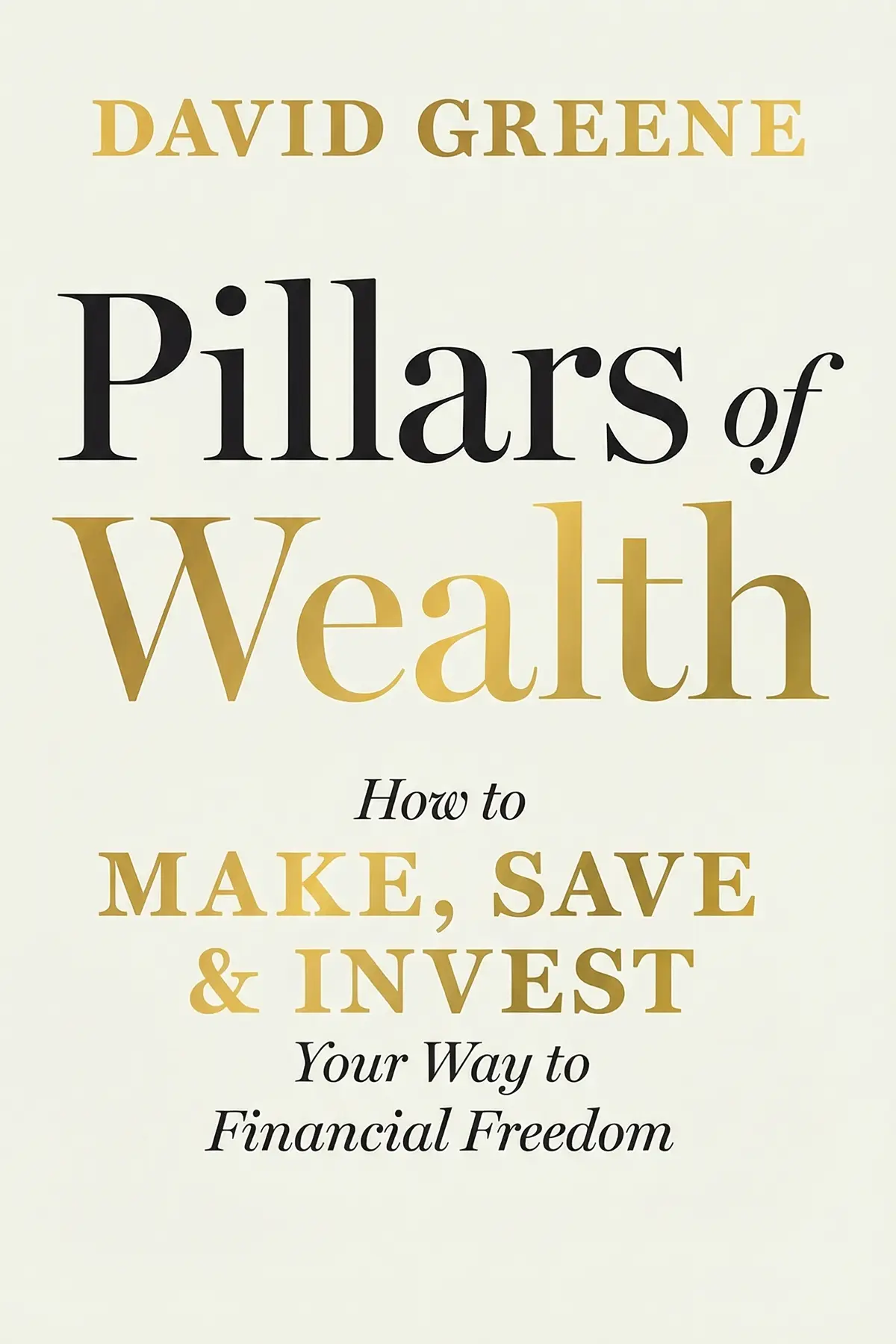
Table of Content
1. Introduction
1 min 00 sec
If your paycheck arrives and disappears while prices keep rising, the problem may be the order you handle money in, not your luck or your talent. In Pillars of Wealth, real estate investor and podcast host David M. Greene argues that a daily latte is the wrong target, because one large cost like housing can be worth many times more. That kind of simple arithmetic runs through his whole plan.
Greene builds wealth on three pillars. Defense protects the money you earn. Offense grows how much you earn. Investing turns the surplus into real estate that keeps producing income. His case is that none of them stands alone, and that ordinary people who work all three with patience can reach financial freedom without genius or wild luck.
Ahead are the two numbers worth tracking, a way to make saving feel like a game, habits that raise your value at work, and the main ways a rental property adds to your net worth.
2. Track the two numbers that measure freedom
1 min 31 sec
Many people who feel stuck with money cannot say how far they are from being free. Greene starts with a measurement so simple it fits in a spreadsheet, plus one belief worth dropping before you begin.
3. Cut the big bills before the coffee
1 min 29 sec
Popular advice says skip the daily treat and watch the savings pile up. Greene runs the numbers and finds that advice aims at the wrong end of the budget, by a very wide margin.
4. Turn saving into a game you can win
1 min 30 sec
A college student saved a six-figure sum before graduation, years before he knew much about wealth. His methods were ordinary. The way he framed them is what made them stick.
5. Raise your income by solving problems
1 min 49 sec
Saving harder has a ceiling, and most people hit it sooner than they expect. Greene describes what separates high earners from average ones, and it has little to do with what they achieved last year.
6. Gather what you need before your first property
1 min 42 sec
Real estate can build large wealth with far less effort than a salaried job, Greene says, but only when certain things are in place first. Missing one of them is how promising deals go wrong.
7. Three ways one rental grows your wealth
1 min 30 sec
An unattractive house on a good street may be worth more than it looks. Greene explains why, and shows how a single property can add to your wealth from more than one direction at once.
8. Conclusion
1 min 05 sec
Greene’s image is a roof, and a roof needs every pillar under it. Saving without earning more limits how much you can ever invest. Earning more without defense lets lifestyle creep eat each raise. Both, without investing, leave you on the same loop of working, earning and spending. He calls his framework easy to grasp and hard to carry out, and the hard part is patience held over many years.
The first moves are small. Write down your net worth and your cash flow, and tie them to a reason that matters to you. Go after your largest expense before your smallest one. Set a weekly savings standard you control and try to beat it, the way a college server once put away $100,000. Then, when you are ready, look at houses the way Greene does, searching for the plain one on the good street that a few changes could transform.
Money, in his telling, is only a tool. Set on three pillars, it can hold up a life you actually chose.
About this book
What is this book about?
Prices keep climbing, wages lag behind, and many people feel stuck in a loop of working, earning and spending. They assume real wealth takes luck or genius. David M. Greene disagrees. He has bought, renovated and run dozens of rental homes, and he argues that a patient plan can get almost anyone there. His plan rests on three pillars. Defense protects the money you already make through a strict budget, cuts to the largest costs and a guard against lifestyle creep. Offense raises your income by making you more valuable at work, with the long aim of working for yourself. Investing turns savings and earnings into real estate, using methods such as forcing equity and forcing cash flow. Readers learn which two numbers to track, why skipping a daily latte matters far less than one big bill, and how to make saving feel like a game. They also learn what to gather before buying a first property and how a well-chosen rental can grow in value while paying them every month.
Book Information
Who it's for
Raises lost to spending
Young professionals whose raises vanish into spending and who want a clear order for saving, earning and investing.
Curious about rental property
Salaried workers curious about rental property who need to know what to gather before buying a first home to rent.
Wanting to earn more
Career climbers looking for concrete habits that raise their value and their pay.
About the Author
David M. Greene
David M. Greene is a real estate investor and the host of the BiggerPockets Podcast. He has bought, renovated and managed more than 50 single-family rental homes, and he holds stakes in larger apartment complexes. He has written five books, among them Buy, Rehab, Rent, Refinance, Repeat and Long-Distance Real Estate Investing, and together they have sold half a million copies. He believes anyone with a good plan can build a net worth in the millions.
Ratings & Reviews
Ratings at a glance
What people think
Listeners find the quality of the information impressive, with one noting that it makes concepts simple to grasp and recall. They also value the investment advice provided, particularly the focus on real estate, and consider it essential reading. Furthermore, the writing is expertly crafted and motivating, with one listener highlighting the relatable examples of human behaviors included in the text.
Top reviews
Nongnuch
Finally got around to reading this after seeing it recommended everywhere, and it’s a powerhouse of financial clarity. The way Greene structures the "Pillars" makes the abstract concept of wealth feel like a construction project you can actually manage. I loved the emphasis on offensive strategies—too many books just tell you to cut coupons, but this one pushes you to increase your value to the market through skillsets. Not gonna lie, the real estate focus is heavy, but it serves as a perfect vehicle for the broader lessons. It’s an easy-to-digest guide that doesn’t just talk about numbers; it changes how you view your daily labor and its long-term potential for freedom.
Show moreJirapat
Wow. This book was exactly the kick in the pants I needed to stop overcomplicating my finances and start executing. David Greene has a way of taking complex market dynamics and distilling them into short, actionable lists that are perfect for a quick review. Personally, I found the mindset shifts regarding work ethic to be just as valuable as the real estate tips. It’s not just about buying property; it’s about becoming the type of person who is capable of building an empire from the ground up. Some might find his "grinder" mentality a bit intense, but if you want real results, that’s the energy you need to bring. Truly an inspirational read for anyone starting their journey.
Show moreAnchalee
One of the best shots of energy I’ve had from a finance book in years! It’s not just about the money; it’s about the psychology behind why we spend and how we work. Greene manages to make the concepts easy to understand by using relatable examples of human behaviors that don't feel like a dry textbook. I particularly appreciated the sections on building a skillset—it’s an "offense" strategy that actually feels achievable. Not every chapter was a revelation, and some parts felt a bit repetitive, but the overall investment value of this book is high. If you are serious about changing your financial trajectory and want a clear path, this is a must-read.
Show moreYindee
Greene manages to bridge the gap between simple money management and high-level investing with remarkable ease. This isn't just a book about real estate; it's a comprehensive look at the fundamental concepts of money and how to leverage your career to build a surplus. I'll admit that the "grinder" tone can be a bit much at times, and I would have liked more disclosure on starting advantages. Regardless, the actionable takeaways regarding managing and saving money are things I plan to implement in my life immediately. The writing style is well-crafted, making even the dryer topics of budgeting feel engaging and necessary for long-term success. It is a great overview of principles for those who want to build wealth.
Show moreMoon
The framework presented here is incredibly logical, dividing wealth into offense, defense, and investing. Truth is, many people master one but fail the others, which is why they never get ahead. While the concepts aren't revolutionary, the writing is well-crafted and the human behavior examples are surprisingly relatable. I did feel that some of the "defense" chapters were slightly elementary, but they serve as a necessary foundation for the more complex investing strategies later on. It’s a well-rounded manual that moves beyond simple dollars and cents. If you are looking for a get-rich-quick scheme, look elsewhere, because this focuses on the slow and steady grit required for true financial success.
Show morePenelope
Picked this up after following David on his podcast for a while, and the book really delivers on that same practical energy. Frankly, I was worried it would just be a repeat of his audio content, but the written structure helps the pillars of offense and defense click in a new way. It’s a great shot of energy for anyone feeling stagnant in their career or their portfolio. My only gripe is that it leans so heavily on real estate that other investment vehicles are almost entirely ignored. However, for what it is—a blueprint for RE-focused wealth—it’s probably one of the most coherent and motivational books on the market right now for the average person.
Show moreAlejandra
Ever wonder why some people make plenty of money but never seem to get wealthy? This book answers that by highlighting the "Defense" pillar, which I realized was my weakest link. While some of the advice is pretty basic financial literacy, the way it’s packaged with "Offense" and "Investing" makes it much easier to remember. To be fair, Greene does toot his own horn quite a bit throughout the chapters, which can get a little tiring after a while. Still, the core message about improving your skillset to increase your income is a vital lesson that most finance books ignore. It’s a solid, functional guide for building a realistic path to freedom through consistent effort.
Show morePruet
After hearing David speak for years, I was glad to see he finally put his full philosophy into a single volume. The breakdown of the three pillars provides a clear roadmap that isn't just about buying houses, though real estate is definitely the star of the show. In my experience, most people skip the "defensive" part of the game, so seeing an entire section dedicated to that was refreshing. It’s a short, punchy read that I’ve already recommended to a few friends who are struggling to get their finances in order. While it might be a bit too "basic" for seasoned pros, it's a perfect foundational text for the average person looking for a realistic path.
Show moreYongyut
As someone who has already dabbled in real estate, the "Investing" section was definitely the highlight for me. To be fair, the earlier sections on defense and offense felt a bit like common sense if you’ve ever looked at a budget before. I appreciate the focus on skillset and work ethic, but David can sometimes come across as a bit of a "hustle culture" cheerleader. That being said, the breakdown of how to actually scale your assets is solid gold for anyone feeling stuck in the middle. It's a decent read for a refresher, even if the "self-made" narrative feels slightly glossed over in parts. I’d recommend it to beginners, but seasoned investors might find themselves skimming the first half of the book.
Show moreManika
Look, I wanted to like this, but it felt incredibly elementary for anyone with even a basic grasp of personal finance. The tone occasionally slides into being somewhat condescending, as if the reader has never heard of saving money or working hard. I also found it problematic that he touts being "self-made" while seemingly ignoring the systemic privileges that often facilitate such rapid growth in real estate. It's overly focused on one specific asset class to the exclusion of almost everything else. If you have absolutely no background in money management, maybe you’ll find a spark here, but for me, it was a lot of fluff around very simple ideas that could have been a blog post.
Show moreQuestions about this book
What are the three pillars of wealth in David Greene's book?
Greene names defense, offense and investing. Defense protects the money you earn through budgeting, cutting large expenses and avoiding lifestyle creep. Offense raises your income by making you more valuable at work, with the long aim of becoming an entrepreneur. Investing turns savings and earnings into assets, mainly real estate, that grow and produce income. He argues the pillars only hold up when all three work together.
Does Pillars of Wealth say to stop buying lattes?
Not as a priority. Greene points out that skipping a five dollar latte every day saves only about $150 a month, while removing a housing payment could save thousands. He suggests sorting expenses into needs, wants and debt payments, then attacking the biggest wants and debts first. Small cuts are fine, but the largest costs offer the largest gains.
How does real estate make money according to Greene?
He describes three main ways. Forcing equity means improving a property so it is worth more. Natural equity comes from inflation pushing property prices up over time. Forcing cash flow means raising a property’s income or lowering its costs, for example renovating a rental kitchen so you can charge higher rent. He also suggests buying unattractive homes in nice neighborhoods and making cosmetic upgrades.
How can I start applying Pillars of Wealth this week?
Write down your net worth and monthly cash flow, along with your personal reason for building wealth. Look at your largest expense and ask how to reduce it. Set a savings standard you control, such as $100 a week, and try to beat it, keeping savings in a separate account filled first. At work, ask for feedback and take on one responsibility before anyone asks.
Readers also enjoyed






AUDIO SUMMARY AVAILABLE
Listen to Pillars of Wealth in 15 minutes
Get the key ideas from Pillars of Wealth by David M. Greene, plus 5,000+ more nonfiction titles.
- 5,000+ titles
- Listen as much as you want
- 7-day free trial
- Cancel anytime









